Coffee Trailer Permits & Health Codes in the USA: What You Must Know Before Ordering
Learn which coffee trailer permits and health codes apply in the USA. Avoid inspection failure by ordering a compliant mobile coffee trailer.
Let’s Be Honest: Permits Are the #1 Reason Coffee Trailer Projects Get Delayed
Almost every buyer we speak with at ZZKNOWN says some version of this:
“I love the trailer—but will it pass inspection?”
That concern is valid.
In the U.S., permits and health codes do not care how nice your trailer looks.
They only care whether your trailer meets local health department requirements.
The good news?
Most permit problems are 100% avoidable—if you plan them before production.
This guide explains:
- Which permits are typically required
- What U.S. health inspectors focus on
- Design mistakes that cause inspection failure
- How to order a coffee trailer that actually passes
First Things First: Permits Are Local, Not Federal
There is no single “U.S. coffee trailer permit.”
Instead, approvals usually come from:
- City or county health department
- Local business licensing office
- Fire marshal (sometimes)
- DMV (for registration)
That means:
Your trailer must be designed to pass inspection—not just be built.
The 4 Permit Categories Most Coffee Trailer Owners Need
1. Mobile Food Vendor Permit
This is your primary operating permit.
Usually requires:
- Approved trailer layout
- Equipment list
- Water & waste system details
- Commissary agreement (in many states)
2. Health Department Approval
This is the most critical step.
Inspectors will check:
- Sink configuration
- Water capacity
- Food safety workflow
- Surface materials
- Cleanability
Fail here, and nothing else matters.
3. Business License & Sales Tax ID
This is administrative, but required:
- Local business license
- State sales tax permit
- EIN (if applicable)
4. Trailer Registration (DMV)
Depending on state:
- VIN
- Trailer weight certificate
- Lighting & brake compliance
Health Codes: What Inspectors Actually Care About
Health inspectors are not trying to stop your business.
They are checking for risk prevention.
Here’s what they focus on most.
Sink Requirements: The #1 Inspection Failure Point
Most U.S. health departments require:
✅ A Dedicated Handwash Sink
- Separate from all other sinks
- With hot & cold water
- Soap and paper towels nearby
✅ A Warewashing / Utility Sink
- For cleaning tools and equipment
✅ (Sometimes) A Food Prep Sink
- Required if food prep happens on-board
ZZKNOWN Insight:
Many failed inspections happen because buyers try to “combine” sinks to save space.
Water System Rules (Critical)
Typical requirements:
- Fresh water tank larger than waste tank
- Food-grade water lines
- On-demand hot water (usually 120°F+)
- External water inlet recommended
| System | Common Requirement |
|---|---|
| Fresh water | 20–40 gallons |
| Waste water | 15–30 gallons |
| Water heater | Electric or propane |
Electrical & Power Compliance
Inspectors may check:
- Proper grounding
- Circuit protection
- Equipment load capacity
- Safe cable routing
Common mistake:
Underpowered electrical systems that trip breakers during service.
Materials & Surfaces: Easy to Clean or It Fails
Health codes usually require:
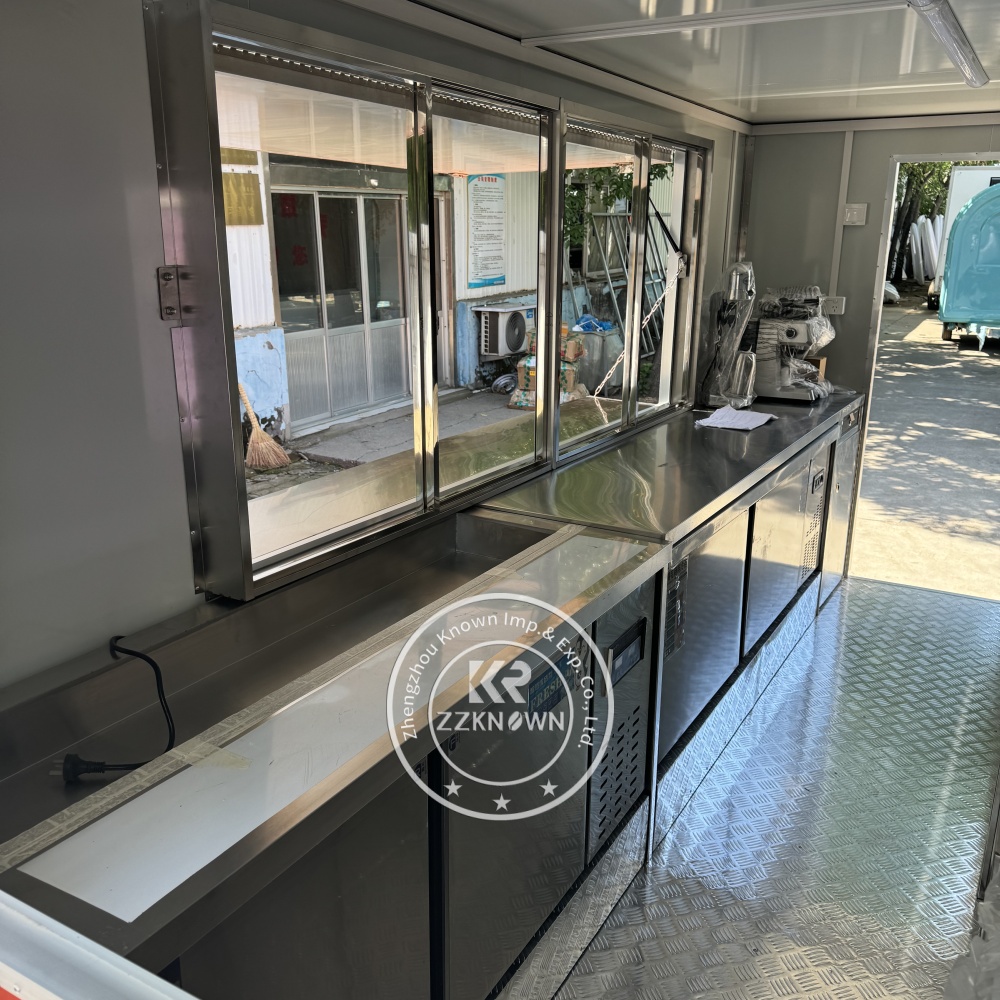
- Stainless steel work surfaces
- Non-porous walls and ceilings
- Sealed flooring with coved edges
What inspectors dislike:
- Exposed wood
- Fabric surfaces
- Decorative materials near prep zones
Ventilation & Fire Safety (Often Overlooked)
If your trailer includes:
- Cooking equipment
- Griddles
- Fryers
You may need:
- Range hood
- Fire suppression
- Fire marshal approval
Pure coffee trailers often avoid this—but only if design is clear.
Commissary Kitchen: Do You Need One?
In many states, yes.
A commissary:
- Supplies water
- Handles waste disposal
- Provides storage
- Acts as inspection anchor
Even if you prep everything on the trailer, a commissary is often required on paper.
State-by-State Differences (Examples)
| State | Special Notes |
|---|---|
| California | Strict sink & water rules |
| Texas | County-based enforcement |
| Florida | Commissary required |
| New York | Complex multi-agency approval |
| Arizona | More flexible, still structured |
Key takeaway:
Always confirm with your local health department—not online forums.
When to Contact the Health Department (Timing Matters)
Best practice:
- Draft trailer layout
- Contact health department
- Confirm requirements
- Finalize production
Worst practice:
Order trailer → hope it passes → redesign later
Design Mistakes That Cause Permit Failure
X Sink Too Small or Too Close
X No dedicated handwash sink
X Insufficient hot water capacity
X Non-approved surface materials
X No clear workflow separation
Every one of these can delay opening by weeks or months.
How ZZKNOWN Helps Buyers Pass Inspection
At ZZKNOWN, permit compliance is part of our process—not an afterthought.
We provide:
- Health-code-aware layout design
- Adjustable sink configurations
- Flexible water & power systems
- 2D/3D drawings for permit submission
- Experience across multiple U.S. states
Many buyers tell us:
“Our inspector had no issues at all.”
Real Buyer Story: Inspection Passed on First Visit
Location: Colorado
Trailer: 12-ft coffee trailer by ZZKNOWN
Preparation:
- Layout approved before production
- Sink setup reviewed with local inspector
- Electrical load calculated in advance
Result:
- Passed inspection first visit
- Opened business on schedule
- Zero redesign costs
Coffee Trailer Permit Checklist (Before You Order)
Confirm these items before final payment:
- Handwash sink separate and compliant
- Water tanks sized properly
- Materials are non-porous
- Electrical system supports peak load
- Commissary plan confirmed
- Local rules reviewed
If your supplier can’t help with this list—that’s a red flag.
FAQ: Coffee Trailer Permits & Health Codes
Q1: Can one trailer pass permits in every state?
No. But a well-designed trailer can be easily adjusted.
Q2: Do I need permits before ordering?
You don’t need approval—but you need requirements.
Q3: Will inspectors review drawings?
Many do. 2D layouts help a lot.
Q4: Can ZZKNOWN customize for my local code?
Yes. That’s part of our service.
Q5: What happens if I fail inspection?
You’ll need modifications—often expensive and time-consuming.
Final Advice: Permits Are a Design Problem, Not a Paperwork Problem
Most permit failures don’t happen because of missing forms.
They happen because:
- The trailer was designed without health codes in mind
- Space was prioritized over compliance
- Buyers trusted “standard layouts” blindly
A coffee trailer that passes inspection smoothly:
- Saves money
- Opens faster
- Reduces stress
- Starts earning sooner
If you want help reviewing your local requirements before ordering, ZZKNOWN can help you design a coffee trailer that works in the real world—not just in photos.