Coffee Trailer Equipment Guide: What You Really Need to Build a Profitable Mobile Coffee Business
At ZZKNOWN, we’ve worked with hundreds of first-time coffee trailer buyers across the U.S.—from solo baristas launching their first mobile espresso business, to multi-trailer operators scaling into fleets.
Why Equipment Choices Decide Whether Your Coffee Trailer Makes Money or Loses It
When people search for coffee trailer equipment, they’re usually not just curious.
They are asking one real question:
“If I invest in a coffee trailer, what exactly do I need so I don’t waste money or fail?”
At ZZKNOWN, we’ve worked with hundreds of first-time coffee trailer buyers across the U.S.—from solo baristas launching their first mobile espresso business, to multi-trailer operators scaling into fleets.
And we’ve seen the same mistake over and over again:
People buy equipment before they understand how they’ll actually operate.
This guide is designed to prevent that.
By the end of this article, you will know:
- Which equipment is mandatory, which is optional, and which is overkill
- How equipment choices affect budget, workflow, permits, and ROI
- Real-world examples of successful and failed setups
- How to spec your coffee trailer correctly before you buy
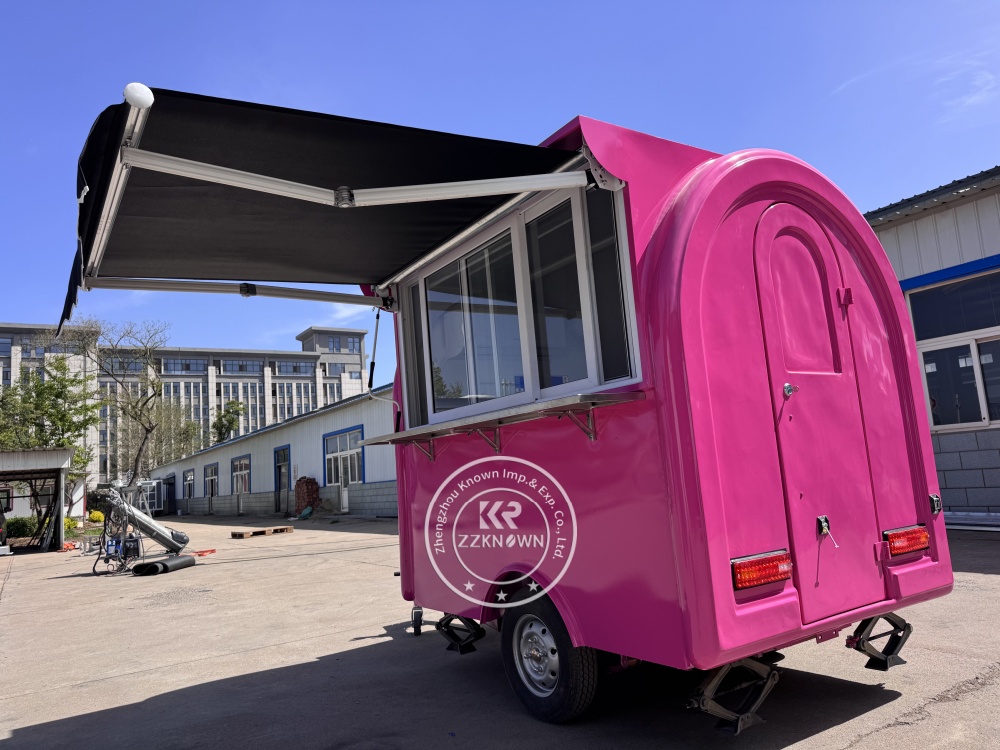
What Equipment Does a Coffee Trailer Actually Need?
Let’s start with clarity.
A functional coffee trailer equipment list includes five core systems:
- Coffee & beverage production equipment
- Power & electrical system
- Water & plumbing system
- Refrigeration & storage
- Workspace, safety & compliance equipment
Everything else is optional or situational.
1. Coffee-Making Equipment: The Heart of Your Trailer
Do You Really Need a Commercial Espresso Machine?
Short answer: Yes, if espresso-based drinks are your main revenue.
A home machine will not survive:
- Continuous operation
- High-pressure cycles
- Health department inspections
Recommended Specs (U.S. Market):
| Item | Recommended |
|---|---|
| Espresso Machine | Commercial, 2-group |
| Power | 220V / 3800–6000W |
| Boiler | Dual boiler preferred |
| Output | 100–200 cups/day |
Real Case (ZZKNOWN Client):
A Texas buyer downgraded to a single-group machine to save $3,000. Within 4 months, wait times doubled and revenue dropped during peak hours. He replaced it later—spending more overall.
Lesson: espresso capacity = revenue capacity.
What Grinder Setup Works Best in a Coffee Trailer?
You need at least one commercial grinder, ideally two.
| Grinder Type | Why It Matters |
|---|---|
| Main Espresso Grinder | Consistency & speed |
| Backup / Decaf Grinder | Avoid cross-contamination |
Non-negotiable features:
- Stepless grind adjustment
- High RPM motor
- Dosing consistency
Should You Add Alternative Brew Equipment?
Only if it fits your concept.
Common add-ons:
- Pour-over station
- Batch brewer
- Cold brew tap system
Rule of thumb:
If it slows service during rush hour, it doesn’t belong in a small trailer.
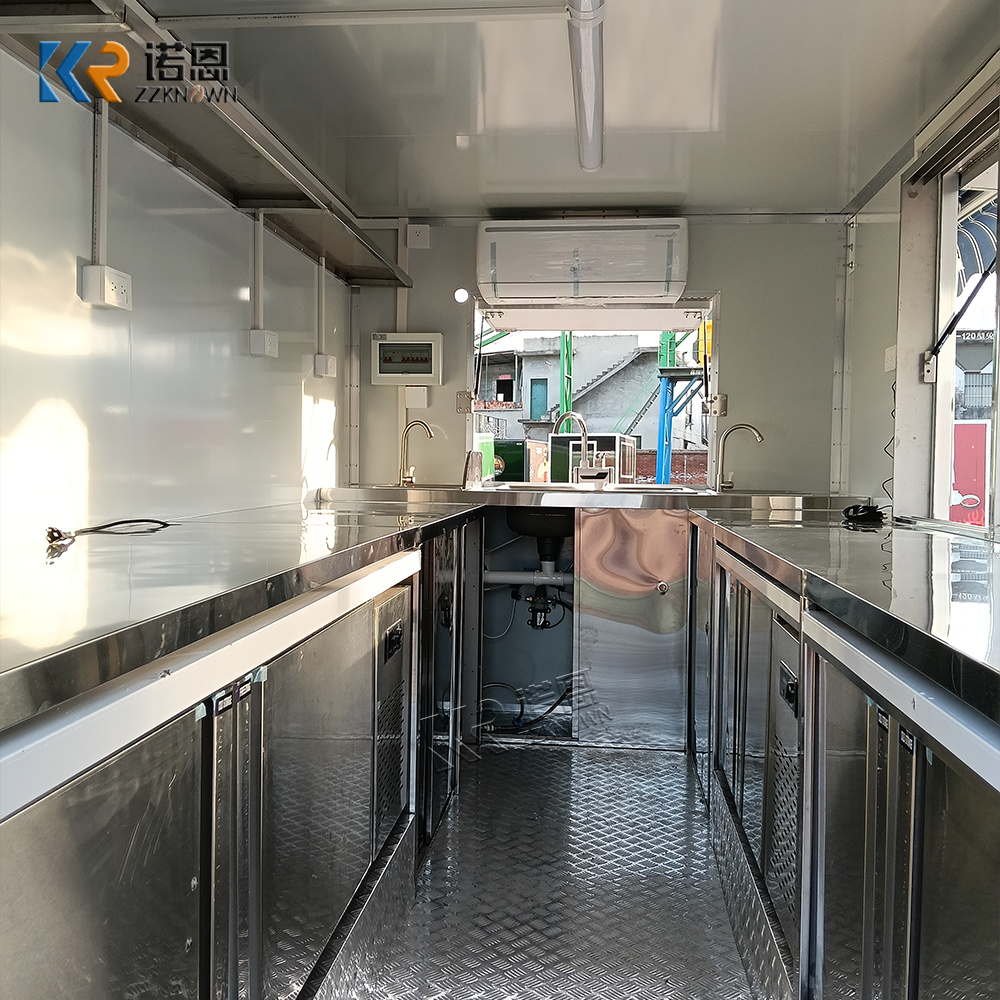
2. Power System: The #1 Equipment Mistake Buyers Make
How Much Power Does a Coffee Trailer Need?
Most coffee trailers fail inspections not because of coffee—but because of power.
Typical load:
| Equipment | Wattage |
|---|---|
| Espresso Machine | 4000–6000W |
| Grinder | 300–800W |
| Refrigerator | 800–1500W |
| Water Heater | 1500–3000W |
| Lights & POS | 300–600W |
Total Recommended Capacity:
8–12 kW
Generator vs Shore Power: Which Is Better?
| Option | Best For |
|---|---|
| Shore Power | Events, markets, fixed spots |
| Generator | Street vending, rural areas |
At ZZKNOWN, we design trailers with:
- External power inlet (30A / 50A)
- Generator compartment
- Load-balanced electrical panels
Avoid This Mistake:
Running espresso + water heater on the same circuit = breaker trips during rush.
3. Water & Plumbing: Health Department Non-Negotiables
What Water System Does a Coffee Trailer Need?
Every U.S. health department requires:
- Fresh water tank
- Wastewater tank
- Food-grade plumbing
- Backflow prevention
Standard Configuration:
| Component | Capacity |
|---|---|
| Fresh Water Tank | 30–50 gallons |
| Wastewater Tank | 40–60 gallons |
| Water Pump | 3–5 GPM |
| Water Heater | 6–10 gallons |
Is a Water Filtration System Necessary?
Yes—especially for espresso machines.
Poor water quality:
- Damages boilers
- Affects coffee taste
- Voids equipment warranties
Most ZZKNOWN coffee trailers include:
- Multi-stage filtration
- Softening system
- Pressure regulator
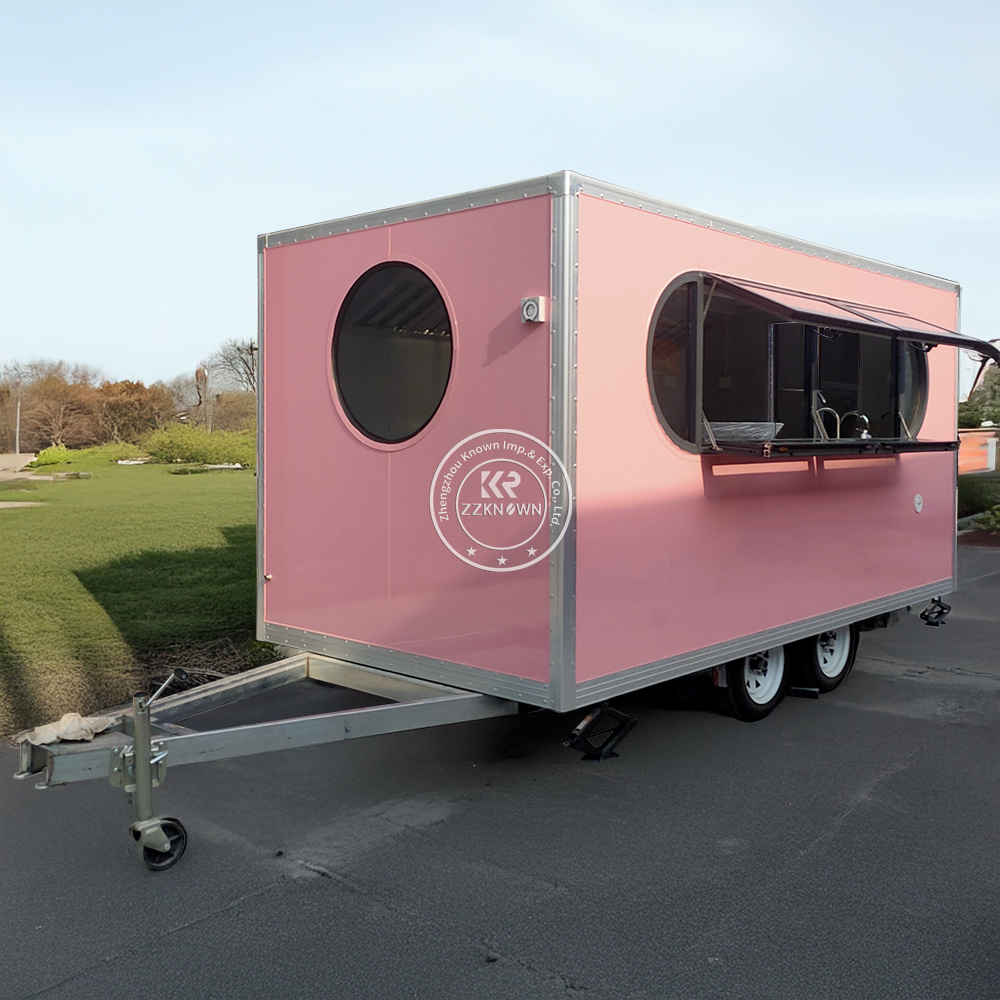
4. Refrigeration & Storage: Small Trailer, Big Consequences
What Refrigeration Equipment Do You Need?
Minimum:
- Undercounter fridge (milk & dairy)
Optional:
- Upright fridge
- Freezer (pastries, ice)
| Item | Why It Matters |
|---|---|
| NSF Certified Fridge | Health compliance |
| Separate Milk Storage | Faster service |
| Temperature Display | Inspection-friendly |
Dry Storage: The Silent Profit Killer
Too little storage = constant restocking.
We recommend:
- Overhead cabinets
- Under-counter drawers
- Bean & cup bulk storage zones
5. Workspace, Safety & Compliance Equipment
Stainless Steel Work Surfaces
Health departments require:
- NSF stainless steel
- Easy-clean corners
- No exposed wood
Handwash Sink vs Utility Sink
You must have:
- Dedicated handwash sink
- Separate utensil sink
| Sink | Purpose |
|---|---|
| Handwash | Hygiene |
| Utility | Cleaning tools |
| Beverage Sink | Coffee prep |
Fire & Safety Equipment
Mandatory in most states:
- Fire extinguisher (Class K recommended)
- GFCI outlets
- Non-slip flooring
- Proper ventilation
A Complete Coffee Trailer Equipment Checklist
| Category | Equipment |
|---|---|
| Coffee | Espresso machine, grinders |
| Power | Generator, shore inlet |
| Water | Tanks, pump, heater |
| Cold Storage | Fridge, freezer |
| Workspace | Stainless counters |
| Safety | Fire extinguisher, GFCI |
| Service | POS, menu board |
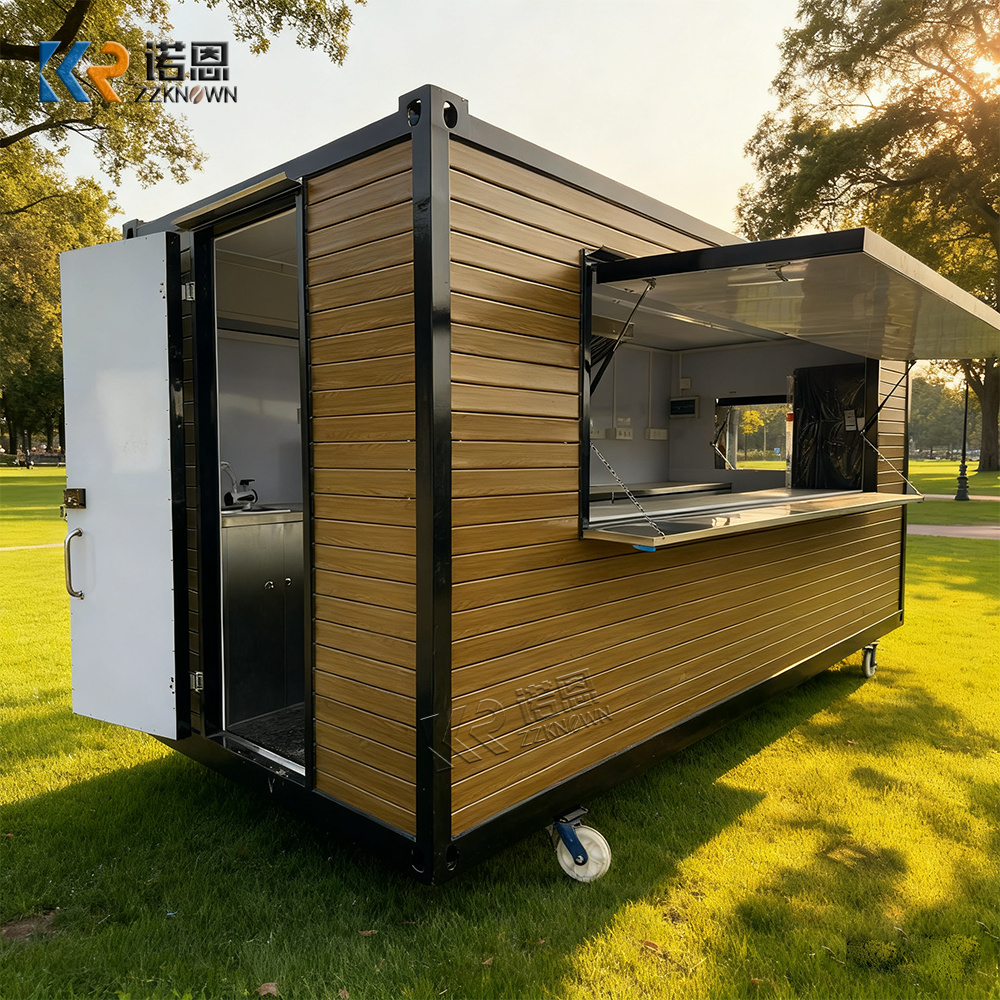
Real Equipment Mistakes We’ve Seen (So You Don’t Make Them)
Failure Case:
Buyer purchased equipment separately before trailer design. Result:
- Espresso machine didn’t fit
- Electrical load exceeded capacity
- Health inspection failed
Success Case:
Buyer worked with ZZKNOWN on layout-first equipment planning. Result:
- Passed inspection first try
- Opened within 30 days
- Reached break-even in 6 months
How ZZKNOWN Helps Buyers Avoid Equipment Overbuying
At ZZKNOWN, we don’t just sell trailers.
We:
- Design equipment layouts based on menu
- Match power systems to real load
- Customize for U.S. health regulations
- Provide 2D & 3D drawings before production
This is why many of our buyers say:
“I didn’t realize how many mistakes I didn’t make until I opened.”
Frequently Asked Questions (FAQ)
Q1: Can I start with minimal equipment and upgrade later?
Yes—but power and plumbing must be designed upfront.
Q2: Is used equipment safe for coffee trailers?
Sometimes. Espresso machines are risky if maintenance history is unknown.
Q3: How long does equipment installation take?
With ZZKNOWN: 25–60 working days including testing.
Q4: Will this equipment pass U.S. inspections?
Yes—when specified correctly for your state.
Q5: Do you customize equipment brands?
Yes. Buyers can specify brands or budget tiers.
Final Advice Before You Buy Coffee Trailer Equipment
If you remember one thing, remember this:
Your equipment should serve your workflow—not your ego.
A profitable coffee trailer is not the one with the most expensive machine.
It’s the one that:
- Serves fast
- Passes inspection
- Matches real demand
- Pays itself off quickly
If you want help reviewing your equipment list or planning your trailer correctly, ZZKNOWN can support you from concept to delivery.