If you’ve ever run — or seriously planned — a seafood business, you already know one thing:
seafood is unforgiving.
Temperature control, hygiene, corrosion, workflow speed — small mistakes don’t just hurt profits, they shut businesses down. That’s exactly why choosing the right seafood food trailer equipment is not optional. It’s foundational.
At ZZKNOWN, we’ve worked with seafood trailer buyers across the USA, Australia, Europe, and coastal markets worldwide. The most successful operators all share one thing in common:
they design their mobile seafood kitchen around how seafood actually works, not around generic food trailer templates.
This guide breaks down what you really need — and what you don't — to run a profitable seafood food trailer.
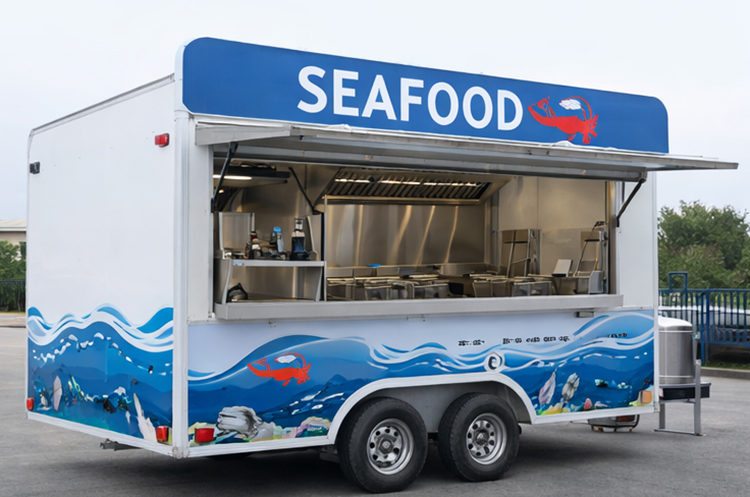
Seafood food trailers face challenges that burger or coffee trailers simply don't.
Seafood must remain within strict temperature ranges from storage to prep to service. One refrigeration mistake can lead to waste, fines, or shutdowns.
Seafood prep involves water, ice, and salt — all enemies of low-grade materials. That’s why stainless steel construction is non-negotiable.
Health inspectors pay closer attention to seafood operations. Poor sink placement or drainage design is one of the most common failure points.
Seafood festivals, night markets, and coastal events demand speed. Layout efficiency directly affects revenue.
A custom seafood food trailer is designed around these realities.
Refrigeration is the backbone of any seafood operation.
Recommended options:
Upright commercial refrigerator
Upright or chest freezer
Under-counter fridge for service speed
Why it matters:
Seafood trailers without adequate refrigeration lose inventory fast — especially in summer or high-volume events.
At ZZKNOWN, we help buyers size refrigeration based on:
Menu type
Daily volume
Local climate
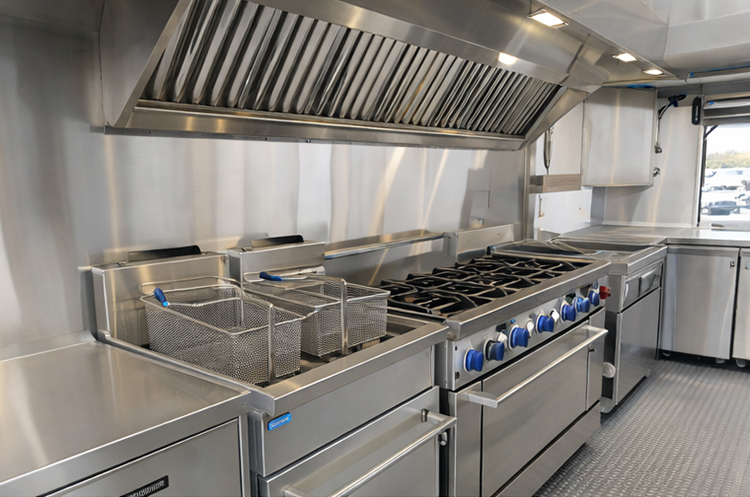
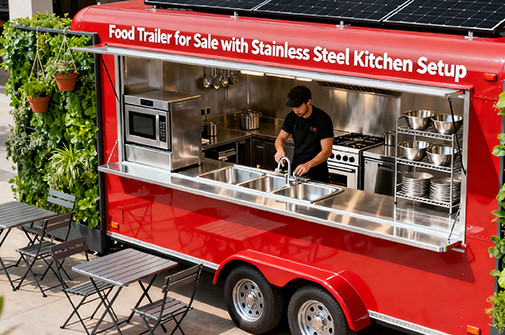
Every prep surface in a seafood trailer should be food-grade stainless steel.
Key benefits:
Corrosion resistance
Easy sanitation
Long lifespan
Health inspection compliance
Avoid painted steel or low-cost substitutes — they fail quickly in seafood environments.
Most health authorities require:
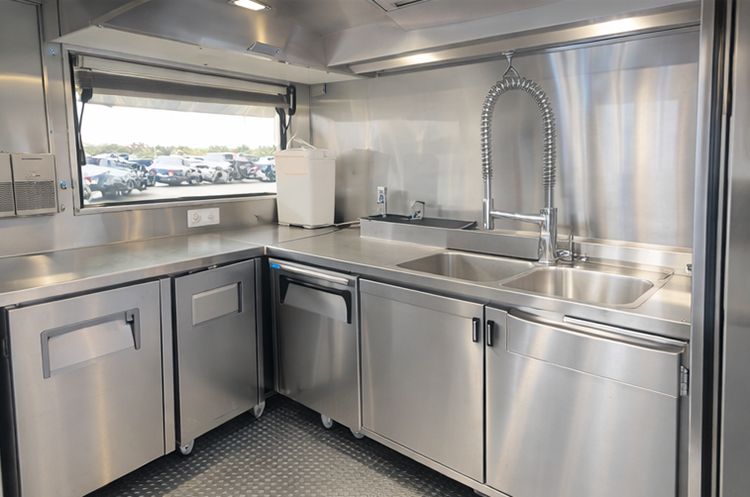
Separate seafood prep sink
Dedicated handwash sink
Hot & cold water supply
Design tip:
Sink placement matters. Poor sink positioning slows workflow and causes inspection issues.
A professional seafood food trailer includes:
Fresh water tank
Waste water tank
Commercial water pump
Proper drainage slope
Water capacity should match:
Daily operating hours
Cleaning frequency
Local regulations
Even if you’re not frying heavily, seafood cooking creates:
Steam
Odors
Grease vapor
A commercial exhaust hood:
Keeps the workspace safe
Improves working comfort
Helps meet fire and health codes
Safety matters in wet environments.
Recommended:
Non-slip aluminum floor
Stainless or aluminum wall panels
Easy-to-clean ceiling materials
These upgrades are optional — but often worth it.
Perfect for:
Fresh seafood display
Fast cooling
High-volume events
Boosts impulse sales, especially for:
Lobster
Oysters
Ready-to-cook seafood
Keeps workflow clean and organized during rush hours.
Buying “just enough” fridge space almost always backfires.
Cheap materials increase long-term costs.
Seafood trailers need purpose-built layouts.
This is why working with an experienced manufacturer like ZZKNOWN matters.
A custom seafood food trailer allows you to:
Match equipment to your exact menu
Reduce wasted movement
Increase serving speed
Pass inspections more easily
Instead of adapting your business to a trailer, the trailer adapts to your business.
The right seafood food trailer equipment:
Protects your product
Protects your license
Protects your profit margin
If you’re serious about building a seafood business that lasts, start with the right foundation.
Talk to ZZKNOWN about a fully equipped seafood food trailer built for your market.