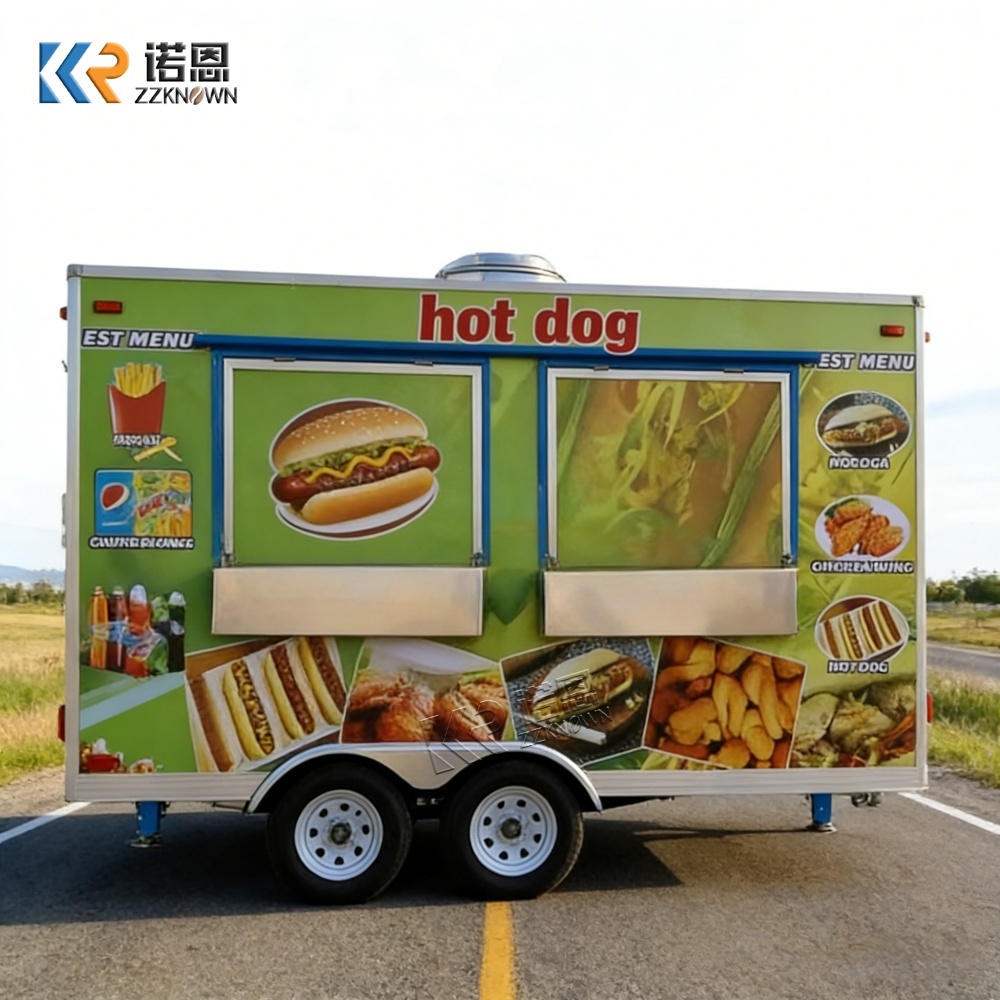
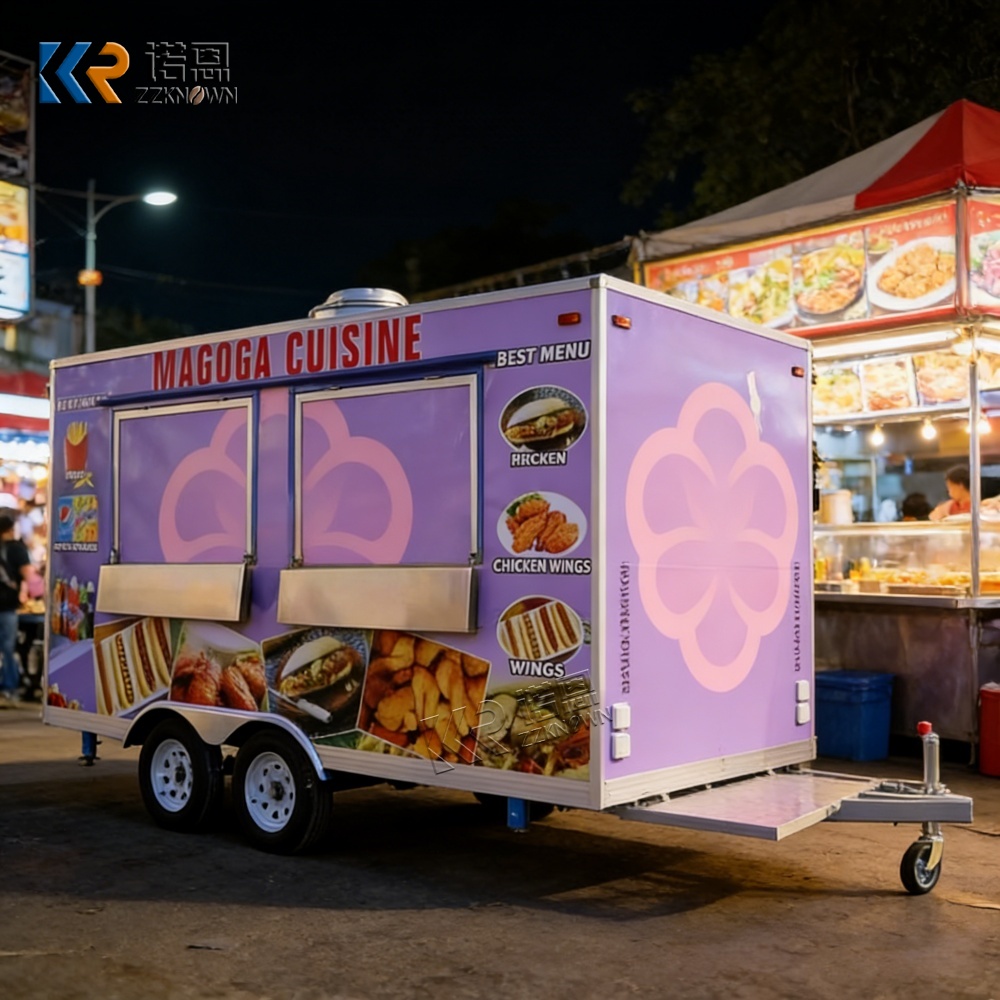
Full 2026 Compliance & Import Guide (Germany, France, Italy, Spain & Nordic Markets)
Entering the European mobile food market in 2026 offers strong growth potential — but compliance is significantly more complex than in many other regions.
If you are planning to sell or operate a hot dog food trailer in Germany, France, Italy, Spain, or Nordic countries (Sweden, Norway, Denmark, Finland), your trailer must meet EU-level regulations and local enforcement standards.
This guide provides a full breakdown of:
-
What CE certification actually means
-
EU machinery and safety directives
-
Electrical standards (230V / 50Hz)
-
Gas installation rules
-
Food hygiene regulations (HACCP)
-
Country-specific enforcement differences
-
Import procedures and documentation
-
Common mistakes and retrofit risks
If your trailer fails compliance, you risk:
-
Customs delays
-
Refused registration
-
Market surveillance penalties
-
Insurance denial
-
Operational shutdown
Let’s break everything down properly.
1. What “CE Certified” Really Means
CE marking indicates conformity with European Union safety, health, and environmental protection requirements.
For food trailers, CE compliance may involve multiple directives, including:
-
Machinery Directive (if mechanical systems present)
-
Low Voltage Directive (LVD)
-
Electromagnetic Compatibility (EMC) Directive
-
Gas Appliance Regulation
-
Pressure Equipment Directive (if applicable)
Important clarification:
CE is not just a sticker. It requires technical documentation and conformity assessment.
Without proper technical file documentation, the CE mark is invalid.
2. EU-Level Compliance Requirements
2.1 Electrical Compliance (230V / 50Hz)
All EU countries operate on 230V / 50Hz.
Your trailer must:
-
Use EU-certified wiring components
-
Include circuit protection (MCB + RCD)
-
Follow EN electrical standards
-
Provide grounding system
-
Include CE-certified appliances
U.S.-spec 110V systems must be fully converted.
Electrical non-compliance is one of the most frequent import failures.
2.2 Gas Installation Requirements
Gas systems must comply with:
-
EN 1949 (LPG systems in vehicles)
-
Pressure regulators meeting EU standards
-
Ventilated gas compartments
-
Shut-off valves
-
Leak detection compliance
Certification from qualified installer is required in most countries.
2.3 Structural & Road Compliance
Trailers must meet:
-
EU Whole Vehicle Type Approval (WVTA) or national approval
-
Axle load ratings
-
Brake systems per EU regulation
-
Lighting compliance (ECE standards)
-
VIN documentation
Without proper homologation, registration may be denied.
3. Food Safety & Hygiene (HACCP System)
All EU member states require HACCP-based food safety systems.
HACCP stands for:
Hazard Analysis and Critical Control Points.
Requirements include:
-
Documented food handling procedures
-
Temperature control monitoring
-
Cross-contamination prevention
-
Cleaning schedules
-
Traceability of ingredients
Trailer interior must be designed to support HACCP compliance.
3.1 Interior Construction Standards
Common requirements:
-
Stainless steel work surfaces
-
Smooth, washable walls
-
Non-slip flooring
-
Handwashing sink
-
Separate washing sinks (depending on country)
Wood and porous materials are prohibited.
4. Country-Specific Enforcement Differences
While EU standards provide framework, enforcement varies.
Germany
Germany enforces some of the strictest standards.
Requirements:
-
TÜV inspection (technical safety check)
-
Gewerbeanmeldung (business registration)
-
Gesundheitsamt approval (health authority)
-
Strict electrical verification
Documentation accuracy is critical in Germany.
France
In France, requirements include:
-
Immatriculation (registration)
-
Hygiene training certification
-
DDCSPP food authority approval
-
Fire safety review
French authorities focus heavily on food traceability and hygiene documentation.
Italy
Italy requires:
-
SCIA registration
-
ASL health approval
-
Electrical certification
-
Fire prevention certificate (if required)
Local municipalities often add extra layers of review.
Spain
Spain requires:
-
Municipal license
-
Sanitary registration
-
Electrical inspection
-
Gas system verification
Autonomous regions may impose additional rules.
Nordic Countries (Sweden, Norway, Denmark, Finland)
Nordic enforcement focuses on:
-
High electrical safety standards
-
Environmental compliance
-
Strict hygiene control
-
Wastewater disposal management
Energy efficiency is often evaluated more closely.
5. Importing a Food Trailer into the EU
If importing from outside Europe:
You must provide:
-
CE Declaration of Conformity
-
Technical file documentation
-
Electrical diagrams
-
Gas installation certificates
-
Material safety data
-
VIN / homologation data
Customs may request additional conformity evidence.
If documentation is incomplete, trailer may be held or rejected.
6. Retrofit Risk & Cost
Non-compliant trailers often require:
| Modification | Estimated Cost (EUR) |
|---|---|
| Electrical rewire | €3,000 – €10,000 |
| Gas system rebuild | €2,000 – €6,000 |
| Interior surface replacement | €2,000 – €8,000 |
| Brake system modification | €1,500 – €5,000 |
Retrofit cost can exceed 30–40% of trailer value.
It is more economical to order EU-spec build from the beginning.
Manufacturers experienced in EU compliance, such as ZZKNOWN, can customize builds for European voltage, gas, and certification requirements before export. Buyers must still verify documentation independently.
7. Registration Process Overview (EU)
Typical process:
-
Receive trailer with CE documentation
-
Register with local transport authority
-
Pass technical inspection (if required)
-
Register business entity
-
Apply for food license
-
Complete hygiene training
-
Pass health inspection
Timeline:
2–4 months average
8. Insurance & Liability
European operators must secure:
-
Public liability insurance
-
Product liability insurance
-
Vehicle insurance
-
Employer liability (if staff hired)
Insurers often request CE documentation before issuing coverage.
9. Estimated Startup Budget (Europe 2026)
Professional CE-Compliant Trailer
| Category | Estimated Cost (EUR) |
|---|---|
| CE-compliant trailer | €18,000 – €35,000 |
| Import & transport | €2,000 – €6,000 |
| Permits & registration | €1,000 – €3,000 |
| Insurance | €1,000 – €2,500 |
| Working capital | €10,000 – €20,000 |
Estimated total:
€32,000 – €60,000
Higher in Germany and Nordic markets due to stricter enforcement.
10. Revenue Potential in European Markets
Average hot dog pricing (2026 estimate):
Germany: €4 – €7
France: €5 – €8
Italy: €4 – €7
Spain: €4 – €6
Nordic markets: €6 – €10
High-demand locations:
-
Christmas markets (Germany)
-
Festivals (Spain, Italy)
-
City centers
-
Tourist areas
-
University districts
Mobile food demand remains strong in urban European markets.
11. Common Compliance Mistakes
Entrepreneurs often:
-
Assume CE sticker alone is sufficient
-
Ignore gas certification requirements
-
Import wrong voltage system
-
Fail to prepare HACCP documentation
-
Underestimate local authority review
Each mistake can delay operation by months.
12. Final Compliance Checklist (Europe)
Before launch confirm:
-
Valid CE Declaration of Conformity
-
Full technical documentation file
-
EU-compliant electrical system
-
Certified gas installation
-
HACCP documentation prepared
-
Registered business
-
Local municipal approval
-
Insurance active
Only then are you legally operational.
Conclusion
The European mobile food market is highly regulated but financially attractive.
CE certification is not optional — it is the gateway to legal market entry.
Entrepreneurs who prioritize:
-
Proper electrical standards
-
Gas safety compliance
-
HACCP documentation
-
Accurate homologation
Avoid costly delays and build long-term credibility.
In 2026, European authorities are increasing enforcement consistency. Cutting corners will not work.
Build for compliance first — scale profit second.