Direct answer: To start a coffee trailer business, first define the menu, expected service volume and number of operators. Those decisions determine the trailer layout, refrigeration, water system, equipment load and approval path. Before ordering, confirm local health, fire, electrical and vehicle requirements, then review the selected equipment nameplates and operating workflow with the manufacturer.
Applicable markets: International buyers; regulatory examples are identified by market. Published: June 18, 2025. Last updated: September 21, 2026.
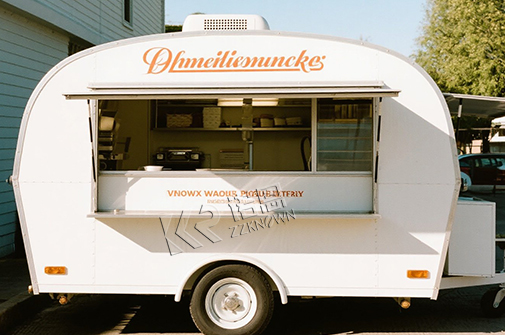
The menu is the starting point because it controls equipment, storage, water demand, power demand and staff movement. A compact espresso menu and a coffee-and-hot-food menu should not use the same layout. Write down every product, ingredient and preparation step before requesting a drawing.
| Menu model | Typical team | Main equipment groups | Layout priority |
|---|---|---|---|
| Espresso and hot drinks | 1–2 operators | Espresso machine, grinders, milk refrigeration, filtration and POS | Short order-to-pickup path |
| Coffee and cold drinks | 2 operators | Coffee equipment plus blender, ice and cold storage | Separate hot-drink and cold-drink stations |
| Coffee and pre-baked pastries | 2 operators | Display, refrigeration and approved reheating equipment if required | Keep ordering and pastry handling from crossing |
| Coffee and freshly cooked food | 2–3 operators | Preparation, refrigeration, cooking and any required ventilation | Separate raw, cooking, service and dirty-return flow |
Planning note: These are workflow examples, not universal approval rules. The required sinks, ventilation, fire protection and food-storage systems depend on the menu and destination authority.
Count the people who will work during the busiest period, not the quietest hour. One operator may take orders, prepare drinks and hand over products from a compact station. With two operators, separate ordering from drink production. With three operators, define a dedicated preparation or replenishment position so staff do not repeatedly cross behind each other.
For broader sizing decisions, see the food trailer size guide and the layout-by-menu-and-staff guide.
Build the equipment list from the menu and preparation method. Record the model, outside dimensions, ventilation clearance, voltage, frequency, phase, rated power, water connection and drainage requirement for every appliance. Do not approve a layout using only equipment category names such as “coffee machine” or “refrigerator.”
| Equipment | Quantity | Dimensions | Voltage / frequency | Rated power | Water / drainage |
|---|---|---|---|---|---|
| Espresso machine | |||||
| Grinder | Not normally required | ||||
| Refrigerator | Drainage depends on model | ||||
| Blender / ice equipment | |||||
| Water heater | Confirm inlet and outlet |
If pastries are part of the menu, use the bakery food cart equipment guide to compare display-only, reheating and onsite baking workflows.
Use the actual equipment nameplates. Add the loads expected to operate at the same time, check motor or compressor starting loads and include appropriate reserve capacity. The final design should be reviewed for the destination voltage, frequency, phase, plug system and local electrical requirements.
Engineer’s note: A generic wattage list cannot replace a load schedule. Two espresso machines of similar size may have different heating loads. Submit the selected model sheets before the electrical drawing and quotation are finalized.
| Equipment | Nameplate load | Quantity | Simultaneous use | Calculated load |
|---|---|---|---|---|
| Coffee equipment | ||||
| Refrigeration | ||||
| Water heating | ||||
| Lighting, POS and auxiliary loads |
Map one complete order: customer order, payment, cup preparation, espresso extraction, milk or cold-drink preparation, finishing and handover. Then map replenishment, handwashing, cleaning and waste removal. The two flows should not create unnecessary crossings.
ZZKNOWN can prepare a custom 2D or 3D trailer layout after the menu, team size, destination and equipment list are confirmed.
Requirements vary by country, state, province and city. Depending on the business and menu, buyers may need to confirm business registration, mobile vending permission, food establishment approval, food-handler training, commissary or servicing-area requirements, fire review, gas inspection, electrical inspection, vehicle registration and insurance.
For U.S. projects, the FDA Food Code 2026 is a model code; the locally adopted requirements control. Ask the destination health and fire authorities to review the proposed menu, workflow and equipment before production.
Important: WMI information, U.S. DOT registration information, CE documentation for specified products or ISO 9001 certification do not replace destination-specific vehicle, health, fire, gas or electrical approval.
Separate the budget into the trailer body, installed systems, kitchen equipment, branding, inspection, inland transport, ocean freight, insurance, customs, duties, port charges, local modifications and operating capital. A low ex-factory price is not the same as the landed cost or the final amount required to open.
Use the coffee trailer cost breakdown and the shipping and landed cost guide as planning checklists. Final prices depend on confirmed specifications and quotation terms.
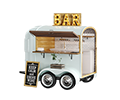
You can review a current mobile coffee trailer product example, but the final layout and quotation must be based on the buyer’s confirmed requirements.
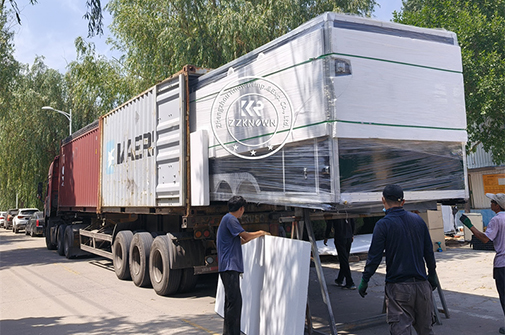
Check the approved dimensions, materials, equipment positions, doors, windows, lighting, electrical or gas configuration, water system and branding against the signed specification. Where the contract includes functional testing, record the agreed checks with photos or video. Confirm packing, detachable parts and shipping documents before dispatch. Learn more about ZZKNOWN factory and quality control.
Yes, for a focused menu and a carefully planned station. The order, payment, drink preparation and handover route should be tested before the layout is approved.
Not necessarily. The decision depends on staff count, equipment dimensions, storage, water systems and the clearances required by local authorities and equipment manufacturers.
ZZKNOWN can help match equipment categories and positions to the menu and space. Buyers should confirm preferred models, supplier support, certifications where applicable and nameplate data before the final design.
Voltage, frequency, phase, sockets and distribution can be planned for the destination market, subject to the confirmed equipment load and applicable local requirements.
No. Approval is issued by the relevant destination authorities. Buyers should confirm local requirements before ordering and provide them for design review.
Use suitable refrigeration, monitoring and staff procedures based on the locally adopted food code. See the coffee trailer food safety guide.
Request a quotation after you can provide the destination, menu, staff count, preferred body size, equipment list, electrical requirements and branding needs.
Send your destination market, menu, team size, preferred trailer size and equipment list. ZZKNOWN can prepare a layout and quotation for review before production.
Content owner: ZZKNOWN Content Team. Technical review: ZZKNOWN Design and Production Team. This guide provides planning information and does not replace professional or destination-authority review.