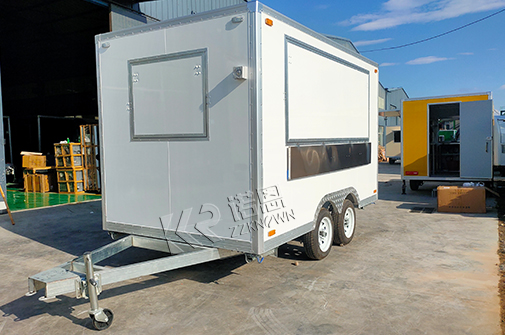
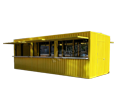
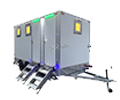
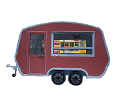
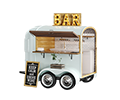
Direct answer: A bakery food trailer needs equipment selected for its actual menu and production method—not a generic appliance package. Start with preparation, proofing, baking or reheating, cooling, refrigerated storage, display, handwashing, warewashing and dry storage. Then build a nameplate-based power schedule, map the workflow for the planned staff count, and confirm health, fire, ventilation, electrical and vehicle requirements with the destination authorities.
Applicable region: International equipment-planning guidance. U.S. food-safety and fire references are examples; locally adopted requirements control. Published: March 27, 2025. Last updated: September 21, 2026.
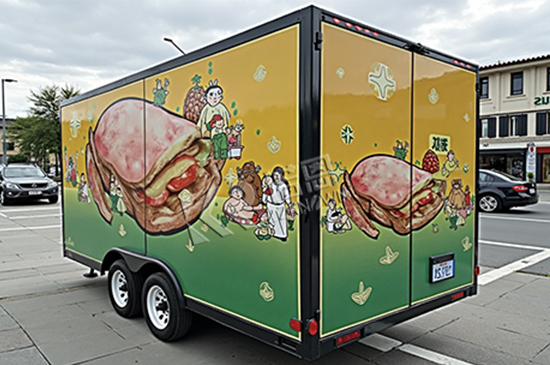
The menu decides whether ingredients are mixed and baked on board, proofed and finish-baked, reheated from a commissary, or only stored and displayed. Define that production model before choosing the trailer size or equipment.
| Production model | Typical menu | Main equipment groups | Layout priority |
|---|---|---|---|
| Bake from scratch | Bread, cookies, cakes, pastries | Mixer, prep bench, proofer where required, oven, cooling racks, refrigeration | Raw-to-baked workflow and heat management |
| Finish-bake | Frozen or commissary-prepared dough | Freezer or refrigerator, proofer if needed, compact oven, cooling and display | Cold storage near the finishing station |
| Reheat and serve | Pre-baked pastries, pies, sandwiches | Refrigeration, approved reheating equipment, protected display | Fast service with minimal crossings |
| Coffee and bakery | Espresso drinks plus pastries | Coffee system, milk refrigeration, bakery display and limited finishing equipment | Separate drink assembly from hot bakery work |
Use this as a planning checklist, not a fixed package. Capacity, fuel type, dimensions and approvals must be confirmed for the chosen model and destination.
| Work zone | Equipment to consider | Selection questions |
|---|---|---|
| Ingredient storage | Dry bins, shelving, refrigerator, freezer | What arrives chilled, frozen or ambient? How many service hours must be stored? |
| Mixing and preparation | Planetary or spiral mixer, scales, prep bench, ingredient containers | What batch size and dough type? Can the mixer be secured and cleaned in place? |
| Proofing | Proofing cabinet or controlled proofing space | Does the menu require proofing on board, or is dough prepared elsewhere? |
| Baking or reheating | Convection, deck or combination oven; approved reheating appliance | Tray size, batches per hour, electric or gas, ventilation and service clearance? |
| Cooling and display | Cooling racks, ambient or refrigerated display | Which products require temperature control or protected display? |
| Hygiene and warewashing | Handwashing station, warewashing setup, water heater, clean and wastewater tanks | What configuration and tank capacity does the local authority require? |
| Service | POS, packaging storage, service counter and menu display | How many orders and operators share the service window? |
Create the power schedule from the exact appliance nameplates and technical sheets. For every item, record voltage, frequency, phase, rated watts or amps, plug or connection type and any starting current. The connected load is the sum of the selected nameplate inputs; a qualified electrical designer then applies the locally required demand, protection, conductor and connection rules.
| Equipment | Nameplate data to collect | Simultaneous-use question |
|---|---|---|
| Oven and proofer | kW or A, voltage, phase, frequency and connection | Will both heat at full demand during peak production? |
| Mixer | Motor rating, voltage, phase and starting current | Does mixing overlap with baking and hot-water recovery? |
| Refrigeration and display | Rated input and compressor starting information | How will temperature be maintained during travel and service? |
| Water heater and ventilation | Rated input, controls and connection | Will they run while the oven and mixer are operating? |
Confirm the destination supply before production—such as 110V/60Hz or 220V/50Hz—and never assume that changing the plug makes an appliance compatible. Use local professionals for final circuit, protection and connection design.
| Team size | Practical workflow | Layout focus |
|---|---|---|
| One operator | Prepare limited batches before service, then finish, display and sell | Short reach between storage, finishing and POS; avoid simultaneous complex production |
| Two operators | One handles production; one handles display, drinks and service | Separate hot production from the customer-service path |
| Three operators | Preparation, baking/finishing and service can run concurrently | Adequate aisle clearance, defined stations and no blocked handwashing route |
For a step-by-step floor-plan method, use the food trailer layout by menu and staff guide.
A practical sequence is receiving and storage → scaling and mixing → forming and proofing → baking or reheating → cooling → display and service. Keep handwashing accessible, give hot equipment its required clearances, and prevent dirty utensils or waste from crossing the ready-to-serve path.
The locally adopted code determines the final sink, warewashing, water, storage and monitoring requirements. The 2026 FDA Food Code is a U.S. model, not an automatic nationwide approval. It addresses equipment durability, cleanability, food-contact surfaces, temperature monitoring and cleaning frequency.
For jurisdictions using comparable FDA provisions, time/temperature control for safety food is generally held at 41°F (5°C) or less when cold or 135°F (57°C) or above when hot. Confirm the local rule and whether cream, custard, dairy, egg, meat or prepared fillings in your menu require additional controls. See the mobile coffee and bakery food-safety guide for workflow details.
No universal answer applies. The decision depends on the oven type, fuel, heat and vapor output, food produced, appliance listing, installation instructions and the authority having jurisdiction. NFPA 96 covers ventilation control and fire protection for commercial cooking operations, including mobile and temporary cooking operations. Obtain written confirmation from the destination fire and building authorities before finalizing the hood, make-up air, clearance or suppression design.
Do not use one daily/weekly/monthly schedule for every model. Manufacturer instructions and local operating rules take priority.
According to ZZKNOWN's production experience, confirming the equipment list and nameplate data before the 2D or 3D layout is approved reduces avoidable changes during manufacturing. Review how to start a coffee trailer business, Custom Design and OEM/ODM, Factory & Quality Control and documented customer projects.
Start with the menu and production volume, then choose the oven or reheating method. Its tray size, output, heat, fuel and power demand affect almost every other layout decision.
Yes for a limited menu and staged production, but the layout should minimize crossings and avoid complex baking during peak service. Model the actual tasks before approving the plan.
Do not assume so. Compare the complete nameplate-based load, operating hours, starting current, battery capacity, inverter rating and local conditions with a qualified designer.
No. Storage depends on ingredients, preparation and supplier instructions. Products with cream, custard, dairy, egg, meat or other time/temperature-control ingredients may require refrigeration under local rules.
Confirm whether the destination authority accepts them for commercial mobile use. Durability, cleanability, listing, electrical compatibility, clearances and service support should all be reviewed.
Choose models or at least verified specifications before layout approval, but coordinate purchasing with the design team so dimensions, access, utilities and transport securing points match.
The destination's health, fire, electrical, gas, building and vehicle authorities may each control different parts of the project. Manufacturer documentation does not replace local approval.
Send your destination, menu, staff count and selected equipment specifications for a layout and quotation review.
Request a Layout and QuotationContent owner: ZZKNOWN. Technical review scope: equipment integration, layout and production planning. Appliance certification, operating procedures and regulatory approval must be confirmed for the selected models and destination.