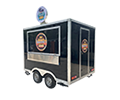
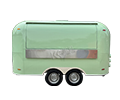
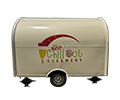
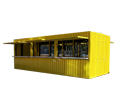
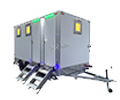
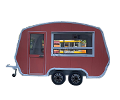
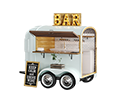
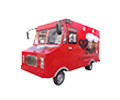
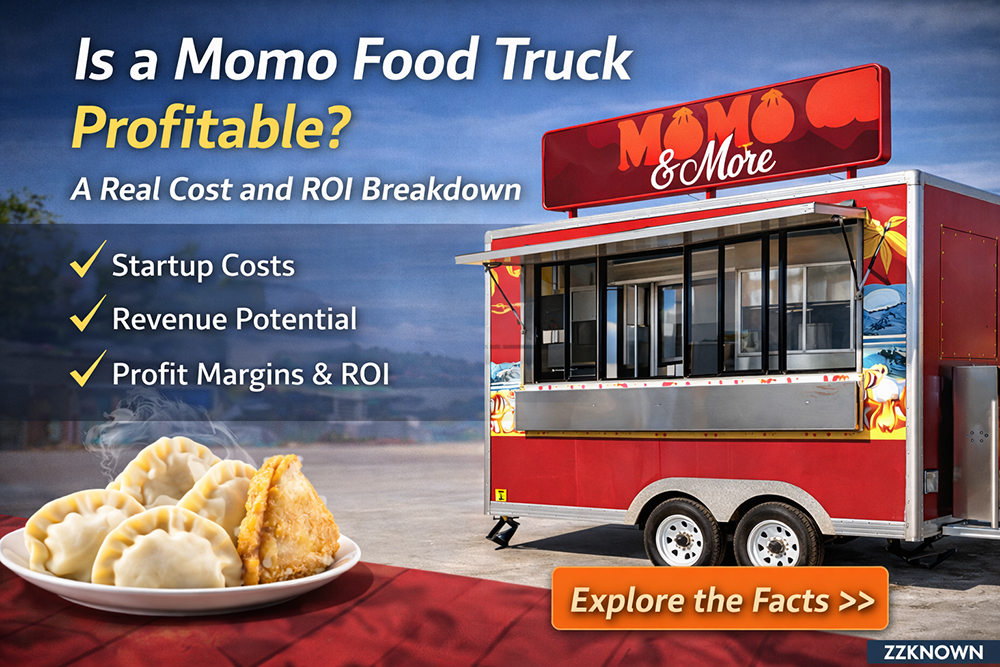
A few years ago, momos were still considered a niche street food outside South Asia. Today, they're showing up everywhere—food festivals in California, night markets in London, university campuses in Australia, pop-ups in Canada, and street corners across Europe. Steamed, fried, pan-seared, filled with chicken, beef, vegetables, or plant-based alternatives, momos have crossed cultural borders fast.
For entrepreneurs watching food trends closely, this raises an important question:
Is a momo food truck business actually profitable—or is it just another food trend?
The short answer: yes, it can be highly profitable.
The long answer—and the one that really matters—is why, how, and under what conditions a momo food truck delivers strong ROI.
In this guide, we break it all down:
Real startup costs
Ongoing operating expenses
Revenue potential by market
Equipment decisions that affect margins
Common mistakes that kill profits
How global buyers can reduce risk by choosing the right trailer and manufacturer
Whether you're planning your first food truck or expanding an existing street food brand, this article will give you a realistic, numbers-driven look at the momo food truck business.
Before diving into costs and ROI, it's important to understand why momos work so well as a mobile food concept.
Momos check all the boxes modern customers care about:
Handcrafted
Freshly steamed or fried
Affordable
Customizable
Easy to eat on the go
Unlike unfamiliar ethnic dishes that require explanation, momos are visually appealing and intuitive—similar to dumplings, potstickers, or bao.
Compared to burgers, BBQ, or pizza, momo ingredients are:
Simple
Inexpensive
Easy to source globally
Flour, vegetables, chicken, beef, spices—these inputs are available and affordable in almost every country.
With the right layout and equipment, momos can be produced in large volumes during peak hours, which is critical for food truck profitability.
This combination of high demand + low food cost + fast service is what makes the momo food truck business financially attractive.
Let's get specific. Below is a realistic cost breakdown for launching a momo food truck business.
This is your largest upfront investment.
Typical price ranges (global averages):
Basic used food truck: $20,000–$35,000
New standard food trailer: $25,000–$40,000
Custom momo food trailer (recommended): $30,000–$55,000
A custom trailer from a manufacturer like ZZKNOWN allows you to:
Design the kitchen specifically for momo production
Avoid paying for unnecessary equipment
Improve workflow efficiency from day one
Over time, that customization directly impacts profit.
Essential momo food truck equipment typically includes:
Commercial momo steamer (gas or electric)
Flat griddle or fryer
Dough mixer
Prep tables (stainless steel)
Refrigeration (upright fridge or under-counter units)
Ventilation hood
Freshwater and wastewater systems
Estimated cost: $6,000–$15,000 depending on quality and capacity.
Choosing equipment that matches your menu—not generic food truck setups—is critical for ROI.
Costs vary by country and city, but common expenses include:
Food safety permits
Business registration
Health inspections
Fire safety approvals
Estimated range: $1,000–$5,000
Includes:
Exterior wrap and logo
Menu boards
Packaging
Initial marketing
Estimated range: $1,500–$4,000
For most global buyers:
$35,000–$65,000 is a realistic investment for a professionally built momo food truck business.
Understanding operating expenses is key to calculating profitability.
Momos typically have a food cost ratio of 25%–35%, which is excellent by food industry standards.
Example:
Average momo selling price: $8
Ingredient cost per serving: $2–$2.50
Most momo food trucks operate with:
1 cook
1 assistant or cashier
In many markets, owners also work inside the truck to reduce payroll.
Estimated monthly labor cost: $2,000–$5,000 (varies widely by country)
Includes:
Generator fuel or electricity
Gas for cooking
Water refills
Estimated monthly cost: $300–$800
Some common scenarios:
Street vending permits
Food markets
Festivals
Private catering
Estimated range: $500–$2,500/month
$3,500–$8,000, depending on market and scale.
This is where the momo food truck business becomes interesting.
Conservative weekday:
80 orders × $8 = $640/day
Strong weekend or event day:
150–250 orders × $8–$10 = $1,200–$2,500/day
Low volume operation: $15,000–$20,000/month
Average operation: $25,000–$35,000/month
High-traffic or event-focused truck: $40,000+/month
Let's put it together.
Revenue: $28,000
Operating costs: $7,500
Net profit: $20,500
Even after conservative adjustments, many momo food truck owners report:
Net profit margins of 30%–45%
With a $45,000 startup investment:
Monthly net profit: $10,000–$15,000
Payback period: 4–8 months
This is significantly faster than most brick-and-mortar restaurants.
Poor layouts slow service and limit volume.
A momo-focused layout ensures:
Shorter prep paths
Faster steaming cycles
Less staff congestion
This is why many successful operators choose custom trailers from manufacturers like ZZKNOWN, rather than retrofitting generic trucks.
The most profitable momo food trucks:
Limit SKUs
Offer variations, not complexity
Control prep time tightly
Oversized or mismatched equipment:
Increases energy costs
Reduces usable workspace
Hurts workflow
Purpose-built momo equipment improves speed and consistency.
Used trucks may look cheaper upfront, but global buyers often face:
Non-compliant electrical systems
Poor ventilation
Inflexible layouts
High retrofit costs
A custom food trailer, built to international standards, offers:
Better compliance
Easier shipping
Lower long-term maintenance
Faster launch
This is why manufacturers like ZZKNOWN work closely with buyers to design trailers specifically for momo food truck businesses across different regions.
Buying oversized trucks “just in case”
Overloading the menu
Ignoring local power requirements
Choosing aesthetics over workflow
Underestimating ventilation needs
Avoiding these mistakes can be the difference between breaking even and scaling profitably.
For global entrepreneurs looking for:
Low startup risk
Fast ROI
Scalable street food concept
Strong global demand
The momo food truck business is one of the most profitable mobile food models available today.
With the right trailer, the right layout, and realistic cost planning, many operators recover their investment in under a year—and then scale through events, catering, or multi-truck expansion.