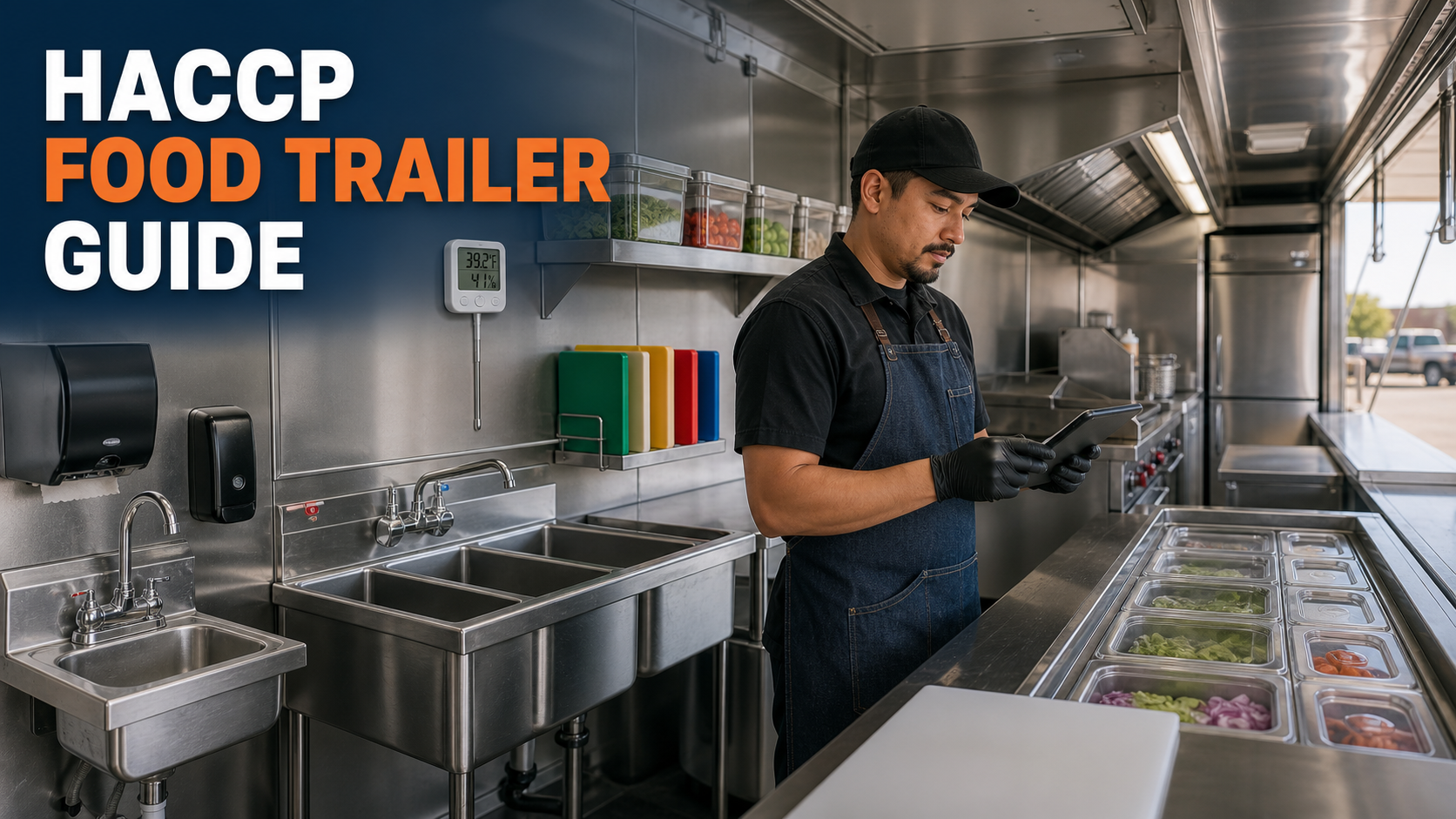
How Do You Build a HACCP-Ready Food Trailer Kitchen?
A practical global guide to applying HACCP principles in a food trailer. Learn how to plan hygienic workflow, sinks, water, temperature control, documentation, and local plan review with real ZZKNOWN models and project examples.
Direct answer
Yes—HACCP principles are highly relevant to a food trailer, but a trailer is not automatically “HACCP certified” just because it has stainless steel walls and sinks. A workable HACCP food trailer combines a menu-specific hazard plan with cleanable construction, safe water, temperature control, separated workflows, staff procedures, monitoring, corrective actions, and records that satisfy the authority where you will operate.
Last updated: July 31, 2026
Author: ZZKNOWN Editorial Team
Technical review: ZZKNOWN Food Trailer Engineering Team
What should you remember before you design anything?
What are the key takeaways?
- Start with the menu, not the trailer shell. Burgers, coffee, ice cream, seafood, and ready-to-eat salads create different hazards and equipment needs.
- HACCP is a management system. Stainless steel, sinks, refrigeration, and ventilation support the system; they do not replace it.
- Separate dirty and clean work. Raw-food receiving, storage, preparation, cooking, plating, service, dishwashing, waste, and handwashing should not collide.
- Design around measurable limits. Your plan needs validated time, temperature, cooling, reheating, sanitation, and allergen controls appropriate to your menu and jurisdiction.
- Send the layout to your local authority before fabrication. A change on a drawing is inexpensive. Moving a sink or rebuilding a counter after delivery is not.
- Keep the plan alive. Review it when the menu, supplier, process, equipment, volume, or regulation changes.
Where does this guidance apply, and how current is the data?
This guide is written for global buyers and uses international HACCP principles as the common foundation. The regulatory comparison covers the United States, the European Union, the United Kingdom, Australia, and Canada. Sources and product information were checked on July 31, 2026.
Here is the important limitation: food-trailer approval is usually local. In the United States, the FDA Food Code is a model that states, territories, tribes, and local authorities may adopt or modify. In Australia, state, territory, and local-council rules can add requirements. In Canada, federal preventive-control rules do not replace provincial and municipal requirements for a local mobile food business. Treat this article as a design and planning guide—not as legal approval for a particular city.
| Region | Main reference used | What a buyer should understand |
|---|---|---|
| International | Codex CXC 1-1969, General Principles of Food Hygiene (2022 revision) | The global reference for good hygiene practices and the seven HACCP principles. |
| United States | FDA Food Code 2022 | The Food Code expressly includes mobile facilities in its “food establishment” concept, but your adopted local code and health department control the permit. |
| European Union | Regulation (EC) No 852/2004 | Food businesses must put in place, implement, and maintain permanent procedures based on HACCP principles, with proportionate flexibility. |
| United Kingdom | Food Standards Agency MyHACCP and simpler SFBB/Safe Catering routes | A small retail operation may use a simpler documented food-safety management approach when appropriate to its processes. |
| Australia | FSANZ food-safety standards | Standards 3.2.2 and 3.2.3 broadly address practices, premises, and equipment; 3.2.2A and a documented program may apply depending on the food and business. |
| Canada | CFIA preventive controls and preventive control plans | Federal PCP duties can apply to regulated interprovincial, import, or export activities; local mobile vending also depends on provincial and municipal rules. |
Why does HACCP matter in a kitchen that can move?
Picture a Friday lunch rush. Your trailer arrived after a two-hour tow. The refrigerator door was opened during loading. A new employee put raw chicken beside ready-to-eat lettuce. The water tank is lower than expected. Then the line suddenly stretches past the next vendor.
Nothing in that story sounds dramatic. That is exactly why HACCP matters. It turns “we usually do this safely” into a repeatable system: identify what can go wrong, decide where control is essential, define the limit, monitor it, correct the problem, verify the system, and keep evidence.
The public-health stakes are real. The U.S. Centers for Disease Control and Prevention estimates that foodborne illness causes about 48 million illnesses, 128,000 hospitalizations, and 3,000 deaths in the United States each year. Those figures are not specific to food trailers, but they explain why regulators care about temperature control, hand hygiene, cross-contamination, approved water, cleaning, and traceability.
Is HACCP a certificate you buy with the trailer?
No. HACCP is a process-based food-safety system, not a universal sticker attached to a mobile kitchen at the factory.
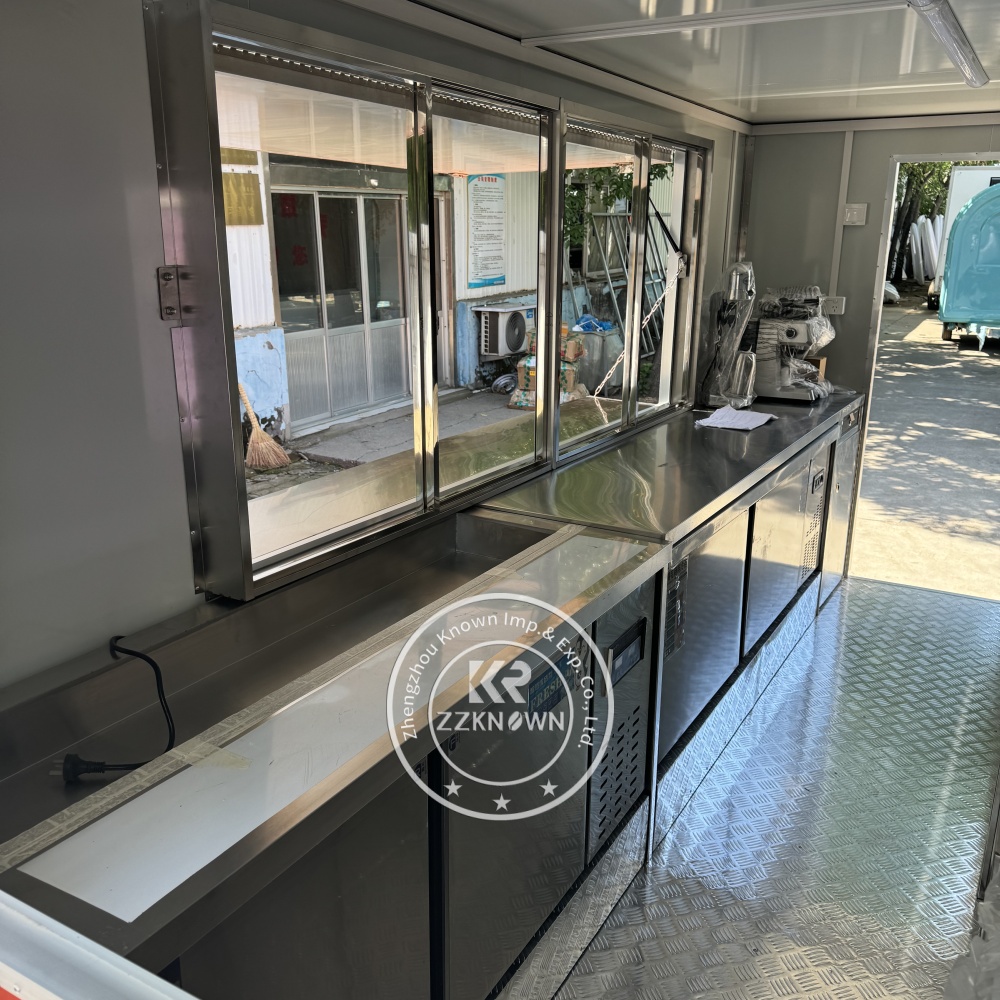
A manufacturer can help you create a HACCP-aware physical platform: smooth cleanable surfaces, a separate handwash point, suitable utensil-washing facilities, potable and waste-water systems, refrigeration, hot holding, ventilation, protected storage, accessible service spaces, and a layout that reduces cross-traffic. But the operating business owns the menu, suppliers, recipes, employee behavior, monitoring, corrective actions, verification, and records.
That distinction protects you. If someone promises that one generic layout is “HACCP approved worldwide,” slow down. Ask which authority approved it, for which menu, process, location, water system, power source, and operating procedure.
What are the seven HACCP principles in plain English?
1. What could make the food unsafe?
Conduct a hazard analysis. Walk through receiving, transport, storage, preparation, cooking, cooling, reheating, hot or cold holding, service, cleaning, and waste. Look for biological hazards such as pathogens, chemical hazards such as allergens or sanitizer residue, and physical hazards such as broken glass or metal fragments.
2. Where must control be exact?
Identify critical control points, or CCPs. Cooking a raw animal product may be a CCP. So might cooling a cooked sauce or maintaining a safety-critical refrigerated product, depending on the process. Not every cleaning task is a CCP; many essential controls sit in your prerequisite programs and standard procedures.
3. What separates acceptable from unacceptable?
Set a critical limit supported by your local rule, a validated process, or reliable scientific guidance. Do not copy a temperature from a foreign blog and assume it applies everywhere. Product type, process, altitude, local law, and the way you measure can matter.
4. How will you know the limit is being met?
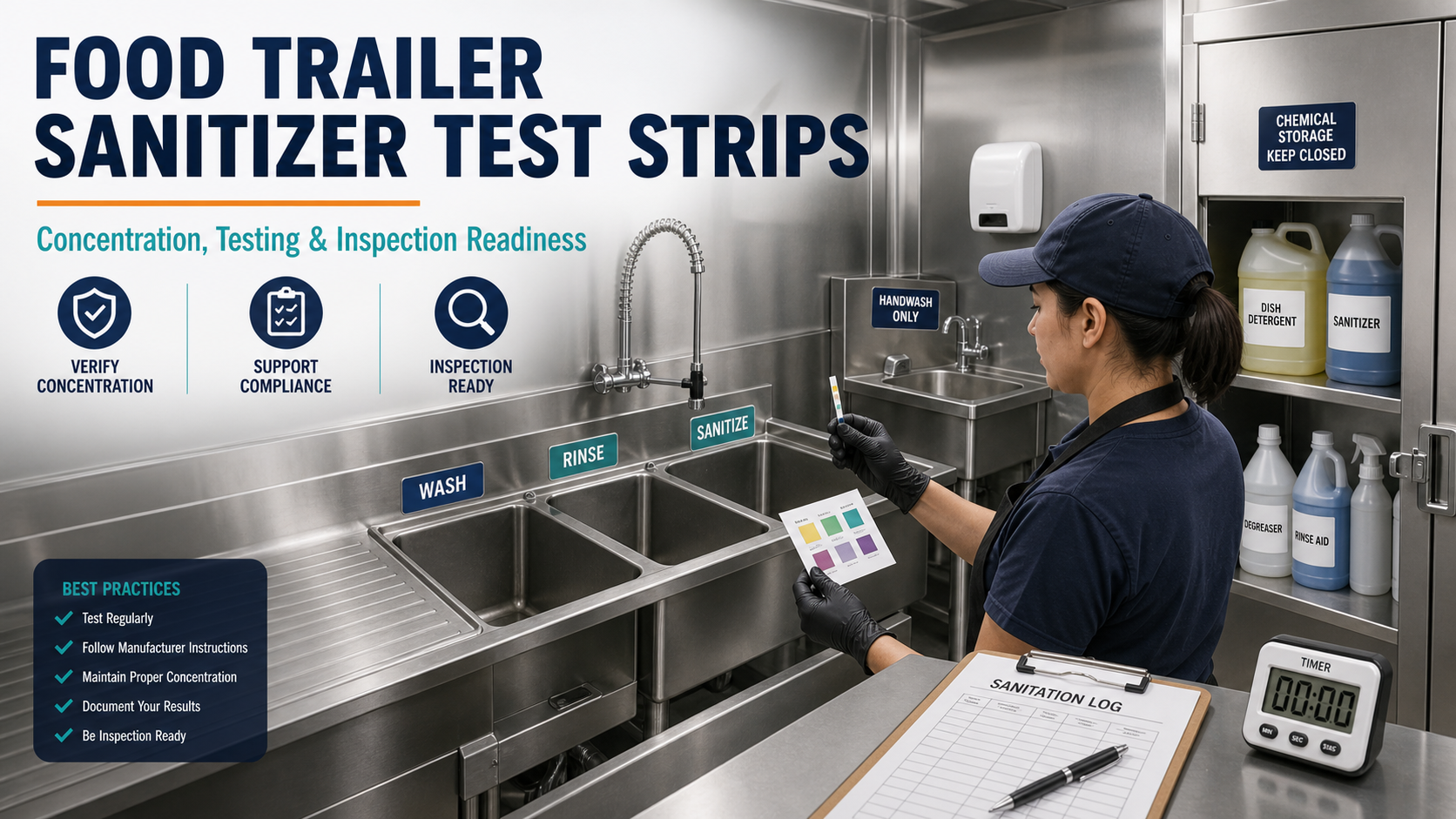
Monitor it. That might mean checking and recording a food temperature with a calibrated probe, verifying cold-holding displays, timing a cooling step, measuring sanitizer concentration, or confirming the water system is ready before service.
5. What will you do when control is lost?
Write the corrective action before the rush begins. Decide what happens to the food, how the equipment or process is corrected, who has authority to act, and what must be recorded. “Use your best judgment” is not a strong corrective-action plan for a new employee.
6. How will you prove the system works?
Verify the plan. Review records, calibrate thermometers, observe employees, check that corrective actions make sense, confirm cleaning procedures, and reassess whenever the menu or process changes.
7. What records should you keep?
Keep records proportionate to the business: receiving checks, temperature logs, cooling or reheating logs, sanitation checks, corrective actions, calibration records, training, supplier information, maintenance, and plan reviews. A short form that staff actually complete is more useful than a beautiful binder that never leaves the shelf.
How should the workflow move through a HACCP food trailer?
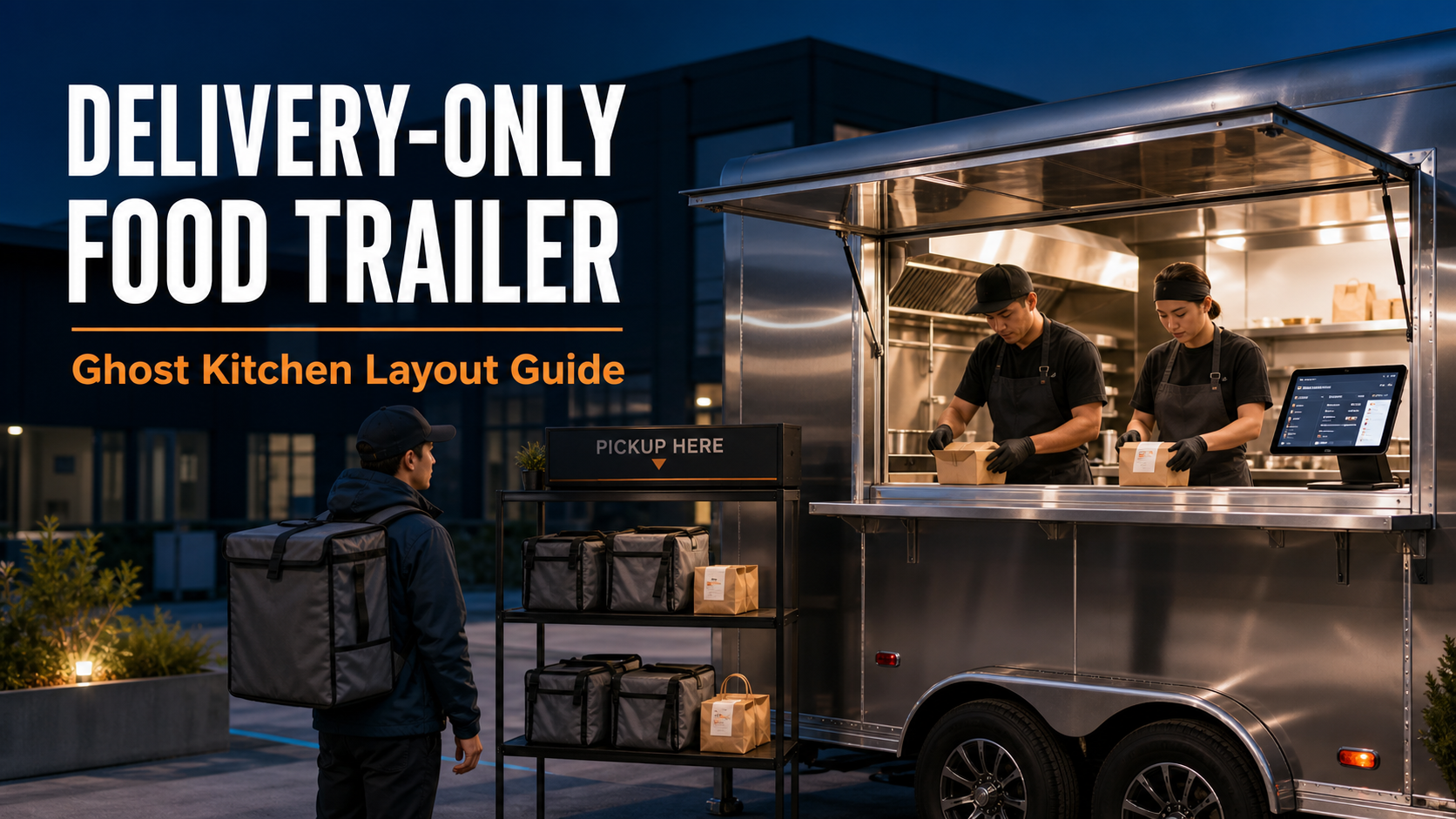
According to ZZKNOWN’s production experience, the most expensive hygiene problems often begin before fabrication: a sink is placed where a refrigerator door blocks it; raw prep crosses the service path; the handwash basin becomes a storage shelf; or the operator adds a fryer after the hood, gas, power, and landing space have already been fixed.
A practical flow is:
with handwashing, cleaning, and waste routes that do not contaminate the food path
In a compact trailer, separation does not always mean a wall. It can mean distance, sequence, dedicated equipment, color coding, lids, splash protection, timed preparation, or one-way staff movement. The right answer depends on the menu and the authority reviewing the plan.
For a deeper explanation of staff and equipment movement, see the ZZKNOWN food trailer layout guide.
Which physical features deserve attention first?
| Design area | What to define before the quote | Why it matters to the HACCP plan |
|---|---|---|
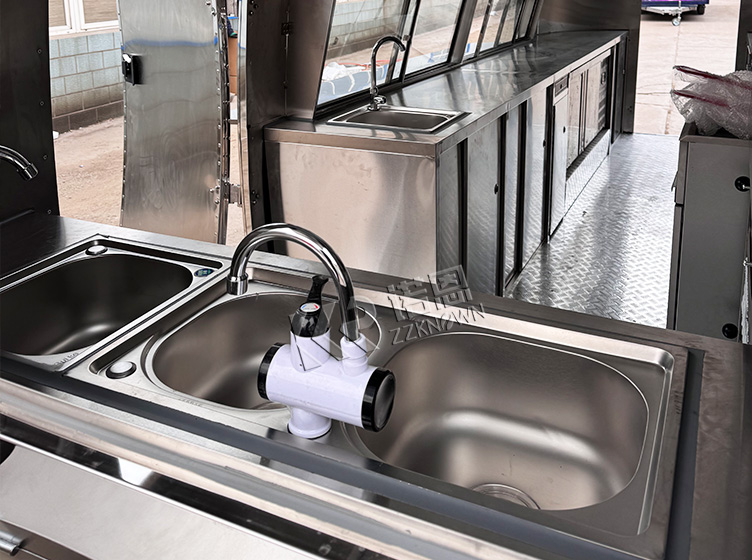
| Handwashing | Dedicated basin, convenient location, hot/cold or tempered water as required, soap, and hygienic drying | Employees must be able to wash hands without crossing or occupying the food/warewashing sink. |
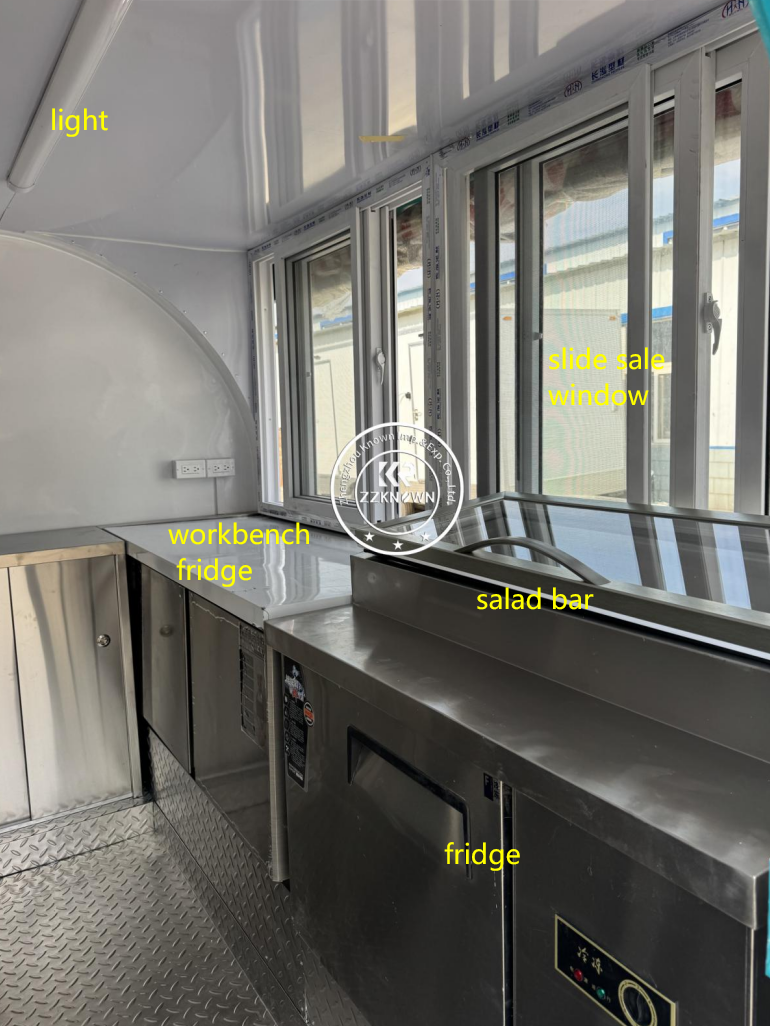
| Warewashing | Compartment count and bowl size based on the largest utensil, plus drainboards or safe landing space | Supports repeatable washing, rinsing, sanitizing, and air-drying. |
| Water | Potable tank, wastewater capacity, pump, heater, fill point, protected hoses, drain access, freeze protection if needed | Running out of safe water can stop handwashing, cleaning, and service. |
| Temperature control | Menu load, ambient conditions, door openings, recovery time, visible displays, and calibrated probe access | Equipment must hold the required limits under real service conditions, not only in an empty factory test. |
| Food-contact surfaces | Smooth, durable, non-absorbent, corrosion-resistant, and reachable for cleaning | Hidden seams, damaged laminate, and inaccessible gaps can defeat an otherwise good cleaning program. |
| Ventilation and heat | Cooking line, hood capture, make-up air, grease filtration, appliance clearances, and local fire requirements | Controls grease, condensation, heat stress, and contamination while supporting safer cooking. |
| Storage and allergens | Off-floor dry storage, sealed containers, chemical separation, raw/RTE separation, and allergen tools | Reduces cross-contamination and makes correct stock rotation easier. |
Engineer’s note: Send your menu, equipment cut sheets, staffing plan, service volume, destination city, power/gas standard, and local plan-review checklist before the layout is frozen. ZZKNOWN engineers can prepare a 2D/3D concept, but the buyer should submit that concept to the local health, fire, gas, electrical, and vehicle authorities as applicable before production.
What can real ZZKNOWN models teach us about layout choices?
Two verified ZZKNOWN product examples show why “the best trailer” depends on the process rather than the exterior style.
| Verified model | Published parameters | HACCP planning implication |
|---|---|---|
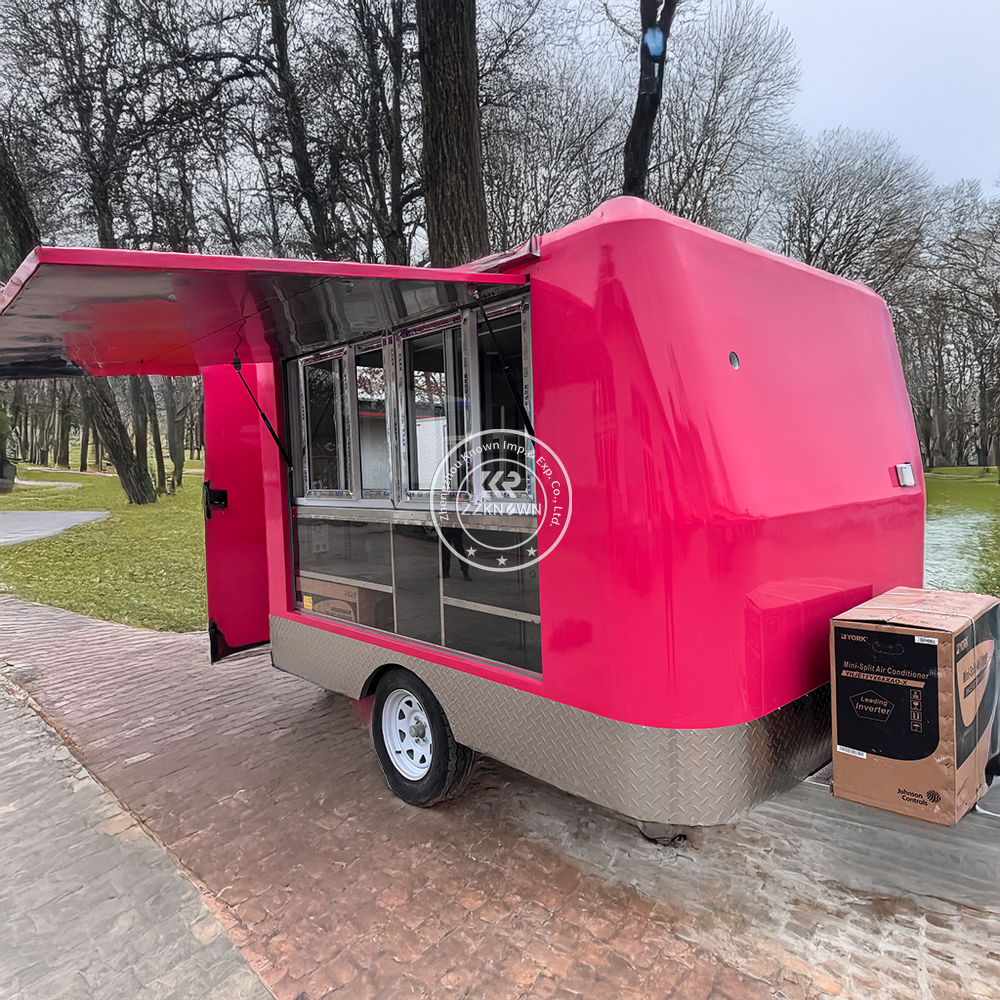
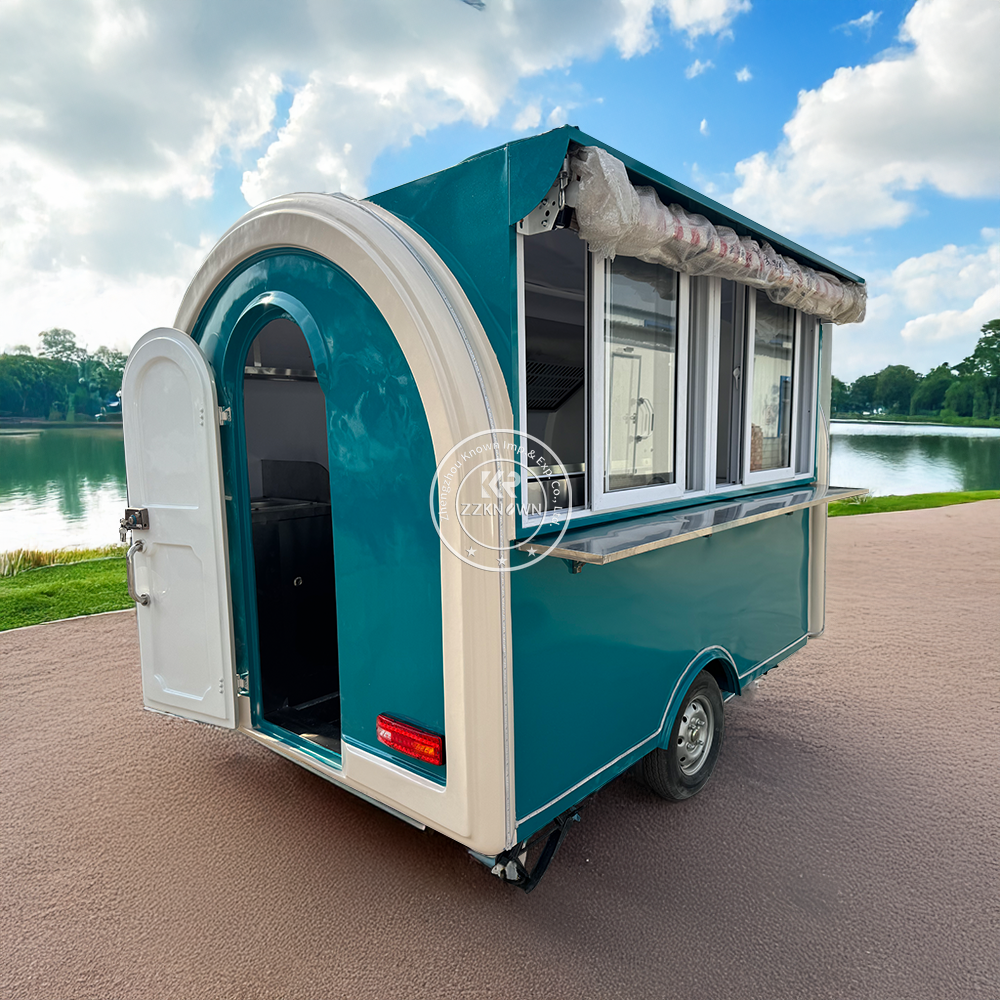
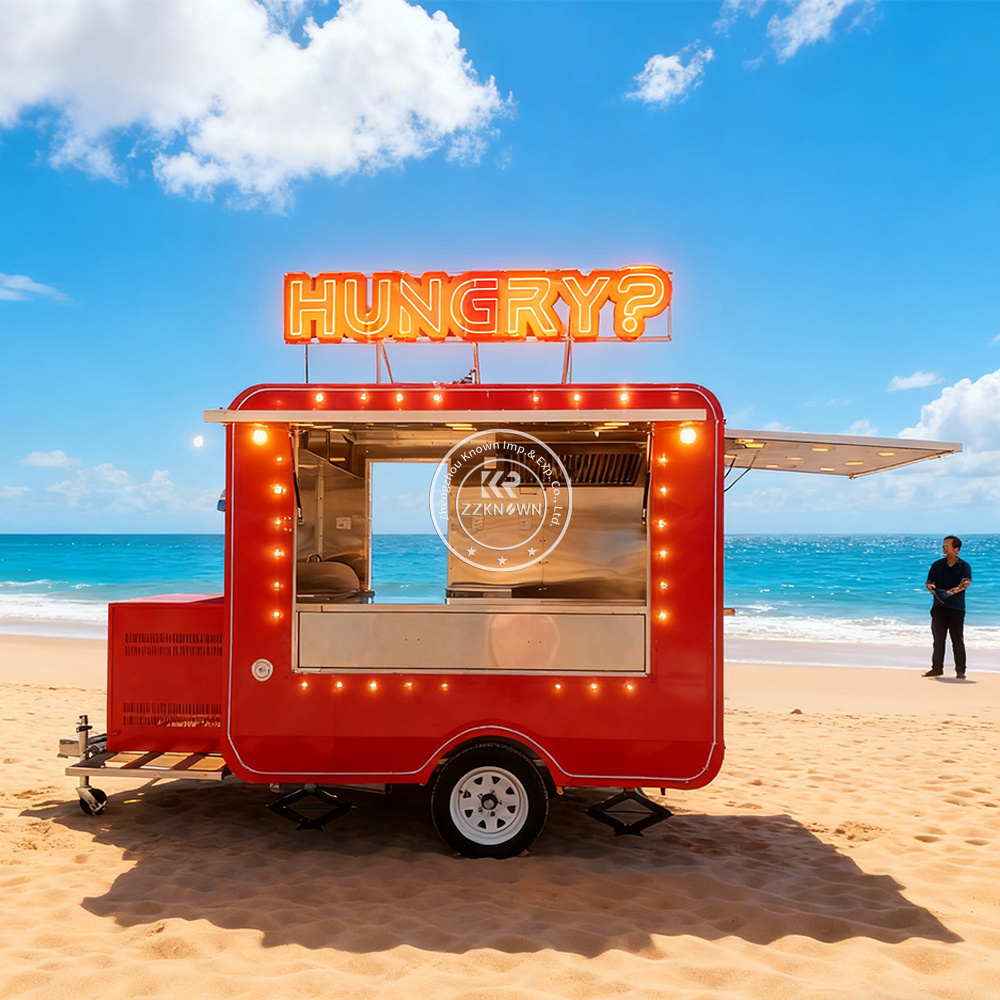
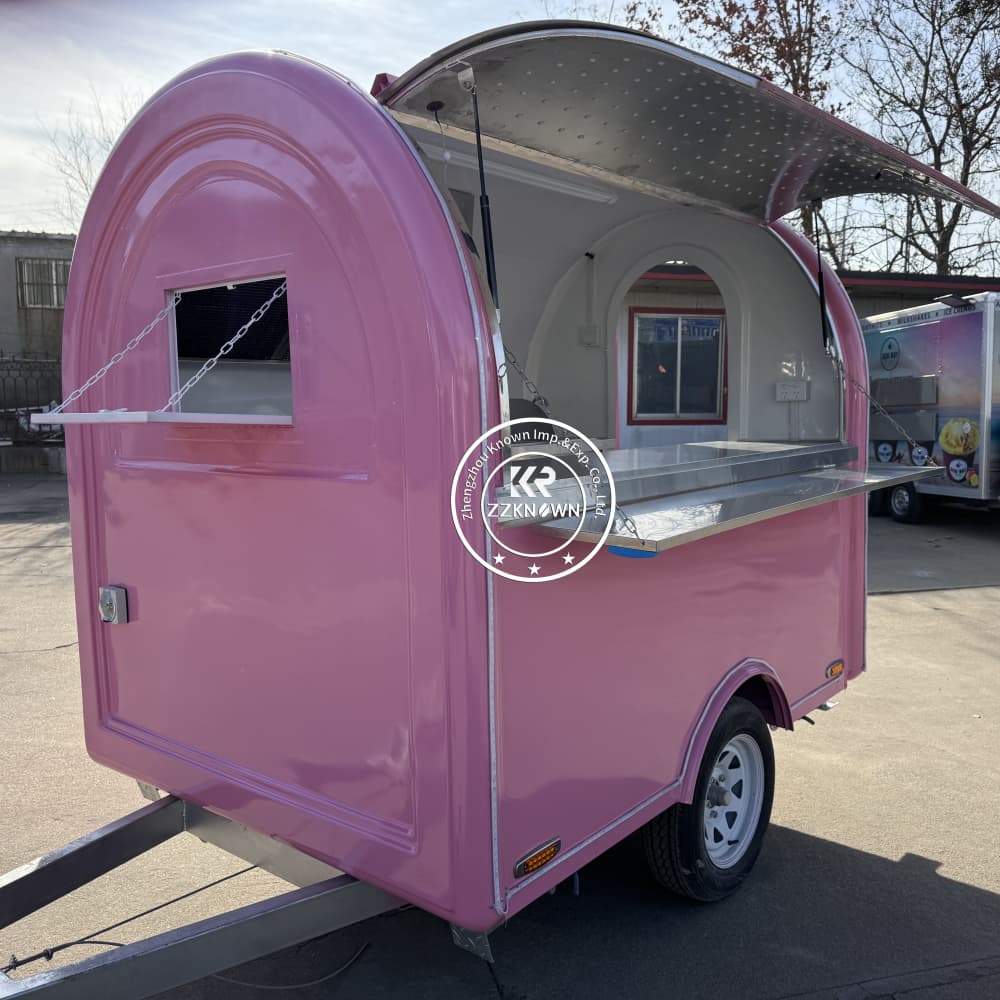
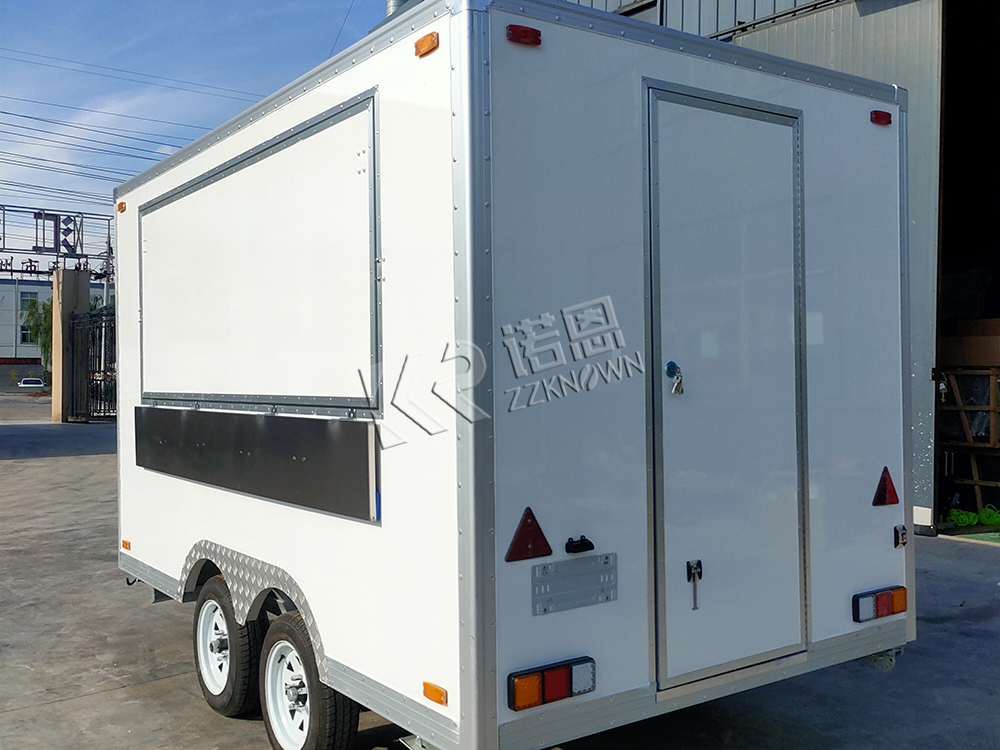
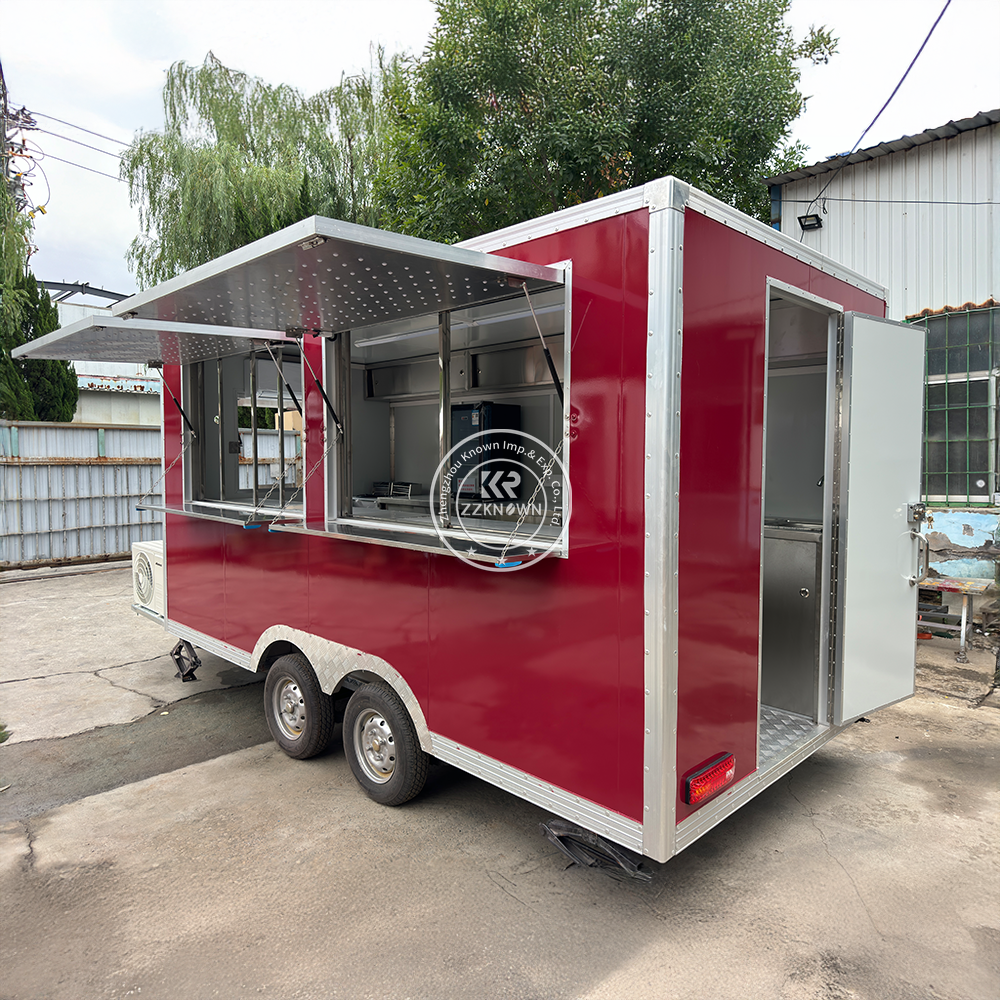
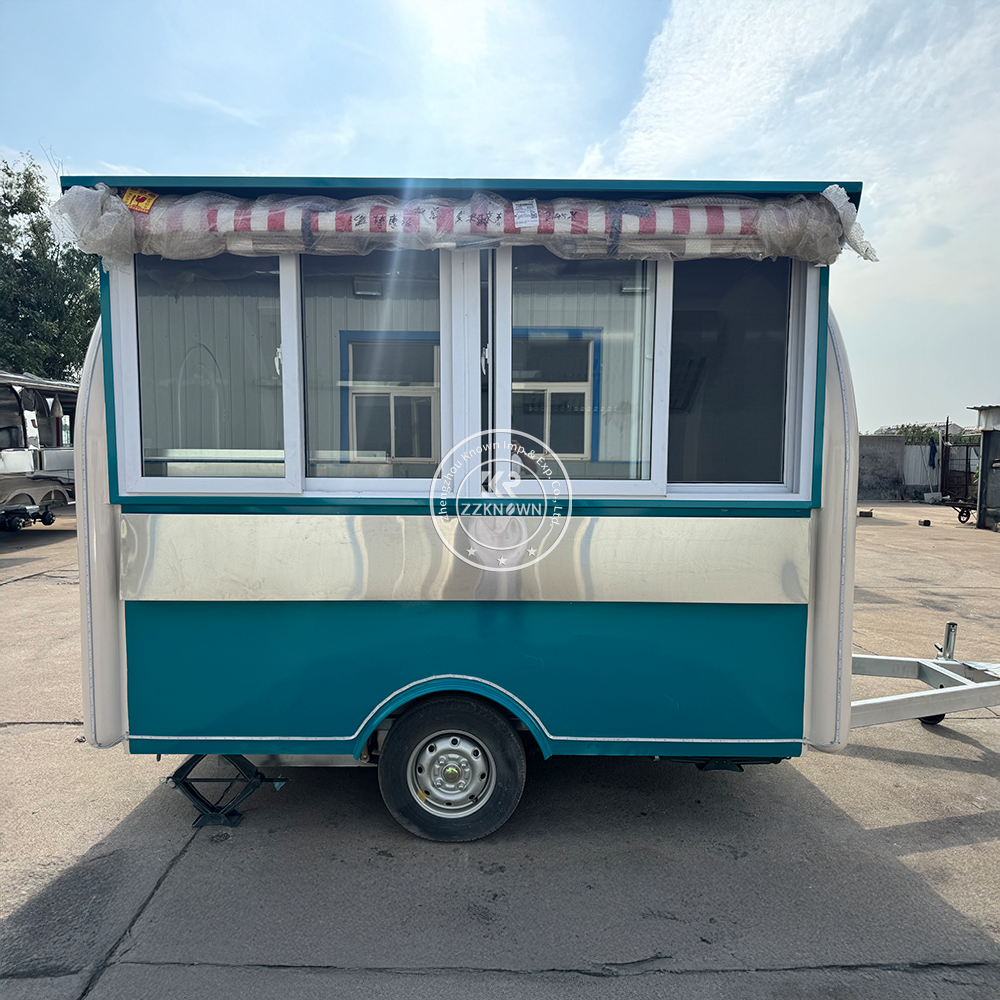
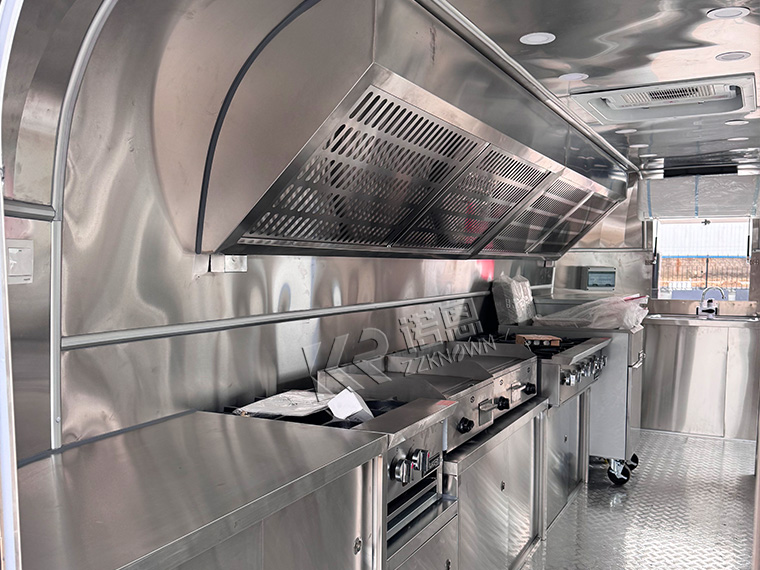
| KN-FR220H mini food trailer | 2.2 m × 1.6 m × 2.3 m; published example with 110 V/60 Hz system and six U.S.-style outlets | Best suited to a focused menu and disciplined workflow. Every sink, cold unit, landing area, and storage zone must earn its space. |
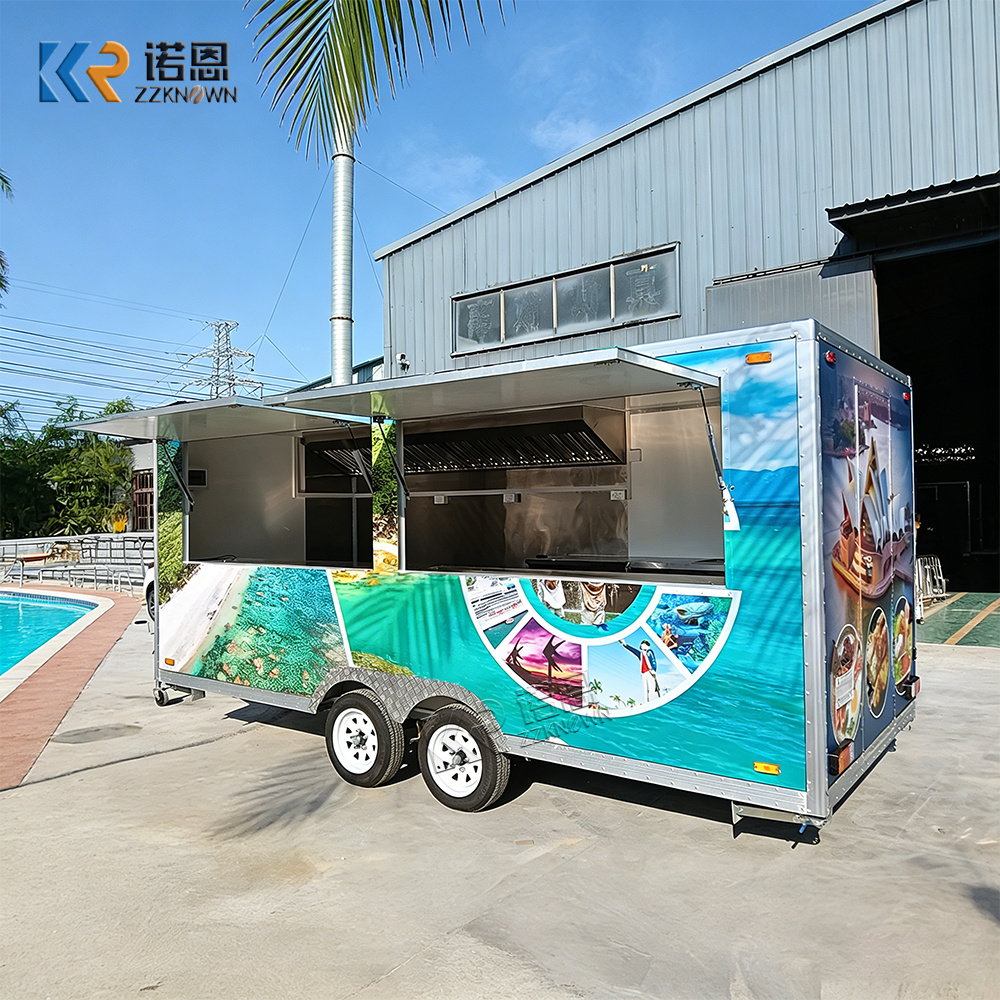
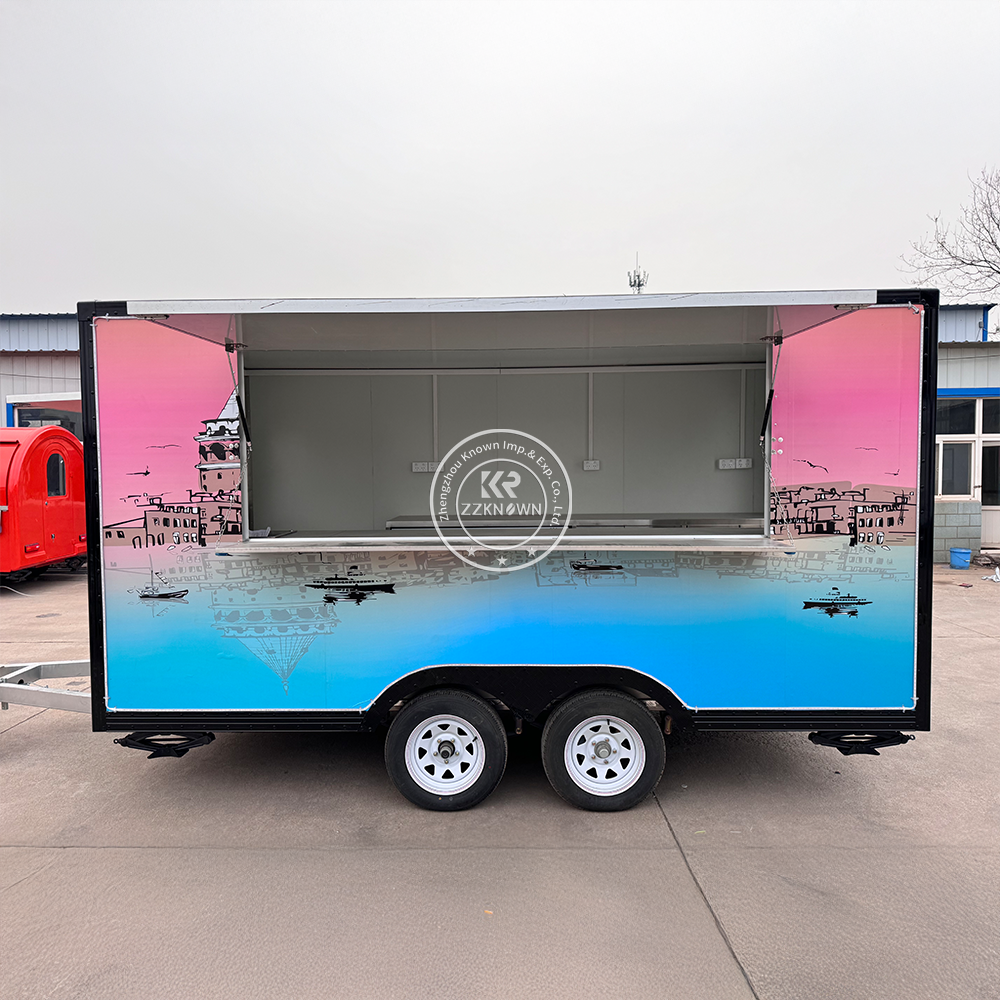
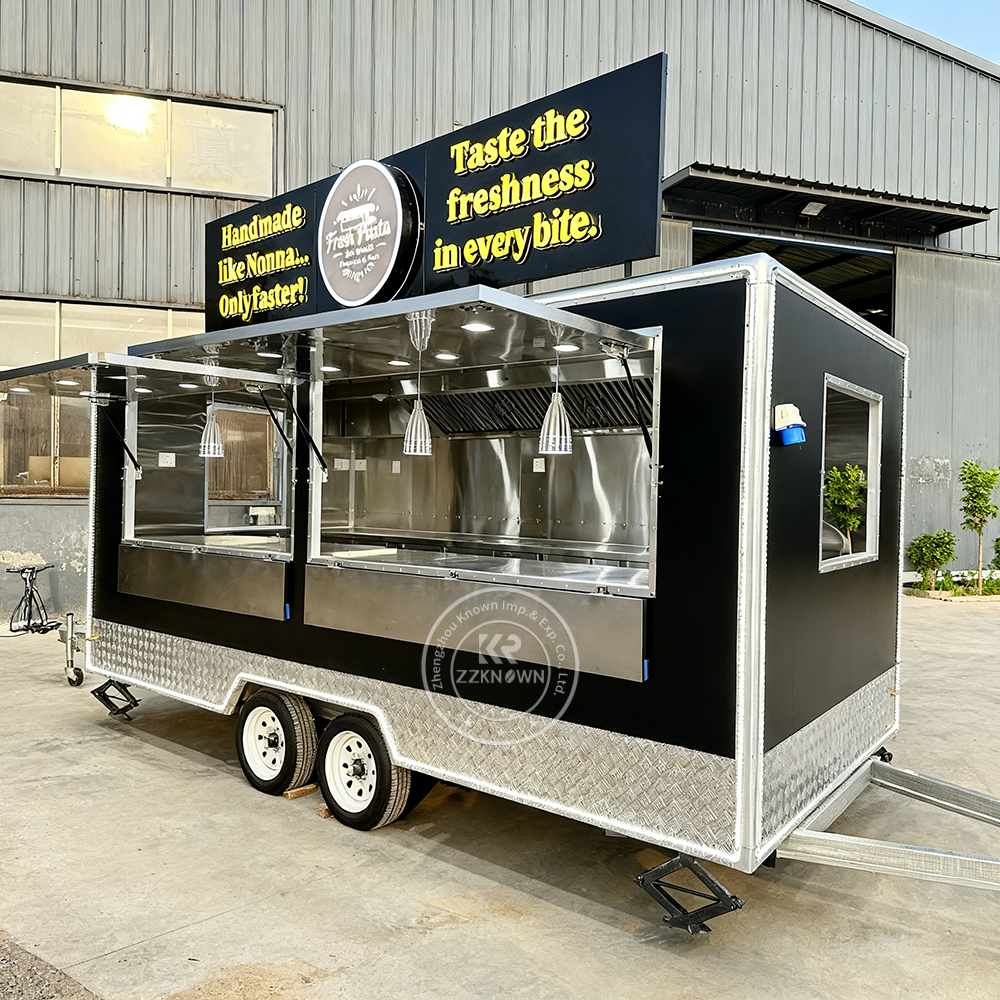
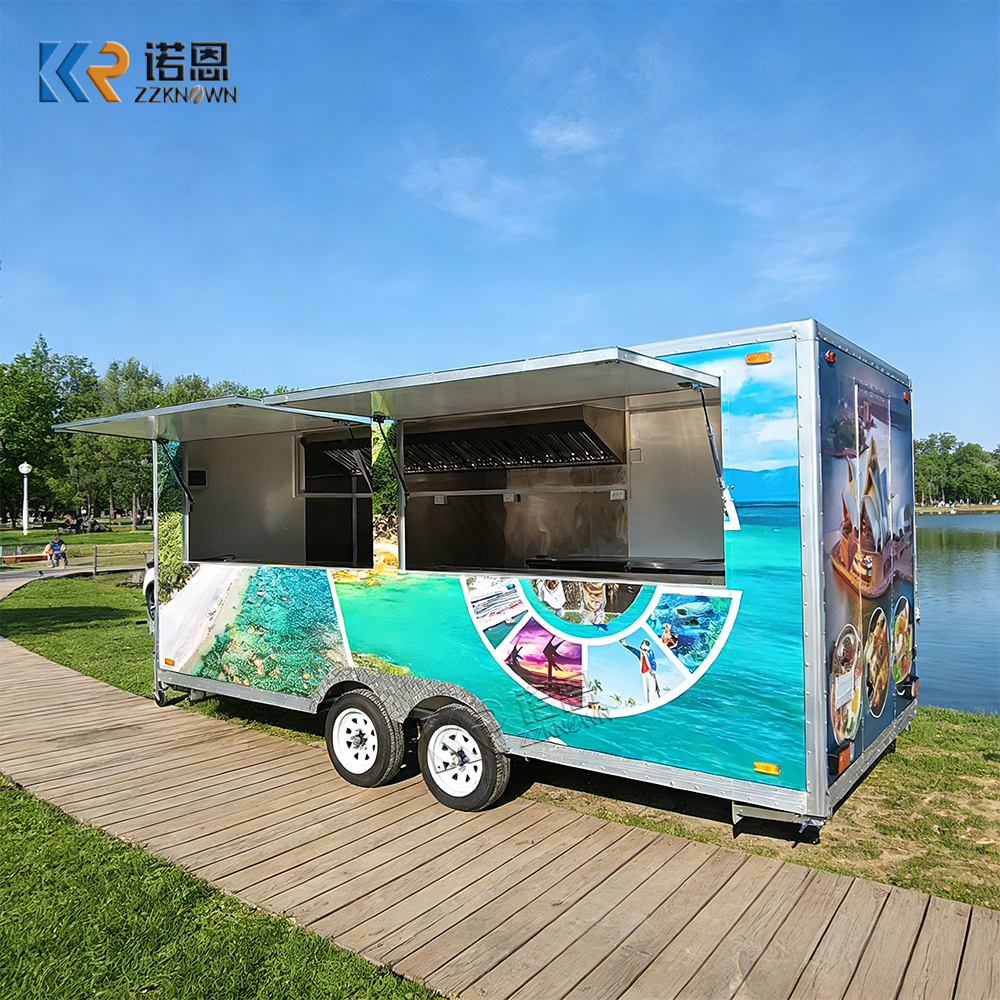
| KN-QF580 Airstream concession stand trailer | 5.8 m × 2.0 m × 2.3 m; DOT/VIN-listed product example with configurable kitchen equipment and a published 3+1 sink option | More room for separation, storage, high-volume equipment, and multiple staff—but only if the added space is organized around the process. |
What did a real customer inspection reveal about planning early?
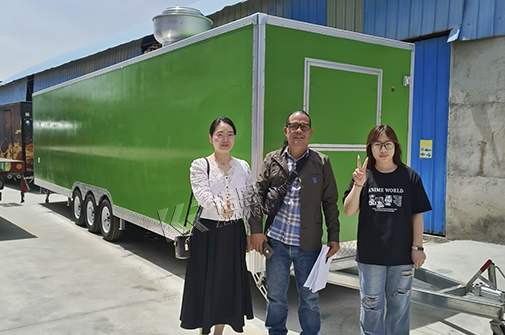
On May 7, 2025, a Canadian customer visited the ZZKNOWN factory to inspect an order that included a food trailer, three toilet trailers, and four space-capsule units. During the inspection, the customer discussed food-trailer workflow refinements with the team, including counter ergonomics, lighting, and awning use.
The useful lesson is not that every customer needs those same features. It is that inspection and feedback should happen while design decisions can still be documented and controlled. For a HACCP-focused project, add a structured review of the menu flow, sink access, cold storage, cleaning access, chemical storage, water service, and waste removal before the final build approval.
How do you turn a menu into a hazard plan?
Start with one menu item and tell its whole story. A burger, for example, is not just “cooked on a griddle.” Where does the meat come from? How is it received? Where is it stored? Can raw packaging drip onto produce? Which tools touch raw patties? What validated cooking limit applies locally? How is the temperature checked? Where does the cooked burger land? Who handles the bun, garnish, allergen request, payment, and final handoff?
Now repeat that exercise for fries, sauces, dairy, eggs, salads, ice, drinks, desserts, and every special process. You will quickly see why a coffee trailer and a raw-protein kitchen should not share a generic HACCP template.
A simple worksheet can use these columns:
- Process step
- Biological, chemical/allergen, and physical hazards
- Preventive or control measures
- Is this a CCP?
- Critical limit and source
- Monitoring: who, what, how, and when
- Corrective action
- Verification
- Record
If the operation is simple, your regulator may accept a recognized simplified food-safety management pack rather than a complex industrial-style plan. Ask before you create unnecessary paperwork.
Which mistakes cause the most trouble after delivery?
Did you design the trailer before choosing the menu?
This leads to missing refrigeration, undersized ventilation, insufficient landing space, or a power system that cannot support the real appliance load.
Did you treat one sink as an all-purpose solution?
Handwashing, food preparation, and warewashing have different functions. Many authorities expect clear separation and specific facilities. Confirm the required number, size, location, water supply, and drainboards locally.
Did you copy another city’s temperature rules?
Use the critical limits adopted by your authority and suitable for your actual food and process. Include thermometer type, accuracy, calibration, probe sanitation, and recordkeeping.
Did you forget cleaning access?
A piece of equipment can look perfect on a floor plan and still leave a narrow grease trap behind it that no one can reach. Ask how panels open, how refrigerators move, how floor-wall junctions are cleaned, and where wet tools air-dry.
Did you wait until arrival to speak with the authority?
Plan review after fabrication can create delay and rework. Use the local authority’s checklist before ordering, then request drawings and equipment specifications that match it.
For routine care after commissioning, use the ZZKNOWN food trailer cleaning and maintenance guide.
How were the facts and product data collected?
We used a transparent source method:
- International principles were checked against the 2022 revision of Codex CXC 1-1969.
- United States guidance was checked against the FDA Food Code 2022 page and current FDA materials available on the review date.
- EU requirements were checked against the official EUR-Lex text of Regulation (EC) No 852/2004.
- UK guidance was checked against the Food Standards Agency’s MyHACCP and small-business guidance.
- Australian guidance was checked against Food Standards Australia New Zealand’s current food-safety standards pages.
- Canadian guidance was checked against the Canadian Food Inspection Agency’s preventive-control and PCP resources.
- ZZKNOWN model dimensions, electrical examples, images, and project details were taken from the linked first-party product and customer-case pages.
We did not publish a universal cost figure because sink packages, tank sizes, refrigeration, fire systems, electrical standards, gas systems, equipment brands, freight, and local plan-review requirements materially change the price. Request a configuration-specific quote instead of comparing incomplete headline prices.
What do real buyers usually ask?
1. Does every food trailer need a formal HACCP plan?
Not in exactly the same form. The answer depends on the country, state or province, city, menu, processes, and customer type. Some jurisdictions require HACCP-based procedures; others accept a simplified documented food-safety system for lower-complexity retail operations. Ask the authority that will issue your permit.
2. Can ZZKNOWN make my trailer HACCP compliant?
ZZKNOWN can design and build a trailer around your menu, workflow, equipment, hygiene, and destination requirements. Final compliance depends on the approved local plan, installed equipment, utilities, operating procedures, staff training, and inspection. The most reliable path is buyer + manufacturer + local authority working from the same drawings.
3. Do I need a separate handwashing sink?
Many food-service codes require a conveniently located handwashing facility that is not used for warewashing or food preparation. Exact construction, water, signage, soap, and drying requirements vary. Confirm them before the sink cabinet is built.
4. Is stainless steel required everywhere?
Not always by name, but food-contact and splash-zone surfaces generally need to be smooth, durable, non-absorbent, corrosion-resistant, and easy to clean. Stainless steel is popular because it supports those goals. Material grade, joints, sealants, and finish details still matter.
5. How large should the fresh- and wastewater tanks be?
Tank capacity should match your operating hours, handwashing, warewashing, food preparation, cleaning, staffing, and local rules. Wastewater capacity is often expected to exceed fresh-water capacity by a specified margin, but that margin is jurisdiction-specific. Do not select tanks by trailer size alone.
6. Can one layout work for burgers, coffee, and ice cream?
A flexible shell can support different businesses, but the safe workflow and equipment are menu-specific. Raw meat control, espresso workflow, dairy storage, frozen-dessert equipment, ventilation, drainage, and power demand are different. Design the first operating menu in detail and leave planned, safe capacity for later upgrades.
7. Should I submit drawings before ordering?
Yes. Ask your local health and other relevant authorities whether they offer plan review. Submit the floor plan, equipment schedule, plumbing and tank details, finishes, ventilation, power/gas information, menu, process flow, and commissary arrangement if one is required.
8. What documents should I request from the manufacturer?
Request the final layout, equipment list and cut sheets, electrical and plumbing information, tank capacities, material specifications, utility requirements, operating manuals, and applicable vehicle/export documents. For U.S. buyers, the ZZKNOWN U.S. import and licensing guide is a useful next read.
What should you do before requesting a quote?
Prepare five things: your menu, destination city, expected staff count, target service volume, and preferred equipment. If you already have a health-department or council checklist, send it too. ZZKNOWN can then design around the real business instead of filling a box with generic equipment.
Would you like a HACCP-aware kitchen layout for your menu?
Send ZZKNOWN your menu, destination, equipment list, staffing plan, and local plan-review checklist. Our engineering team can prepare a custom 2D/3D food trailer concept for your review before fabrication.
Editorial note: This article is educational and does not replace legal, food-safety, fire, gas, electrical, vehicle, or permitting advice. Requirements change. Confirm the current rules with the competent authority where the trailer will be built, registered, and operated.