How Can Menu Engineering Make Your Food Trailer More Profitable Without Raising Prices?
Menu engineering helps a food trailer earn more from the customers it already serves. Instead of automatically increasing every price, you compare each item’s popularity, selling price, direct cost, preparation difficulty, and contribution margin. You then promote profitable favorites, improve underperforming items, simplify slow dishes, and design the kitchen and menu board around the products that produce the strongest return.
Published: August 6, 2026
Last Updated: August 6, 2026
Author: ZZKNOWN Editorial Team
Technical Review: ZZKNOWN Mobile Kitchen Engineering Team
What Is the Direct Answer?
Menu engineering helps a food trailer earn more from the customers it already serves. Instead of automatically increasing every price, you compare each item’s popularity, selling price, direct cost, preparation difficulty, and contribution margin. You then promote profitable favorites, improve underperforming items, simplify slow dishes, and design the kitchen and menu board around the products that produce the strongest return.
What Are the Key Takeaways?
- Menu engineering measures both popularity and contribution margin, not food cost percentage alone.
- A bestselling item is not always a profitable item.
- A high-margin product cannot help much if customers rarely notice or order it.
- Small changes in sales mix can improve total contribution without increasing overall customer traffic.
- Food trailer menus should be analyzed by category, such as entrées, drinks, desserts, or sides.
- Preparation time, equipment use, storage space, packaging, waste, and labor should be reviewed alongside ingredient cost.
- Your trailer layout should be planned around the menu, rather than choosing equipment first and designing the menu later.
- Menu labeling and allergen requirements vary by country, state, province, and business size.
Where Does the Data in This Guide Apply?
The operating examples in this guide are designed primarily for independent food trailer, food truck, concession trailer, market stall, mobile catering, and small quick-service businesses.
The sample financial calculations use U.S. dollars and an illustrative mobile burger menu. They are not reported results from a specific ZZKNOWN customer and should not be treated as a guaranteed profit forecast.
The regulatory section covers general requirements and official guidance available for:
- The United States
- The United Kingdom
- The European Union
- Australia
- New Zealand
Regulations and official guidance were reviewed on August 6, 2026. Local authorities may apply additional food safety, licensing, allergen, nutrition, signage, or consumer-protection rules.
Real ZZKNOWN product dimensions and configurations referenced in this article are based on published product and project pages available on the same date.
Why Can a Busy Food Trailer Still Struggle to Make Money?
Picture a Saturday afternoon at a crowded street-food festival.
There is a line outside your trailer. The grill is full. The fryer has not stopped for two hours. Your team is rushing to prepare orders, and your payment terminal keeps beeping.
From the outside, the business looks successful.
Then you close for the evening and review the numbers.
Sales were strong, but packaging costs were higher than expected. Your bestselling loaded fries used more cheese and sauce than the recipe allowed. A premium sandwich with a much better contribution margin was ordered only a few times. Meanwhile, one complicated menu item slowed the entire kitchen because it required a separate pan, an extra ingredient container, and nearly four minutes of assembly.
This is the problem menu engineering is designed to solve.
It does not begin by asking, “Which dish has the lowest food cost percentage?”
It asks better questions:
- Which items do customers order?
- Which items generate the most money after direct costs?
- Which products slow down service?
- Which dishes use ingredients that are difficult to store?
- Which menu items fit the physical workflow of the trailer?
- Which profitable items are being overlooked?
- Which popular products could be improved without damaging demand?
According to ZZKNOWN’s manufacturing experience, many first-time buyers think of the menu and the trailer as two separate projects. They choose fryers, refrigerators, sinks, worktables, and service windows first, then try to fit a menu into the finished kitchen.
The stronger approach is the opposite: define the menu, service volume, preparation steps, storage requirements, and customer experience first. The trailer layout should then support that operating model.
What Does “Menu Engineering” Actually Mean?
Menu engineering is a structured way to compare menu items using two primary factors:
- Popularity: How frequently customers order the item.
- Contribution margin: How much money remains after direct variable cost is deducted from the selling price.
The traditional menu engineering model places menu items into four groups:
- Stars
- Plowhorses
- Puzzles
- Dogs
The method is commonly associated with the work of Kasavana and Smith. Later hospitality research added labor effort as another useful dimension, which is especially relevant inside a compact food trailer where one slow item can affect the entire service line.
A 1997 hospitality management paper explains that effective menu analysis requires the selling price, variable food cost, and number of units sold for each item. It also argues that contribution margin and menu engineering can help an operation reach financial goals with fewer customers by improving the products customers choose.
That last point matters.
A food trailer cannot always serve more people. You may be limited by:
- Event attendance
- Parking location
- Service-window capacity
- Fryer recovery time
- Grill space
- Refrigerated storage
- Electrical load
- Staff availability
- Local operating hours
When volume has a physical ceiling, improving the value of each order becomes more important.
Which Numbers Should You Collect First?
You do not need expensive restaurant analytics software to begin. A POS export, supplier invoices, recipe sheets, and a spreadsheet are enough for a useful first analysis.
For each menu item, collect the following data:
| Data Point | What Should Be Included? | Why Does It Matter? |
|---|---|---|
| Selling price | The normal customer price before tax | Establishes menu revenue |
| Ingredient cost | Every ingredient in the standard recipe | Shows direct product cost |
| Packaging cost | Box, cup, lid, napkin, bag, cutlery and sauce container | Often overlooked in takeaway businesses |
| Payment fee | Card or platform fee directly connected to the sale | Helps show the real transaction contribution |
| Waste allowance | Spoilage, trimming, overportioning and unsold prepared food | Prevents unrealistically low costs |
| Units sold | POS quantity for the measurement period | Measures popularity |
| Preparation time | Active staff time and equipment time | Identifies operational bottlenecks |
| Equipment required | Grill, fryer, oven, blender, coffee machine or cold preparation | Shows kitchen complexity |
| Storage requirement | Refrigerated, frozen, dry or hot holding | Connects the menu to trailer capacity |
| Order errors or returns | Remakes, refunds and customer complaints | Reveals hidden cost and complexity |
For a simple first-stage analysis, direct variable cost can be defined as:
Direct Variable Cost = Ingredients + Packaging + Item-Specific Consumables + Waste Allowance
For a more operational analysis, you may also estimate:
Adjusted Variable Cost = Direct Variable Cost + Direct Labor Allocation + Item-Specific Energy or Platform Fees
Do not automatically include fixed monthly expenses such as trailer financing, annual insurance, general business registration, or your base POS subscription in each item’s basic contribution margin. Those expenses still matter, but they are usually evaluated after the item-level contribution analysis.
How Do You Calculate Contribution Margin?
The basic formula is simple:
Contribution Margin per Item = Selling Price − Direct Variable Cost
Imagine that a burger sells for $12.50.
Its direct cost is:
- Ingredients: $3.55
- Packaging: $0.45
- Sauces and napkins: $0.15
- Waste allowance: $0.25
The total direct variable cost is $4.40.
The contribution margin is therefore:
$12.50 − $4.40 = $8.10
That $8.10 contributes toward labor, permits, insurance, fuel, event fees, trailer financing, marketing, maintenance, tax, and eventual profit.
Food cost percentage can still be useful:
Food Cost Percentage = Direct Food Cost ÷ Selling Price × 100
However, food cost percentage alone can create bad decisions.
A $5 drink with a 20% direct cost may contribute $4.
A $14 meal with a 35% direct cost may contribute $9.10.
The drink has the lower cost percentage, but the meal contributes more dollars per transaction. What matters is not only the percentage. You must also look at actual contribution, sales volume, preparation speed, and the customer’s full order.
How Can You Classify Items as Stars, Plowhorses, Puzzles, or Dogs?
The traditional matrix compares each item’s contribution margin with the weighted average contribution margin of its menu group.
Popularity is often compared with a threshold equal to 70% of the average expected popularity for the category:
Popularity Threshold = 70% × (100% ÷ Number of Items in the Group)
For a six-item entrée category:
70% × (100% ÷ 6) = 11.67%
An item representing more than 11.67% of category sales would be considered relatively popular under this method.
The contribution benchmark is calculated as:
Weighted Average Contribution Margin = Total Category Contribution ÷ Total Units Sold
The four classifications are:
| Category | Popularity | Contribution Margin | Basic Meaning |
| Star | High | High | Customers want it and it produces strong contribution |
| Plowhorse | High | Low | Customers love it, but the margin needs attention |
| Puzzle | Low | High | Profitable when sold, but not ordered often enough |
| Dog | Low | Low | Weak popularity and weak contribution |
These names are useful labels, but they are not automatic instructions. A “Dog” should not always be deleted, and a “Star” should not always receive a price increase.
What Does a Sample Food Trailer Menu Analysis Look Like?
The following example is illustrative. It represents 700 sales from one savory-food category during a defined measurement period.
| Menu Item | Selling Price | Direct Cost | Contribution per Item | Units Sold | Sales Mix | Classification |
| Classic Smash Burger | $11.50 | $3.60 | $7.90 | 180 | 25.71% | Star |
| Bacon BBQ Burger | $13.50 | $4.50 | $9.00 | 130 | 18.57% | Star |
| Spicy Chicken Sandwich | $12.50 | $4.20 | $8.30 | 110 | 15.71% | Star |
| Loaded Fries | $9.00 | $2.80 | $6.20 | 150 | 21.43% | Plowhorse |
| Birria Tacos | $12.00 | $4.70 | $7.30 | 80 | 11.43% | Dog |
| Truffle Melt | $14.50 | $5.10 | $9.40 | 50 | 7.14% | Puzzle |
| Total or Average | — | — | $7.84 weighted average | 700 | 100% | — |
In this example:
- Total sales revenue is $8,235.
- Total direct variable cost is $2,746.
- Total contribution is $5,489.
- Weighted average contribution per item is approximately $7.84.
- Popularity threshold is approximately 11.67%.
The analysis immediately gives us several useful questions.
Why are loaded fries so popular?
Why is the Truffle Melt rarely ordered even though its contribution is the highest?
Are the Birria Tacos strategically important, or do they add too much operational complexity?
Can customers easily see the Bacon BBQ Burger and Spicy Chicken Sandwich on the menu board?
Does the kitchen have enough griddle, fryer, cold-storage, and assembly capacity to keep the three Stars consistent during peak service?
These questions are more useful than simply saying, “Our average food cost is acceptable.”
How Should You Manage a Star?
A Star has high popularity and a contribution margin above the category benchmark.
Your first job is not to change it. Your first job is to protect it.
Make sure that:
- The recipe is written and followed.
- Portion sizes remain consistent.
- Ingredients are available during peak periods.
- Preparation steps are easy for staff to repeat.
- The product appears prominently on the menu.
- The product name is easy to understand.
- The service team knows how to recommend it.
- The kitchen can produce it quickly when several are ordered together.
A Star can lose its position when an operator becomes careless. A slightly larger meat portion, an uncontrolled sauce bottle, a premium package, and one extra topping can gradually reduce contribution without changing the selling price.
You should also be cautious about increasing the price of a Star merely because it is successful. The item may be popular because customers believe it offers excellent value.
Test changes carefully. Protect the reason customers choose it.
What Should You Do with a Popular but Low-Margin Plowhorse?
A Plowhorse is usually loved by customers. The challenge is improving its economics without damaging that popularity.
For the loaded fries in our example, you could examine:
- Whether staff are overportioning cheese or meat
- Whether the package is larger than necessary
- Whether customers would accept two sizes
- Whether premium toppings should become paid add-ons
- Whether the item can be sold as part of a meal bundle
- Whether the base recipe contains an ingredient customers barely notice
- Whether the selling price is visibly lower than comparable products
- Whether the item is slowing fryer output for higher-contribution orders
Do not reduce quality blindly.
Customers notice when a generous signature product suddenly feels smaller. A better solution may be to create a clear standard portion, offer an optional premium topping, or combine the item with a profitable drink.
For example:
- Regular Loaded Fries: $9
- Loaded Fries with Smoked Brisket: $12
- Loaded Fries Meal with Lemonade: $14
The exact prices depend on your costs and market. The principle is to give customers a genuine choice while protecting the base item’s popularity.
How Can You Turn a Puzzle into a Strong Seller?
A Puzzle has strong contribution but low popularity.
This is often a presentation, positioning, naming, or service problem rather than a recipe problem.
Ask:
- Is the product name confusing?
- Is it placed in a low-visibility area?
- Does the customer understand what is included?
- Is the product too similar to a cheaper item?
- Does it take too long to explain?
- Does the photograph accurately represent it?
- Is it only attractive during one daypart?
- Are staff confident recommending it?
- Does the customer have a reason to pay the premium?
Our Truffle Melt produces $9.40 in contribution but accounts for only 7.14% of category sales.
Instead of immediately lowering the price, the operator could test:
- A clearer description
- A “Chef’s Pick” or “Signature Melt” label
- One accurate product photograph
- Placement beside the bestselling burger
- A limited-time tasting sample
- Staff recommendations
- A lunchtime meal bundle
- A weekend-only premium version
Hospitality research on contribution margin recommends using marketing techniques to shift sales mix, including creating signature items, communicating products clearly, reviewing pricing, and highlighting selected items on the menu.
The important word is test.
Do not assume that a box, photograph, badge, price ending, or descriptive name will automatically work in every market. Change one or two elements, measure the next sales period, and compare the results.
Should You Remove Every Dog from the Menu?
No.
A low-popularity, low-contribution item may still have a strategic purpose.
It might:
- Serve vegetarian, vegan, halal, gluten-free, or allergy-aware customers
- Complete a product category
- Use ingredients already stocked for other products
- Be important for a regular catering client
- Sell well at a specific event or time of day
- Attract families or groups with different preferences
- Require almost no additional equipment or labor
However, a Dog becomes harder to defend when it:
- Requires unique ingredients
- Creates significant waste
- Needs separate cooking equipment
- Slows the kitchen
- Is difficult to explain
- Causes frequent order errors
- Occupies valuable menu-board space
- Has no important customer or brand role
In the sample menu, the Birria Tacos sit just below both benchmarks. Before removing them, the operator should check whether the product performs better at evening events, whether its ingredients overlap with other dishes, and whether its direct cost can be improved.
A sensible decision might be to offer it only on weekends or as a seasonal special.
Can You Increase Profit Without Changing Any Prices?
Yes, at least in principle.
Using our illustrative menu, moving 20 orders from Loaded Fries to the Bacon BBQ Burger would increase contribution by:
20 × ($9.00 − $6.20) = $56
Moving another 20 orders from Birria Tacos to the Truffle Melt would increase contribution by:
20 × ($9.40 − $7.30) = $42
The total improvement would be:
$56 + $42 = $98 per measurement period
If the same pattern occurred for 50 operating weeks, the theoretical annual difference would be $4,900, assuming order volume, prices, costs, and availability remained unchanged.
This is not a guaranteed forecast. It simply demonstrates why sales mix matters.
Other ways to improve contribution without raising the displayed price include:
- Reducing overportioning
- Negotiating supplier prices
- Standardizing recipes
- Selecting more efficient packaging
- Reducing spoilage
- Reusing ingredients across several dishes
- Improving upselling
- Removing unnecessary garnishes
- Decreasing remakes and order errors
- Increasing preparation speed
- Matching menu items to existing equipment
- Selling add-ons with genuine customer value
How Should You Design the Menu Board?
Your menu board should help customers make a decision quickly.
A crowded food trailer event is different from a full-service restaurant. Customers may be standing outside, reading from several feet away, with other people waiting behind them.
A practical food trailer menu board should answer five questions immediately:
- What type of food do you sell?
- What are the main choices?
- What is included?
- How much does each item cost?
- How does the customer order?
Keep the first viewing level simple.
A useful structure might be:
- Signature Meals
- Classic Meals
- Sides
- Drinks
- Add-Ons
Avoid giving every item a colored box, photograph, star, banner, or “popular” badge. When everything is highlighted, nothing is highlighted.
Use visual emphasis for only a small number of products:
- One signature item
- One bestselling meal
- One high-contribution add-on
- One temporary special
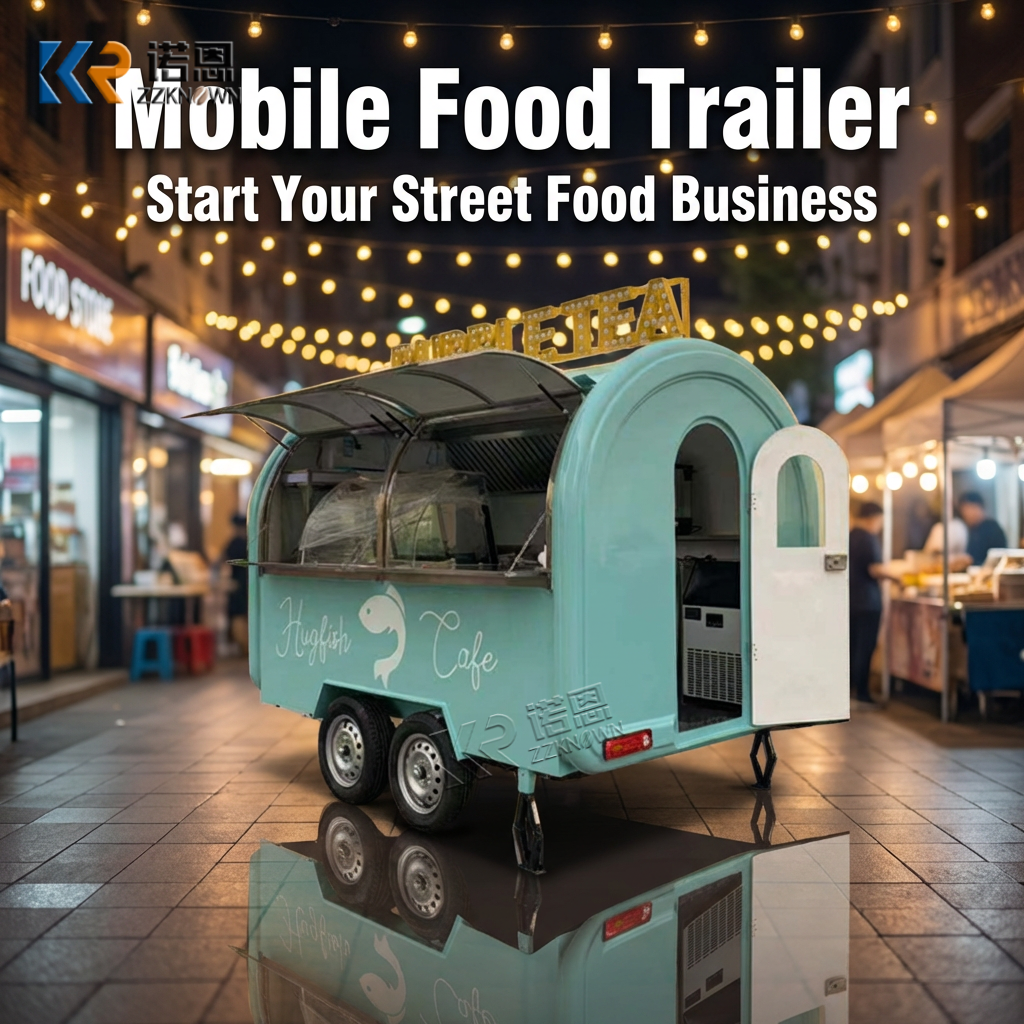
ZZKNOWN food trailer configurations can include exterior branding, illuminated signs, menu boards, lighting systems, and optional digital menu screens, depending on the project and destination market.
When Is a Digital Menu Screen Worth It?
A digital menu screen can be helpful when your prices, products, or operating periods change frequently.
It works particularly well for:
- Breakfast-to-lunch changes
- Coffee and evening-dessert menus
- Festival-only pricing
- Seasonal products
- Daily sold-out notices
- Rotating product photographs
- Multilingual menus
- Catering packages
- Weather-based drink promotions
- Testing two menu layouts over different periods
A printed menu is often more practical when:
- Your core menu rarely changes
- Electrical supply is limited
- The trailer operates in strong sunlight
- The screen would be exposed to rain or heat
- You want a simple vintage or handmade brand style
- Staff do not have time to manage digital content
The best solution can be a hybrid:
- Permanent printed board for core products
- Small digital screen or replaceable panel for specials
- Illuminated top sign for the main brand
- POS display for modifiers and add-ons
Remember that the physical installation matters. A digital screen requires a secure mounting point, appropriate voltage, cable routing, weather protection, ventilation, and a viewing angle that works when customers are standing outside.
How Can Pricing Psychology Be Used Responsibly?
Pricing psychology should make the menu easier to understand, not trick customers.
Start with a logical price structure.
For example:
| Level | Customer Need | Example |
| Good | Simple and affordable | Classic Burger |
| Better | More flavor or larger portion | Bacon BBQ Burger |
| Best | Premium ingredients or complete meal | Signature Burger Meal |
The difference between price levels should reflect a real difference in ingredients, portion, convenience, or experience.
Useful approaches include:
- Showing a clear entry-level option
- Offering a balanced middle option
- Creating a premium signature choice
- Using meal bundles with real customer value
- Keeping add-on prices easy to understand
- Displaying prices consistently
- Avoiding excessive decimal variations
- Separating optional upgrades from included ingredients
Avoid:
- Fake discounts
- Permanent “limited-time” claims
- Artificial crossed-out prices
- Confusing mandatory fees
- Tiny allergen or surcharge text
- Photographs that do not match the actual portion
- Descriptions that imply ingredients the product does not contain
A menu should build trust. A customer who feels misled may complete one purchase, but that does not build a strong mobile food brand.
Why Should Your Menu and Trailer Layout Be Designed Together?
Inside a food trailer, every menu decision has a physical consequence.
A new fried item may require:
- A second fryer basket
- More oil storage
- Frozen storage
- A draining or seasoning station
- Additional extraction capacity
- Fire-safety review
- More packaging
- A different waste-oil process
A smoothie menu may require:
- Multiple blenders
- Ice supply
- Cup and lid storage
- Fresh-fruit refrigeration
- A washing area
- Sound management
- Enough electrical capacity for simultaneous operation
A pizza menu may require:
- Dough refrigeration
- Preparation tables
- Ingredient pans
- Oven clearance
- Heat management
- Pizza-box storage
- A collection area for large packages
This is why ZZKNOWN engineers ask buyers about the menu, expected orders per hour, staff size, destination voltage, gas or electric preference, equipment list, and service-window requirements before finalizing a layout.
What Does the Engineer Recommend?
Engineer’s Note: Start with the five products you expect to sell most often. Map every step from cold storage to preparation, cooking, assembly, payment, and handoff. Shared ingredients and shared equipment usually create a more efficient mobile kitchen. A menu with fewer operational pathways can often serve more customers than a larger menu that requires constant staff movement.
This does not mean every trailer needs a tiny menu. It means the number of products should match the available space, staff, equipment, and intended service volume.
Which Real ZZKNOWN Models Fit Different Menu Strategies?
The following examples are real published ZZKNOWN product or project configurations. Final equipment, weight, axle selection, electrical systems, gas systems, and certification requirements must be confirmed for each order and destination.
| ZZKNOWN Product or Project | Published Size or Configuration | Menu Strategy It Can Support |
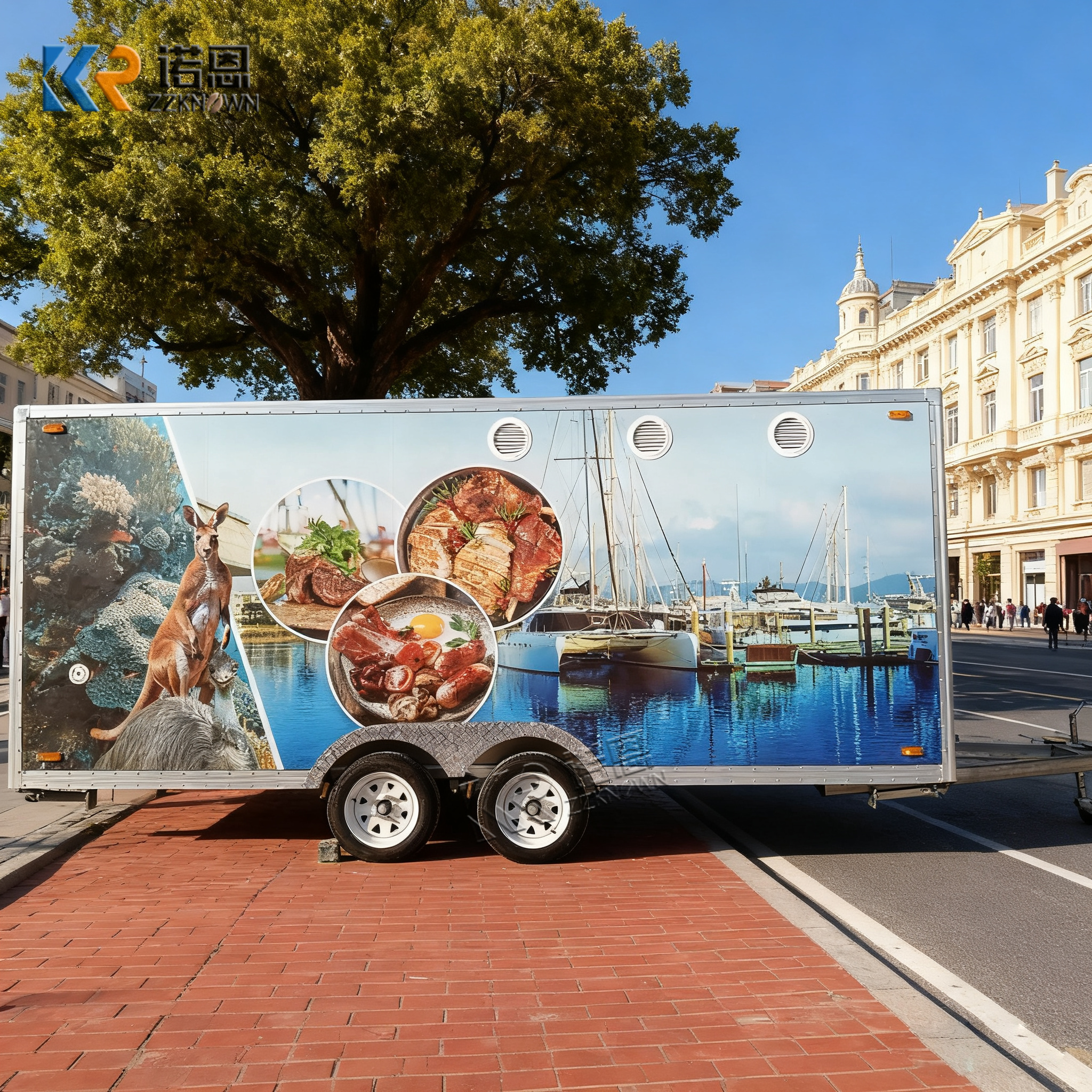
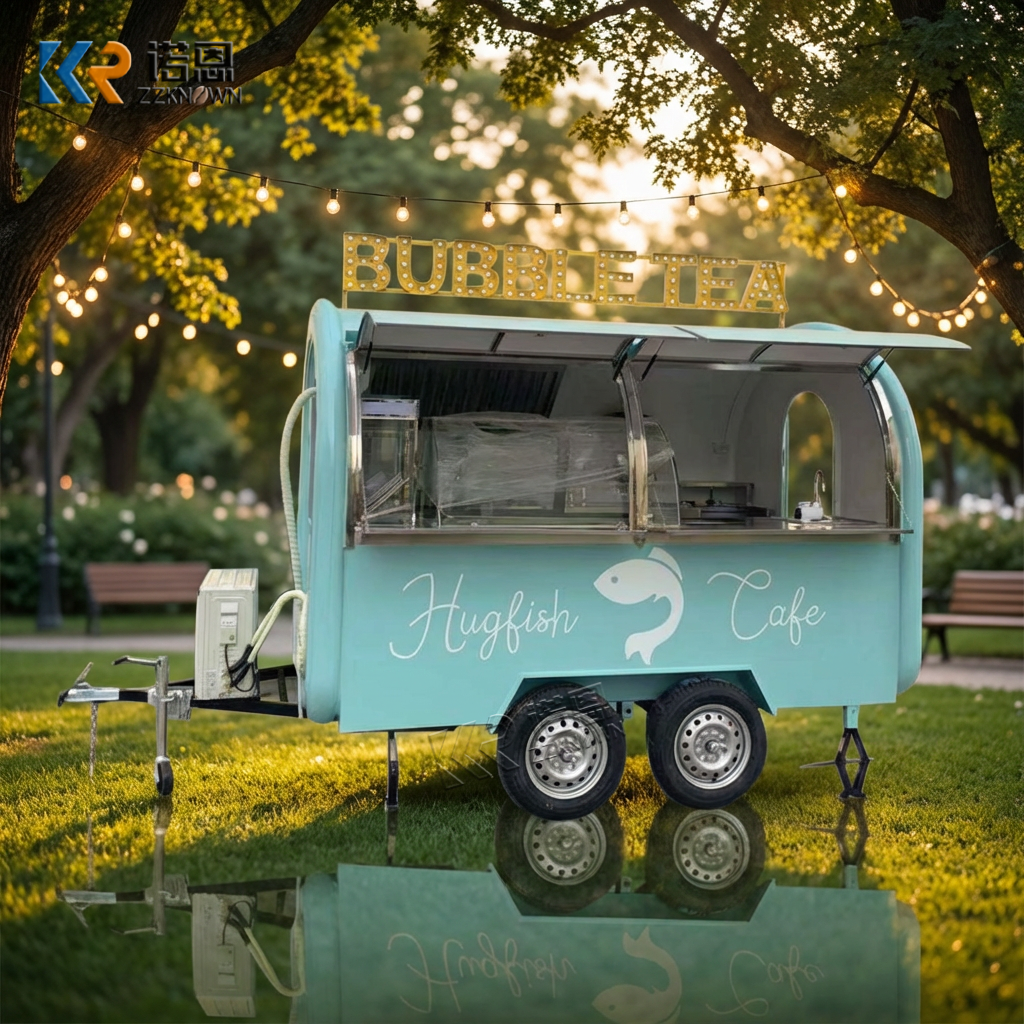
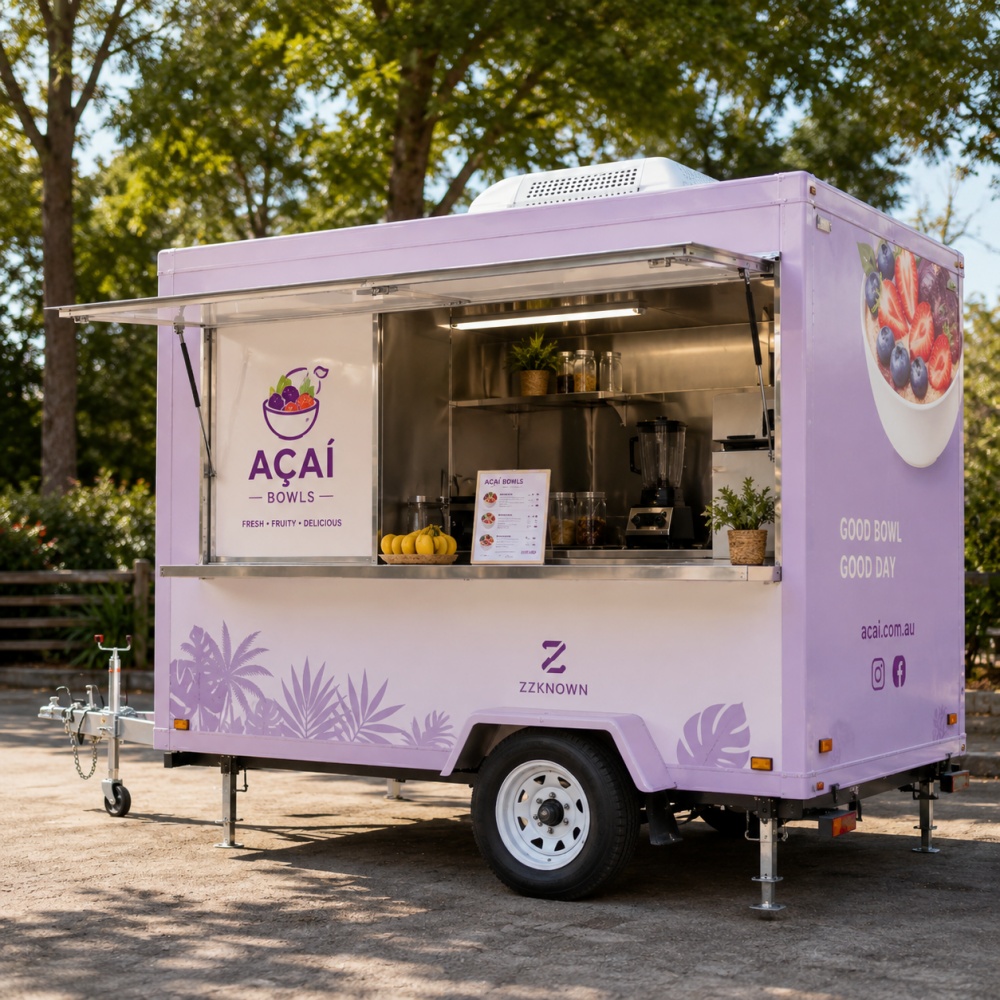
| 3M ACAI Bowls Food Trailer | 3000 × 2000 × 2300 mm; single axle with brake; Australia-market configuration | Acai bowls, smoothies, cold drinks, desserts and compact cold preparation |
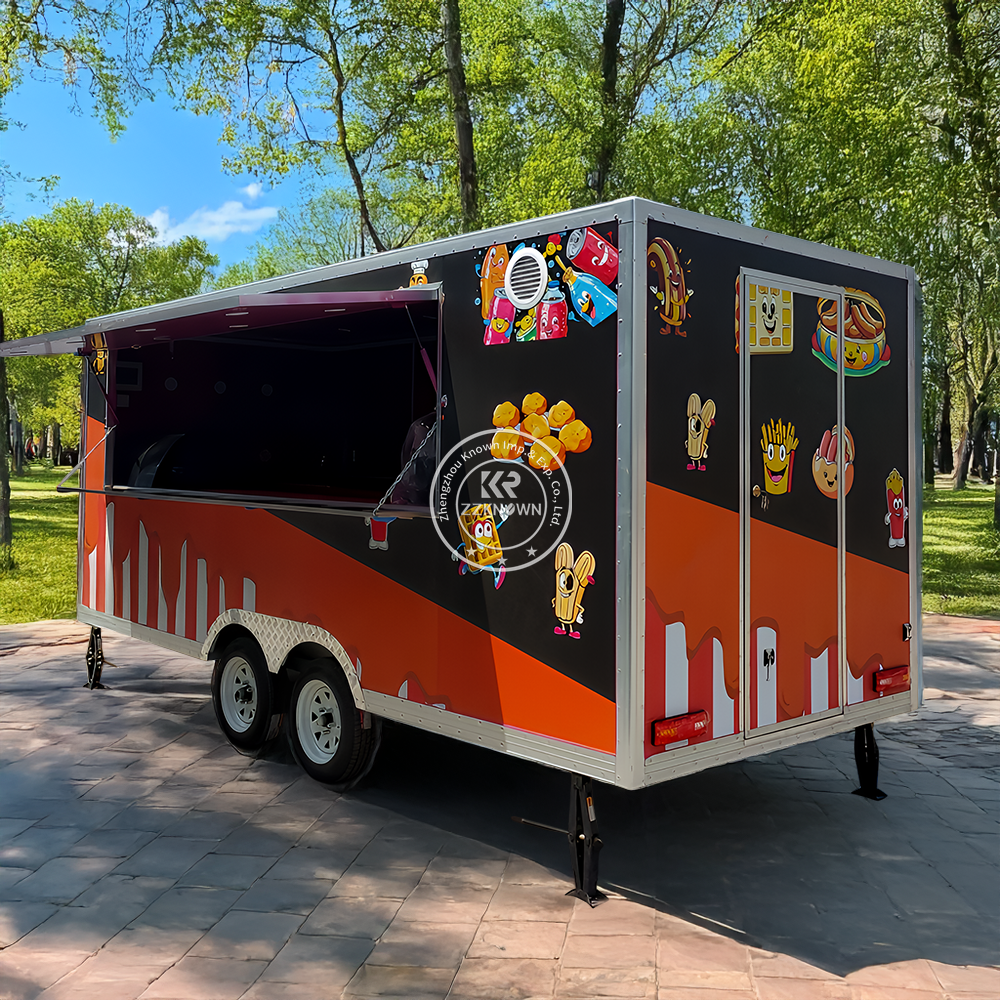
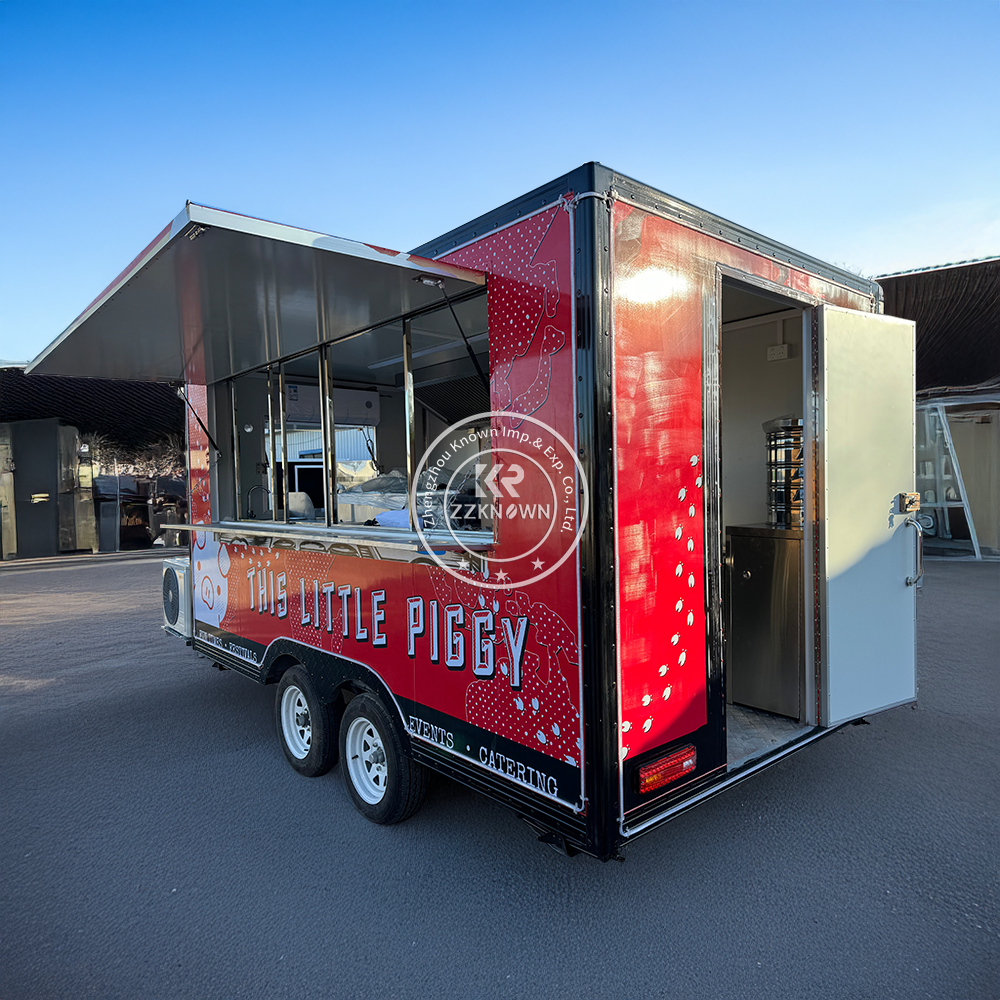
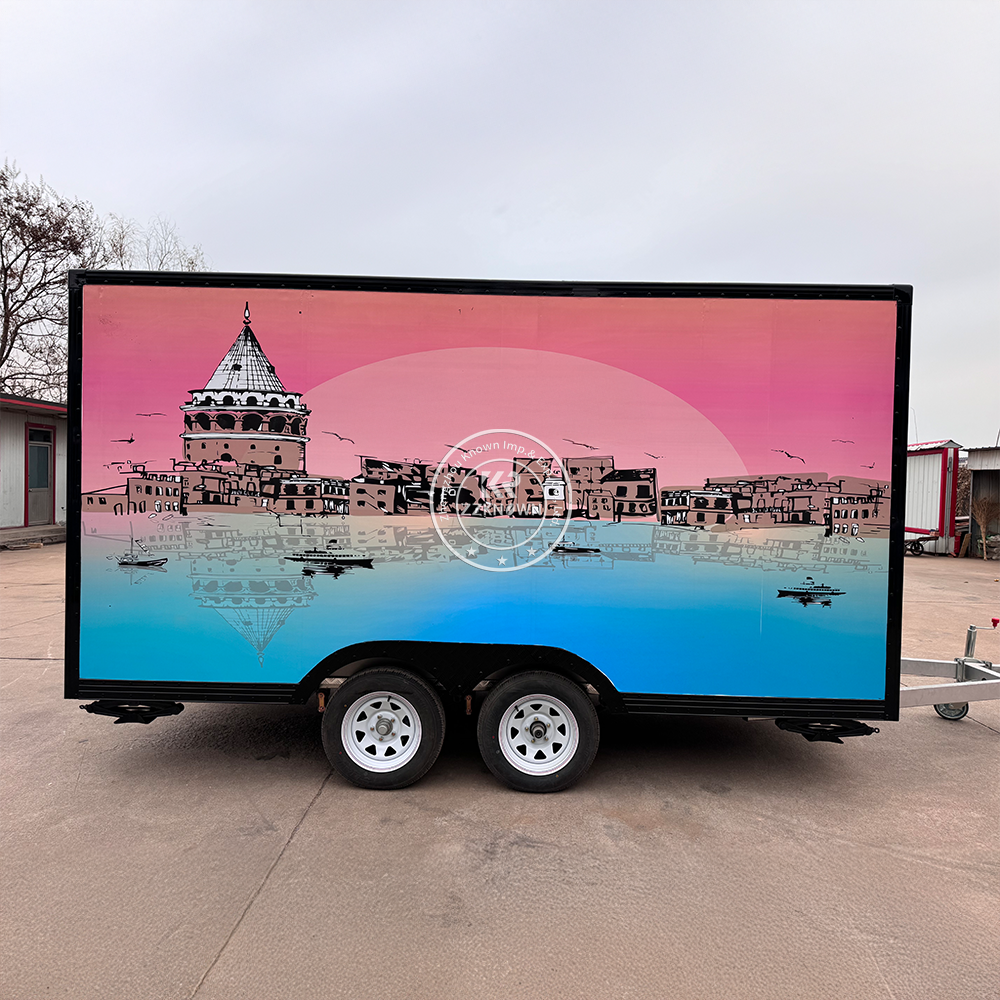
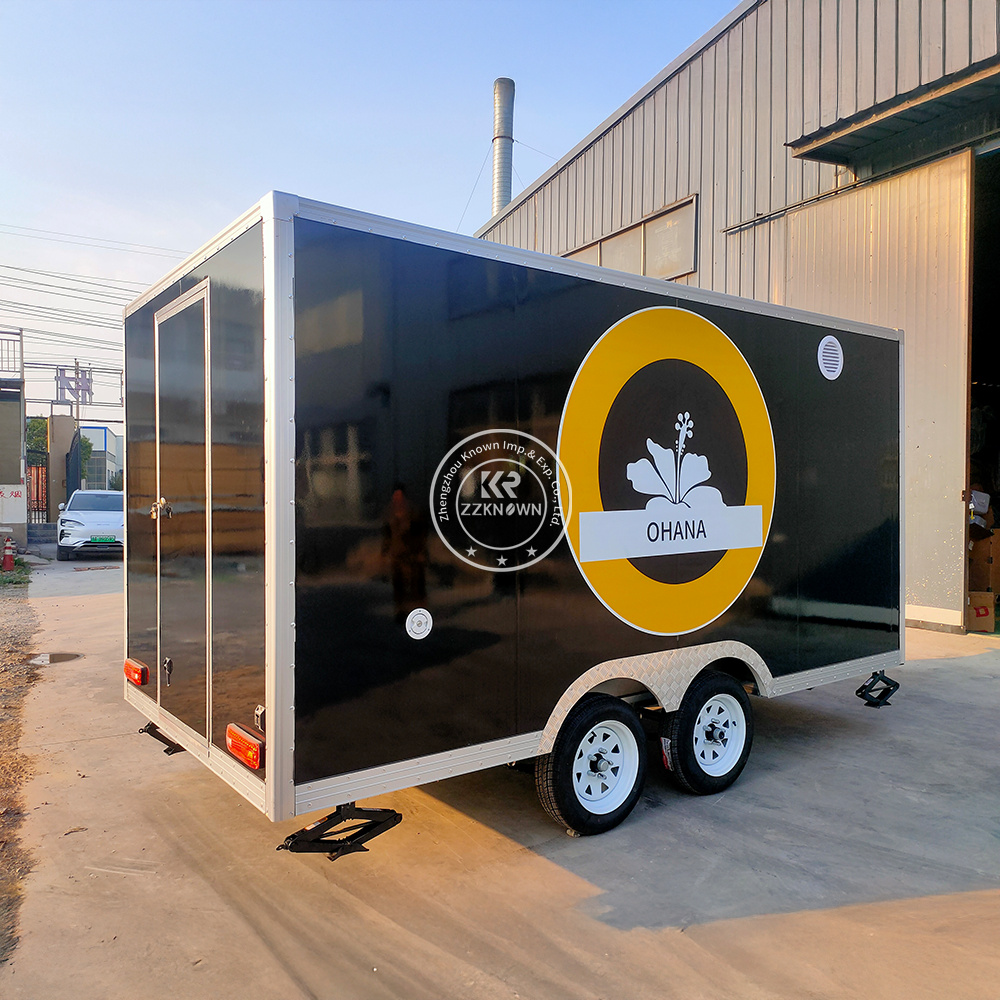
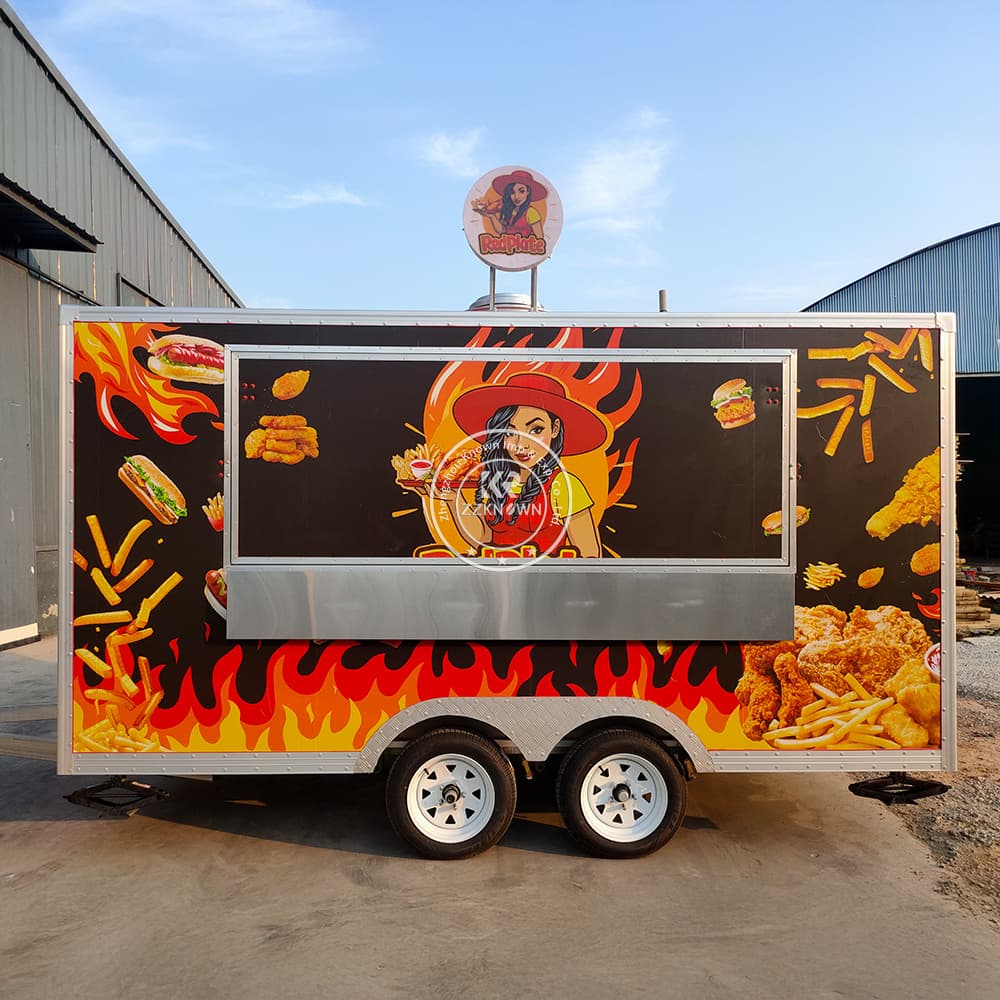
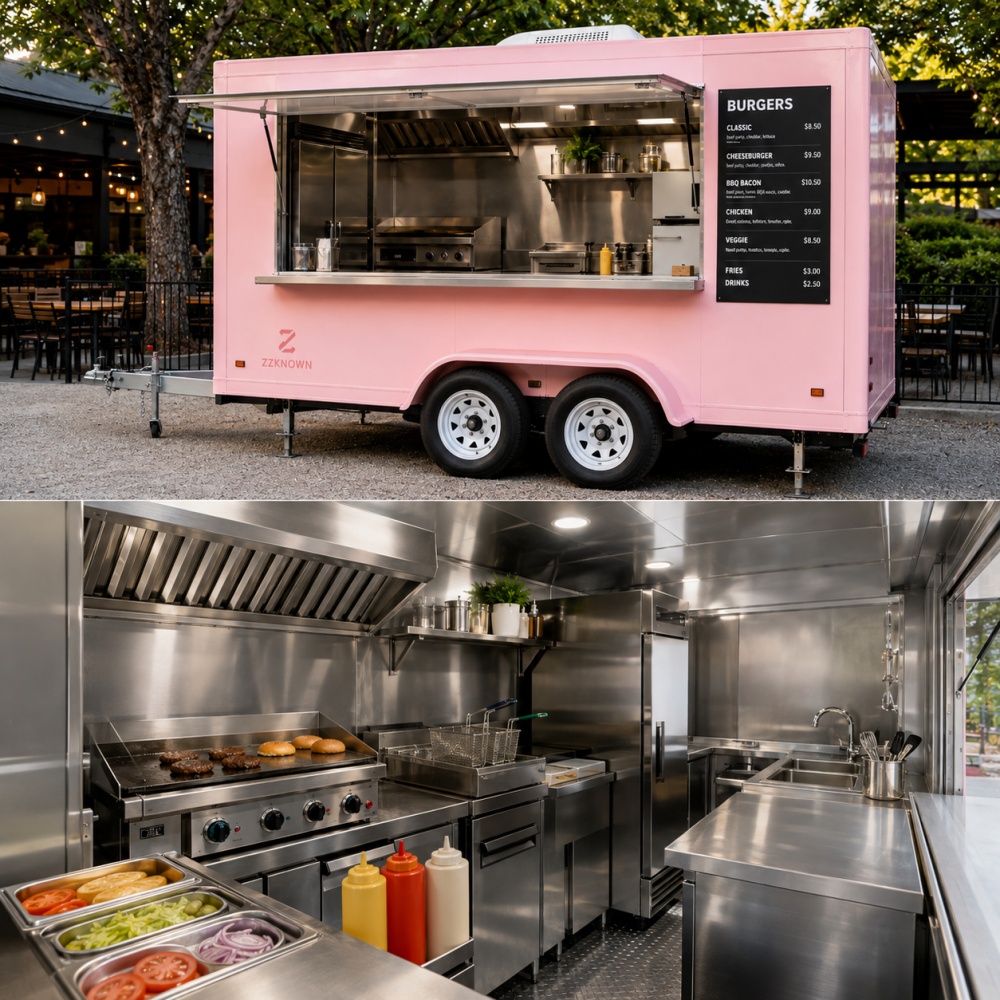
| 4M Pink Burger Trailer Project | 4 × 2 × 2.3 m; dual axle; griddle, fryer, refrigeration and extraction equipment | Burgers, fried food, sandwiches and event catering |
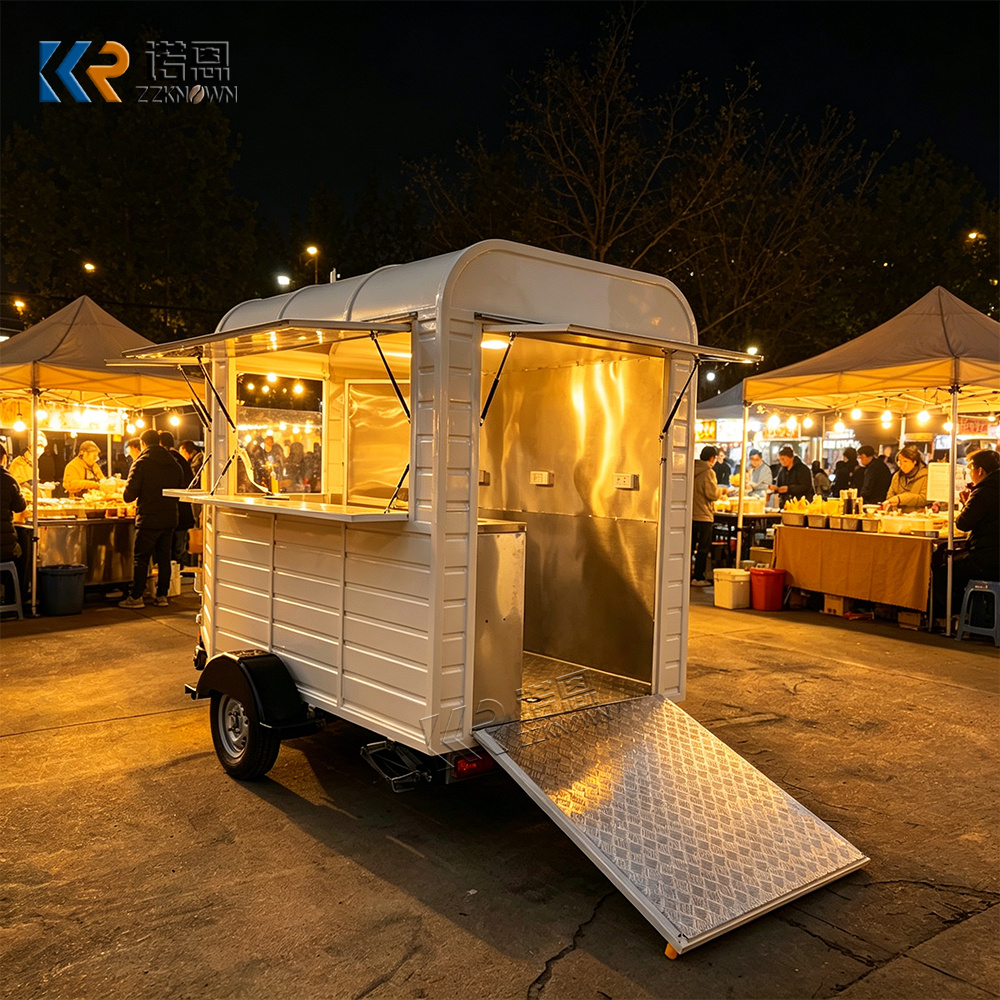
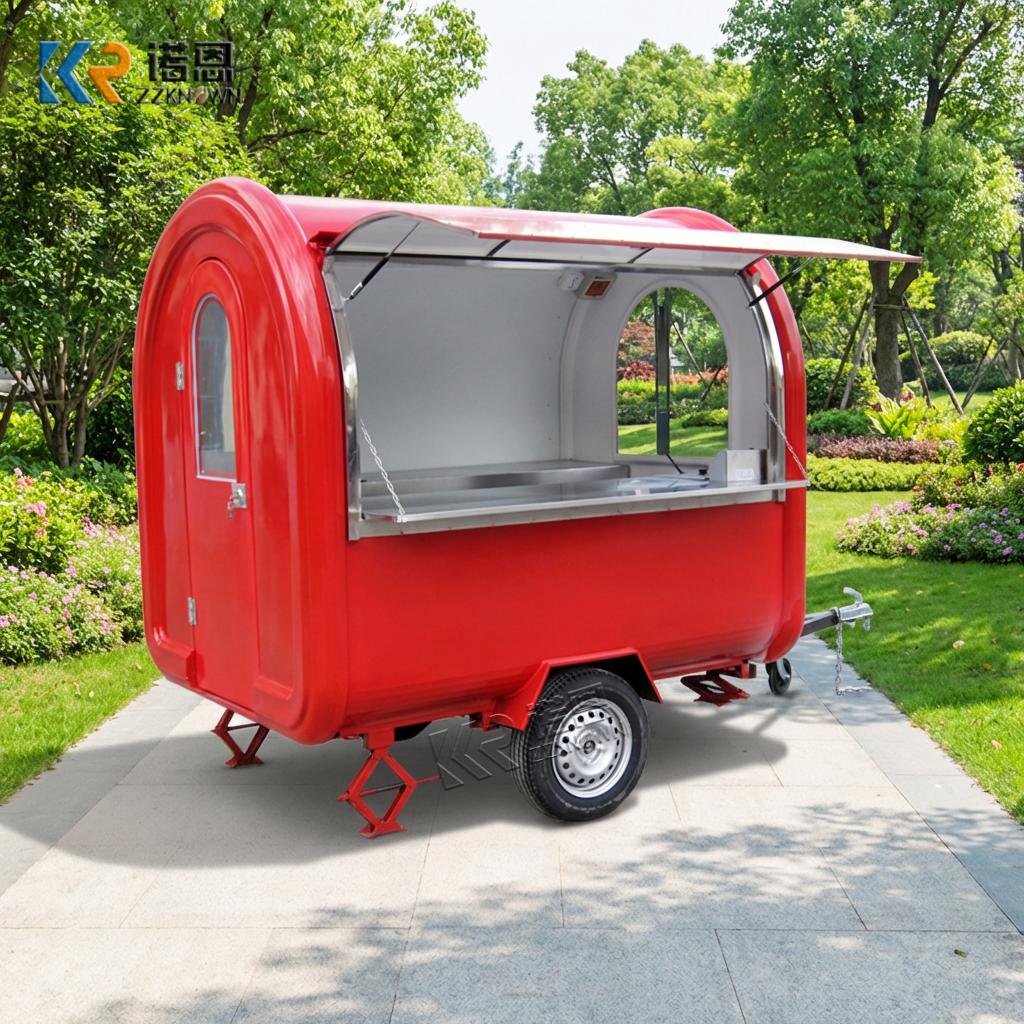
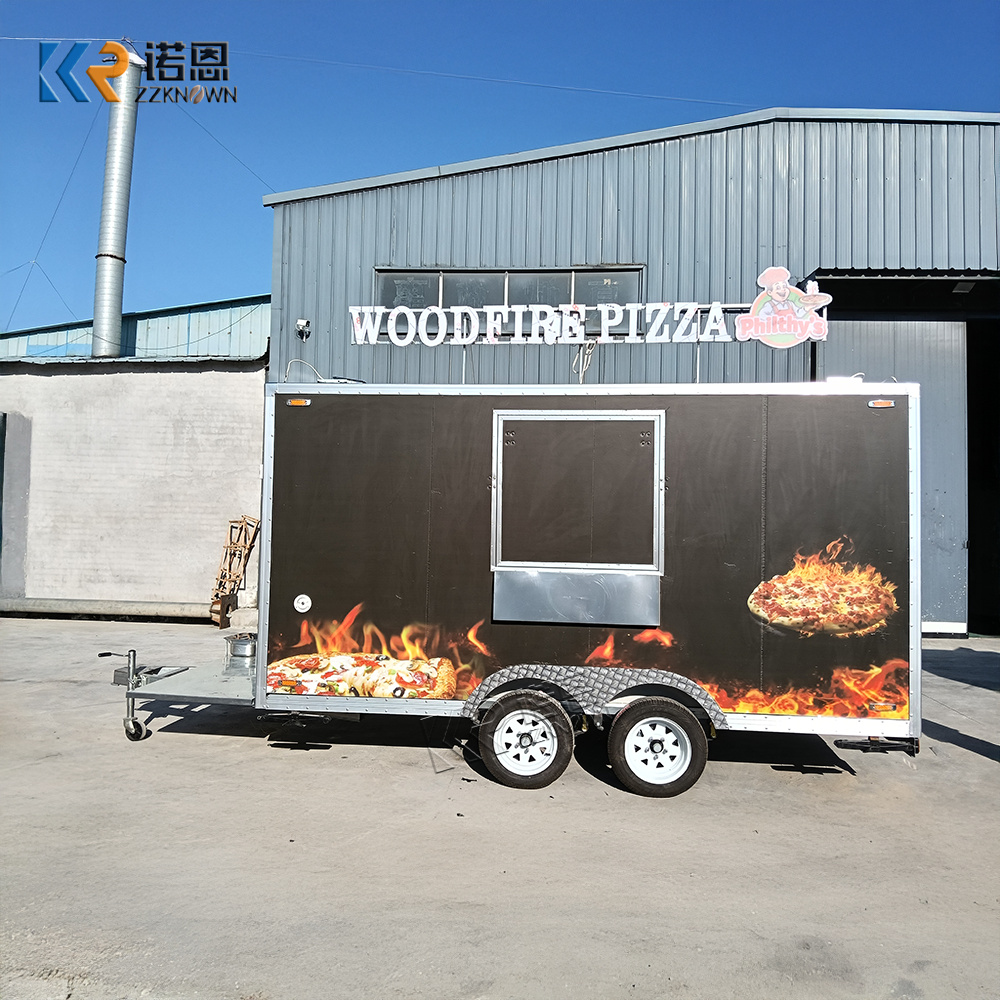
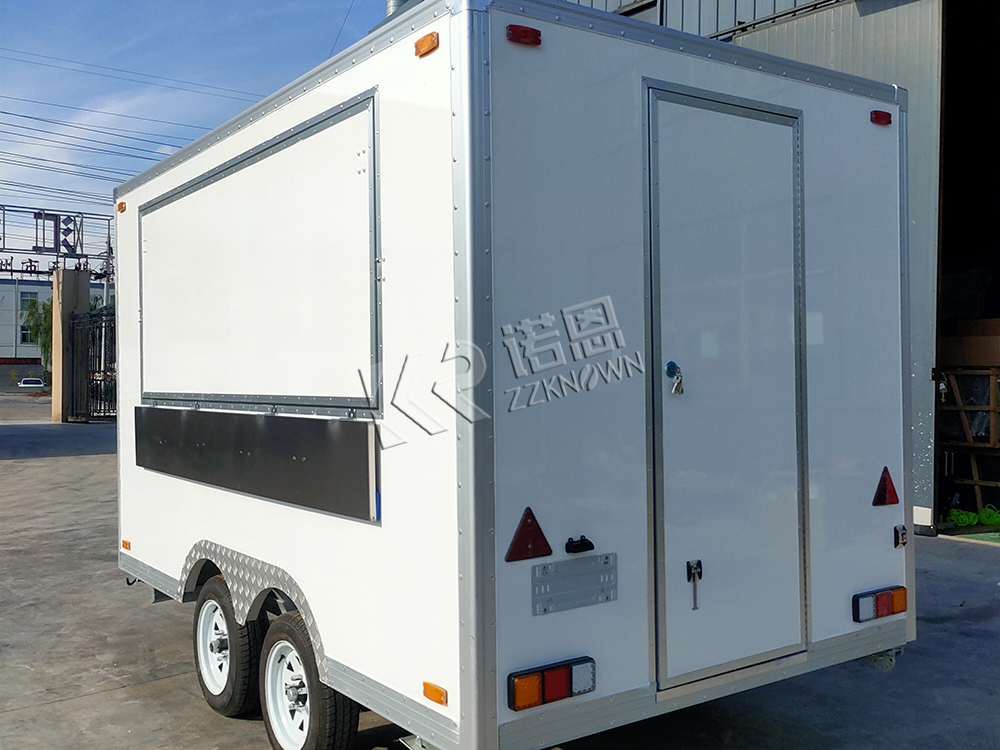
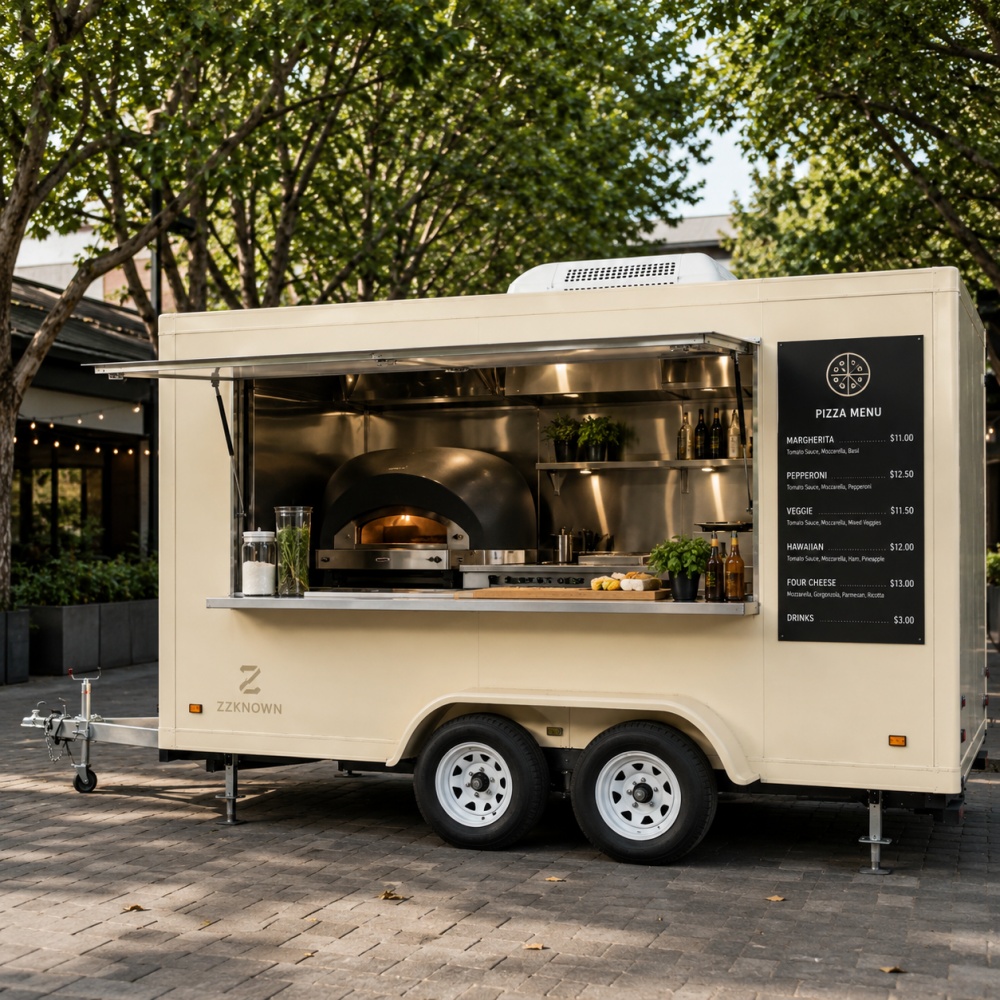
| 4M Mobile Pizza Trailer | 4-meter custom dual-axle trailer with branding, menu-board and lighting options | Pizza, baked products, hot snacks and night-market service |
| KN-FS500 Kebab Trailer | 5 × 2 × 2.3 m; dual axle | Kebab, grilled meat, fried food and higher-volume savory menus |
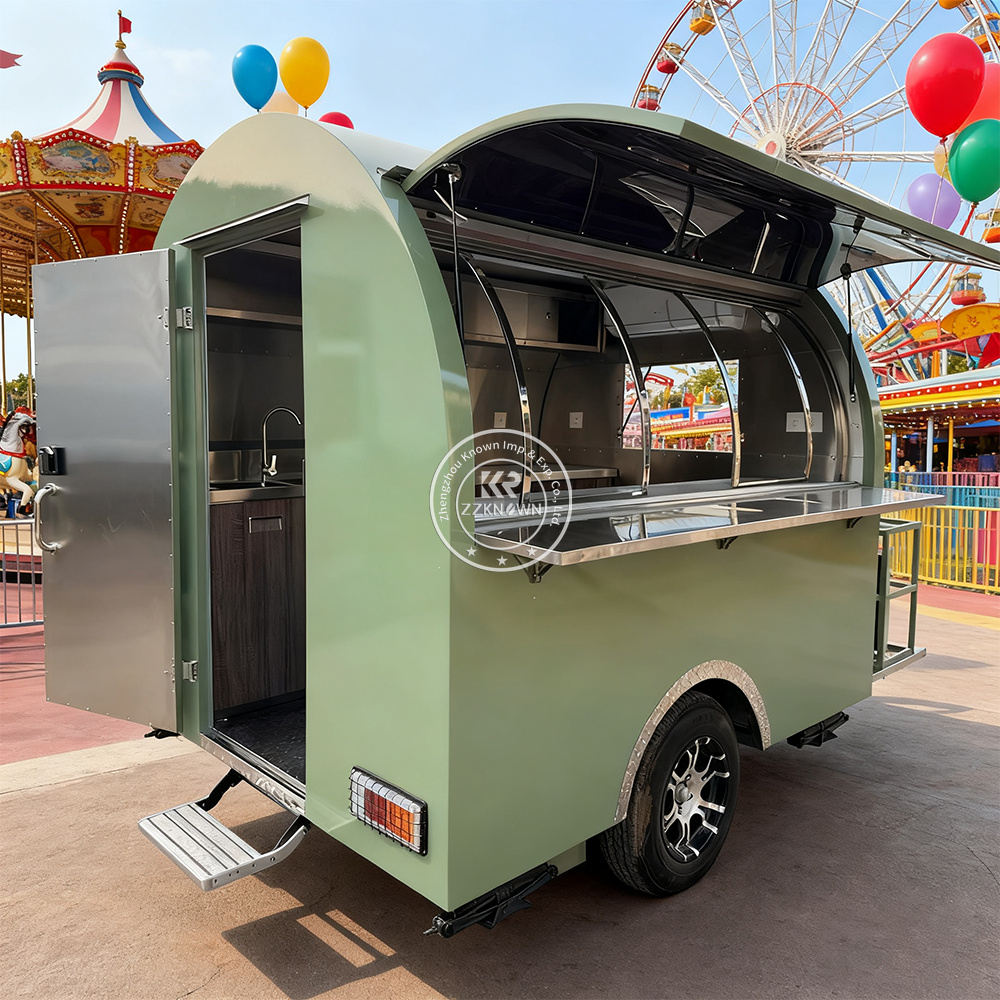
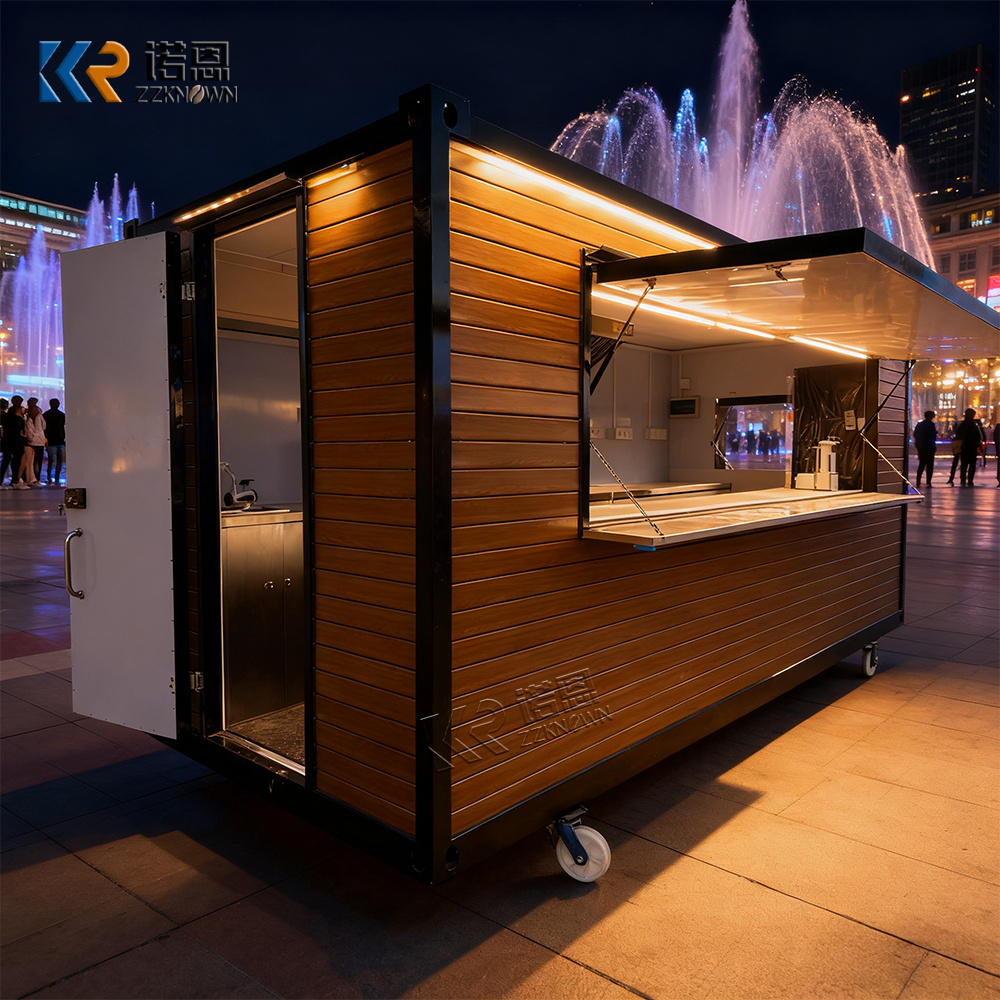
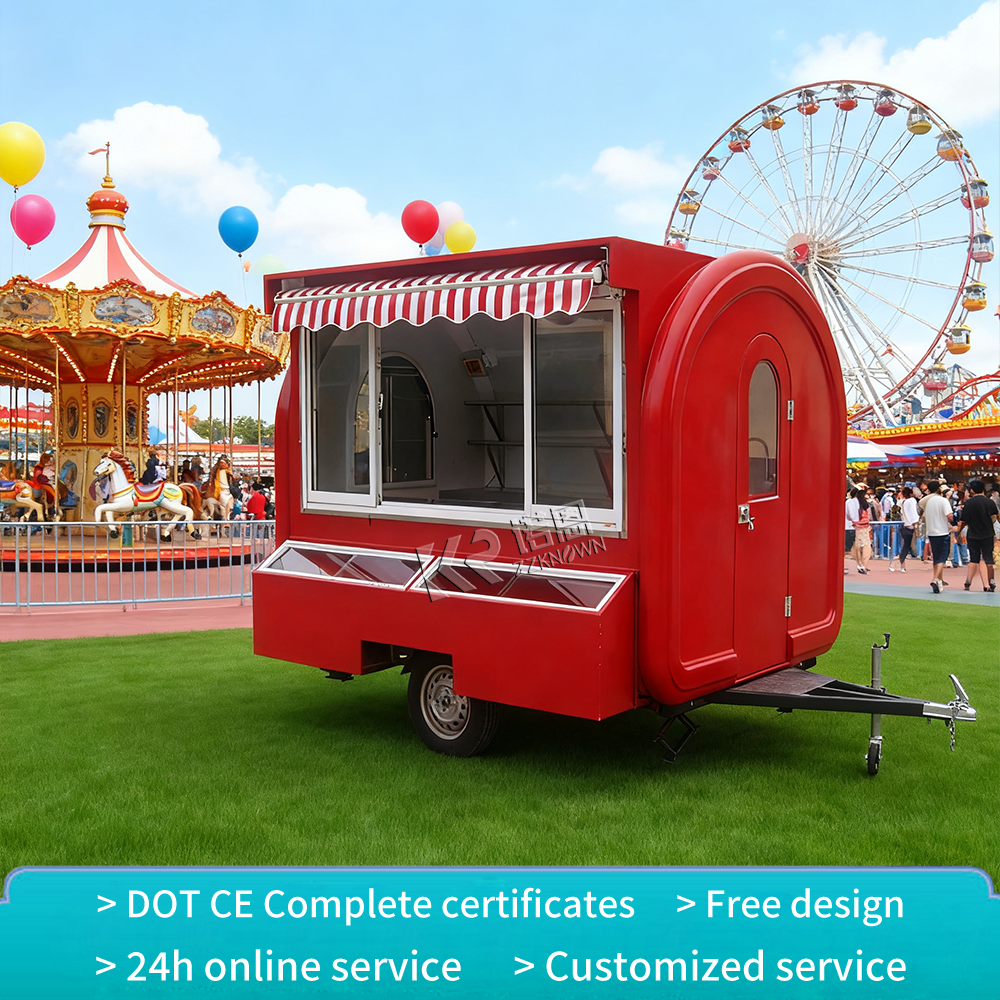
| KN-DZ5 Mobile Restaurant Container | Approximately 5.7 × 2.1 × 2.15 m; four heavy-duty wheels | Broader restaurant menu, fixed-location service, food court or resort operations |
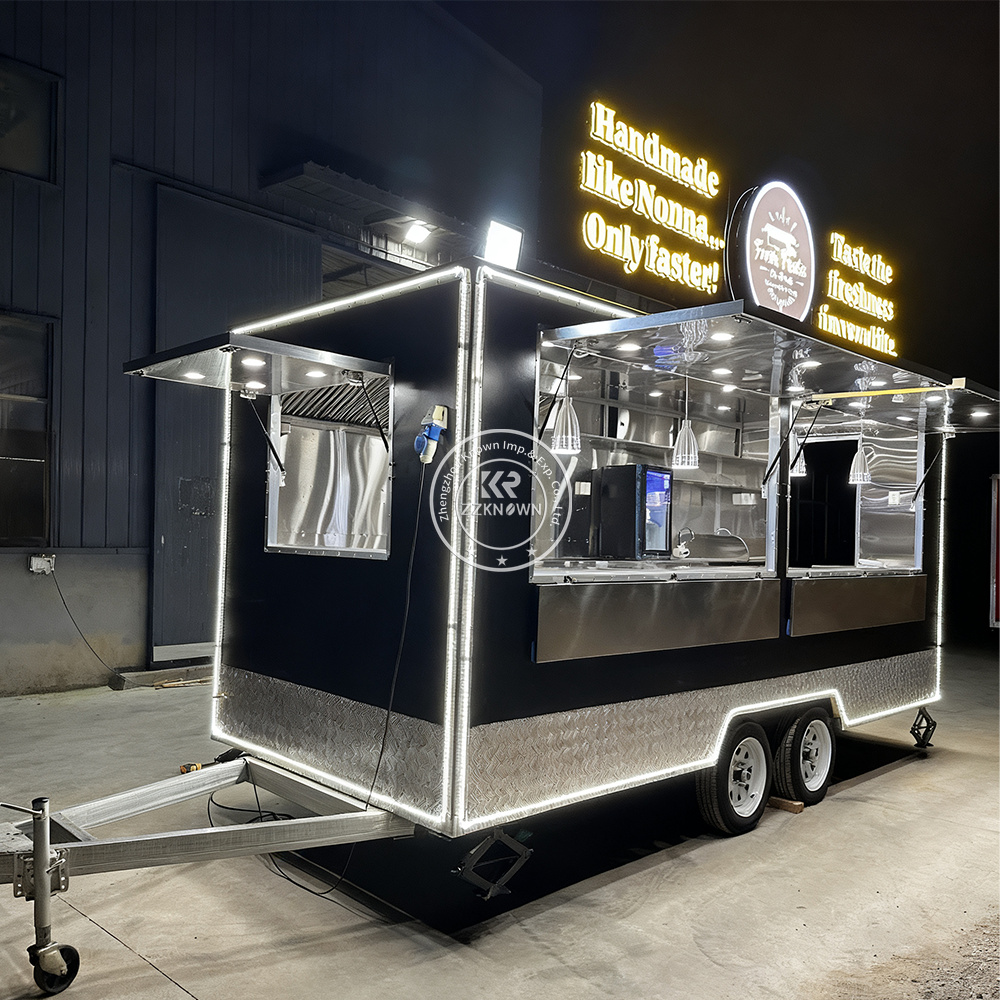
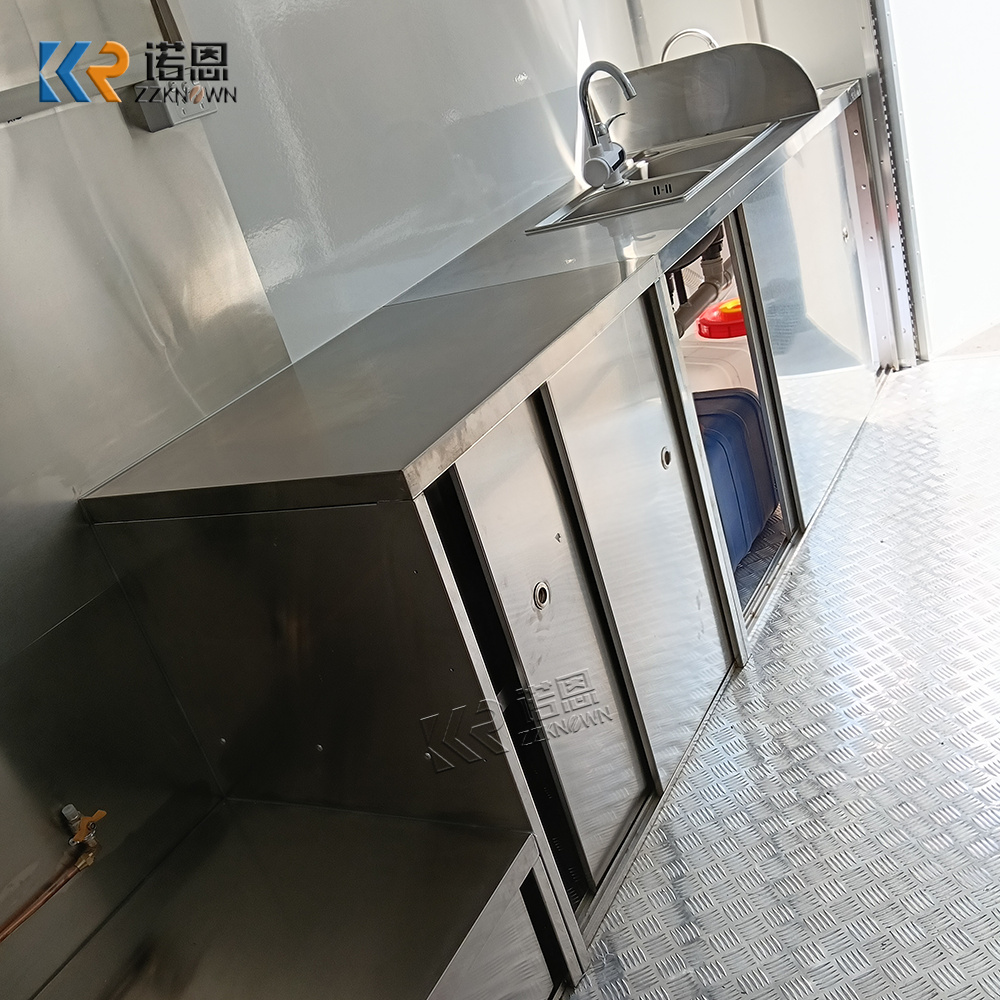
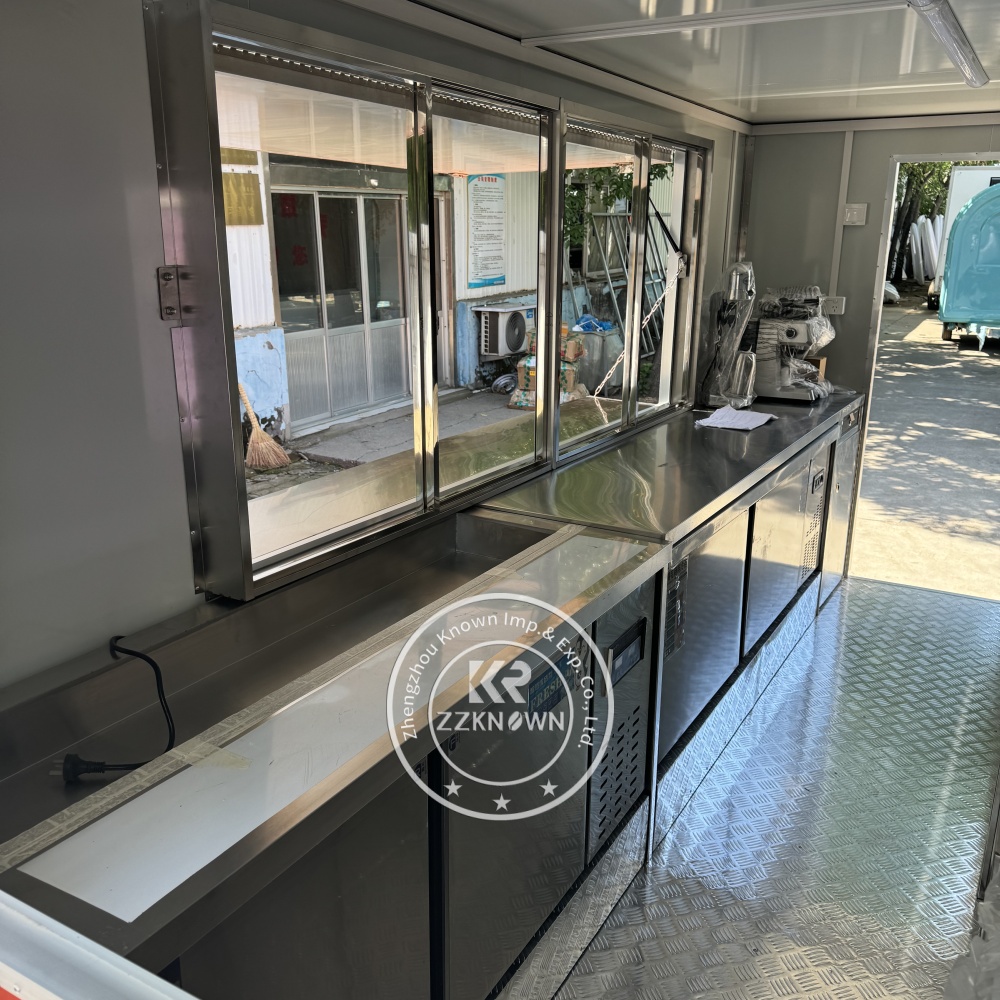
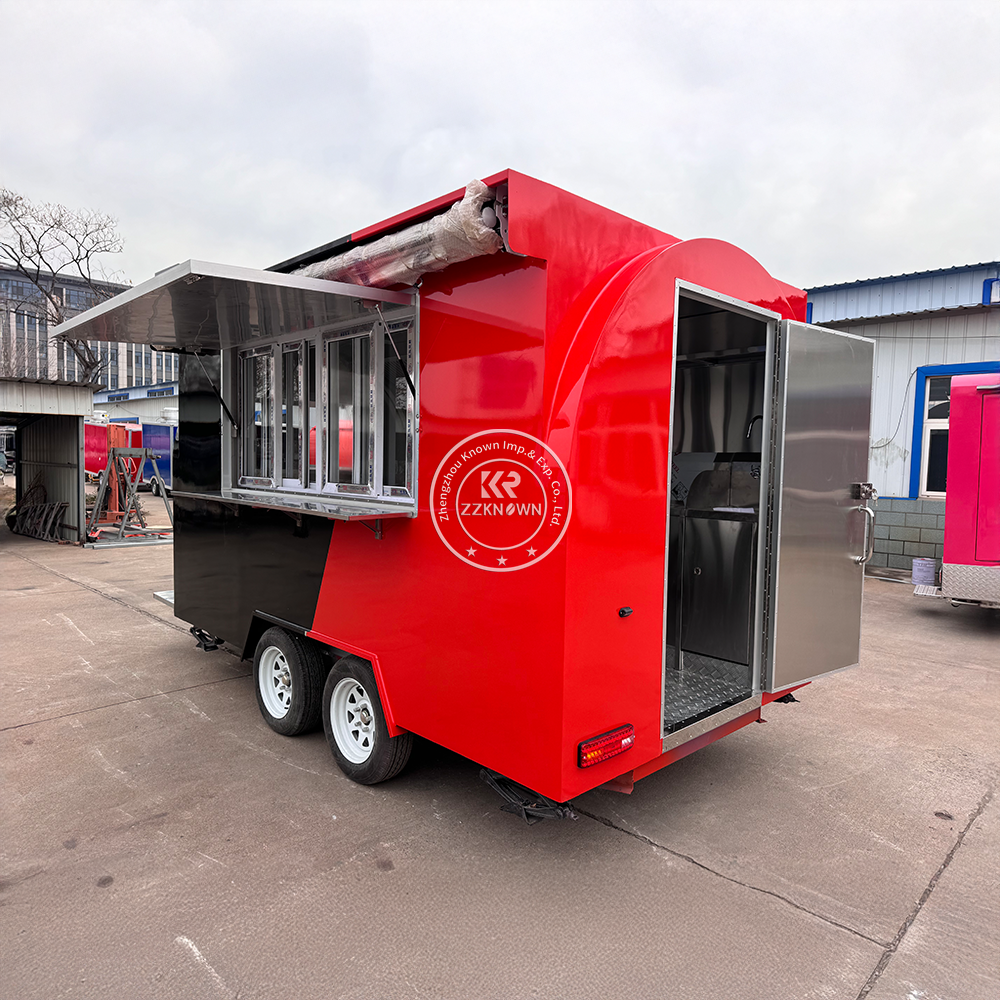
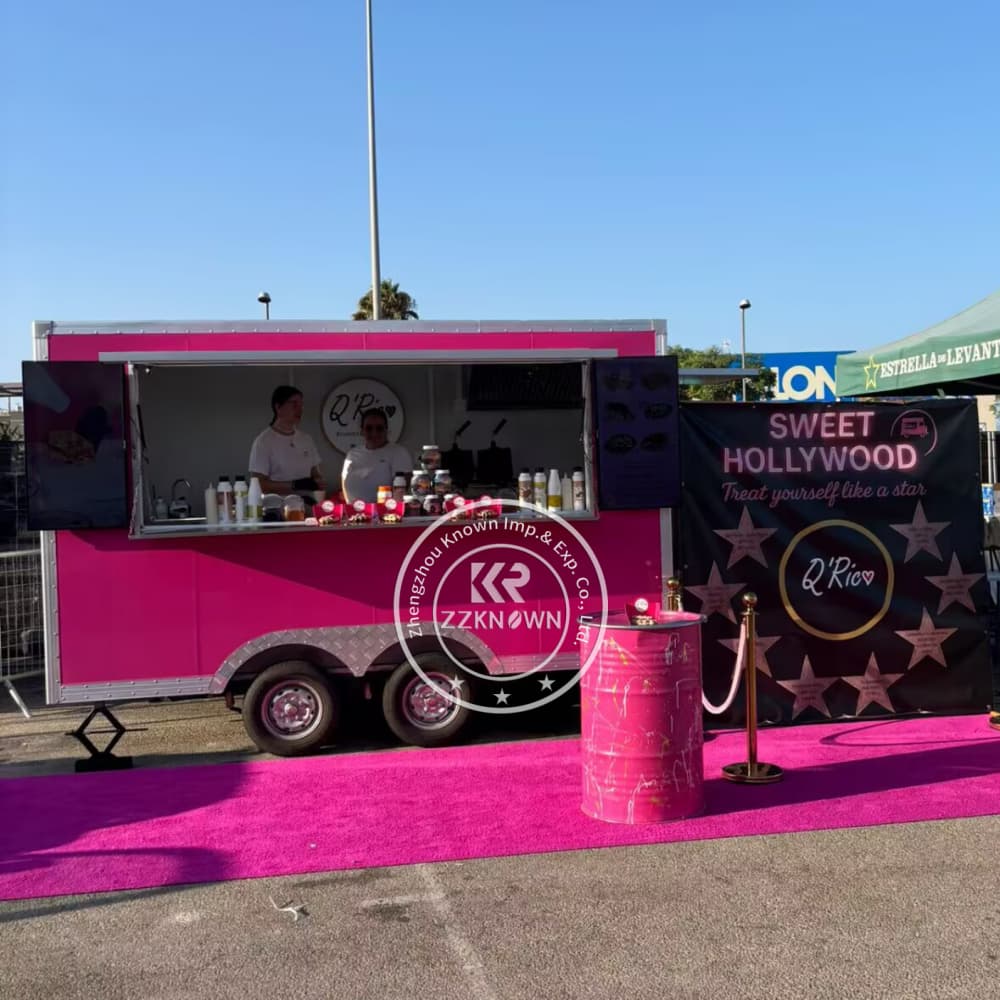
The 4-meter burger project includes a real configuration with a large exhaust hood, gas cooking equipment, refrigerated preparation space, sinks, worktables, air conditioning, American electrical specifications, a sales window, and rear access.
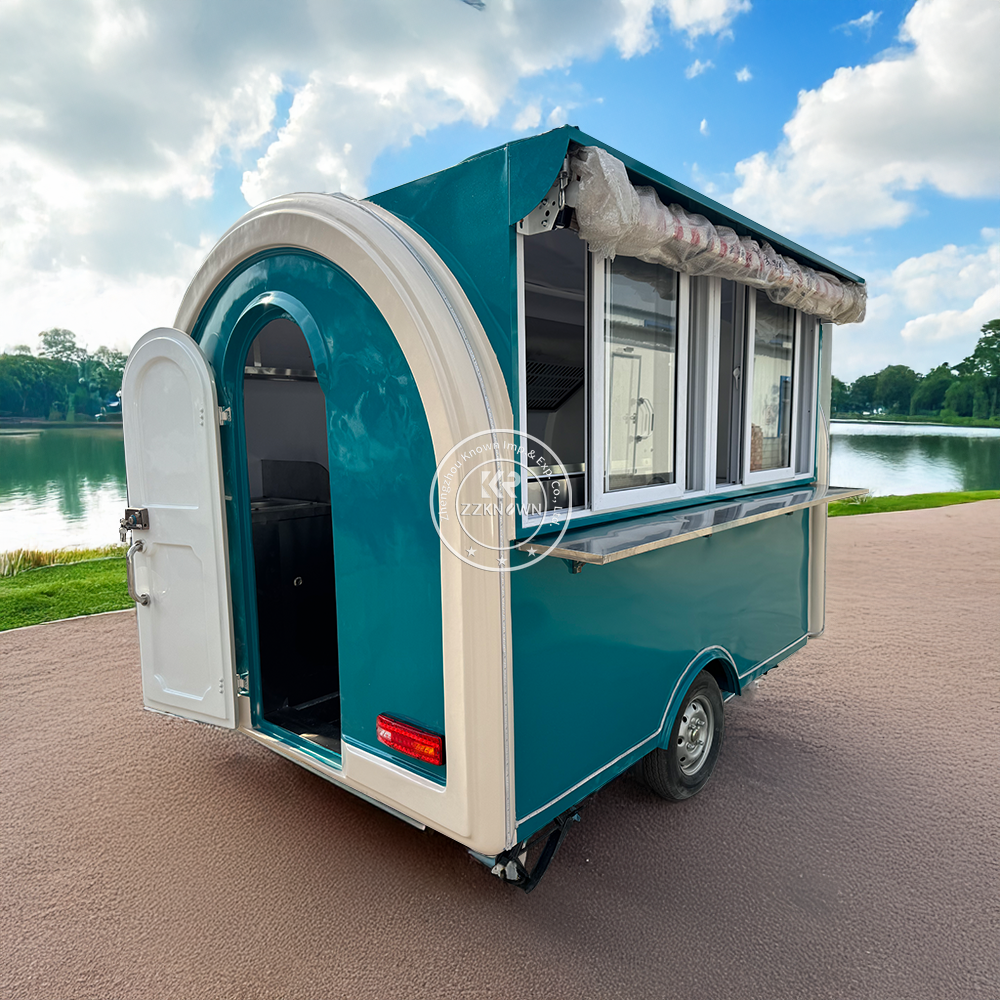
The 3-meter Australia-market Acai trailer is published with a 3000 × 2000 × 2300 mm body, single axle with brake, custom branding, illuminated signage, and market-specific road lighting.
The KN-FS500 kebab trailer is listed at 5 × 2 × 2.3 meters with a dual-axle configuration, while the KN-DZ5 mobile restaurant container is listed at approximately 5.7 × 2.1 × 2.15 meters with four heavy-duty wheels.
Recommended Internal Product Links
- View Square Food Trailers
- View the 4M Mobile Pizza Trailer
- View the KN-FS500 Kebab Trailer
- View the KN-DZ5 Mobile Restaurant Container
- Read the 4M Burger Trailer Project
How Should You Collect Menu Data?
A useful menu analysis needs consistent data. Do not compare a rainy Monday with a major Saturday festival and assume the menu caused the difference.
Step 1: Choose a Measurement Period
For a stable operation, begin with four consecutive weeks.
For seasonal or event-based businesses, collect data from several comparable events. Separate:
- Weekdays and weekends
- Lunch and dinner
- Regular street locations and ticketed events
- Hot and cold weather
- Delivery and walk-up orders
- Catering and public sales
Step 2: Export the POS Sales Data
Collect:
- Item name
- Quantity sold
- Selling price
- Discounts
- Refunds
- Modifiers
- Combos
- Time of sale
- Sales channel
Make sure the same product is not recorded under several slightly different names.
“Classic Burger,” “Classic,” and “Burger Regular” should not appear as three separate items unless they are genuinely different products.
Step 3: Cost Every Standard Recipe
Use actual supplier invoices rather than old estimates.
For each recipe:
- Record the purchase quantity.
- Calculate usable yield after trimming or cooking loss.
- Calculate cost per gram, ounce, milliliter, or portion.
- Multiply by the standard recipe quantity.
- Add packaging and direct consumables.
- Add a realistic waste allowance.
Step 4: Observe the Kitchen
Sales data cannot show every operational problem.
Watch:
- Staff walking distance
- Equipment waiting time
- Fryer or oven congestion
- Delays caused by modifiers
- Difficult packaging
- Incorrect orders
- Ingredients that run out
- Products that create excessive cleaning
- Items that require one highly skilled employee
Step 5: Compare Products Within Similar Groups
Do not directly compare a $4 lemonade with a $15 burger and conclude that the burger should be removed because the drink has a better food cost percentage.
Analyze:
- Entrées against entrées
- Drinks against drinks
- Sides against sides
- Desserts against desserts
- Breakfast against breakfast
- Catering packages against catering packages
You can then evaluate how the groups work together within the complete order.
Step 6: Make One Controlled Change
Change one or two variables at a time.
For example:
- Move one Puzzle to a stronger menu position.
- Add a photograph to one item.
- Change one item description.
- Standardize one Plowhorse portion.
- Introduce one bundle.
- Remove one operationally difficult Dog.
Then measure again.
How Often Should You Review the Menu?
A practical schedule for many independent food trailers is:
- Weekly: Ingredient prices, waste, sold-out items and operational problems
- Monthly: Contribution margin, popularity and modifier performance
- Quarterly: Menu structure, pricing, seasonal items and supplier changes
- Annually: Full concept, equipment capacity, branding and major product changes
Event businesses may need to analyze each event type separately.
A product that performs poorly at a weekday office location may become a Star at a music festival. A hot coffee menu may dominate in winter and lose relevance during a summer outdoor event.
Avoid making permanent decisions from a short or unusual period.
What Regulations Should Global Food Trailer Buyers Check?
Menu engineering is a commercial tool, but your menu must also comply with the rules in the country and locality where you operate.
What Applies in the United States?
The U.S. Food and Drug Administration’s federal menu-labeling rule generally applies to restaurants and similar retail food establishments that:
- Are part of a chain with 20 or more locations
- Operate under the same name
- Sell substantially the same standard menu items
Covered businesses must disclose calories for standard items on menus and menu boards and make additional written nutrition information available on request. Most independent single-trailer operators may not fall under this federal chain rule, but state and local requirements can still apply.
Operators should also check local health departments for:
- Food-handler requirements
- Commissary requirements
- Allergen procedures
- Menu claims
- Temporary-event rules
- Mobile-food licenses
- Consumer pricing and surcharge disclosures
What Applies in the European Union?
Regulation (EU) No 1169/2011 establishes general food-information requirements and applies to food intended for final consumers, including food supplied by mass caterers. Allergen information must be addressed for non-prepacked food according to the applicable national implementation rules.
A mobile food operator should be ready to provide accurate allergen information for every item, including sauces, toppings, bread, seasoning mixes, cooking oils, and possible cross-contact.
What Applies in the United Kingdom?
The UK Food Standards Agency publishes guidance for food businesses on allergen information and allergen handling. The current guidance cited here applies to England, Northern Ireland, and Wales and was updated in July 2026.
Your menu system should connect each product to a controlled recipe and allergen record. Staff should not guess when a customer asks an allergen question.
What Applies in Australia?
FSANZ establishes food-labeling requirements through the Australia New Zealand Food Standards Code. Australian states and territories enforce these standards, and misleading food representations are also restricted by food and fair-trading laws.
Some Australian jurisdictions apply kilojoule menu-labeling requirements to qualifying chain businesses. For example, Queensland’s Fast Choices requirements apply to certain chain food restaurants, while New South Wales operates its own legislated Fast Choices program for qualifying chains and franchises.
Independent buyers should check the rules in the state or territory where the trailer will operate.
What Applies in New Zealand?
New Zealand’s Ministry for Primary Industries states that allergen information must be provided when a customer requests it in dining-out situations. Some businesses also choose to provide allergen information voluntarily on menus and signs.
Is This Legal Advice?
No. This article provides general planning information. Before opening, confirm your menu, food processes, trailer configuration, electrical system, gas system, labeling, licenses, and operating procedures with the relevant local authorities and qualified professionals.
Which Real Project Images Should Be Included?
Use original ZZKNOWN factory or customer-project photography rather than synthetic customer stories.
Cover Image
Size: 505 × 335px
Recommended Source: 4M pink burger trailer customer project
Internal Source Link:
/blog/customer-cases/how-i-built-my-burger-business-in-a-4m-trailer.html
Suggested Alt Text:
4M ZZKNOWN burger food trailer with custom service window and mobile kitchen layout
Suggested Caption:
A menu performs best when the trailer layout, cooking equipment, storage and service window are designed around the same operating plan.
Article Image 1
Size: 1000 × 1000px
Image: Exterior and interior views of the real 4M burger trailer
Placement: After “Why Should Your Menu and Trailer Layout Be Designed Together?”
Suggested Alt Text:
ZZKNOWN 4 meter burger trailer interior with griddle fryer refrigeration and exhaust hood
Article Image 2
Size: 1000 × 1000px
Image: Real 3M Acai Bowls trailer built for the Australia market
Placement: Beside the real product model comparison
Suggested Alt Text:
3M Acai bowls food trailer built by ZZKNOWN for the Australia market
Article Image 3
Size: 1000 × 1000px
Image: Real 4M mobile pizza trailer with exterior branding and menu-board area
Placement: After the digital menu-board section
Suggested Alt Text:
4M mobile pizza trailer with custom branding illuminated sign and menu board
Article Image 4
Size: 1000 × 1000px
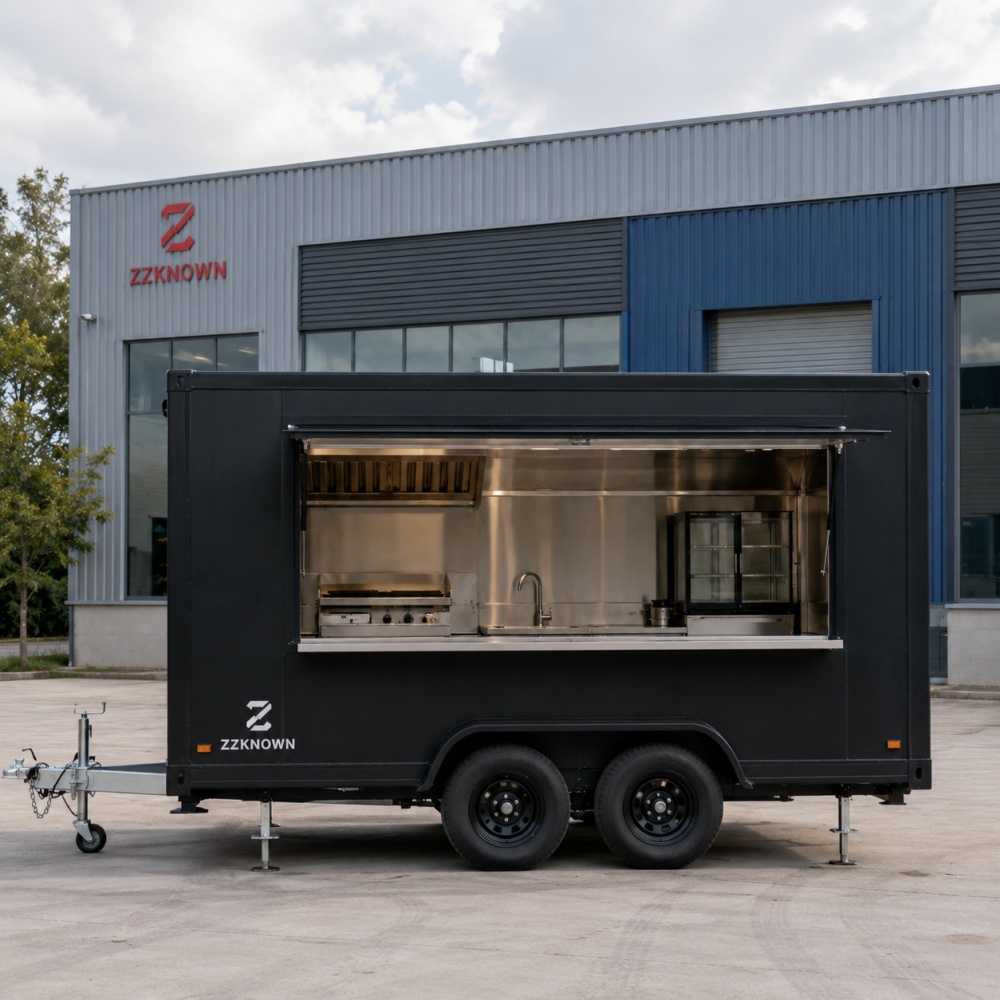
Image: Real KN-DZ5 mobile restaurant container
Placement: After the trailer-size comparison table
Suggested Alt Text:
ZZKNOWN KN-DZ5 mobile container restaurant with custom kitchen configuration
Before publishing customer photographs, confirm that ZZKNOWN has permission to use the images for website marketing.
What Are the Most Common Menu Engineering Questions?
1. How many items should a food trailer menu have?
There is no universal perfect number. A small trailer may operate efficiently with five to ten core items, while a larger trailer or container kitchen may support more.
The better question is whether the items share ingredients, equipment, storage, and preparation steps. Eight unrelated products can be more difficult than fifteen products built from the same well-planned ingredient system.
2. How much sales data do I need before analyzing the menu?
Four weeks is a useful starting point for a stable operation. Event-based businesses should collect several comparable events rather than relying on one unusually busy or quiet day.
The data should include enough transactions to show repeatable patterns by product category and daypart.
3. Should I remove every low-selling item?
No. Check the item’s strategic role, ingredient overlap, customer group, event performance, and preparation complexity first.
An item that uses existing ingredients and takes little time may be worth keeping. An item that requires unique stock, separate equipment, and extensive preparation needs a stronger reason to remain.
4. Should labor be included in menu-item cost?
Start with ingredient, packaging, consumable, and waste costs. Then add labor effort as a second layer, especially when certain items require significantly more preparation or slow the service line.
Hospitality research has extended basic menu engineering by considering labor intensity in addition to popularity and contribution margin.
5. Is a digital menu board better than a printed menu?
It depends on the business.
Digital screens are useful for changing dayparts, prices, specials, languages, photographs, and sold-out notices. Printed menus can be more reliable, less expensive to operate, easier to read in sunlight, and better suited to a simple brand.
The screen should not be selected until the mounting position, power supply, protection, brightness, ventilation, and customer viewing distance have been reviewed.
6. Can menu engineering work for drinks and desserts?
Yes. Analyze drinks, desserts, entrées, and sides as separate groups.
For drinks, include cups, lids, straws, ice, flavor syrups, milk alternatives, fruit, toppings, and waste. A drink may appear inexpensive to produce but become less attractive after premium packaging and ingredient waste are included.
7. Should I increase the price of my bestselling item?
Not automatically.
First review portion control, supplier cost, packaging, modifiers, bundles, and customer value. A bestseller may be popular partly because its price feels fair.
When a price change is necessary, make it deliberate and measure demand afterward.
8. Can ZZKNOWN design a trailer around my menu?
Yes. Buyers can send ZZKNOWN their menu, expected service volume, preferred trailer size, destination country, staff number, gas or electric requirements, and equipment list.
The engineering team can then review preparation flow, equipment positions, sinks, ventilation, refrigeration, storage, service windows, electrical configuration, branding, and available working space before production. ZZKNOWN’s website describes this as an OEM/ODM process covering layout design, equipment integration, production, inspection, and export coordination.
What Should You Send Before Requesting a Layout?
To receive a more useful food trailer layout and quotation, prepare:
- Destination country and city
- Planned menu
- Five expected bestselling items
- Expected orders per hour
- Number of employees
- Preferred trailer length
- Gas, electric, or mixed cooking
- Local voltage and frequency
- Required cooking equipment
- Refrigerated and frozen storage needs
- Freshwater and wastewater requirements
- Preferred service-window position
- Entry-door preference
- Exterior color and logo
- Menu-board or digital-screen requirements
- Certification and registration requirements
- Budget range
- Target opening date
The clearer the menu information, the easier it is to design a trailer that supports real service rather than simply fitting equipment into an empty shell.
How Should You Start?
Do not begin by redesigning your entire menu.
Choose one category. Export the sales data. Cost every standard recipe. Calculate contribution margin. Identify the Star, Plowhorse, Puzzle, and Dog items. Then observe what happens inside the trailer when those products are ordered.
You may discover that your most profitable improvement is not a price increase.
It may be:
- A clearer menu-board position
- A faster assembly process
- A better-sized package
- A standardized sauce portion
- A more profitable meal bundle
- A seasonal product rotation
- A simplified kitchen station
- A larger refrigerator
- A different service-window arrangement
- The removal of one difficult item
Menu engineering works because it connects numbers with customer behavior and kitchen reality.
For a food trailer, those three elements cannot be separated. Your menu determines what equipment you need. Your equipment determines how quickly you can serve. Your service speed affects how many orders you can complete. Your menu board affects what customers choose. Those choices determine contribution margin.
That is why ZZKNOWN recommends discussing the menu before confirming the trailer layout.
Ready to Design a Food Trailer Around Your Most Profitable Menu?
Send ZZKNOWN your menu, destination market, required equipment, staff number, preferred trailer size, branding requirements, and estimated orders per hour.
The ZZKNOWN engineering team can help you evaluate:
- Kitchen workflow
- Cooking and preparation stations
- Refrigeration capacity
- Storage space
- Ventilation
- Gas and electrical requirements
- Service-window placement
- Menu-board installation
- Exterior branding
- 2D or 3D layout options
Request a Custom Food Trailer Layout
Or explore:
- Square Food Trailers
- Round Roof Food Trailers
- Mobile Restaurant Containers
- Real ZZKNOWN Customer Projects
- Custom Mobile Restaurant Projects
A profitable food trailer does not begin with the biggest kitchen or the longest menu. It begins with a clear operating plan—and a trailer designed to support it.
Research and Official Sources
This guide was prepared using:
- Published hospitality research on contribution margin and menu engineering, including popularity thresholds, weighted contribution margin and sales-mix management.
- U.S. FDA menu-labeling requirements for qualifying chains with 20 or more locations.
- European Commission guidance on Regulation (EU) No 1169/2011 and mandatory food information.
- UK Food Standards Agency allergen guidance for food businesses.
- Food Standards Australia New Zealand food-labeling guidance.
- Queensland and New South Wales official kilojoule menu-labeling information.
- New Zealand Ministry for Primary Industries allergen guidance.
- Published ZZKNOWN product and customer-project pages for real trailer models, dimensions and configuration examples.