



A food trailer brake cable may look like a small part, but it directly affects towing safety, wheel balance, and daily operation. If the brake cable is too loose, the trailer may not stop firmly. If one side is tighter than the other, the two wheels may brake unevenly.
This guide explains how to install, fix, and adjust the brake cable on a food trailer, concession trailer, mobile kitchen trailer, or small food truck trailer in a simple and practical way.
ZZKNOWN is a China food trailer factory that manufactures high quality food trailers, concession trailers, container shops, refrigerated trailers, and restroom trailers for customers in the USA, Europe, Australia, and other global markets. In our factory installation experience, careful brake cable adjustment is one of the most important details before a trailer is delivered or used on the road.
Why Is Brake Cable Installation Important For A Food Trailer
The brake cable connects the brake head, tow bar area, and wheel brake system. When the brake is used, the cable transfers pulling force to the wheel brake mechanism. A good installation should make the cable straight, stable, and easy to adjust.
For a food trailer buyer, this matters because the trailer often carries heavy equipment such as fryers, refrigerators, grills, water tanks, sinks, and stainless steel worktables. A properly adjusted brake cable helps the trailer brake more smoothly when towing, parking, or moving in a work area.
Important tip: Before using a food trailer on the road, always check the tow bar, brake cable, wheels, lights, coupling, and tires. These small checks can help avoid many towing problems.
What Tools And Parts Do You Need Before Installation
Before installing the brake cable, prepare the following parts and tools.
| Item | Purpose |
|---|---|
| Brake cable | Connects the brake head and wheel brake parts |
| Three screw rods on the brake cable | Used for positioning and tension adjustment |
| Matching nuts | Used to lock the cable position after adjustment |
| Wrench | Used to tighten or loosen nuts |
| Tow bar mounting holes | Guide the brake cable through the correct path |
| Wheel side brake cable position | Used to adjust the brake tightness of each wheel |
Before starting, check whether the screw rods, nuts, cable head, and mounting holes are complete. Make sure the trailer is stable and will not move during installation.
How Do You Prepare The Brake Cable Before Passing It Through The Holes
First, put nuts onto all three screw rods on the brake cable. Screw each nut toward the end of the threaded rod first. This leaves enough room for installation and later adjustment.
This step is important because the nuts should not block the cable from passing through the correct holes. Keeping the nuts toward the back also gives you a wider adjustment range later.
Simple Preparation Steps
- Install nuts onto the three screw rods.
- Move the nuts toward the rear end of the threaded rods.
- Check that the cable is not twisted.
- Confirm the direction of the cable before inserting it into the tow bar area.
How Do You Pass The Brake Cable Through The Correct Holes
After the nuts are installed on the screw rods, pass the brake cable through the matching holes according to the trailer structure.
The first section usually passes through the fixed hole near the tow bar or brake mounting area. Pull the cable straight and guide it through the correct position. When the cable needs to enter the second hole, use the gap beside the hole to pull the cable in firmly.
A helpful method is to pull the brake cable straight first, then use the gap to guide the cable into the second hole. Do not bend the cable sharply. A straight cable path makes the brake response cleaner and easier to adjust.
Key Operation Points
- Pass the brake cable through the first corresponding hole.
- Pull the cable straight with steady force.
- Use the gap to guide the cable into the second hole.
- Make sure the cable is seated correctly.
- Avoid twisting, crossing, or pressing the cable against sharp edges.
How Do You Fix The Brake Cable Near The Tow Bar
After the brake cable passes through the holes, guide it through the hole on the tow bar. Then roughly fix the cable position before final tightening.
At this stage, do not lock everything too tightly at once. The purpose is to keep the cable in place while still allowing small adjustments. After the cable direction and position are confirmed, tighten each nut step by step.
Recommended Fixing Order
- Guide the brake cable through the tow bar hole.
- Roughly fix the brake cable position.
- Check whether the cable path is straight.
- Adjust the cable so both sides look balanced.
- Tighten each nut after confirming the position.
How Do You Tighten The Brake Cable After Installation
Once the brake cable is in the correct position, tighten all related nuts. Tighten the nuts evenly and avoid leaving any loose threaded parts.
After tightening, pull the brake cable lightly by hand to check whether it moves abnormally. The cable should be fixed firmly, but the brake system should still move smoothly when the brake head is operated.
Factory experience: A common mistake is tightening one side completely before checking the other side. This may make the two wheels brake differently. It is better to tighten gradually, check both sides, then fine tune.
How Do You Adjust The Brake When It Feels Too Loose
If the brake feels too loose after installation, adjust the screw position near the tow bar. When the whole brake system is loose and both wheels feel similar, move the screw at the hole near the tow bar slightly away from the tow bar direction.
This adjustment helps increase the overall brake cable tension. After adjustment, tighten the nuts again and test the brake head.
Simple Rule For Overall Loose Brake
- If both wheels are loose at the same time, adjust the screw near the tow bar hole.
- Move it slightly away from the tow bar direction.
- Tighten the nuts again.
- Test the brake several times.
How Do You Adjust Two Wheels When The Brakes Are Not Synchronized
Sometimes the two wheels do not brake at the same time. One wheel may feel tight while the other feels loose. In this situation, do not only adjust the main screw near the tow bar. You need to adjust each side separately.
The brake tightness of a single wheel is controlled by the brake cable on the same side. If one wheel is loose, adjust the cable on that side. If one wheel is too tight, loosen the cable on that side.
The adjustment rule is simple. The closer the nut position is toward the tow bar direction, the tighter the brake becomes. The farther it moves away from the tow bar direction, the looser the brake becomes.
| Problem | Adjustment |
|---|---|
| Both wheels are loose | Adjust the screw near the tow bar hole slightly away from the tow bar |
| Left wheel is loose | Adjust the left side brake cable separately |
| Right wheel is loose | Adjust the right side brake cable separately |
| One wheel brakes earlier than the other | Fine tune the tighter or looser side until both wheels respond evenly |
| Single wheel brake needs to be tighter | Move the screw on that side closer to the tow bar direction |
| Single wheel brake needs to be looser | Move the screw on that side away from the tow bar direction |
How Do You Use The Brake Head After Adjustment
After the brake cable is adjusted, use the brake normally and check the brake head movement.
The brake head position also affects brake tightness. When the brake head moves closer to the trailer body, the brake becomes tighter. When the brake head moves outward, the brake becomes looser.
Brake Head Adjustment Rule
- Brake head closer to the trailer body means tighter braking.
- Brake head farther outward means looser braking.
- After every adjustment, test the brake before towing.
- Do not use the trailer if the brake cable is loose or uneven.
What Should You Check Before The Food Trailer Is Used
Before using the food trailer, check the following details.
- Brake cable is straight and not twisted.
- All nuts are tightened.
- The cable passes through the correct holes.
- The tow bar side cable is fixed firmly.
- Left and right wheel brakes feel similar.
- Brake head moves smoothly.
- The trailer does not roll freely when the brake is applied.
- There is no abnormal cable rubbing or sharp bending.
This small inspection can prevent many common problems. In our factory experience, most brake cable issues come from three causes. The cable was not pulled straight during installation, the nuts were not locked firmly, or the two wheel sides were not adjusted separately.
What Is A Common Successful Installation Case
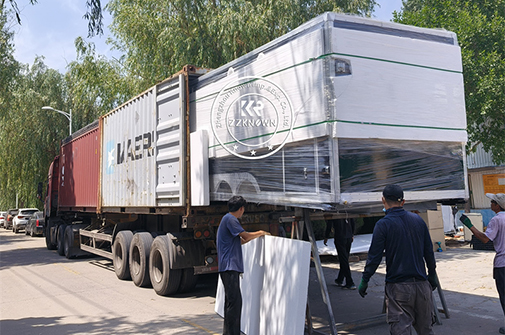
A customer received a customized food trailer with the brake cable packed safely for transport. During installation, the brake felt loose at first. Instead of changing parts, the installer checked the screw position near the tow bar and moved the nut position slightly away from the tow bar direction. After tightening the nuts and testing again, both wheels braked more firmly.
This is a common successful case. The brake cable was not damaged. It only needed correct tension adjustment.
What Is A Common Failed Installation Case
Another common situation is when one wheel brakes tightly and the other wheel remains loose. Some users keep adjusting the main screw near the tow bar, but the problem does not disappear.
The reason is simple. When the two wheels are not synchronized, each wheel side must be adjusted separately. The single wheel brake tightness is controlled by the brake cable on the same side. After the loose side is adjusted closer to the tow bar direction, the two wheels can brake more evenly.
Why Choose A Factory Built Food Trailer With Good Brake Details
A food trailer is not only a kitchen on wheels. It is also a trailer structure that needs correct towing, braking, weight balance, and road use design. ZZKNOWN focuses on custom food trailers, concession trailers, food truck trailers, refrigerated trailers, and mobile kitchen trailers with practical installation details for global buyers.
For customers in the USA, Europe, and Australia, we can customize trailer size, kitchen layout, equipment, electrical system, water system, gas system, axle structure, and local standard requirements. Details such as brake cable installation, tow bar structure, wheel position, and chassis strength are considered during production.
FAQ
How do I know if my food trailer brake cable is too loose
If the brake head moves a lot but the wheels do not brake firmly, or if the trailer still moves easily after braking, the cable may be too loose. Check the tow bar side screw and the wheel side cable adjustment.
What should I do if both wheels feel loose
If both wheels are loose and the tightness feels similar, adjust the screw near the tow bar hole slightly away from the tow bar direction. Then tighten the nuts and test again.
What should I do if only one wheel is loose
Adjust the brake cable on the same side as that wheel. Single wheel tightness should be adjusted separately.
Which direction makes the brake tighter
For a single wheel brake cable, moving the screw position closer to the tow bar direction makes the brake tighter.
Which direction makes the brake looser
Moving the screw position away from the tow bar direction makes the brake looser.
Does the brake head position affect tightness
Yes. When the brake head moves closer to the trailer body, the brake becomes tighter. When it moves outward, the brake becomes looser.
Can I tow the trailer immediately after adjustment
Do a brake test first. Check whether all nuts are tight, the cable is straight, and both wheels brake evenly. If the brake still feels abnormal, stop and adjust again before towing.
Should I ask a technician to check the brake system
Yes, if you are not familiar with trailer brake systems or if the trailer will be used on public roads. Brake systems affect safety, so professional inspection is recommended when needed.