Direct answer: The best food trailer location matches your menu, target customer, operating hours and trailer requirements. Before signing a lease or paying an event fee, compare legal access, pedestrian traffic, parking, utilities, competition, total site cost and weather exposure. Test promising locations for several service periods, record orders and costs, and confirm local health, fire, zoning and vending requirements.
Applies to: international food trailer operators. Local rules vary by country, state and city. Published: March 27, 2025. Last updated: September 24, 2026.
| Location type | Useful when | Check before committing |
|---|---|---|
| Business districts | Your menu is fast and suits lunch service | Lunch-hour traffic, parking rules, competition and queue space |
| Universities | Your pricing and menu fit students | Term dates, campus permission, peak class times and payment preferences |
| Festivals and events | You can serve a simplified menu at higher volume | Vendor fee, attendance evidence, utilities, competing vendors and weather policy |
| Parks and leisure areas | Your menu suits families, snacks or cold drinks | Seasonality, access hours, waste rules and weather exposure |
| Private commercial sites | A property owner permits repeat service | Written agreement, utilities, signage, insurance and customer parking |
| Construction and industrial sites | You can serve early or fixed meal breaks | Site permission, worker count, shift times and safe vehicle access |
For temporary events, also read our food truck festival preparation guide.
Use the same simple method at every candidate location. Count people passing the proposed serving side in 15-minute blocks, then record how many appear to match your target customer. Repeat the count at the hours you intend to trade. A busy location at 8:00 a.m. may be quiet during your planned dinner service.
| Test field | What to record | Why it matters |
|---|---|---|
| Date and time | Weekday/weekend, start and finish | Separates one unusual period from a repeatable pattern |
| Pedestrian count | People passing in each 15-minute block | Shows when customer exposure is strongest |
| Orders and average ticket | Number of orders and gross sales | Lets you compare conversion and order value |
| Service speed | Typical wait and longest queue | Shows whether the menu and layout fit the demand |
| Conditions | Weather, nearby events and road works | Explains unusual results |
Practical method: run at least three comparable service tests before committing to a long agreement. Seven sessions covering different days and weather conditions provide a clearer operating picture. This is a testing method, not a guarantee of future sales.
Requirements depend on the destination. Contact the local health department, fire authority, zoning or planning office, vehicle-registration authority and property owner as applicable. Ask whether you need a mobile food permit, business licence, site or parking permission, commissary agreement, food-handler documentation, fire inspection, gas inspection or electrical approval.
The U.S. Food and Drug Administration publishes a model Food Code, but adoption and enforcement vary by state and local authority. Manufacturer documentation does not replace destination-specific approval.
ZZKNOWN can configure trailer size, layout, voltage, equipment and available documentation around confirmed buyer requirements. Local authorities decide whether a unit may operate at a particular site.
Do not compare locations using rent alone. Use this working formula:
Then compare the cost with the contribution margin from actual test orders. Keep estimates separate from confirmed invoices and record which costs are daily, weekly, monthly or event-specific.
A constrained urban site may favor a compact trailer, while a high-volume event may require a wider serving window, more preparation space or a separate collection point. Confirm the towing route, turning space, stabilizer clearance, customer approach, service-window direction, generator or shore-power position, water and wastewater access, and emergency exits before finalizing the layout.
See custom food trailer design and OEM/ODM support for layout planning based on menu, staff and destination market.
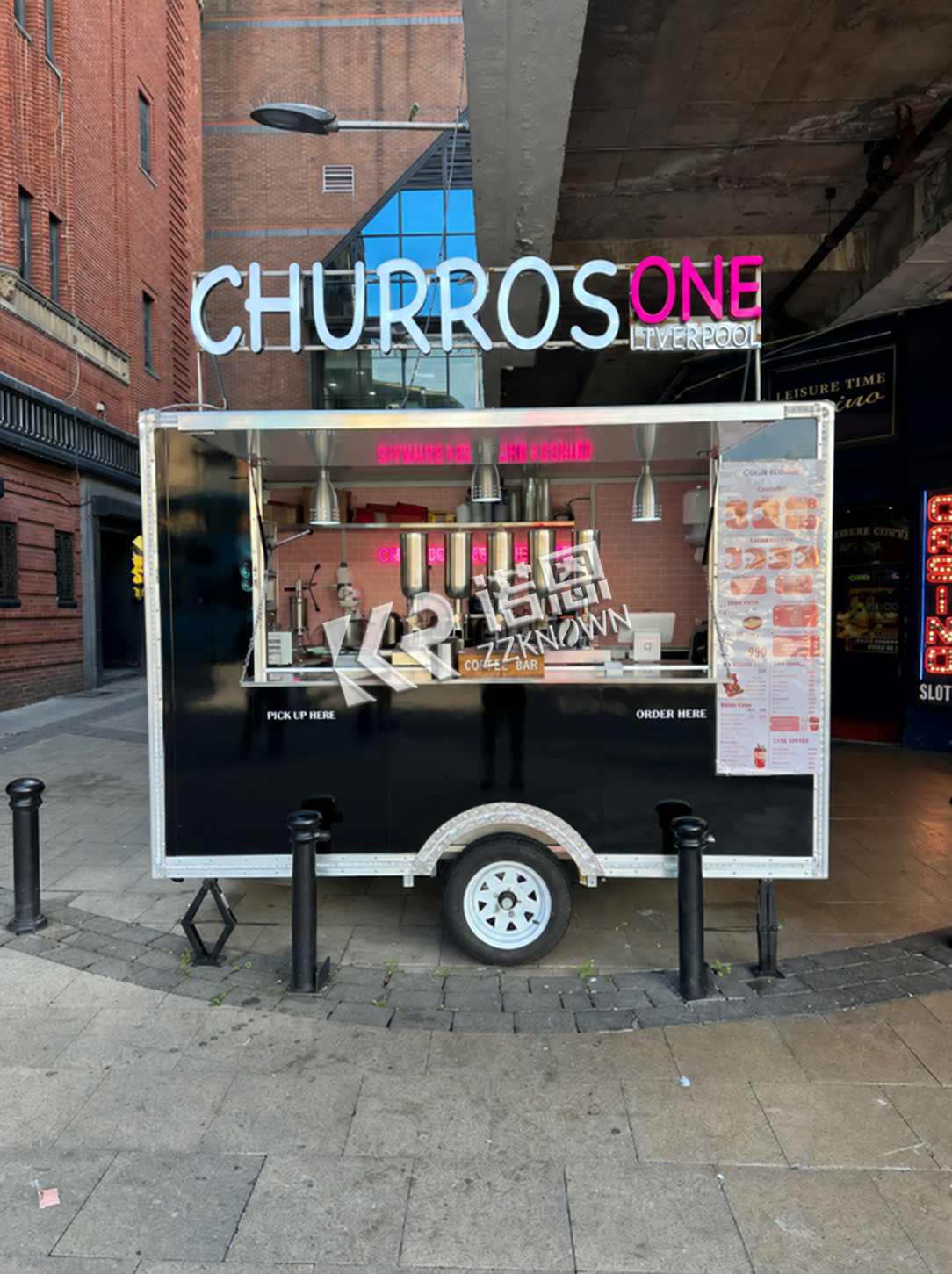
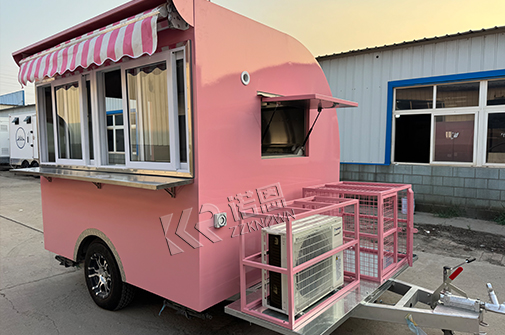
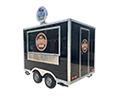
Customer-supplied photos show a 3 m food trailer used by a UK customer serving churros, smoothies and coffee. The compact body, single axle, large service window and illuminated sign suit a constrained urban setting. The example shows why buyers should check the customer approach direction, service-window orientation, towing access and utility connection points before choosing a trailer size.
Documented details: UK customer material; 3 m square trailer; single axle; large serving window; coffee, smoothie and churros equipment visible.
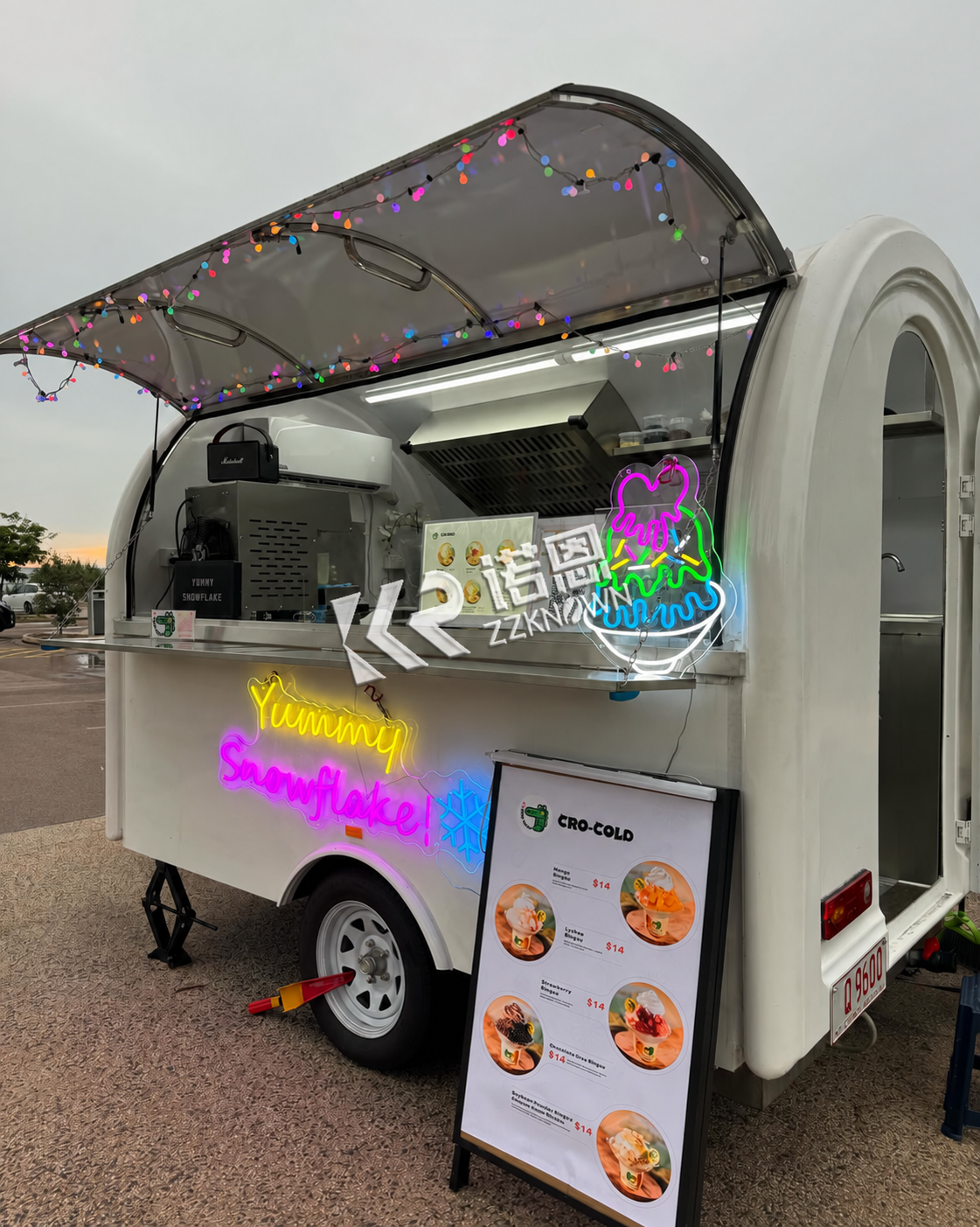
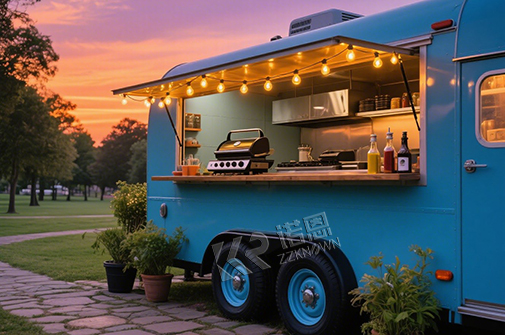
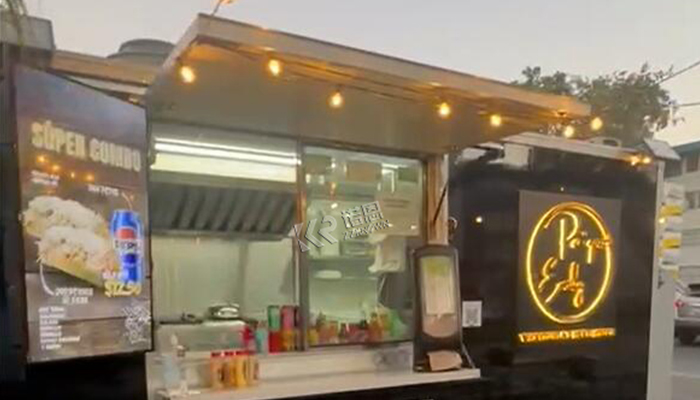
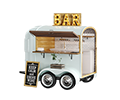
Customer-supplied photos show this 280W trailer operating at an outdoor location in Australia. Its illuminated service window and external menu board make the offer visible after sunset. The setup also highlights the need to check customer waiting space, menu visibility, lighting, service-window clearance and access to operating utilities.
Documented details: Australian customer material; 280W rounded trailer; single axle; external menu board; lighting, refrigeration, extraction and preparation equipment visible.
These cases demonstrate operating considerations only. They do not prove a particular sales result. Browse more real customer projects.
For a new business, a short trial or flexible agreement can reduce uncertainty. Ask the property owner or event organizer for the exact operating area, trading hours, fee schedule, included utilities, cancellation rules, insurance requirements and competitor policy in writing. Do not assume that owning or renting private land automatically grants permission to sell food there.
No. The audience must match your menu, price, service time and opening hours, and you must be legally permitted to operate there.
Test several comparable service periods. Three sessions are a practical minimum for screening; more sessions across different days and conditions give a stronger basis for comparison.
Confirm electrical supply, voltage and outlet type, generator restrictions, potable-water access, wastewater disposal, gas rules, lighting and waste collection.
Not necessarily. Property-owner permission and government operating approval are separate issues. Confirm both in writing.
Enough to keep customers away from moving vehicles, neighboring entrances and the trailer hitch while maintaining access to exits. The local authority or event organizer may set additional rules.
Usually it should face the safe customer approach and waiting area, not moving traffic. Confirm the final orientation during the site review.
Use the same operating hours and record pedestrian counts, orders, average ticket, direct costs, service time, weather and unusual events.
No manufacturer can replace local authority review. ZZKNOWN can prepare a layout and configure specified equipment and available documentation based on buyer requirements, while approval remains destination-specific.
This guide combines practical site-review questions used during food trailer layout discussions, customer-supplied operating photos and official small-business and food-safety resources. No sales or profit figures have been inferred from the customer images.
Share your menu, destination, preferred trailer size, staff count and available utilities. ZZKNOWN can prepare a 2D or 3D layout and equipment proposal for review before production.
Author: ZZKNOWN Editorial Team | Technical review: ZZKNOWN Engineering Team