Direct answer: A successful food trailer festival setup starts before the event. Confirm permits, vendor fees, attendance evidence, utilities, access times and weather rules; then match the menu, inventory, staff and trailer layout to realistic service capacity. Run a timed service test, document total event costs and prepare backup plans. A large crowd can create opportunity, but it does not guarantee sales or profit.
Applies to: international food trailer and food truck operators. Event and food-safety rules vary by country, state and city. Published: January 26, 2025. Last updated: September 24, 2026.
| Event type | Possible advantage | Check before applying |
|---|---|---|
| Food truck festival | Audience expects mobile food | Vendor count, cuisine overlap, fee, utilities and queue allocation |
| Music or cultural festival | Longer trading window | Noise, lighting, overnight access, weather and stock security |
| Community market | Lower-volume test opportunity | Repeat schedule, local permission, customer mix and parking |
| Private or corporate event | Pre-agreed service window | Guaranteed minimum, payment terms, guest count and dietary needs |
| Sports event | Predictable peak periods | Arrival route, rush timing, menu speed and venue restrictions |
Also review our food trailer location evaluation guide before accepting a site.
Separate confirmed invoices from estimates and include every event-specific expense. Use these planning formulas:
Total event cost = vendor fee + permits + travel + fuel + labor + ingredients + packaging + utilities + insurance allocation + waste + accommodation
Required orders to cover event costs = total event cost ÷ contribution per order
Contribution per order means selling price minus the variable food, packaging and transaction cost for that order. This calculation is a planning tool, not a profit guarantee. Compare it with your tested service capacity and the organizer's documented information.
Start with the slowest production step. Time each menu item from order to handoff, then identify tasks that can be completed safely before the rush. A shorter menu often makes purchasing, holding temperatures, training and queue communication easier.
| Planning item | What to measure | Decision it supports |
|---|---|---|
| Menu cycle time | Minutes from order to handoff | Realistic orders per service period |
| Bottleneck station | Grill, fryer, beverage, payment or pickup delay | Equipment position and staff assignment |
| Holding capacity | Safe hot and cold storage volume | Batch size and replenishment plan |
| Utilities | Actual electrical, gas and water demand | Shore power, generator and water plan |
Use our menu-and-staff layout guide and food trailer size guide when planning workstations.
Confirm connection type, voltage, current limit, generator restrictions, potable-water supply, wastewater disposal, LPG or other fuel rules, fire-extinguisher requirements, ventilation, lighting and waste collection. The U.S. FDA Food Code is a model reference; adoption and enforcement remain state- and local-specific. Event rules do not replace health, fire, gas, electrical or vehicle approval.
Engineer note: size the electrical and gas systems from the confirmed equipment list, not from a generic festival estimate. Simultaneous equipment use, startup loads and cable length can change requirements. Review the food trailer fire-safety guide and obtain destination-specific approval.
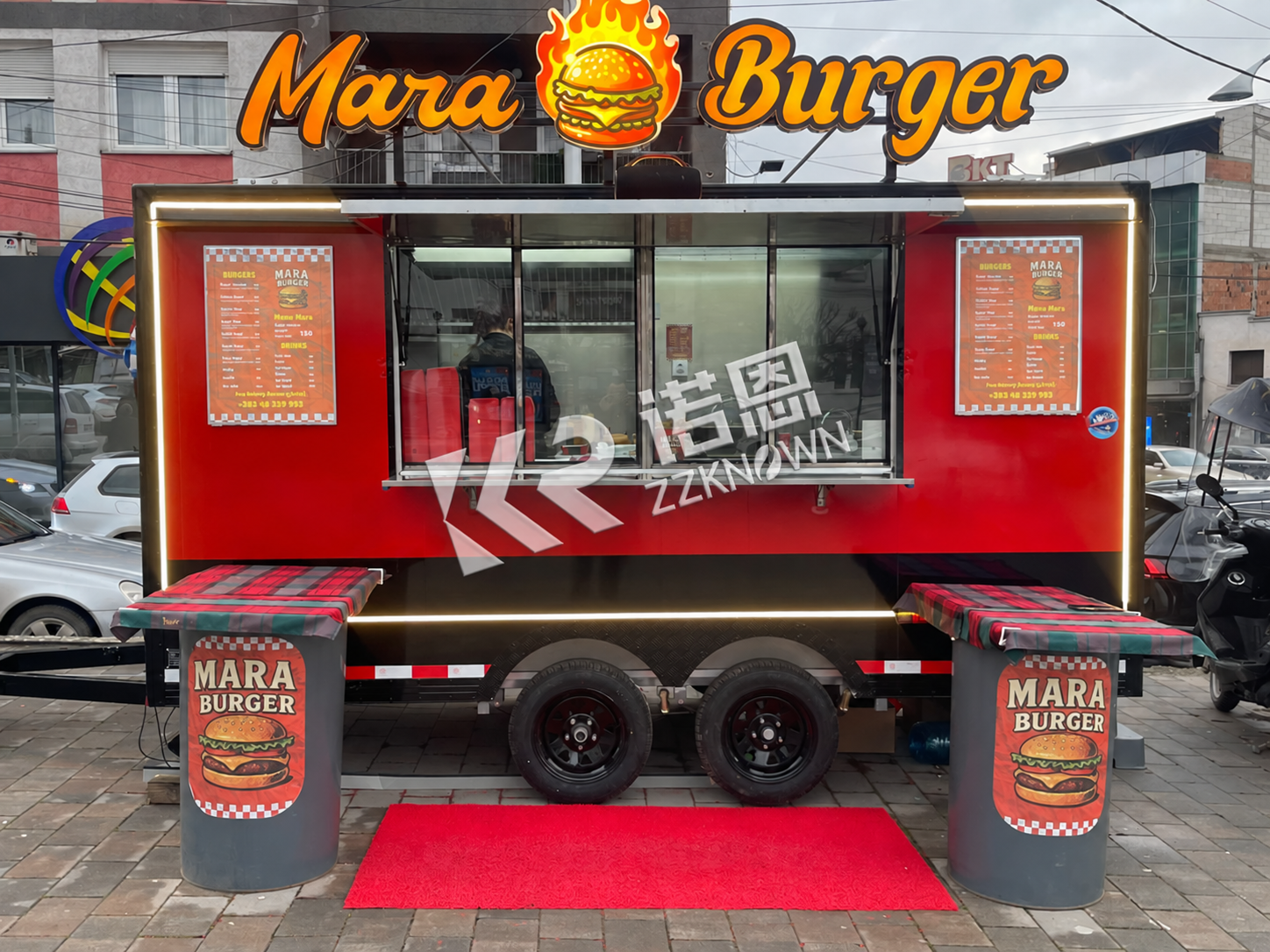
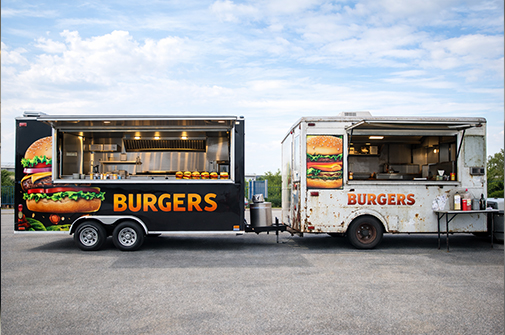
Customer-supplied material shows a red-and-black dual-axle burger trailer with an illuminated sign, large serving opening, two exterior menu boards and customer-side ledges. These visible features can help an event operator plan menu communication, queue direction, pickup space and evening visibility.
Documented details: customer-supplied operating image; burger menu; dual-axle trailer; illuminated exterior; serving window and menu boards visible. No sales or profit result has been inferred.
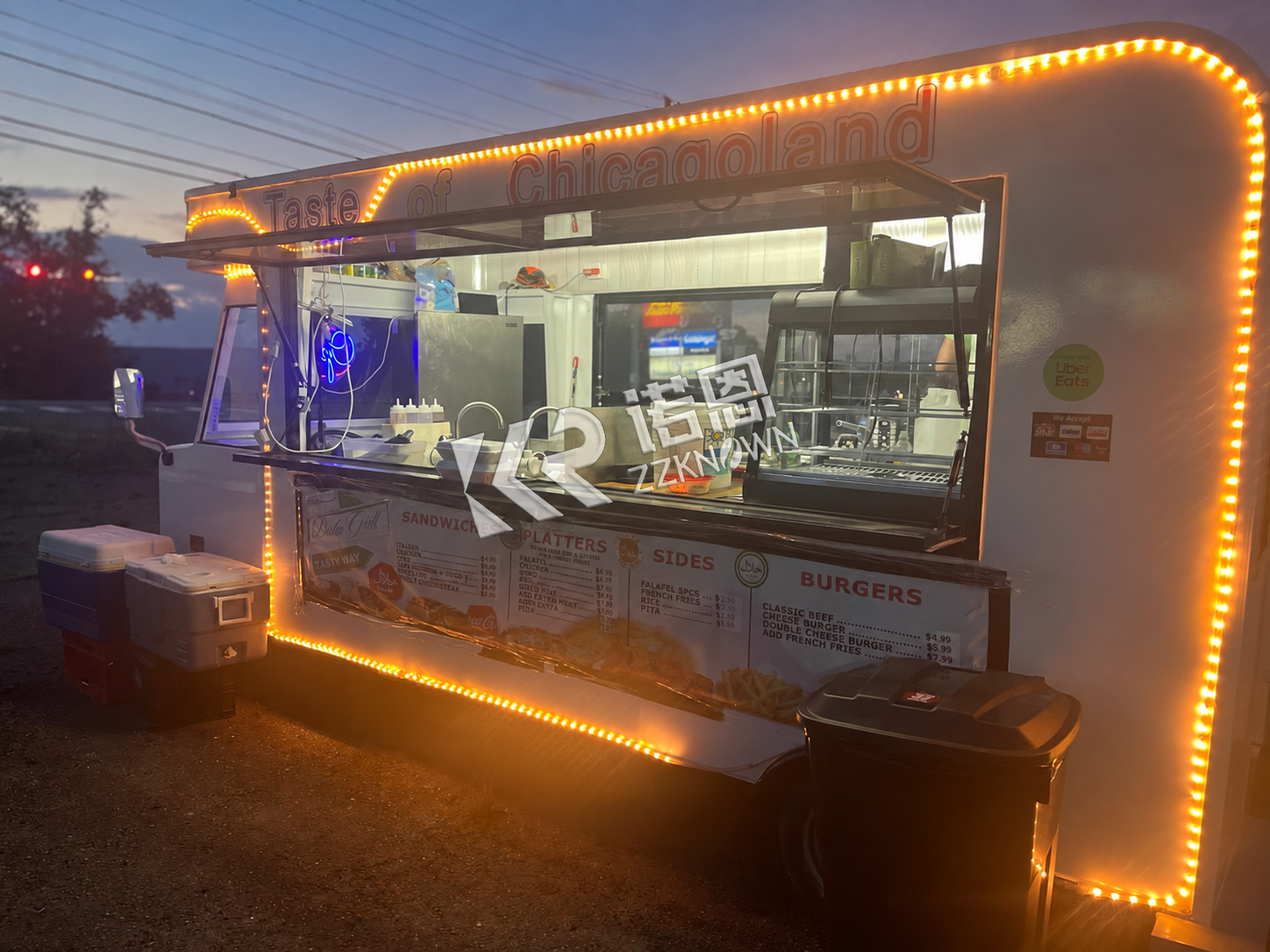
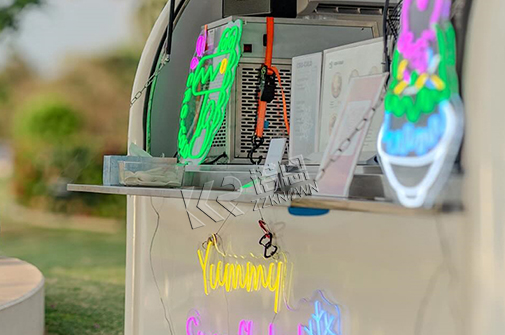
Another customer-supplied image shows an illuminated trailer operating after sunset with a wide service opening, visible menu graphics, countertop equipment and external coolers. The setup illustrates why lighting, safe cable routing, stock storage, waste placement and closing-time access should be reviewed before an evening event.
Documented details: customer-supplied operating image; evening service; illuminated perimeter; menu graphics, equipment and external storage visible. No attendance, order or revenue figure has been assumed.
Browse more real customer projects.
Record orders, average ticket, ingredient and packaging use, waste, labor hours, vendor fees, travel, equipment issues, weather and customer comments. Compare actual results with the pre-event plan. Keep the event name and date with the data so future decisions rely on comparable evidence rather than memory.
No. Attendance, vendor count, cuisine overlap, customer profile, weather, location within the site and service capacity all affect results.
Use the smallest menu that meets the event concept and can be produced safely at your tested service speed. There is no universal number.
Compare the organizer's confirmed supply with the trailer's calculated load. Check connector type, current limit, cable route, generator restrictions and backup options.
Requirements may include business and mobile-food permits, inspection records, insurance, food-handler documents, menu information, fire or gas records and vehicle details. Confirm locally.
Base quantities on tested sales data, safe storage capacity, event duration and a written replenishment plan—not attendance alone.
Follow the organizer's safety and cancellation policy. Protect equipment and signage, secure loose items, review towing access and do not operate when conditions are unsafe.
No manufacturer can replace organizer or authority review. ZZKNOWN can configure a trailer and provide available documentation against confirmed requirements; final approval is destination-specific.
Compare total cost, operating hours, tested order capacity, utility access and repeatability. The location guide provides a consistent measurement method.
This guide combines event-planning questions used during ZZKNOWN food trailer layout discussions, customer-supplied operating images and official small-business and food-safety resources. It does not claim a standard event profit or return period.
Before choosing a configuration, compare the food trailer cost guide and review custom design and OEM/ODM support.
Share your menu, destination, expected staff, event rules, preferred trailer size and available utilities. ZZKNOWN can prepare a 2D or 3D layout and equipment proposal for review before production.
Author: ZZKNOWN Editorial Team | Technical review: ZZKNOWN Engineering Team