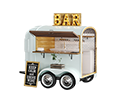
It is 2:45 p.m. on a Saturday, fifteen minutes before a birthday party begins. The trailer looks great from the curb. The screens are glowing, the controllers are lined up, and a group of excited kids is already waiting outside. Then the air conditioner trips a breaker. One console starts an update. The primary internet connection drops to one bar.
That is the moment when a mobile gaming trailer stops being a cool idea and becomes a real operating business. Customers are not only paying for games. They are paying for a smooth, supervised, on-time event in a small moving venue where power, heat, internet, safety, and customer service must work together.
If you are researching how to start a mobile gaming trailer business, this guide will walk you through the decisions that matter most: the business model, startup budget, equipment, capacity, pricing, marketing, licensing, and trailer design. We will also share what we have learned at ZZKNOWN while planning custom trailer interiors with buyers in different countries.
Important licensing reminder: Buying a console, game, or consumer subscription does not automatically give you the right to use it in a paid commercial event. Microsoft, for example, states that its digital goods are for personal, noncommercial entertainment and restricts public performance or display. Before accepting bookings, check the current terms for every platform and title you plan to use, and obtain guidance appropriate to your country. This article is practical business information, not legal advice.
A gaming trailer can be a practical event business when four things are true:
The opportunity is broader than children alone. The Entertainment Software Association reported in its 2025 Essential Facts study that more than 205 million Americans play video games. It also found that 55% of players ages 8 to 90 play with other people every week. That does not guarantee demand in your town, but it explains why gaming can work as a shared event rather than a solitary activity.
The business still succeeds one market at a time. Before ordering a trailer, talk to parents, party planners, schools, youth organizations, wedding venues, employers, and event organizers within the distance you can profitably serve.
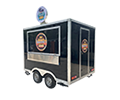
A mobile gaming trailer is a towable entertainment venue fitted with screens, consoles or gaming PCs, seating, sound, lighting, climate control, power distribution, and network equipment. The operator brings the trailer to the customer, sets it up, supervises the session, and packs it down when the booking ends.
Most owners sell time-based experiences instead of access to a physical product. A typical booking may include a defined service area, a set number of players, one or more game coaches, a curated game library, setup time, and a weather or cancellation policy. Optional services can include exterior screens, tournament hosting, virtual reality, themed decorations, additional time, photography, or corporate branding.
The trailer is only one part of the offer. Your real product is a managed event. A clean trailer arriving late is still a bad experience. Expensive consoles with confusing game accounts are still a bad experience. The best operators make the difficult technical work almost invisible to the customer.
Start with the customers who already pay for organized entertainment. Birthday parties are the obvious market, but depending on your location, they may not be the only or even the best source of repeat bookings.
Do not assume every audience wants the same setup. A nine-year-old birthday party needs age-appropriate games and clear parental controls. A corporate event may care more about fast rotations, team play, branding, and simple games that new players can learn quickly. A festival may require higher throughput, an outdoor display, queue control, and stronger weather planning.
For most first-time owners, a scheduled private-event model is easier to control than open admission. You know the location, duration, group size, travel distance, and expected revenue before leaving the yard. That makes staffing and cash-flow planning clearer.
| Model | How It Earns | Main Advantage | Main Challenge |
|---|---|---|---|
| Private parties | Fixed package by time and capacity | Predictable booking value | Weekend-heavy demand |
| Public events | Hourly hire, sponsor fee, or tickets | Visibility and lead generation | Queue and weather risk |
| Schools and camps | Half-day or full-day rate | Weekday utilization | Procurement and safeguarding rules |
| Corporate events | Premium hosted package | Higher service value | Professional delivery expectations |
There is no honest universal startup number. Trailer size, local road requirements, the number of stations, console choice, import costs, electrical standard, air-conditioning demand, insurance, and whether you already own a suitable tow vehicle can change the budget dramatically.
The U.S. Small Business Administration recommends separating one-time startup costs from recurring monthly expenses. That approach is much more useful than copying a total from another operator whose market, trailer, and equipment are different.
| Budget Group | What to Include | Commonly Missed Item |
|---|---|---|
| Trailer and delivery | Chassis, body, axles, brakes, freight, customs, registration | Tow-vehicle capacity |
| Interior fit-out | Insulation, walls, flooring, seating, cabinets, mounts | Service access panels |
| Gaming equipment | Displays, consoles or PCs, controllers, headsets, games | Spare controllers and cables |
| Power and climate | Distribution, shore inlet, generator or battery, AC, ventilation | Startup surge loads |
| Business launch | Registration, permits, insurance, booking system, website, branding | Deposits and professional advice |
| Operating reserve | Fuel, data service, repairs, cleaning, advertising, payroll | Slow-season cash buffer |
Build three totals: a minimum viable launch, a preferred setup, and a maximum budget you will not exceed. Ask suppliers for written, itemized quotations. Add a contingency rather than assuming every cable, permit, adapter, replacement part, and delivery charge is already covered.
Start with the experience you want to sell, not the maximum number of screens you can physically mount. More equipment creates more heat, more power demand, more accounts to manage, more controller failures, and more maintenance.
Download games and system updates before leaving for an event. Keep a small offline game list that does not depend on perfect connectivity, but confirm that the way you use each title is permitted. Never make the first test of a new game, router, or power source at a paying customer's driveway.
Capacity should be based on usable stations, seating, ventilation, exit access, supervision, and legal occupancy - not simply how many children can squeeze inside. A listing that says "up to 16 players" is not useful if only eight people can play comfortably or the air conditioner cannot manage the heat.
Ask these questions during layout planning:
A smaller, comfortable capacity often produces a better event than an impressive number used only in marketing. If the group is larger, rotate players in short rounds or add an exterior activity rather than overcrowding the interior.
This is the section to complete before taking deposits. Requirements vary by country, state, city, venue, vehicle classification, and customer type, so use the checklist as a starting point and verify each item locally.
The ESRB explains that parental controls can block games by rating, control spending, limit play time, and restrict online communication. Those settings are valuable in a family-focused trailer, but they do not replace active staff supervision or a clear game policy. Keep voice chat, friend requests, purchases, and public account access under control.
Do not begin with a competitor's price. Begin with your required revenue per booking, then compare the result with what customers in your service area are willing to pay.
Minimum booking price =
Direct event costs + share of monthly overhead + equipment reserve + target operating profit
Direct costs include labor, fuel, tolls, payment fees, cleaning, consumables, and any event-specific permit. Monthly overhead includes insurance, storage, software, phone and data plans, routine advertising, and loan or lease payments. Your equipment reserve pays for controller drift, damaged cables, failed displays, batteries, tires, and other replacements that are certain to happen eventually.
Create a simple base package with a clear duration, service radius, guest capacity, staffing level, and included features. Then add transparent fees for extra travel, extra time, exterior stations, holidays, difficult access, or premium customization. Require a deposit and publish cancellation, weather, parking, and power policies before checkout.
It can be, but profitability depends on booking volume, price, travel, staffing, financing, maintenance, seasonality, and how often the trailer sits unused. No manufacturer or online article can promise your result.
Use unit economics instead of optimistic annual revenue:
| Calculation | Formula |
|---|---|
| Contribution per booking | Booking revenue - direct event costs |
| Monthly break-even bookings | Monthly fixed costs / contribution per booking |
| Monthly operating profit | Total revenue - direct costs - fixed costs - replacement reserve |
Run a conservative, expected, and strong-demand scenario. In the conservative version, reduce bookings and increase repair or advertising costs. If the business works only when every weekend is full and nothing breaks, the plan needs more margin.
Your marketing should answer three questions in seconds: What is it? Who is it for? How do I book it? A short video showing the trailer arriving, opening, and running a real supervised event usually explains the offer better than a long list of equipment.
At ZZKNOWN, buyers often begin with a list of screens and consoles. We begin by asking what must happen around them. Where will players enter and leave? Where will the operator stand? How will heat escape? Which panels must be removable for repairs? Where will cables run when a screen is replaced three years later?
Our most practical design observations are these:
A well-designed custom mobile gaming trailer should be easy to operate on event day and easy to service later. Beautiful LED lighting is useful, but accessible wiring, secure equipment, airflow, balance, and clear movement are what keep the business running.
Do not send the factory a message that says only, "I need eight screens." Send an operating plan. The more complete your equipment and workflow information is before production, the fewer compromises you will make after the walls and cabinets are finished.
| Planning Question | Information to Confirm | Design Impact |
|---|---|---|
| Who will use it? | Age groups, active players, spectators, staff | Capacity, seating, supervision |
| What equipment is fixed? | Exact dimensions, weight, ports, wattage | Mounts, structure, power, access |
| How will it be powered? | Local voltage, shore power, generator, battery | Inlet, panel, circuits, ventilation |
| How will it connect? | Router, antennas, cellular backup, wired ports | Router position and cable routes |
| Where will it operate? | Climate, roads, parking, legal standards | Insulation, AC, axles, brakes, dimensions |
Review suitable OEM trailer models, then share the equipment list and local requirements during OEM/ODM trailer customization. Final compliance, registration, and commercial game licensing must still be confirmed for your destination and business.
Use enough stations to deliver your promised active-player capacity without overcrowding the trailer. Start with the business package and floor plan, then choose the equipment count.
Many games, account checks, updates, and online multiplayer features need internet. Maintain primary and backup connectivity, and keep a tested offline plan for permitted games that can operate locally.
Do not assume so. Consumer platform and game terms may limit use to personal, noncommercial entertainment. Ask the relevant platform and publisher what permission or commercial arrangement is required.
The right size depends on station count, seating, staff visibility, equipment, climate systems, legal dimensions, towing limits, and aisle or exit requirements. A scaled layout is more useful than a generic size recommendation.
It must be calculated from local climate, trailer volume, insulation, sun exposure, door use, electronics, and occupancy. Ask a qualified designer or HVAC professional instead of selecting from floor area alone.
Consoles are often simpler for a party format. PCs may offer different games and premium experiences but add cost, heat, security, updates, and technical support. Some operators use a controlled mix.
Use the rating system relevant to your country, create child-appropriate accounts, enable parental controls, restrict purchases and communication, curate the library, and keep an adult operator actively supervising.
Common needs may include commercial vehicle or trailer coverage, general liability, equipment coverage, and workers' compensation. An insurer familiar with mobile events should evaluate your exact operation.
Set a base service radius that still leaves a healthy contribution after driving time, fuel, tolls, setup, and return travel. Charge clearly for longer distances and confirm safe parking before accepting the event.
Yes, if insulation, climate control, ventilation, electrical capacity, seals, and local-weather procedures are designed for the target conditions. The same standard trailer should not be assumed suitable everywhere.
It depends on parking, leveling, power, internet, exterior equipment, and safety checks. Time the complete process during testing and include a buffer in every schedule rather than promising an untested number.
Usually, but the host style, games, branding, rotation plan, pricing, and customer expectations differ. Build flexible lighting and content options while keeping the technical operation consistent.
Begin with a one-page operating brief: target customers, booking length, service radius, active-player capacity, equipment list, local voltage, climate, towing limits, and the rules you have confirmed. That brief is the bridge between a business idea and a buildable trailer.
Explore more mobile business guides, or contact ZZKNOWN with your market, planned number of gaming stations, preferred equipment, and target capacity. We can help turn those requirements into a free preliminary layout for discussion.