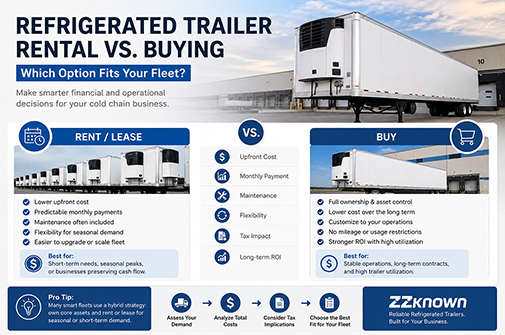
If you've spent any time in cold chain logistics lately, you've probably noticed a trend:
More businesses are investing in mobile refrigerated trailers than ever before. And it's not just small companies — large distributors, supermarket chains, seafood suppliers, and pharmaceutical fleets are all expanding their mobile cold storage capacity.
At ZZKNOWN, we've been part of this evolution. Over the past decade, our customers' requirements have shifted from static storage solutions to flexible, mobile refrigeration assets that can respond quickly to changing market demands.
But why is this happening now? And how can B2B logistics operators benefit from this trend?
This guide answers those questions, using real-world insights, data-backed examples, and practical advice for fleet managers, cold chain startups, and logistics operators looking to scale efficiently.
There are several key factors fueling adoption.
The cold chain industry is expanding rapidly. According to recent research:
| Segment | Annual Growth Rate |
|---|---|
| Frozen & chilled food | 6–8% |
| Pharmaceuticals | 7–9% |
| E-commerce fresh delivery | 10–12% |
Businesses need flexible refrigeration solutions to manage surges, seasonal demand, and last-mile delivery.
Unlike stationary cold storage, mobile refrigerated trailers allow businesses to:
Owning mobile trailers reduces rental costs over time and allows fleet optimization, especially when trailers are used daily across multiple routes. Instead of investing in multiple fixed facilities, a mobile fleet can cover:
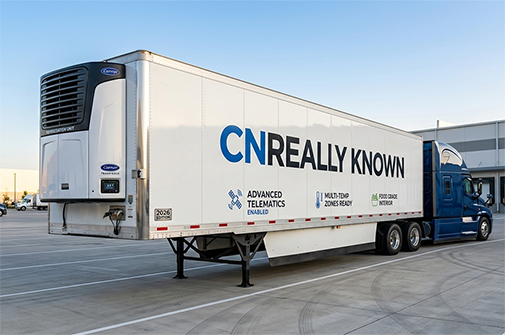
Mobile refrigerated trailers now come equipped with:
This makes them reliable for perishable goods while maintaining regulatory compliance.
| Industry | Application |
|---|---|
| Food & Beverage | Ice cream, frozen meals, fresh produce distribution |
| Pharmaceuticals | Vaccine transport, temperature-sensitive medicines |
| Event Catering | Festivals, weddings, outdoor food service |
| Supermarkets & Retail | Seasonal product distribution, overflow storage |
| Seafood & Meat | Supply chain deliveries to restaurants and markets |
Mobile refrigerated trailers come in a variety of sizes to meet operational needs.
| Size | Use Case |
|---|---|
| 10–16 ft | Local delivery, catering, small distribution |
| 20–28 ft | Regional distribution, mid-volume logistics |
| 30–53 ft | Large fleets, national distribution, multi-zone cargo |
Multi-temperature compartments are increasingly popular for operators transporting mixed products.
Using GPS and telematics, fleets can:
Proper maintenance ensures:
Many logistics operators combine:
This approach maximizes ROI and ensures flexibility during high-demand periods.
Q1: Why are mobile refrigerated trailers preferred over fixed cold storage?
A1: They provide flexibility, reduce capital expenditure on warehouses, and can respond to seasonal demand or emergencies efficiently.
Q2: What sizes are best for B2B logistics?
A2: 10–16 ft for local deliveries, 20–28 ft for regional distribution, 30–53 ft for national or high-volume operations.
Q3: Are multi-zone trailers necessary?
A3: Recommended for operators transporting mixed cargo (e.g., frozen and chilled products) to improve efficiency and reduce contamination risk.
Q4: How do mobile refrigerated trailers support regulatory compliance?
A4: Modern trailers include temperature monitoring, HACCP and FDA compliance features, and certifications like ATP and CE.
Q5: Can small startups benefit from mobile refrigerated trailers?
A5: Absolutely. Small fleets can scale operations without heavy investment in fixed cold storage infrastructure.
Mobile refrigerated trailers are no longer a niche solution — they’re becoming essential assets in the modern cold chain industry.
For fleet managers, logistics operators, and cold chain startups, the benefits are clear:
At ZZKNOWN, we've seen how investing in mobile refrigerated trailers can transform cold chain operations, reduce losses, and create scalable growth opportunities.
For businesses looking to stay competitive in the fast-growing B2B logistics market, mobile refrigerated trailers are no longer optional—they’re essential.