Let me tell you a quick story. A few years ago, a buddy of mine started a cold chain logistics company. He landed a massive contract hauling fresh berries from California to the Midwest. Eager to get moving, he jumped online, searched for a "refrigerated trailer for sale," and bought the first used 53-footer that looked decent and fit his budget.
Three days later, I got a frantic phone call. The trailer's insulation was degraded, the cooling unit couldn't keep up with the Arizona heat, and he lost $40,000 worth of organic strawberries.
That right there is why I'm writing this guide. Whether you're a fleet manager upgrading your equipment in 2026 or a startup trying to break into the lucrative cold chain market, buying a reefer trailer is not like buying a dry van. It is a highly specialized, expensive piece of machinery. You aren't just hauling freight; you are keeping a mobile climate-controlled environment stable while bouncing down the highway at 70 miles per hour.
Grab a cup of coffee. We are going to walk through everything you need to know to find the absolute best refrigerated trailer for sale in 2026, without making the expensive mistakes my friend did.
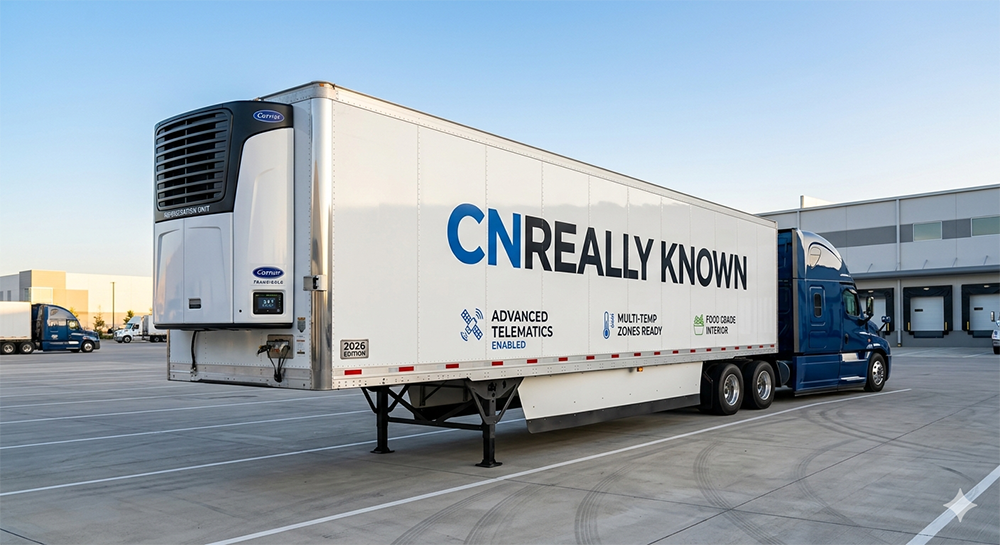
Honestly? Yes. If you've been searching for a refrigerated trailer for sale lately, you've probably noticed that inventory is tight and prices are firm. According to recent supply chain research, the demand for temperature-controlled freight—driven by pharmaceuticals and grocery delivery—jumped 14% over the last two years, but manufacturing output hasn't fully caught up.
Because of this, you have to be smart. You can't just kick the tires; you have to understand the thermodynamic capabilities of the box you're buying.
Here is a secret that surprises a lot of new buyers: the cooling unit (the TRU, or Transport Refrigeration Unit) is critical, but it's useless if the box itself is garbage.
Think of it like buying a massive air conditioner for a house that has no windows or doors. If the trailer's insulation is compromised, your TRU will run constantly, burning through diesel, wearing out the engine, and still failing to maintain temperature.
When you look at a refrigerated trailer for sale, you need to evaluate three main pillars:
The TRU (Transport Refrigeration Unit): This is the engine on the front. Thermo King and Carrier are the absolute heavyweights here.
The Insulation (The Box): Usually made of polyurethane foam. Over time, foam outgasses and loses its R-value (its ability to resist heat transfer).
The Floor: Airflow is everything in a reefer. Heavy-duty duct floors (often aluminum) allow cold air to flow under the pallets and circulate to the back doors.
If we are looking at specs, here is what you need to zero in on.
| Feature | What to Look For in 2026 | Why It Matters |
| Length | 53' is standard, 48' or 28' (pup) for urban delivery | 53' gives you max capacity (up to 30 pallets) for long-haul routes. |
| Floor Type | Heavy-duty extruded aluminum duct floor | Handles heavy forklift traffic and ensures proper under-pallet air circulation. |
| Insulation | High-density polyurethane | Keeps the cold in. Older trailers lose up to 3-5% of insulation efficiency per year. |
| Scuff Liners | High-impact plastic or aluminum | Protects the interior walls from careless forklift drivers. Punctured walls ruin insulation. |
| Telematics | Two-way remote temperature control | Allows you to monitor temps from your phone and prove to the receiver that the cold chain was maintained. |
This is a question I get asked constantly by startups. Should you buy a standard single-temp trailer, or spend the extra cash on a multi-temp (often called a multi-zone) trailer?
Let me break down the difference simply. A single-temp trailer keeps the whole box at one temperature. A multi-temp trailer uses movable, insulated bulkheads and remote evaporators so you can haul deep-frozen ice cream in the front (-10°F), fresh produce in the middle (35°F), and dry goods in the back.
My personal take: If you are running dedicated truckload (TL) freight—like moving a full truck of beef from a packing plant to a distribution center—stick to a single-temp. They are cheaper to buy, cheaper to maintain, and lighter.
But, if you are doing Less-Than-Truckload (LTL) food service, grocery delivery, or you want maximum versatility to win high-paying contracts, multi-temp is the way to go. Just be aware that maintaining multiple evaporators means higher maintenance costs. I recently worked with a fleet manager who specifically targeted multi-temp units when searching for a refrigerated trailer for sale because it allowed him to double-dip on smaller, high-margin local routes.
This is the million-dollar question. A brand new 2026 53-foot refrigerated trailer will easily run you between $85,000 and $110,000 depending on the specs. A 7-year-old used trailer might cost $40,000.
Sounds like an easy choice, right? Not so fast.
Reefers age like dogs. A 7-year-old dry van still has a lot of life left. A 7-year-old reefer is entering its twilight years for long-haul. Because the foam insulation degrades over time, an older trailer weighs more (from absorbing moisture) and insulates worse. The TRU will also have thousands of engine hours on it.
Here is my rule of thumb:
Buy New If: You are running long-haul, high-liability freight (like pharmaceuticals or high-end seafood), and you plan to keep the trailer for 5-7 years. The fuel savings from better insulation and a modern, efficient TRU will offset the purchase price. Plus, you get a warranty.
Buy Used If: You are doing local, short-haul deliveries, using the trailer for stationary cold storage, or you have a top-tier mechanic on staff.
Insider Tip: When a buddy of mine was expanding his fleet, he ended up sourcing from ZZKNOWN—a solid move because they understand the structural integrity needed for heavy-duty cold chain logistics. They are known for building boxes that don't twist and flex under heavy loads, which prevents micro-cracks in the insulation panels.
If you do search for a used refrigerated trailer for sale, ignore the odometer on the truck and look at the engine hours on the TRU.
0 – 10,000 hours: Basically new.
10,000 – 20,000 hours: Mid-life. Expect to replace belts, alternators, and maybe the starter.
20,000+ hours: Danger zone. The engine might need a rebuild, and the compressor could be on its last legs.
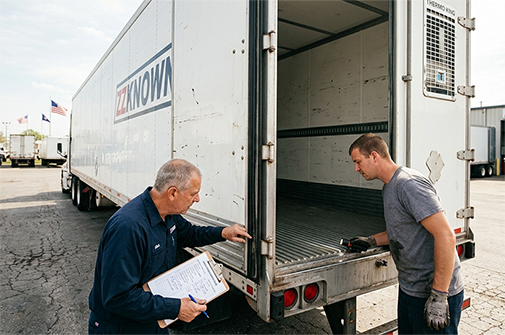
Always, always pay a certified Thermo King or Carrier technician to hook up their laptop and pull the engine codes before you hand over a check.
A lot of folks blow their whole budget acquiring the asset and forget that reefers are hungry beasts.
Diesel: The TRU runs on its own diesel tank (usually 30 to 50 gallons). Depending on the ambient temperature and the set point, a unit can burn 0.5 to 1.5 gallons per hour. In the summer heat of Texas, that adds up fast.
Maintenance: You need to service the TRU engine just like a truck engine—oil changes, fuel filters, air filters. Plus, you have to maintain the refrigeration circuit (compressor, refrigerant, belts).
Trailer Washouts: Food safety regulations (like FSMA) require the trailer to be sanitized between loads. If you haul raw chicken, you have to pay for a commercial washout before you can load fresh lettuce.
Insurance: Cargo insurance for temperature-controlled freight is significantly more expensive than dry freight. If your unit breaks down and a load of pharmaceuticals spoils, the claim can easily exceed $250,000.
Absolutely. We are way past the days of the driver having to pull over, walk to the back of the truck, and look at an analog thermometer.
Modern trailers come equipped with advanced two-way telematics. As a fleet manager sitting in an office in Chicago, you can see that your trailer in Nevada is set to 34°F, the return air is 35°F, the fuel tank is at 60%, and the doors are closed.
Even better? If the driver accidentally sets the unit to 54°F instead of 34°F, you can log into a portal and change the temperature remotely before the load spoils. When a receiver tries to claim the product arrived warm, you can hand them a minute-by-minute digital temperature log proving the cold chain was never broken. Do not buy a refrigerated trailer in 2026 without a modern telematics gateway.
If you are walking a lot looking at a refrigerated trailer for sale, keep your eyes peeled for these absolute dealbreakers:
Wavy or Delaminated Walls: Look down the side of the exterior and interior walls. If they look wavy or bubbly, the insulation has separated from the skin. The trailer is severely compromised.
Patched Floors: Walk the entire length of the floor. If the aluminum duct floor is smashed flat in places, air cannot flow under the pallets. Those spots will create "hot zones" in the trailer.
Heavy Door Damage: The rear doors take a beating at loading docks. If the door seals are ripped, or the doors don't latch tightly, you are literally blowing cold air—and money—onto the highway.
Weird Smells: If you open the doors and it smells heavily of bleach, mildew, or rotting meat, walk away. Odors can seep into the fiberglass and insulation, and some receivers will reject your trailer before they even load it if it smells off.
For over-the-road (OTR) long-haul use, the prime lifespan is about 5 to 7 years. After that, the insulation degrades to the point where fuel efficiency drops significantly. Many fleets will then sell them to local operators or farmers to be used for another 5-10 years as local delivery units or stationary storage.
Most standard refrigerated trailers can maintain temperatures ranging from -20°F (-29°C) up to 80°F (27°C). Yes, they can also heat! If you are hauling water or paint through North Dakota in January, the TRU will run in heating mode to prevent the product from freezing.
If you are doing long-haul truckload, always choose swing doors. They seal much tighter and offer better insulation. If you are doing multi-stop urban delivery (like delivering to 15 restaurants a day), a roll-up door is much faster and safer, though you sacrifice some thermal efficiency.
It's a fabric or plastic duct that runs along the ceiling from the cooling unit to the back of the trailer. It forces the cold air to the rear doors, ensuring even temperature distribution instead of just freezing the pallets closest to the nose of the trailer.
Finding the right refrigerated trailer for sale is about matching the equipment to your specific freight network. Don't overbuy on multi-temp technology if you don't need it, but don't underbuy on insulation just to save a few bucks on the front end.
If you remember one thing from this guide, let it be this: You are buying a mobile climate chamber. The integrity of the box is just as important as the horsepower of the cooling unit. Check the engine hours, inspect the walls and floors, insist on telematics, and lean on reputable manufacturers and dealers.
Whether you end up sourcing a heavy-duty unit from a company like ZZKNOWN or finding a pristine used Thermo King at a local dealership, do your homework. The cold chain is a highly profitable industry for those who get it right, but it is brutally unforgiving to bad equipment. Stay cool out there, and happy hauling!