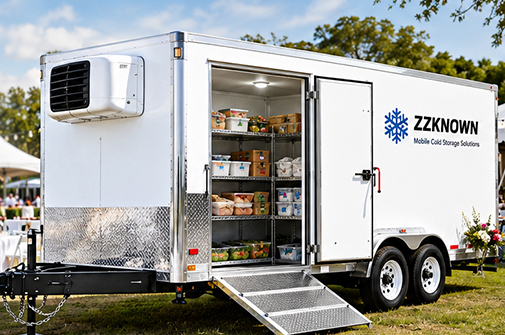
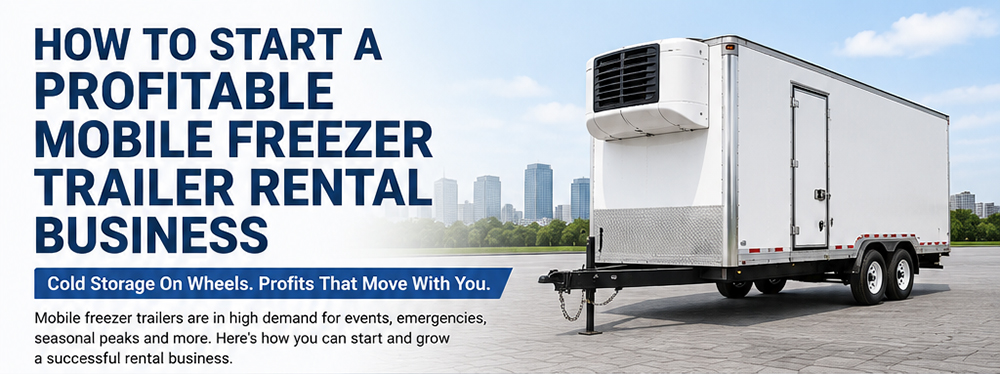
A few years ago, most people never thought about renting a freezer trailer.
Today?
Mobile cold storage rentals are everywhere.
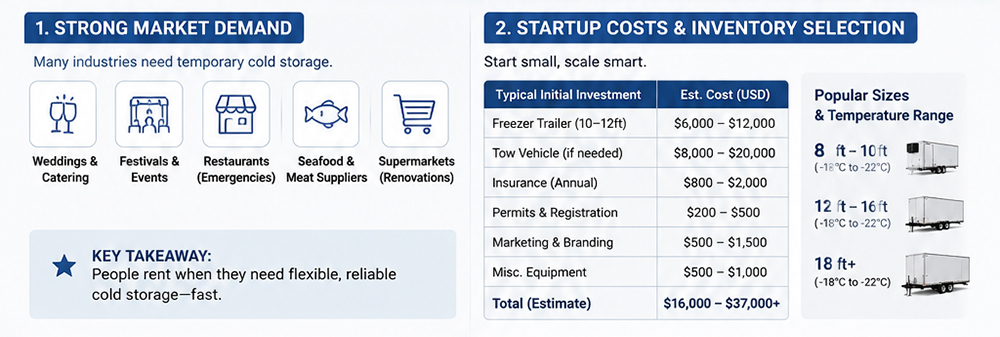
Wedding caterers need temporary refrigeration.
Festival vendors need backup freezer space.
Restaurants need emergency cold storage when walk-in coolers fail.
Seafood distributors need seasonal overflow capacity.
Supermarkets need temporary refrigerated storage during renovations.
And every one of those situations creates opportunity.
That's why more entrepreneurs are now looking into starting a refrigerated trailer business — especially smaller investors who want a business model with relatively stable commercial demand.
At ZZKNOWN, we've seen customers build surprisingly profitable rental operations using just one or two freezer trailers initially. Some eventually expanded into full local cold storage fleets serving restaurants, event companies, and logistics businesses.
But here's the truth:
This business is not just about buying a trailer and waiting for customers.
The operators who succeed usually understand three things very well:
This guide walks through the real-world side of building a mobile freezer trailer rental business — like talking to someone who already tested the model, made mistakes, and learned what actually works.
Because modern businesses increasingly rely on flexible cold storage.
Years ago, companies often depended entirely on permanent refrigeration infrastructure.
Now businesses want:
And they want it quickly.
That shift has created a growing rental market.
More than most people realize.
Here are some of the most common customers.
| Industry | Typical Rental Need |
|---|---|
| Wedding catering | Weekend cold storage |
| Festivals & fairs | Temporary refrigeration |
| Restaurants | Emergency cooler failure |
| Supermarkets | Renovation backup |
| Seafood businesses | Seasonal overflow |
| Beverage distributors | Peak summer demand |
| Ice cream vendors | Event storage |
| Pharmacies | Temporary cold chain support |
The important thing to understand is this:
Most clients don’t want to own extra refrigeration equipment permanently.
They only need additional cold storage temporarily.
That’s exactly why rental businesses work.
Because emergencies create urgent demand.
And urgent demand usually means higher pricing power.
Imagine:
A restaurant’s walk-in freezer suddenly fails on Friday afternoon before a busy weekend.
They don’t have time to compare ten suppliers.
They need cold storage immediately.
Rental businesses that respond quickly often build loyal repeat customers from these situations.
One rental operator told us nearly 40% of their long-term commercial clients originally came from emergency service calls.
Because event businesses hate equipment ownership.
Think about it:
A catering company may only need large refrigeration capacity during:
Owning extra refrigeration year-round may not make financial sense for them.
So they rent instead.
That creates recurring seasonal revenue opportunities.
This depends heavily on:
But even small operations can generate strong returns.
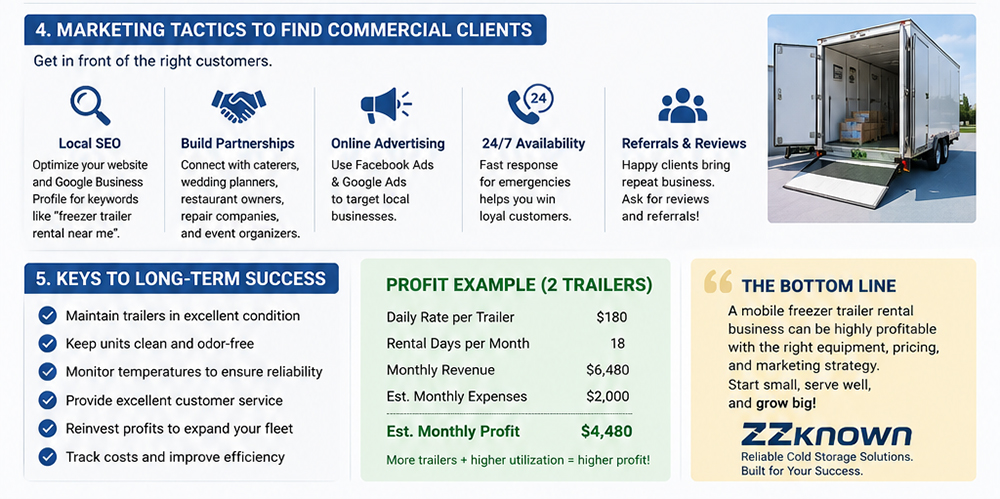
Suppose you own:
And each rents for:
If each trailer averages:
Monthly gross revenue becomes:
2×180×18=64802 \times 180 \times 18 = 64802×180×18=6480
And that’s with only two trailers.
Many operators scale gradually from there.
This is usually the first big question entrepreneurs ask.
The good news?
Compared to many logistics businesses, startup costs can be relatively manageable.
This is your largest expense.
Typical ranges:
| Trailer Type | Estimated Cost |
|---|---|
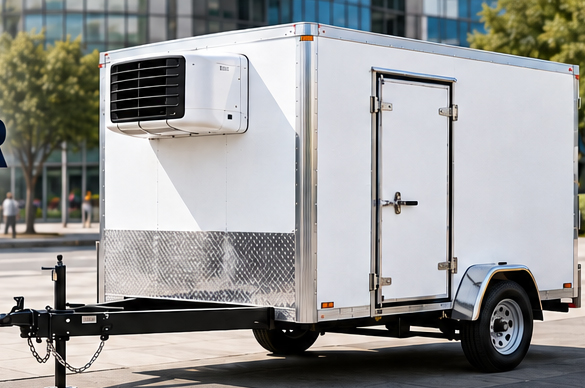
| Small 10ft freezer trailer | $4,000–$8,000 |
| Mid-size 12ft–16ft trailer | $8,000–$15,000 |
| Large commercial reefer trailer | $20,000+ |
Some operators already own suitable tow vehicles.
If not, this becomes another major investment.
Commercial equipment insurance is essential.
You’ll need:
Smart operators also keep:
Honestly?
Most successful operators start smaller than they originally planned.
And that’s usually smart.
One or two well-utilized trailers often outperform five underutilized units.
This depends on local demand.
But many small rental businesses begin with:
Why?
Because they’re:
Smaller trailers also allow faster ROI for first-time operators.
There’s no universal answer.
Used trailers reduce upfront investment.
That helps preserve cash flow early on.
But there’s risk involved.
Older reefer trailers may suffer from:
At ZZKNOWN, many rental business customers choose new trailers because downtime hurts rental income badly.
Reliable operation matters more than many beginners expect.
If your trailer fails during a wedding or emergency rental, clients may never call again.
Pricing strategy matters enormously.
Too cheap?
You struggle to cover costs.
Too expensive?
Clients choose competitors.
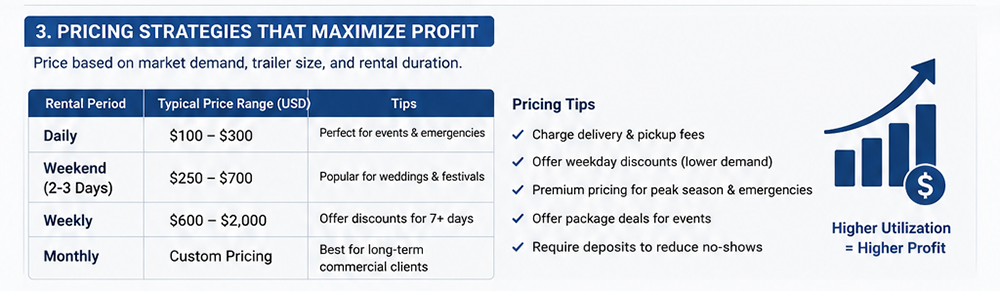
Here’s a simplified example.
| Rental Period | Typical Pricing |
|---|---|
| Daily rental | $100–$300 |
| Weekend rental | $250–$700 |
| Weekly rental | $600–$2,000 |
| Monthly rental | Discounted long-term pricing |
Rates vary depending on:
Because transportation consumes:
Many profitable businesses separate:
This improves profitability significantly.
Usually yes.
Long-term rentals provide:
That stability matters.
This is where many startups struggle.
Because refrigeration rental is not usually an impulse purchase.
Most customers search only when they urgently need cold storage.
So visibility matters enormously.
Because customers often search things like:
If your business appears locally, you gain leads quickly.
Extremely important.
Especially for emergency rentals.
Optimize your website for:
Event planners and caterers often discover vendors through social platforms.
This is huge.
Build relationships with:
Referral partnerships often become your best lead source.
Because when walk-in coolers fail, repair companies are often the first call businesses make.
And while repairs happen…
The customer still needs refrigeration.
Smart rental operators partner directly with repair technicians for referrals.
This strategy works surprisingly well.
Very important.
In emergency cold storage situations, speed often matters more than price.
Many successful operators answer calls 24/7 during peak seasons.
That responsiveness creates repeat business.
Many beginners underestimate ongoing costs.
| Expense | Estimated Monthly Cost |
|---|---|
| Fuel | Variable |
| Insurance | $100–$500+ |
| Refrigeration maintenance | $100–$1,000+ |
| Marketing | Variable |
| Trailer storage | Variable |
| Vehicle maintenance | Variable |
Preventive maintenance matters enormously in this business.
Downtime destroys rental revenue.
We’ve seen several repeatedly.
More inventory doesn’t automatically mean more profit.
Utilization matters more.
Some markets have strong seasonal demand.
Others don’t.
Research matters.
Low pricing often attracts difficult customers while reducing profitability.
Poorly maintained trailers destroy customer trust quickly.
Customers can’t rent from businesses they can’t find online.
One small operator started with a single 10ft freezer trailer serving wedding caterers.
Initially, they worried the market was too small.
But within one year:
Eventually, they expanded into multiple trailers.
Another operator bought four trailers immediately without testing local demand first.
Several units sat unused for months.
The financing pressure became difficult.
The lesson?
Grow based on utilization — not optimism.
Most successful businesses scale gradually.
Typical expansion stages look like this:
| Growth Stage | Focus |
|---|---|
| 1–2 trailers | Build local reputation |
| 3–5 trailers | Add commercial partnerships |
| 5–10 trailers | Expand regional coverage |
| 10+ trailers | Fleet specialization |
Some businesses later specialize in:
Specialization often increases profitability.
Yes — especially in markets with strong event, restaurant, and emergency refrigeration demand.
Small operations may start with under $10,000–$20,000 depending on trailer size and equipment.
Many startups begin with 10ft–12ft freezer trailers because they’re versatile and lower cost.
Maintaining high trailer utilization while controlling operating costs.
Very. Emergency situations often create premium pricing opportunities.
Local SEO, Google Business listings, partnerships, and strong response speed are extremely important.
For many entrepreneurs?
Absolutely.
The demand for flexible mobile refrigeration keeps growing.
And compared to many other commercial equipment businesses, freezer trailer rentals can offer:
But success usually comes down to three things:
Because in the cold storage rental business, customers don’t just pay for refrigeration.
They pay for reliability when they need it most.