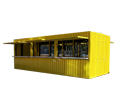
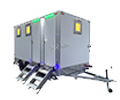
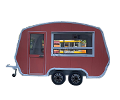
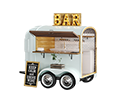
If you've ever stood in line at a farmers market, food festival, or late-night street fair and watched people happily pay $6–$10 for a fresh waffle, you've probably thought the same thing many of our customers tell us:
“This looks fun… and profitable.”
You're not wrong.
In recent years, more first-time entrepreneurs in the U.S. are choosing to invest in a waffle truck or waffle trailer instead of opening a traditional brick-and-mortar café. The reasons are practical, emotional, and financial all at once: lower startup costs, flexibility, strong margins, and the joy of running a business that literally makes people smile.
This guide is written like I'm explaining it to a friend who's seriously considering the idea—but wants real answers, not hype. I'll walk you through what it really means to invest in a waffle trailer business in the USA, what to watch out for, what works, what doesn't, and what we've learned at ZZKNOWN from working with U.S. buyers every single day.
Let's start with the big question.
Short answer: for many people, yes—but only if you do it right.
The U.S. street food and mobile food business has been growing steadily. According to IBISWorld and National Restaurant Association data, mobile food services in the U.S. generate over $1.4 billion annually, with desserts and specialty snacks consistently ranking among the highest impulse-purchase categories.
Why waffles?
They're instantly recognizable
Ingredients are relatively low-cost
They smell amazing (seriously, this matters)
They work across breakfast, dessert, and late-night crowds
They're extremely customizable (sweet, savory, gluten-free, vegan options)
We've seen first-time operators break even in 6–12 months, especially when they focus on events, festivals, and high-traffic locations.
But success isn't automatic. It depends on how you invest.

When people search “invest in waffle truck”, they're often thinking only about buying equipment. In reality, you're investing in three things at once:
A physical asset (the waffle trailer or truck)
A business model (where and how you sell)
Yourself (time, learning curve, consistency)
A waffle trailer business is not passive income—but it is scalable, flexible, and forgiving compared to many food concepts.
At ZZKNOWN, we often recommend trailers rather than full trucks for first-time operators, so let's talk about that.
.jpg)
This is one of the first decisions you'll face.
| Factor | Waffle Trailer | Waffle Food Truck |
|---|---|---|
| Initial Cost | Lower | Higher |
| Maintenance | Simpler | More complex |
| Vehicle Engine | Not included | Included |
| Towing Flexibility | High | Low |
| Licensing | Often easier | More restrictive |
| Ideal for Beginners | Yes | Not always |
Most U.S. first-time buyers choose a waffle trailer because:
You can tow it with a pickup or SUV
You're not paying for an engine you don't need
You can upgrade or replace the towing vehicle independently
Storage and insurance costs are usually lower
From a pure ROI perspective, trailers are often the smarter way to invest in a waffle truck-style business.
Let's talk numbers—realistic ones.
| Item | Estimated Cost (USD) |
|---|---|
| Waffle Trailer (custom) | $5,000 – $12,000 |
| Waffle Makers & Equipment | $2,000 – $6,000 |
| Permits & Licenses | $500 – $3,000 |
| Initial Ingredients | $300 – $800 |
| Branding & Wrap | $800 – $2,500 |
| Misc. & Buffer | $1,000 – $2,000 |
Estimated total investment:
$8,000 – $20,000
Compared to opening a small café (often $150,000+), this is why so many people choose to invest in a waffle truck business instead.
This is where experience matters.
At ZZKNOWN, we've customized waffle trailers for:
First-time solo owners
Couples running weekend businesses
Festival vendors
Coffee + waffle combo operators
Dessert brands expanding into mobile sales
Commercial waffle makers (Belgian or Liege style)
Stainless steel prep counter
Under-counter refrigeration
Double sink (health code requirement)
Fresh water & waste water tanks
Exhaust hood (if required by local code)
Electrical outlets (US standard)
Too many beginners overspend on unnecessary equipment early. Start lean. You can always upgrade.
This is one of the most misunderstood parts of the business.
Festivals & Fairs
High volume, short time, excellent margins
Private Events
Weddings, birthdays, corporate events—predictable income
Farmers Markets
Consistent weekly revenue
Late-Night Locations
Near bars, colleges, or entertainment districts
One of our U.S. customers runs only Friday–Sunday events and still clears enough profit to treat it as a full-time income.
Let's break it down simply.
Ingredient cost: ~$1.20
Selling price: $6–$9
Gross margin: 65%–80%
Even after labor, fuel, and event fees, waffle businesses tend to have healthy margins, especially compared to savory food trucks with higher food waste.
This is why dessert-focused trailers often outperform more complex menus.
I'm going to be very honest here—because we've seen these mistakes repeatedly.
Buying too large of a trailer “just in case”
Ignoring local health department requirements
Choosing style over workflow
Overcomplicating the menu
Underestimating power requirements at events
One client invested heavily in a beautiful trailer but forgot to confirm generator compatibility for festivals. The fix cost time, money, and stress.
Good planning beats good looks—every time.
Here's one success story and one lesson learned.
A U.S. buyer invested in a 3-meter waffle trailer, focused exclusively on weekend festivals and private bookings. He broke even in 8 months and now books events 3–4 months in advance.
Why it worked:
Simple menu
Clear branding
Reliable equipment
Right-sized trailer
Another buyer ordered a larger trailer than necessary, increasing towing and storage costs. After six months, they downsized—and became profitable.
The takeaway: buy for your first year, not your dream five years from now.
At ZZKNOWN, we don't just sell trailers—we help people invest intelligently.
We provide:
Custom trailer design based on U.S. regulations
2D & 3D layout drawings before production
Electrical and plumbing systems aligned with U.S. standards
Experience-based layout recommendations
Export experience to the USA, Canada, and Europe
Our goal is simple: help you avoid expensive mistakes.
Most U.S. buyers are operational within 4–8 weeks, depending on permits.
No. Many successful owners started with zero experience.
Yes, but most operators earn more during spring–fall and supplement with private events in winter.
Yes. Modular design makes upgrades easy.
Like any business, there is risk—but the lower startup cost makes it more forgiving than restaurants.
If you're looking for:
A lower-risk entry into food entrepreneurship
A business with strong margins
Flexibility in schedule and location
A product people genuinely love
Then choosing to invest in a waffle truck or waffle trailer business in the USA can be a very smart move.
At ZZKNOWN, we've seen ordinary people build extraordinary side businesses—and sometimes full-time incomes—one waffle at a time.
If you're ready to take the next step, start with the right foundation. The trailer matters. The layout matters. The planning matters.
And you don't have to do it alone.