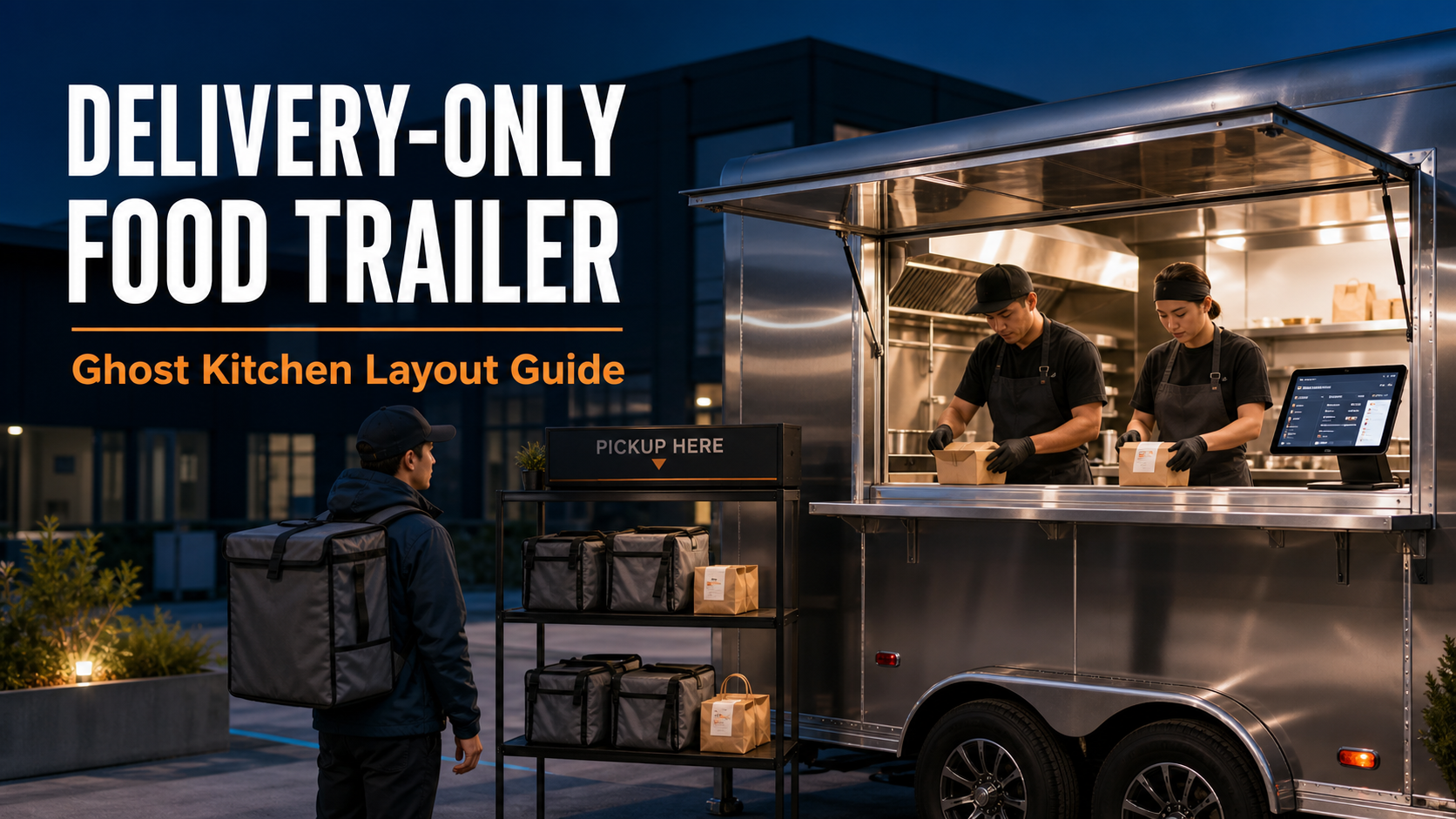
Direct answer
Yes, a food trailer can work as a delivery-only kitchen if the site, permits, utilities, food-safety plan, and courier handoff are approved for that use. The best design is not simply a regular trailer with the serving window closed. It needs a high-throughput cooking line, separate packing and pickup zones, reliable power and water, temperature-controlled holding, and a menu built to travel well.
Last updated: August 20, 2026
Author: ZZKNOWN Editorial Team
Technical review: ZZKNOWN Food Trailer Engineering Team
What are the key takeaways?
- Approval comes before fabrication. A trailer may be a legal food establishment, but zoning, parking, commissary, fire, health, wastewater, and business rules are local.
- Delivery changes the layout. Packing, order verification, sealed holding, and courier collection need dedicated space away from raw-food and dishwashing traffic.
- The menu must survive the trip. Design the kitchen around realistic delivery times, packaging, and quality after transport—not only the food at the pass.
- Capacity is a system. Fryer output means little if the printer, prep bench, packaging shelf, refrigeration, or courier handoff becomes the bottleneck.
- Transparency builds trust. A U.S. study of 977 restaurant customers found that perceived benefits increased trust, while societal risks reduced it; trust then supported behavioral intention.
- Hybrid can be a safer launch. Some operators combine delivery with scheduled pickup or limited walk-up service, but both flows must be designed and permitted.
Where does this guide apply, and when were the sources checked?
This guide is for buyers planning delivery-only, ghost-kitchen, cloud-kitchen, virtual-brand, catering, or hybrid operations in a mobile food trailer. It is not a permit. Official sources and research were checked on August 20, 2026. The examples cover the United States, the European Union, and Australia/New Zealand to show how the same trailer may face different approvals.
In the United States, the FDA Food Code is a model used by jurisdictions rather than a single nationwide operating license. Its definition of a food establishment includes mobile facilities and operations that transfer food indirectly through home-delivery or restaurant-takeout services. Your city, county, state, fire authority, utility provider, landlord, and delivery platform can still add requirements.
| Region | Official source | What to confirm locally |
|---|---|---|
| United States | FDA Food Code 2022 | Local adoption version, mobile-food permit, commissary/base requirements, plan review, fire approval, zoning and approved operating address. |
| European Union | Regulation (EC) No 852/2004 | Registration, HACCP-based procedures, hygiene of movable premises, potable water, waste, temperature control and national/local implementation. |
| Australia / New Zealand | FSANZ food-delivery guidance | Prior approvals, Standard 3.2.2 obligations, allergen information, safe transport temperature, council registration and state/territory rules. |
What does a delivery-only food trailer actually look like?
Picture Friday at 7:05 p.m. No customer is reading a menu at the window, yet twenty orders arrive in ten minutes. One cook is working the hot line, another is finishing sides, and a third person is matching labels, sauces, drinks, and allergen notes. Three couriers arrive together. If they stand inside the cooking path or ask staff to search through a pile of bags, the kitchen loses its rhythm.
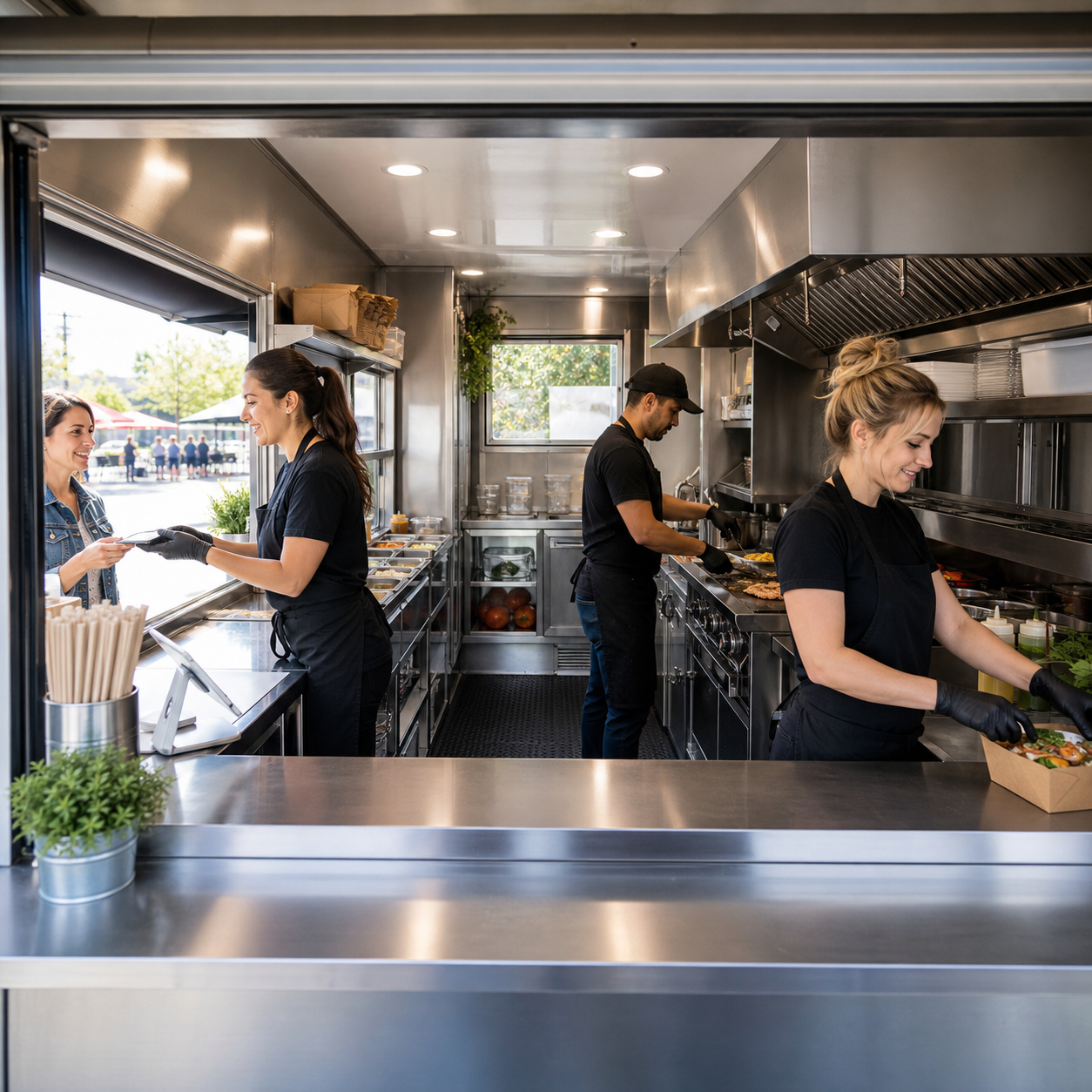
That is why a delivery-only trailer is better understood as a compact production and dispatch kitchen. The front of house has not disappeared; it has become an order screen, a printer, a packing bench, a quality-control checkpoint, a pickup shelf, and a courier communication process.
According to ZZKNOWN’s production experience, buyers often begin by listing cooking equipment. For delivery, we ask a second set of questions first: How many orders may arrive in a 15-minute wave? How many bags wait at once? Who checks modifiers? Where do drinks, cutlery, sauces, and tamper-evident labels live? Which door or window will couriers use without crossing the staff route?
Why might a trailer be better than a fixed ghost kitchen?
Can the asset move?
Yes, subject to towing, registration, site and permit rules. Mobility can support seasonal demand, events, catering or relocation when a site changes.
Can the layout be purpose-built?
Yes. A factory-built shell can align power, gas, ventilation, sinks, refrigeration, storage and dispatch with one menu instead of adapting a shared room.
Does it reduce every cost?
No. You still need an approved site, utilities, permits, maintenance, insurance, packaging, platform fees and possibly a commissary or support kitchen.
Is it automatically legal anywhere?
No. Mobility is not permission to park and cook. Obtain written answers from the authorities responsible for the actual address and operation.
Which operating model fits your business?
| Planning factor | Delivery-only | Walk-up | Hybrid |
|---|---|---|---|
| Customer interface | Apps, website, phone or catering system | Counter and menu board | Both digital and counter |
| Critical space | Packing, labeled holding, courier pickup | Ordering and serving window | Separate queues and order channels |
| Peak-load risk | Many orders arrive at once | Visible queue moderates demand | Two channels compete for equipment |
| Brand challenge | Trust without a storefront | Location, signage and service | Consistent promise across channels |
| Best fit | Focused menus and dense delivery zones | Events and strong foot traffic | Operators able to control channel capacity |
How should orders move through the trailer?
The line should move forward. Raw ingredients should not travel through the dispatch shelf. Used utensils should not return across packed orders. Couriers should not reach through a window beside hot equipment. A second small pickup opening, external locker, sheltered shelf, or controlled handoff counter may help, but the authority must accept the design.
Order throttling matters too. If the kitchen can safely complete 24 comparable meals in 15 minutes, allowing three apps to promise 40 meals creates late orders before anyone touches a pan. Configure preparation times and temporarily pause channels when the real bottleneck is full.
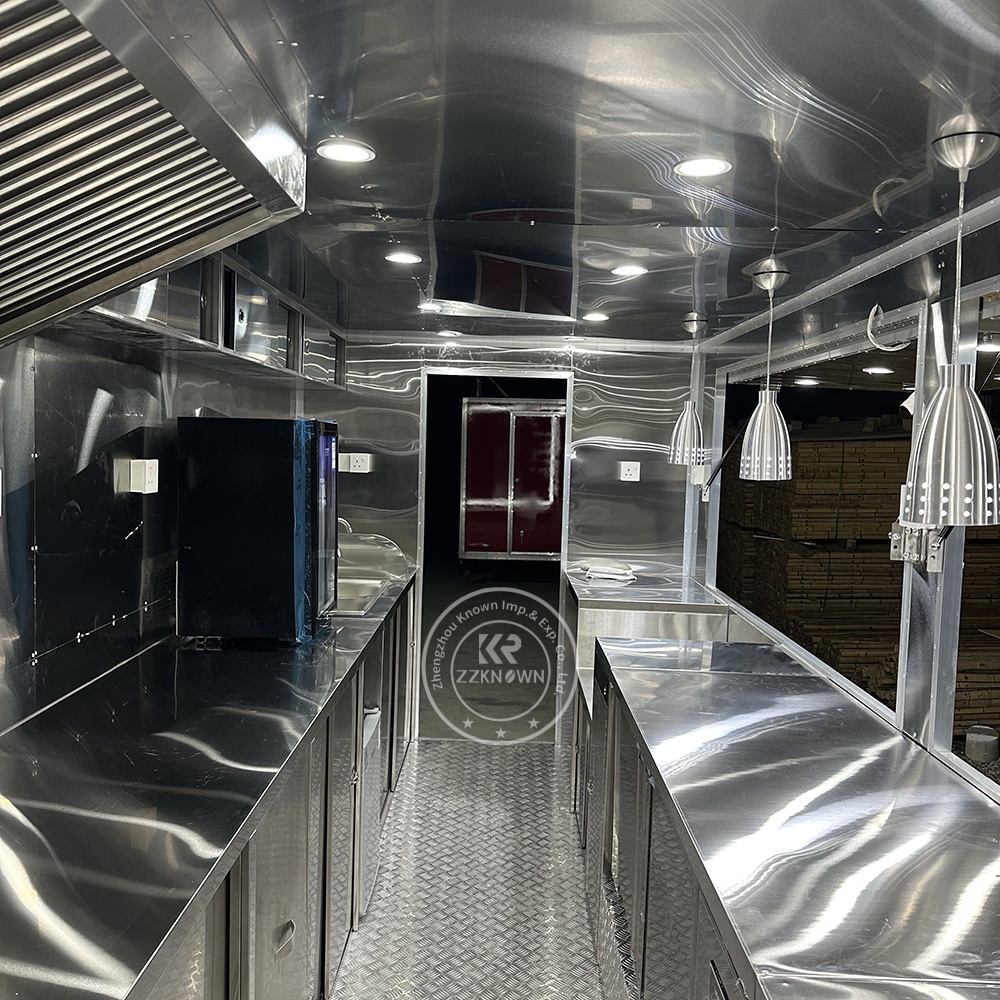
What equipment belongs in the layout?
Start with the menu and order profile, not a generic equipment wish list. The table below is a planning comparison, not a universal specification.
| Zone | Typical components | Capacity question | Cost impact |
|---|---|---|---|
| Digital order station | Tablet/POS mounts, printer, KDS, network backup | How many channels and tickets per wave? | Low to medium |
| Cold and dry storage | Prep refrigerator, freezer, shelving, ingredient bins | How many hours between replenishment? | Medium to high |
| Cooking line | Fryer, griddle, range, oven, hood and suppression as required | What is output per 15-minute peak? | High |
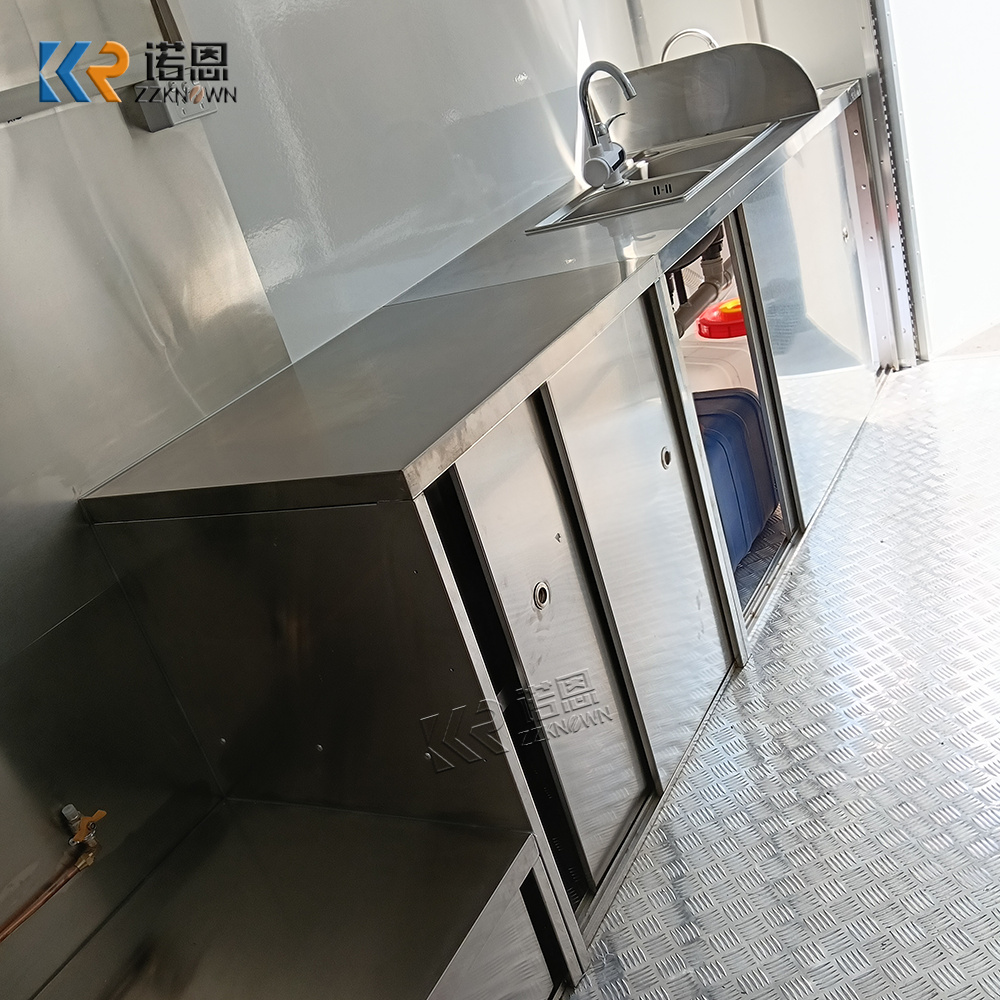
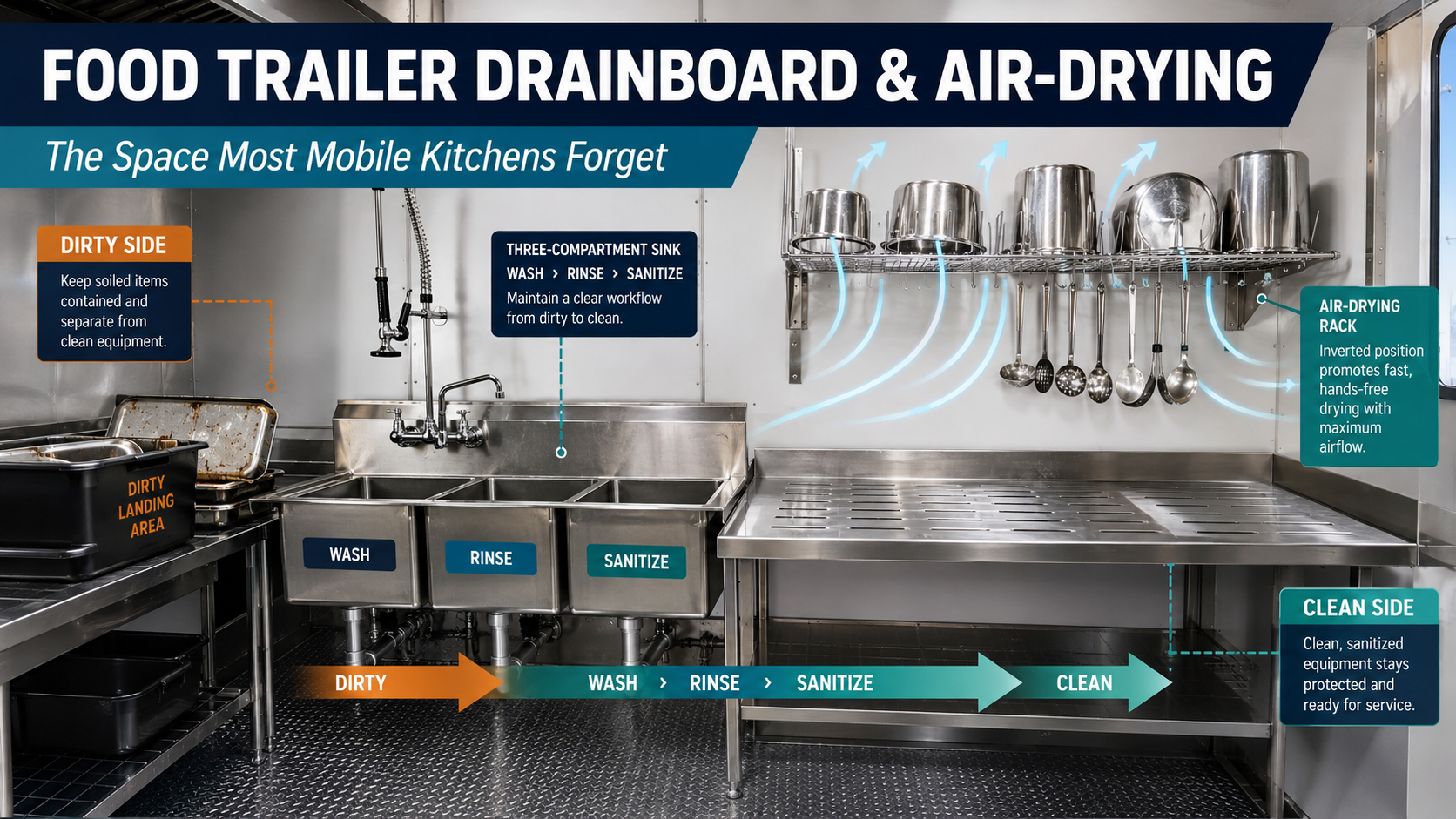
| Wash and water | Hand sink, warewashing sinks, tanks, heater, pump, drainage | What does the authority require for menu and hours? | Medium |
| Pack and dispatch | Clean bench, label printer, sauce/cutlery bins, sealed holding shelf | How many completed orders wait at once? | Low to medium |
Do not treat “cost impact” as a quote. Local-certified appliances, voltage, freight, chassis, fire systems, climate control, generator or battery capacity, water systems, and inspection requirements can change the price materially. A responsible quotation needs the destination, menu, equipment schedule and approval checklist.
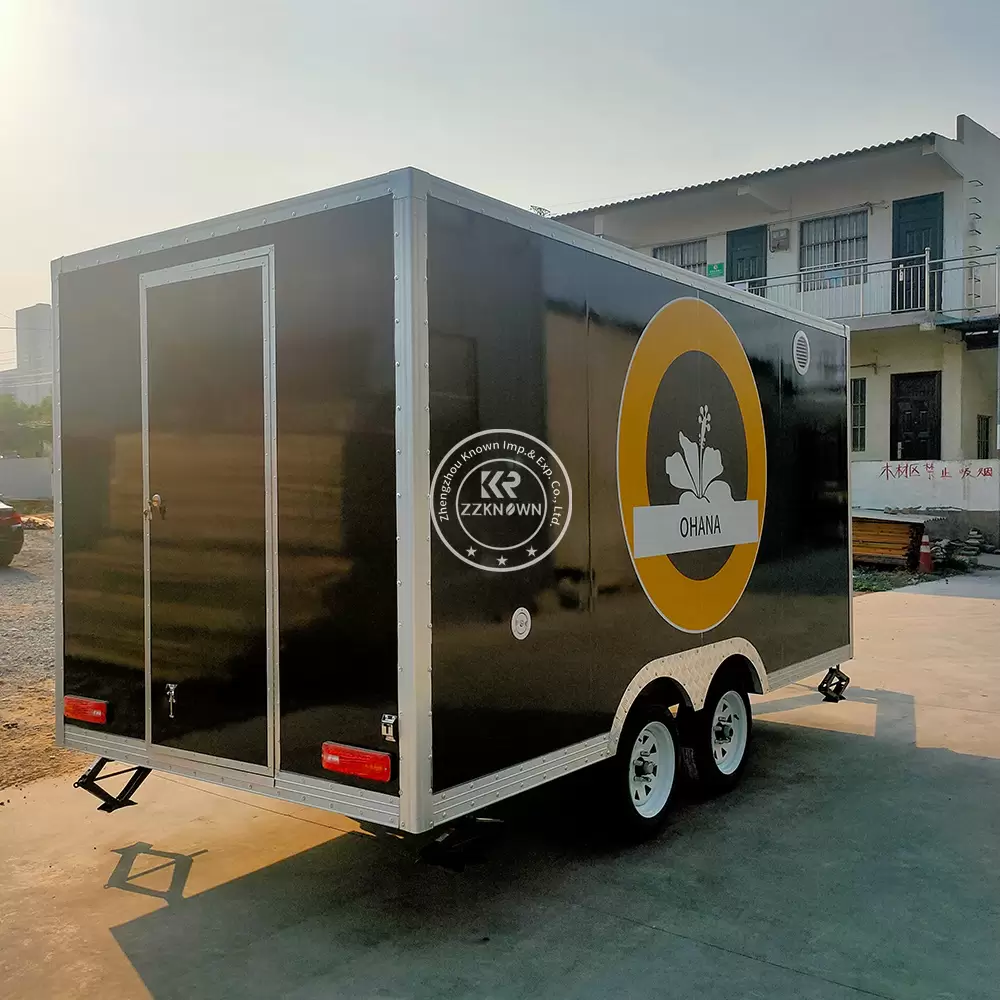
Which real ZZKNOWN models can support the concept?
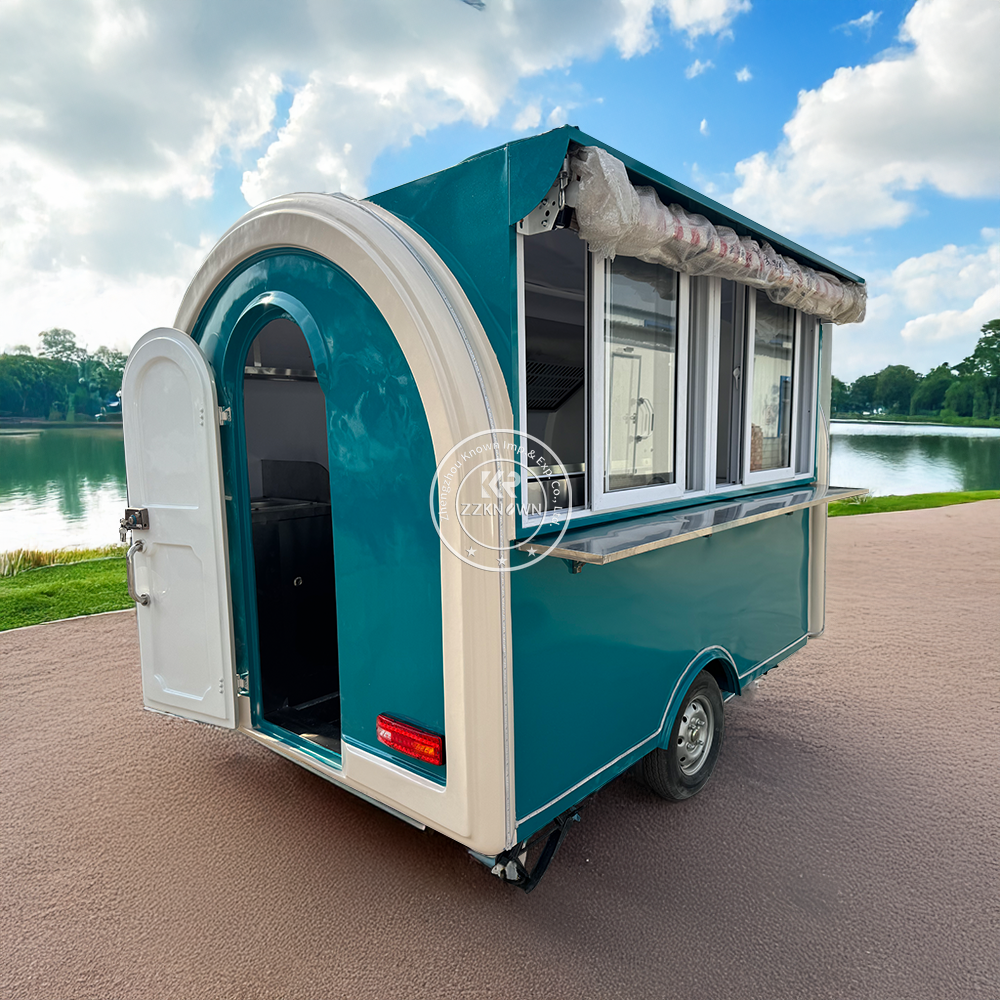
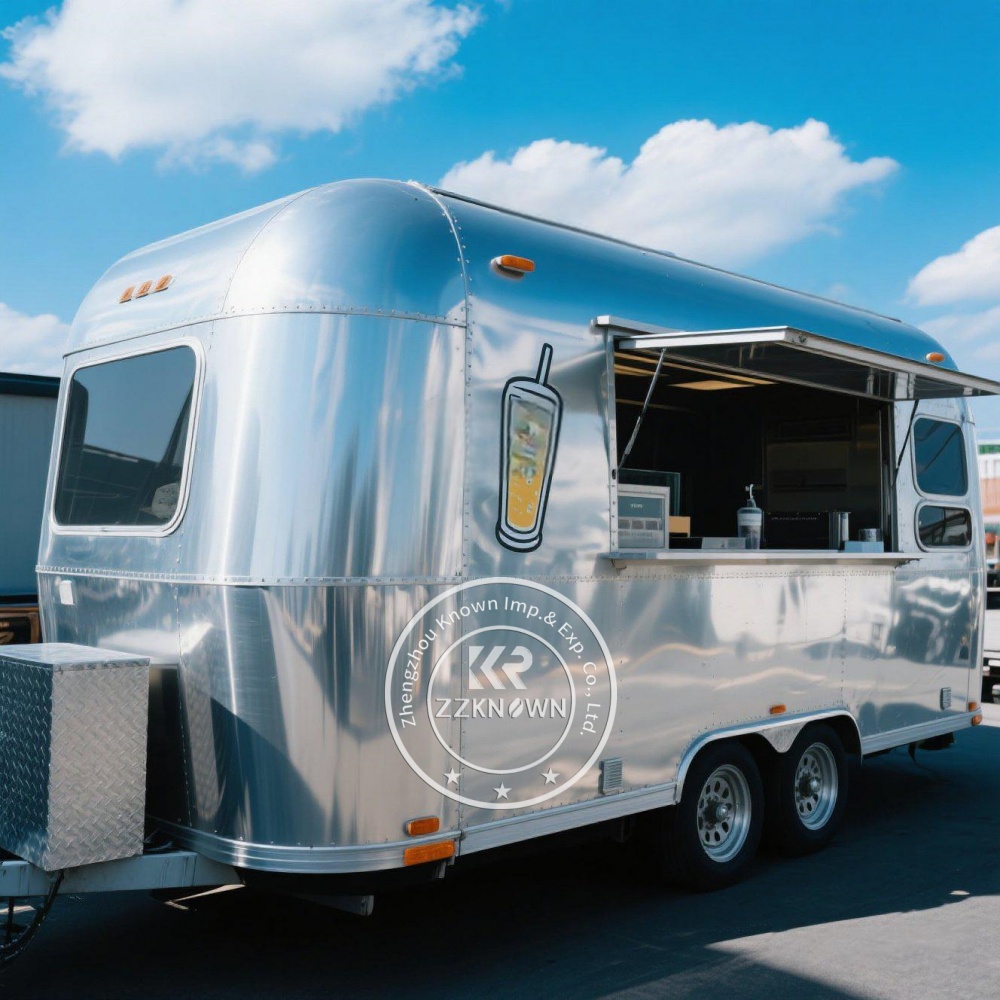
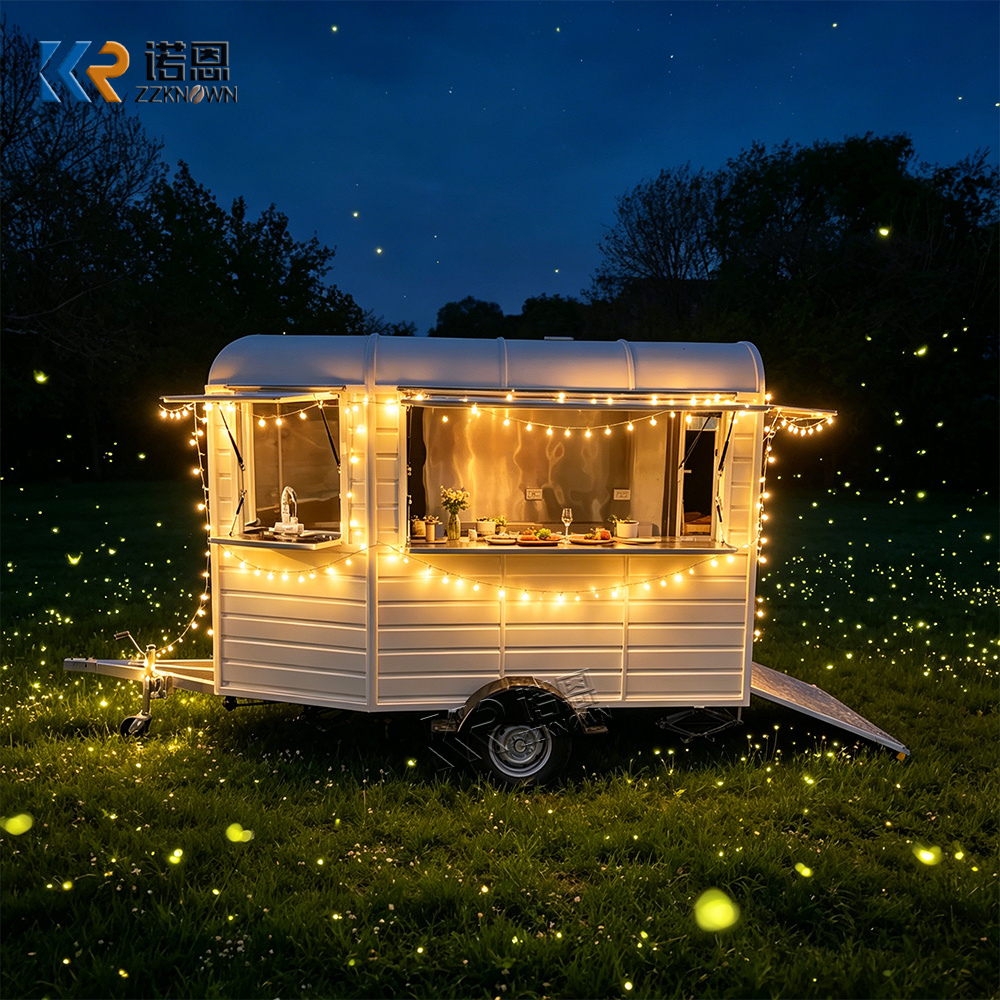
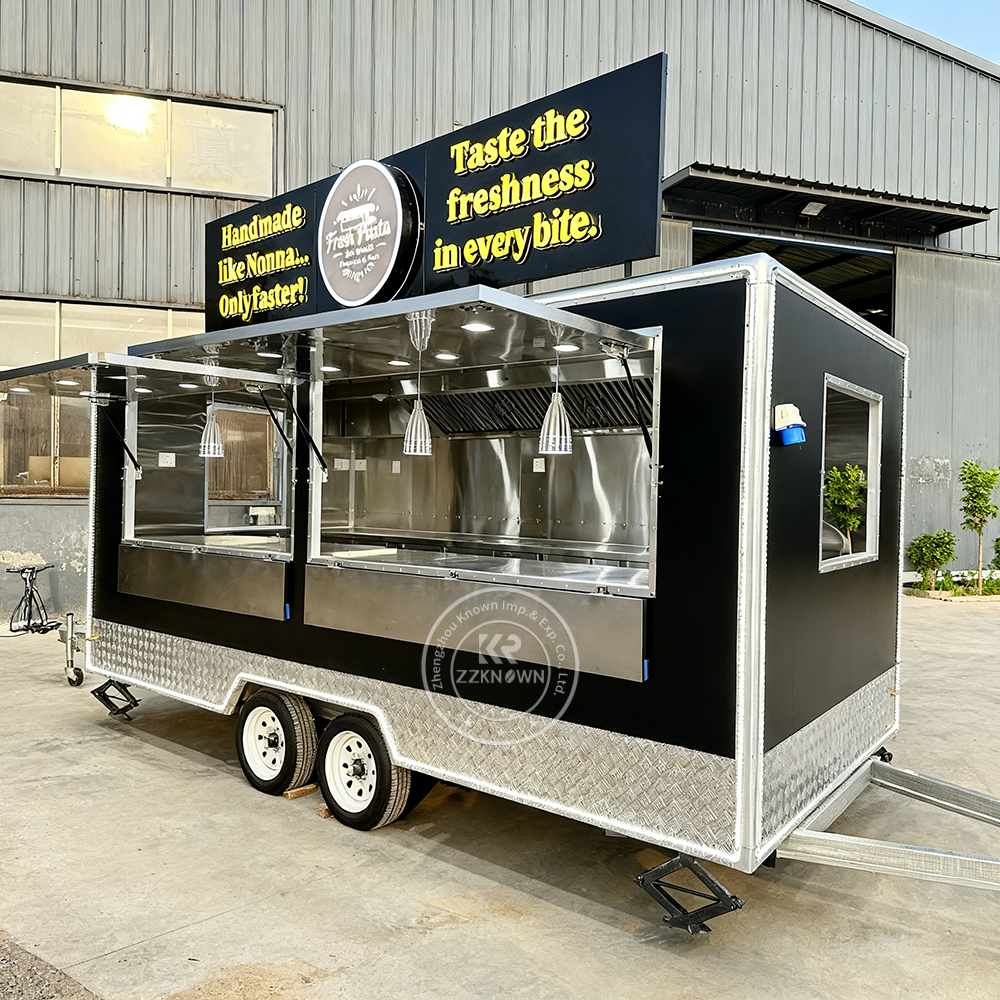
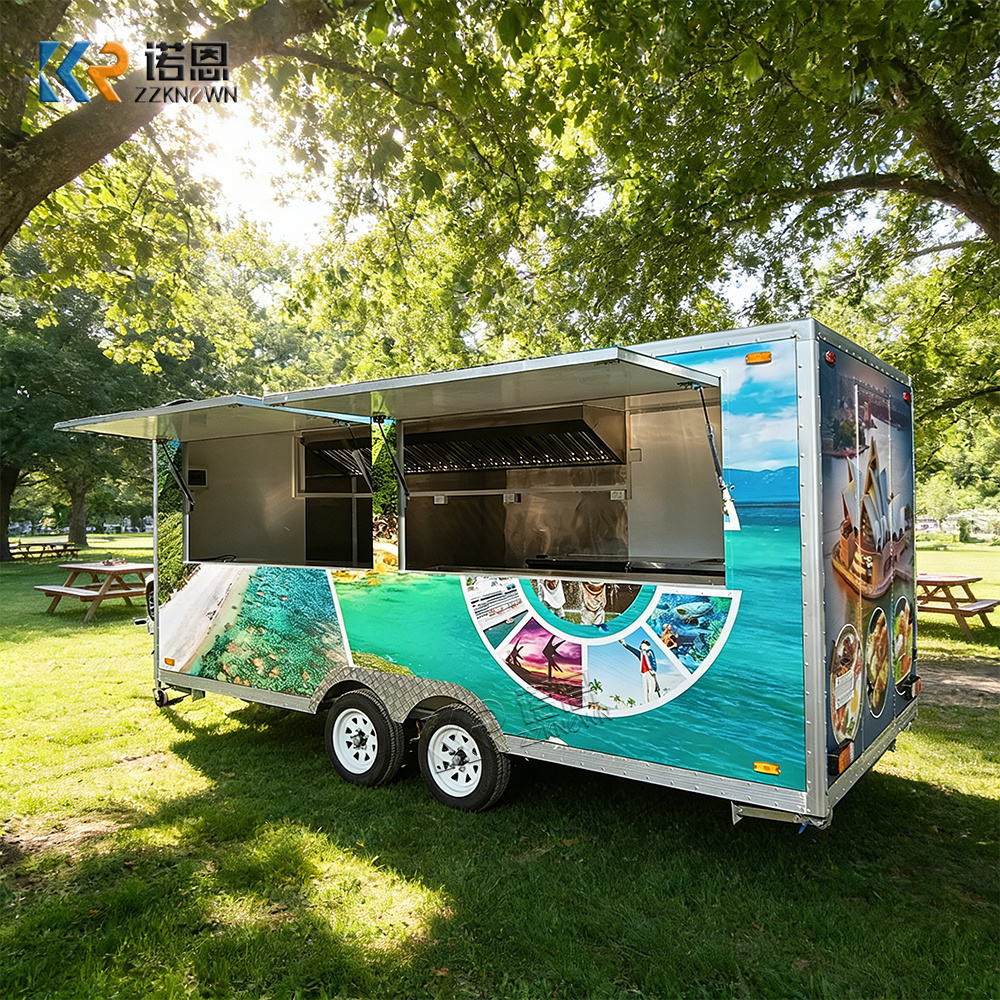
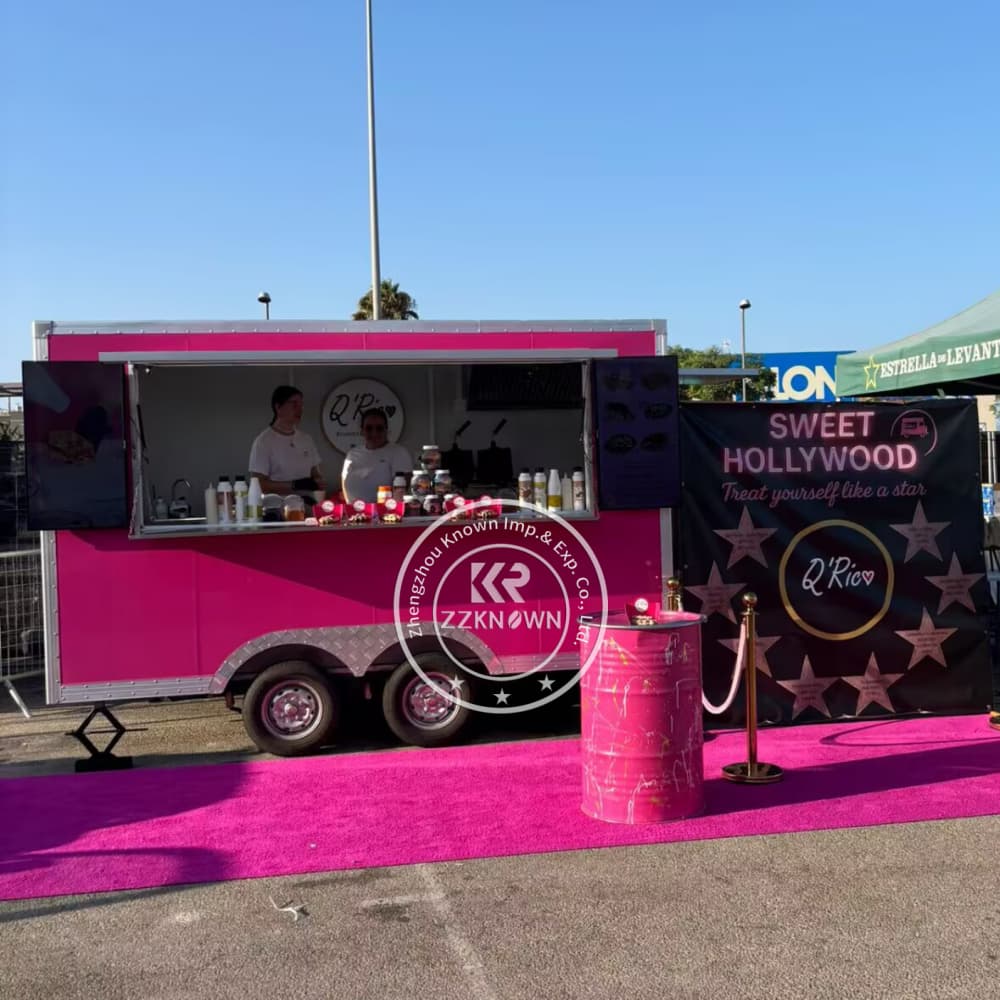
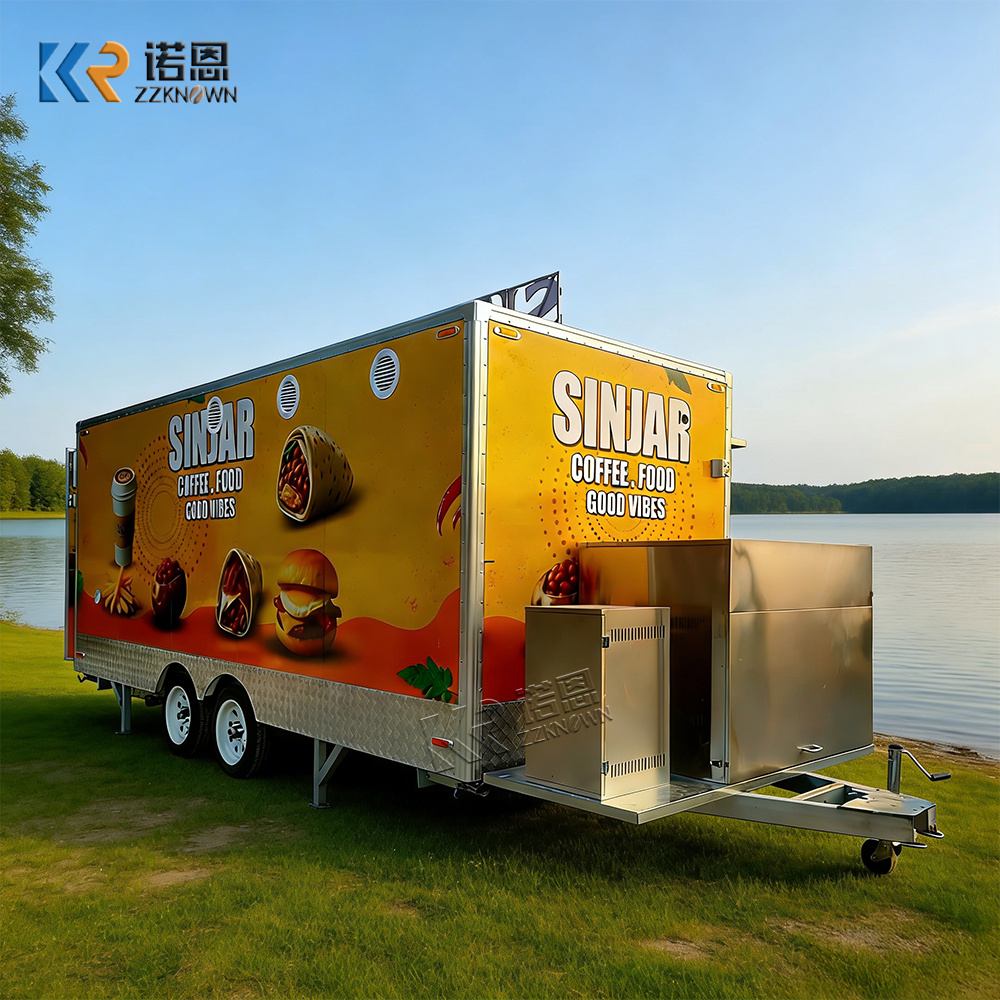
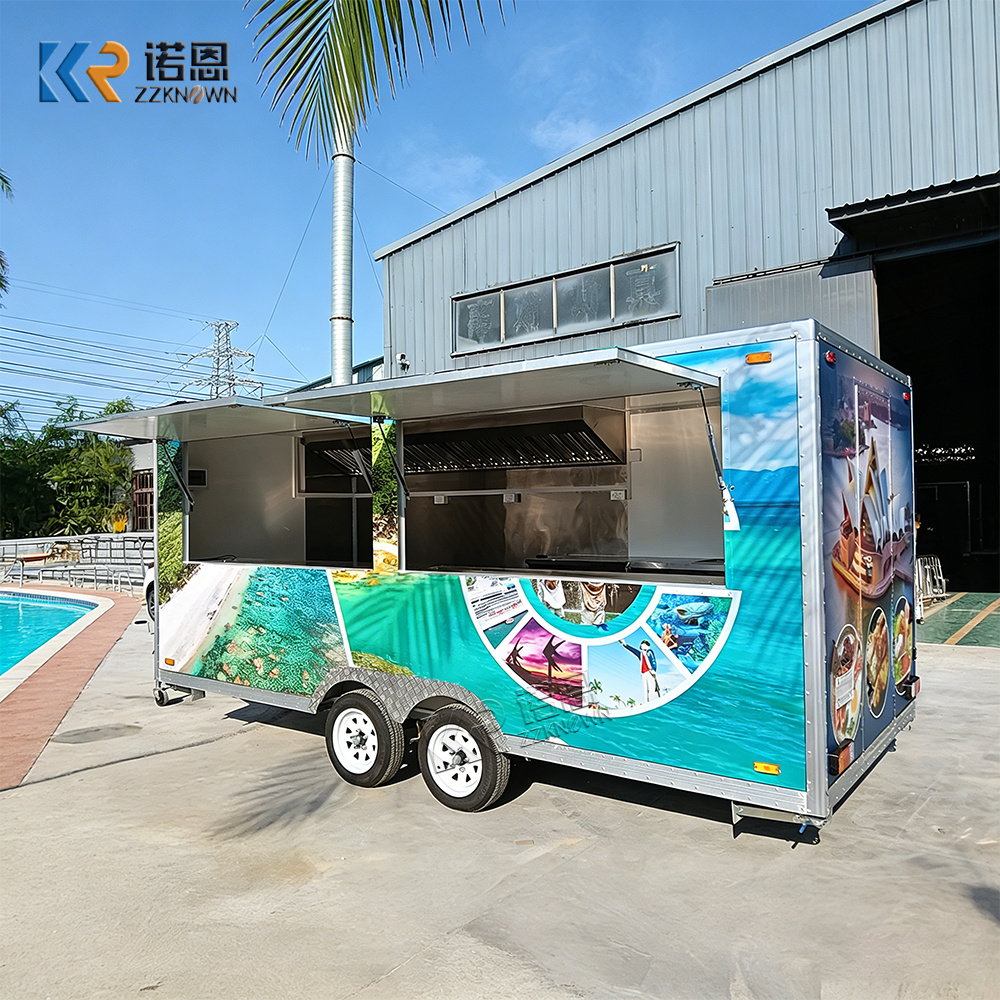
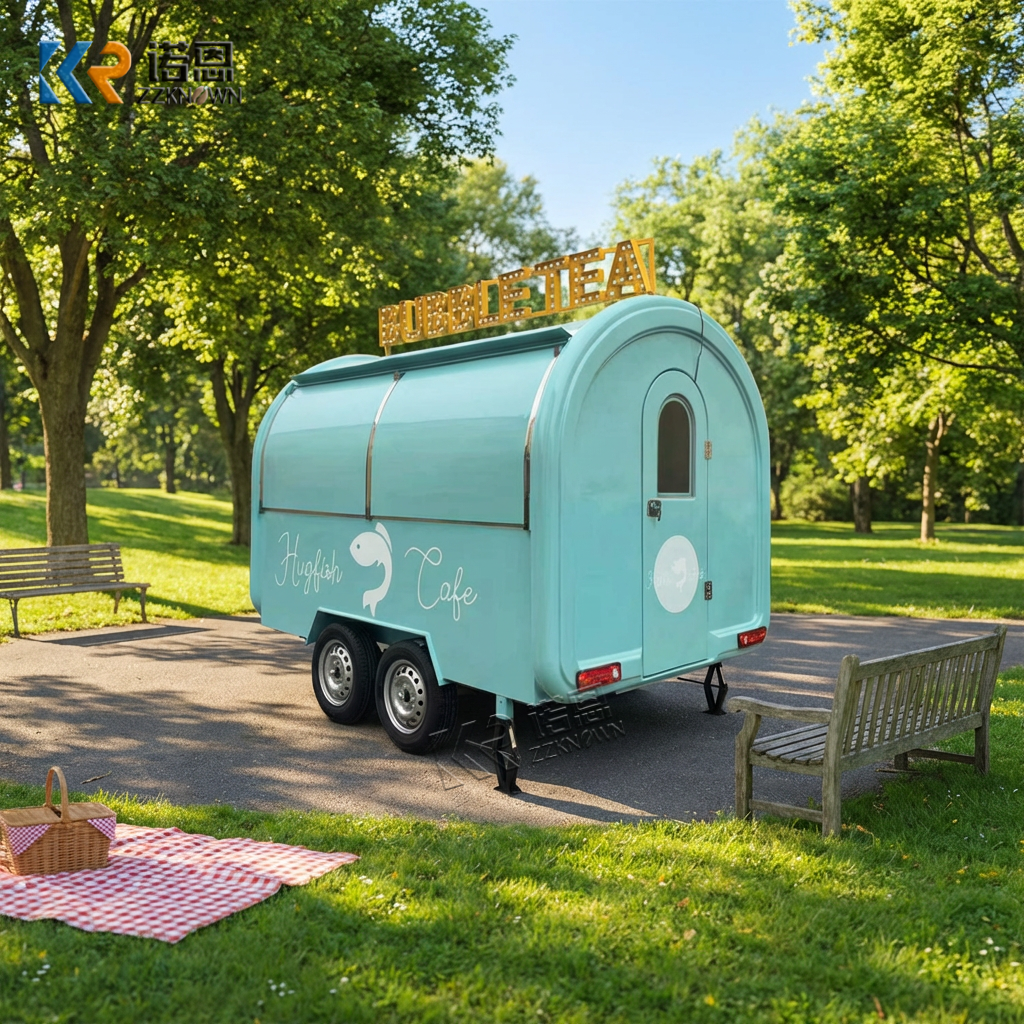
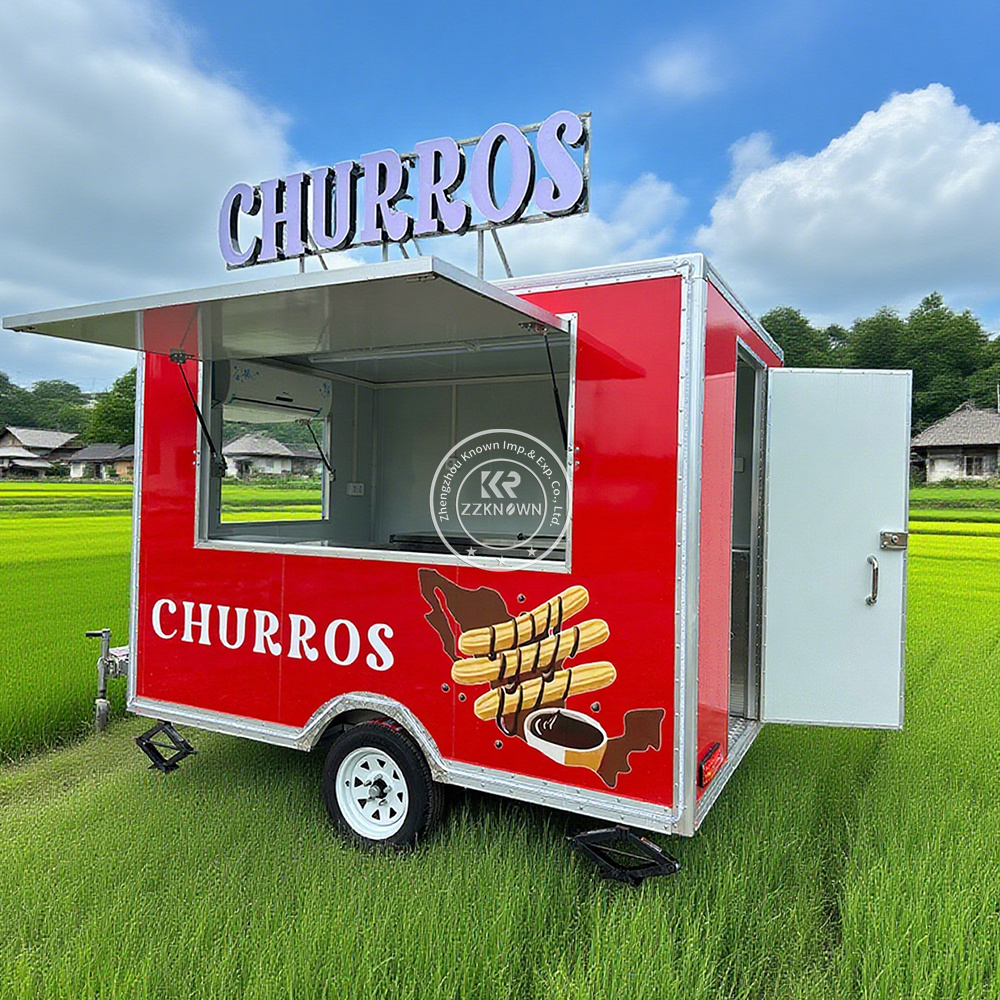
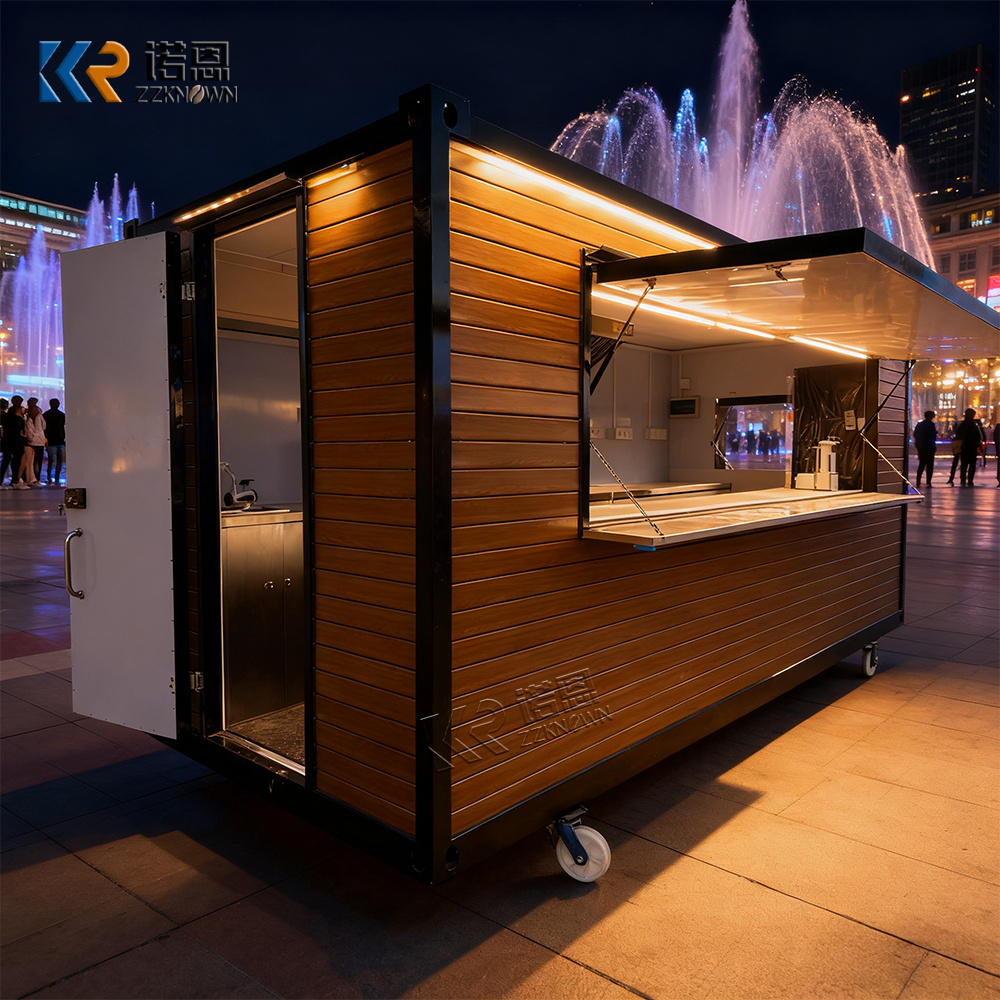
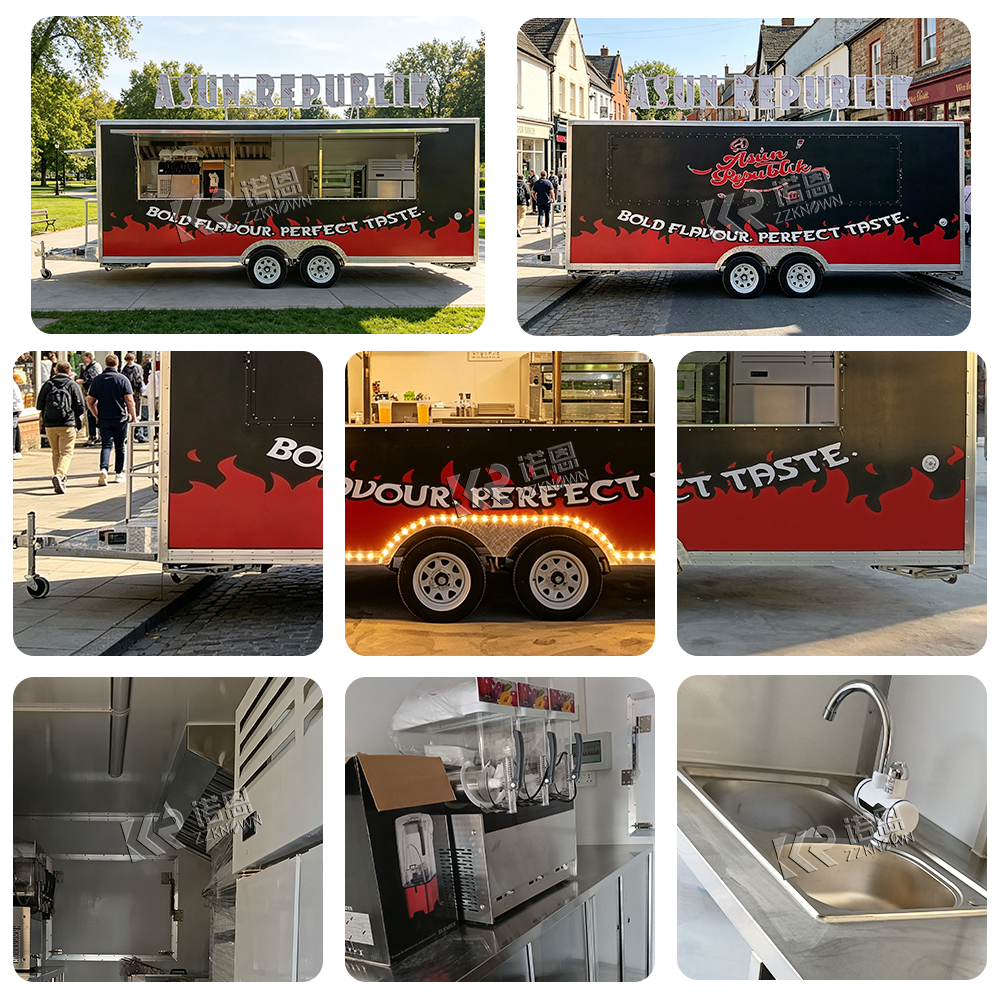
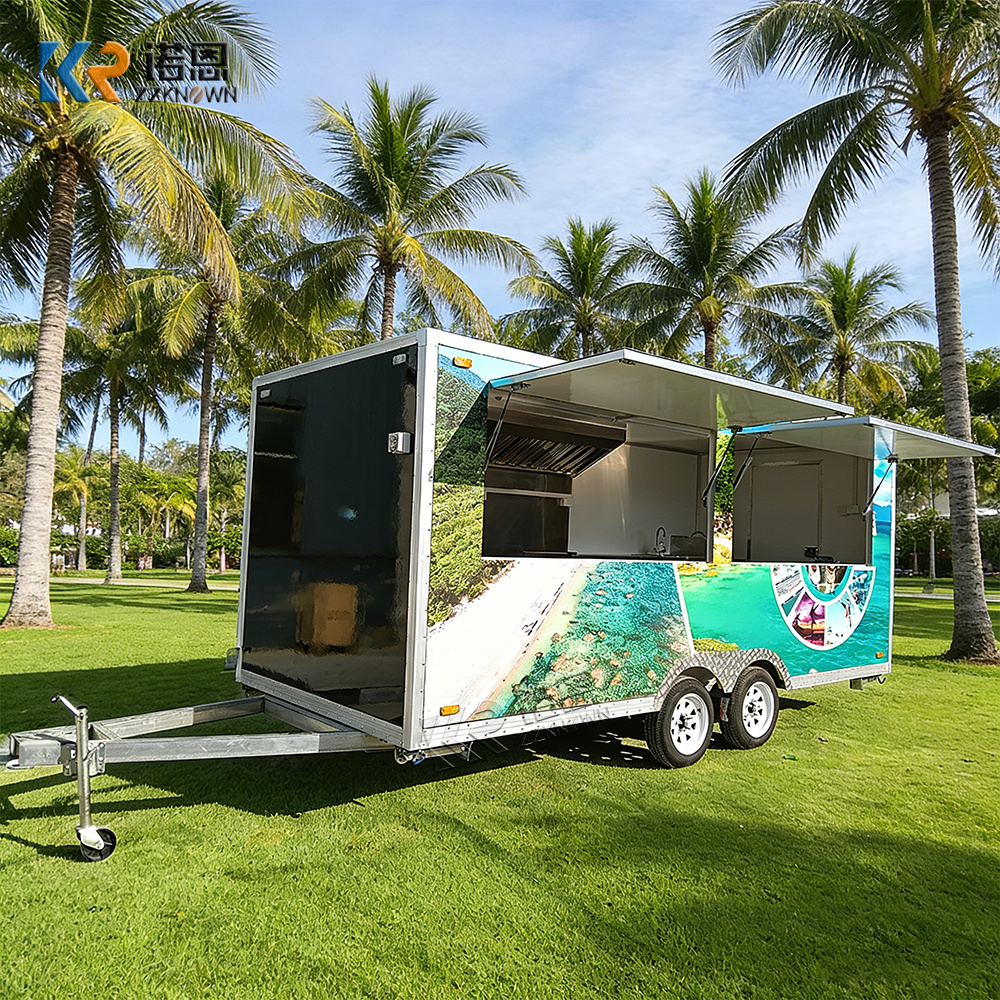
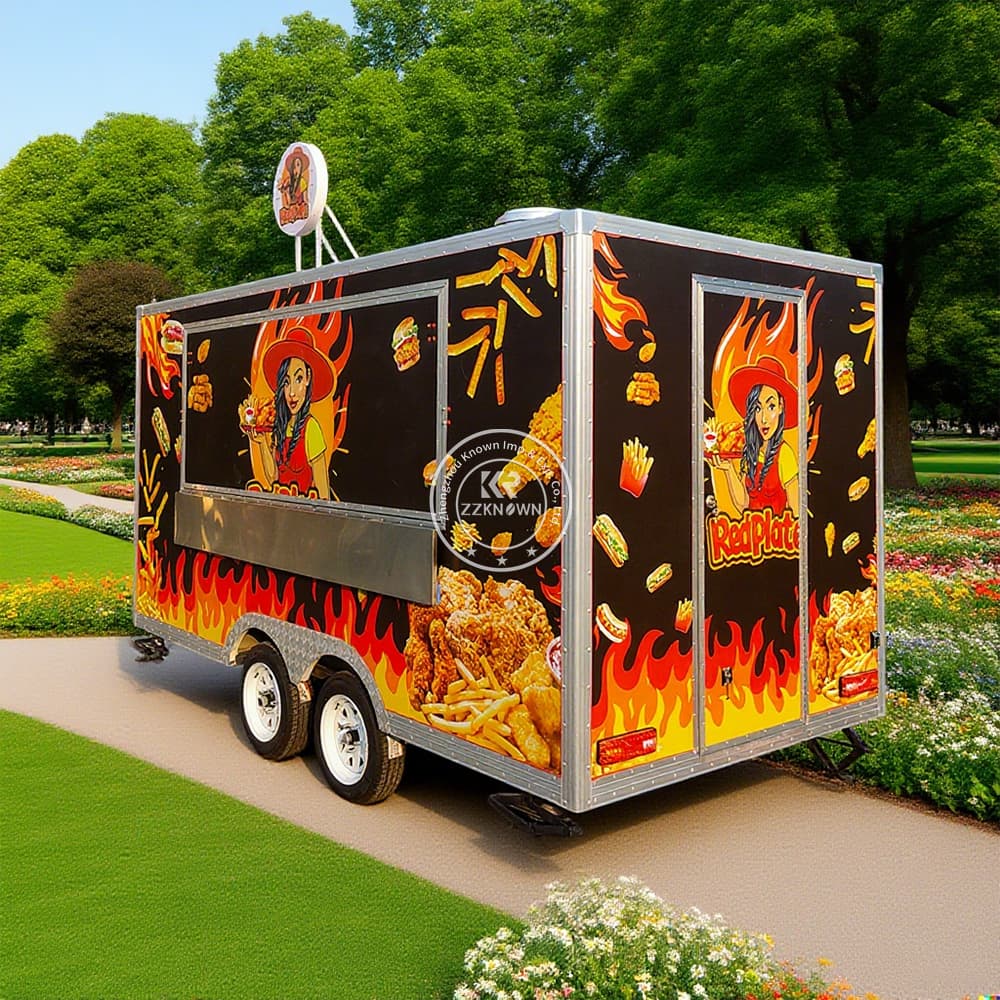
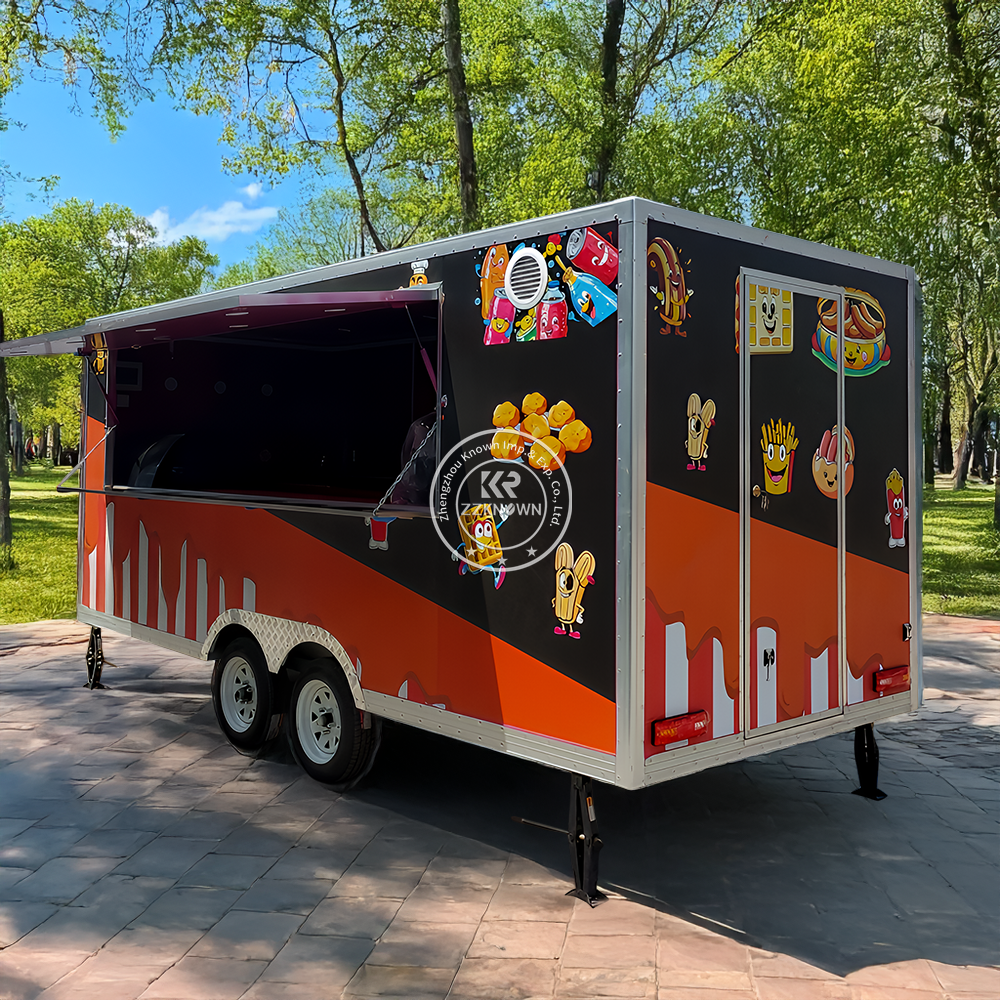
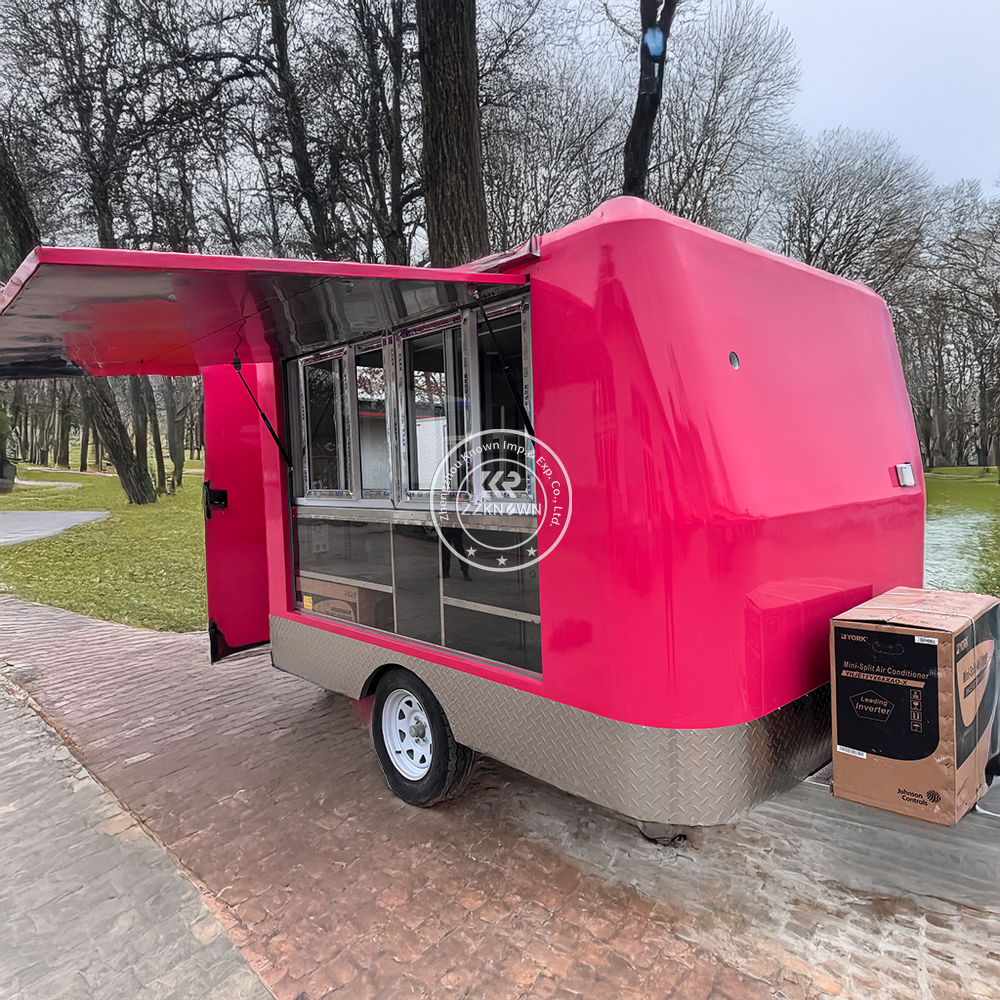
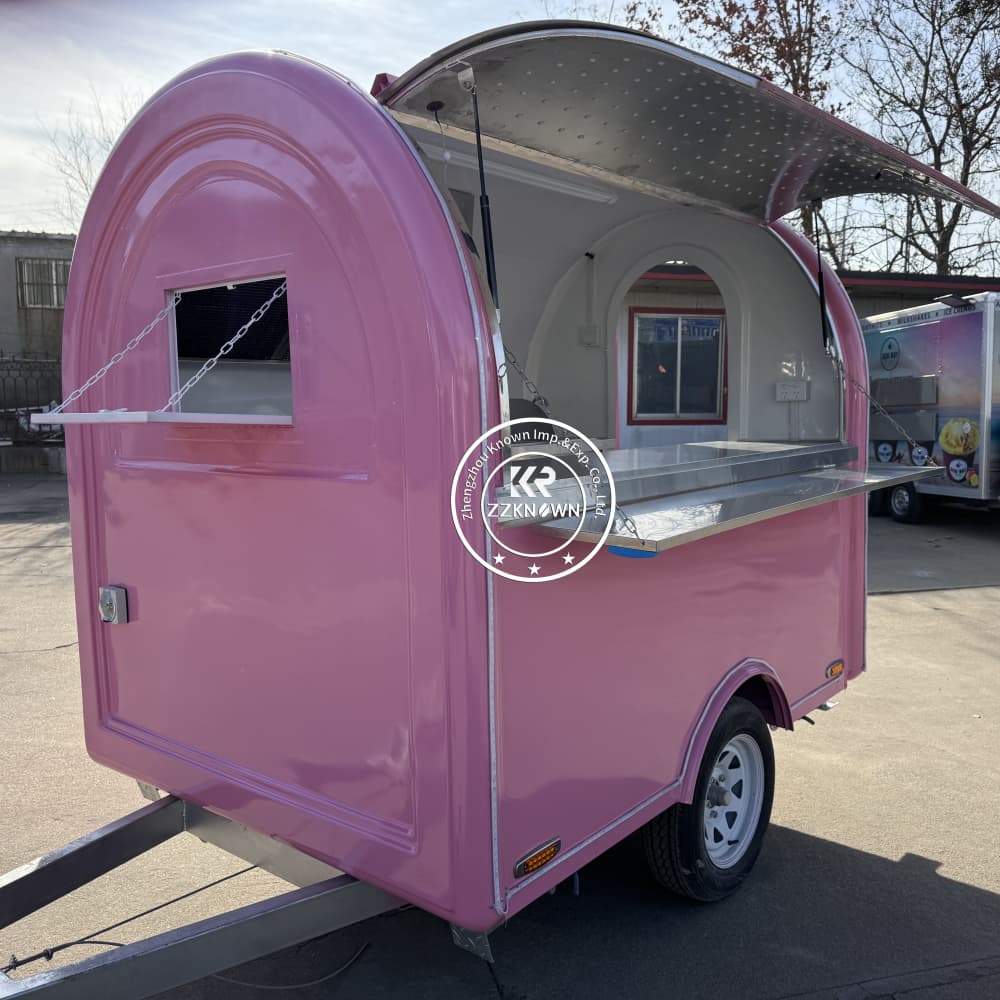
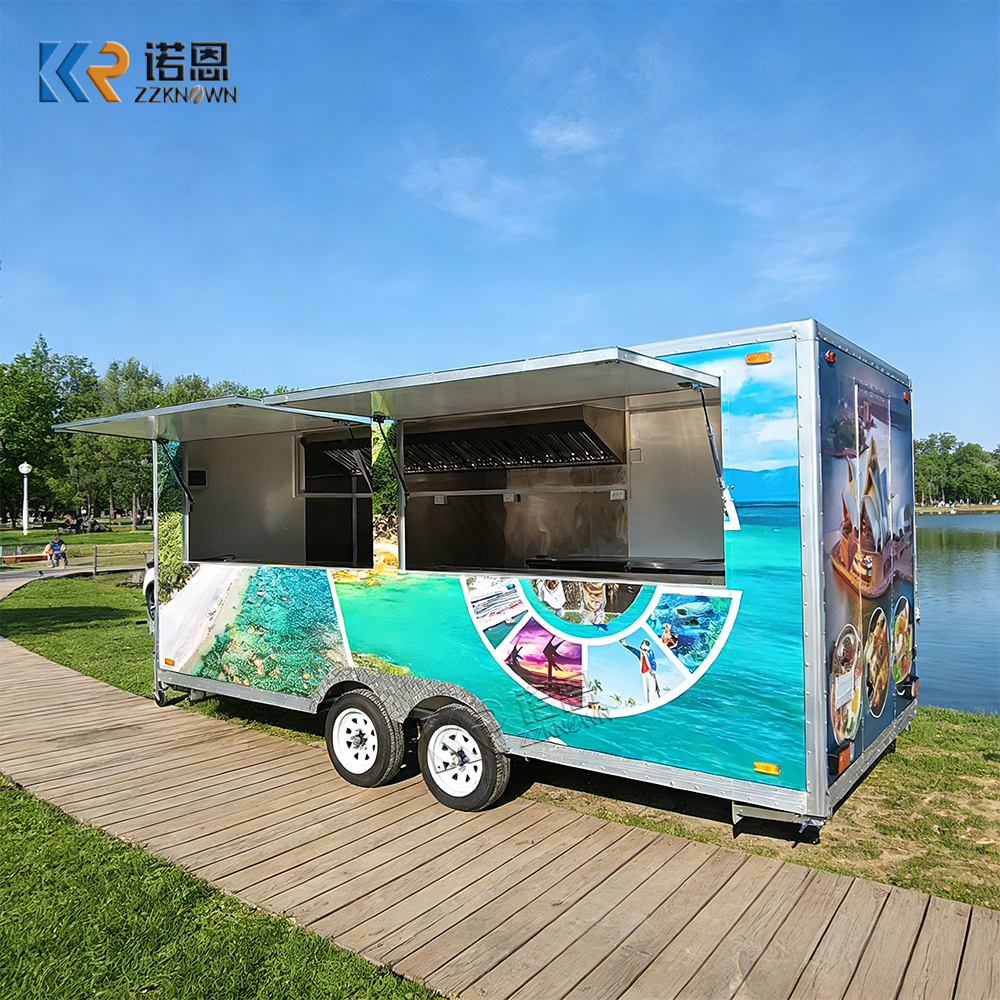
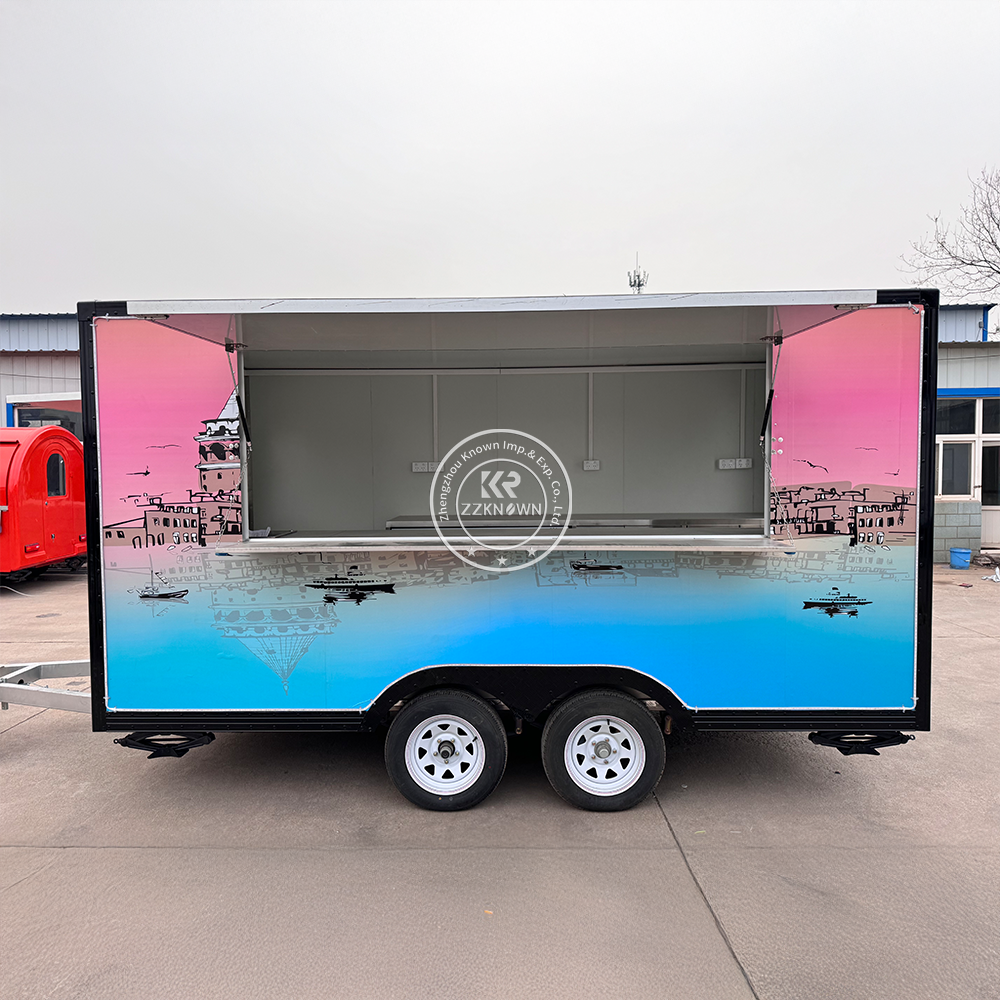
A model name is a starting platform, not proof of suitability for your permit. Two real examples show different directions:
.png)
What does the research say about customer trust?
A peer-reviewed study published in the International Journal of Hospitality Management analyzed two subsamples totaling 977 U.S. restaurant customers. Researchers used exploratory factor analysis, confirmatory factor analysis, and structural equation modeling. They found that personal and societal benefits positively affected trust, societal risks negatively affected trust, and trust positively affected behavioral intentions.
That does not predict the sales of your trailer. It does offer a practical lesson: an invisible kitchen still needs a visible standard. Show an accurate business name, address where required, menu and allergen information, food photos that match delivery, contact details, hygiene practices, packaging, and a reliable refund or support path. Read the original ghost-kitchen study.
A second study surveyed 623 Brazilian consumers. Perceived food safety, quality control and consumer experience were among the positive influences on willingness to pay and purchase intention. Because both studies are self-reported consumer research in specific countries, use them as design and communication clues—not guaranteed conversion rates.
How were the data and recommendations collected?
- We reviewed the official FDA Food Code 2022 page and current model-code definitions relevant to mobile establishments and delivery.
- We checked Regulation (EC) No 852/2004 for hygiene requirements applying to movable or temporary premises.
- We checked current FSANZ delivery guidance for approval, hygiene, allergens, transport and temperature-control points.
- We reviewed peer-reviewed ghost-kitchen consumer studies from the United States and Brazil, including sample size, method and stated limitations.
- We compared those findings with ZZKNOWN’s food-trailer production questions: menu, throughput, staff, equipment, utilities, workflow, destination and approval documents.
No confidential customer revenue was used. No market-size forecast is presented. Model specifications are taken from published ZZKNOWN pages and must be reconfirmed in the final quotation.
What does the ZZKNOWN engineer want before drawing the layout?
Engineer’s note: “Please send the menu before the equipment list. We need the target orders per 15-minute peak, staff count, cooking method, packaging dimensions, number of delivery platforms, pickup method, destination voltage/fuel, climate, site utilities and local authority checklist. That lets us size the hot line, refrigeration, clean packing bench, water system and electrical load as one workflow.”
This is a planning statement from the ZZKNOWN Food Trailer Engineering Team, not regulatory approval. Final drawings should be reviewed by the buyer, equipment suppliers and the authority having jurisdiction.
What other guides should you use before ordering?
- Use the food trailer layout guide to map staff and equipment flow.
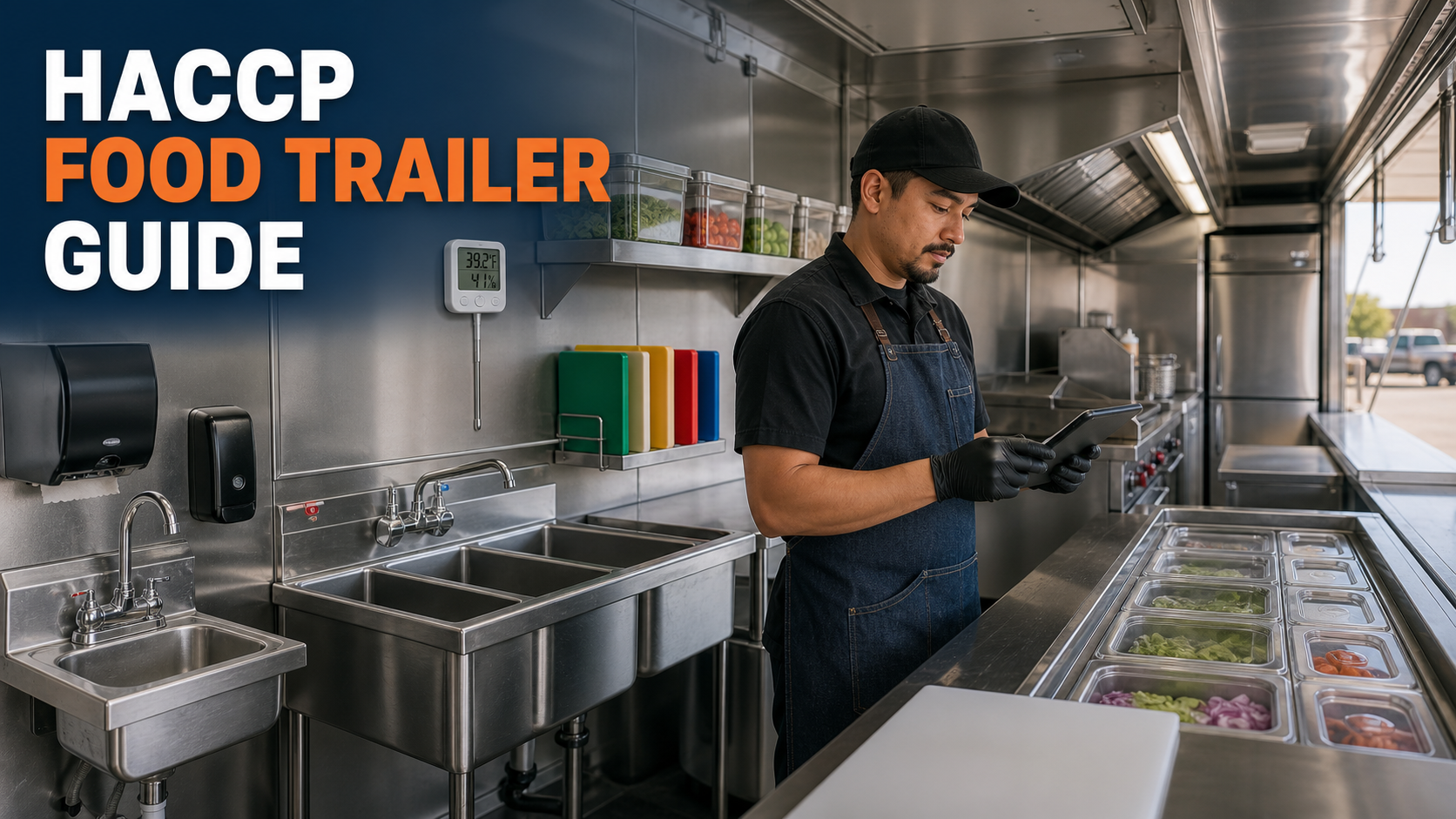
- Use the HACCP food trailer guide to identify hazards and control points.
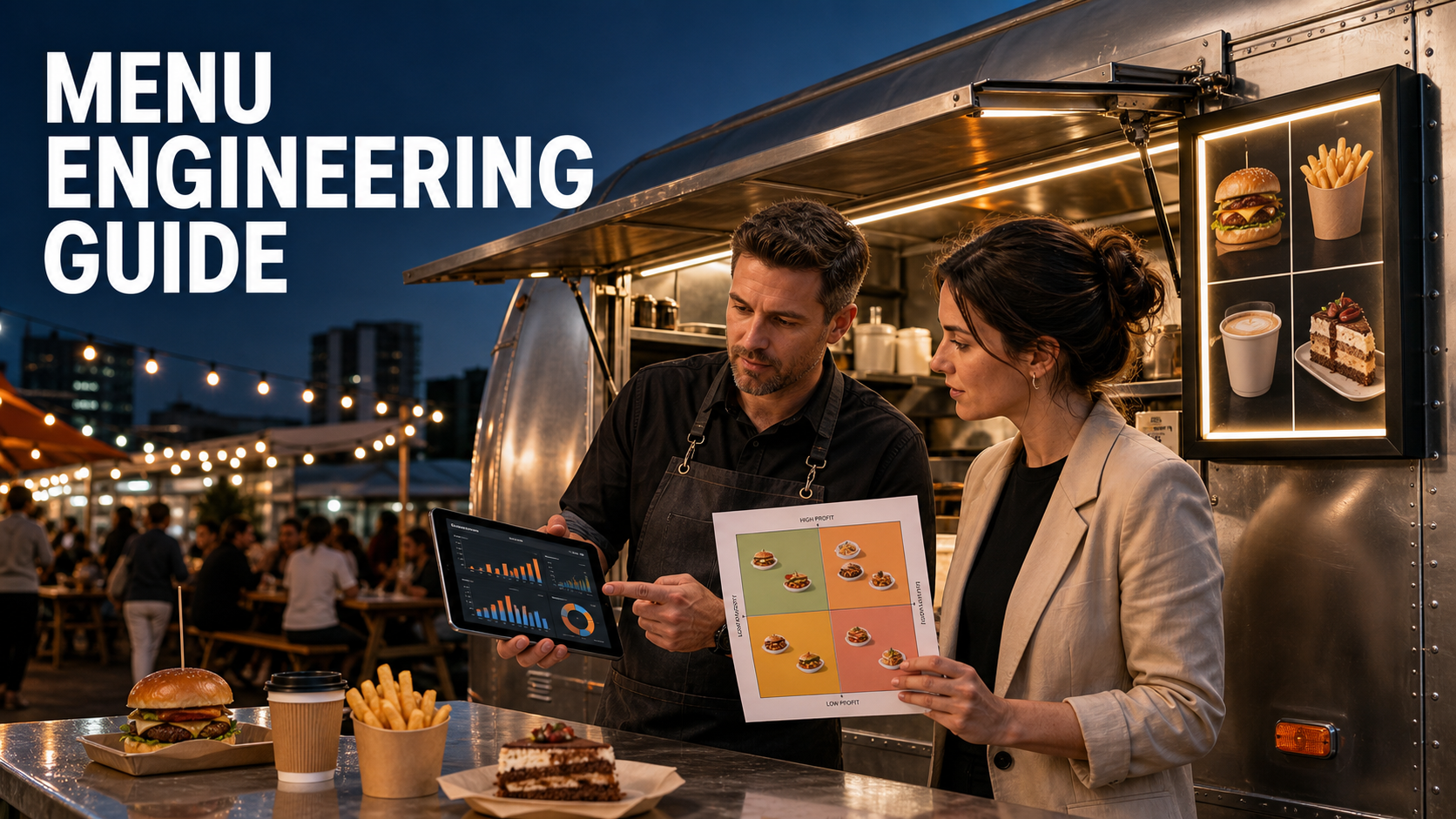
- Use the menu engineering guide to reduce slow, low-contribution items before sizing the kitchen.
- Review custom-built ZZKNOWN food trailers for factory-direct design options.
What do real buyers usually ask?
Do I need a commissary?
Sometimes. The answer depends on your jurisdiction, menu, water/waste systems, storage, servicing plan and adopted code. Ask the regulator in writing before ordering.
Can I operate several virtual brands?
Operationally, yes, but extra menus increase ingredients, packaging, tickets and errors. Confirm platform, labeling, licensing and consumer-information rules.
How large should the trailer be?
Size follows menu, peak throughput, staff, storage and dispatch space. A longer trailer is not automatically faster if the workflow creates crossing paths.
Can couriers collect at the serving window?
They can where the design and authority permit it, but a dedicated handoff point is safer and faster when it keeps couriers away from cooking and sanitation zones.
Do I still need signage?
Usually you need clear identification for couriers, inspectors and emergency services. Customer-facing brand signage also supports trust, subject to site rules.
How do I keep food safe in delivery?
Use validated cooking, holding, packing and transport procedures; suitable containers and insulated bags; allergen controls; time/temperature records; and trained staff.
Can the trailer run on a generator?
Possibly, after a full load calculation including starting loads, ventilation, refrigeration, hot water and climate control. Noise, exhaust, fuel and local rules also matter.
Can I add walk-up sales later?
Plan for it now. Electrical capacity, serving window, POS, queue area and permits may need to change. Future-ready space is cheaper than rebuilding a full kitchen.
Would you like a delivery-kitchen layout built around your menu?
Send ZZKNOWN your destination country, menu, peak order target, staff count, preferred trailer size, equipment list and local approval checklist. Our engineering team can prepare a practical CAD workflow and factory quotation for review.
Editorial note: This article provides engineering and business-planning information, not legal, food-safety, fire, tax, or financial advice. Requirements and costs vary by jurisdiction, site and menu. Obtain written approval before production and operation.