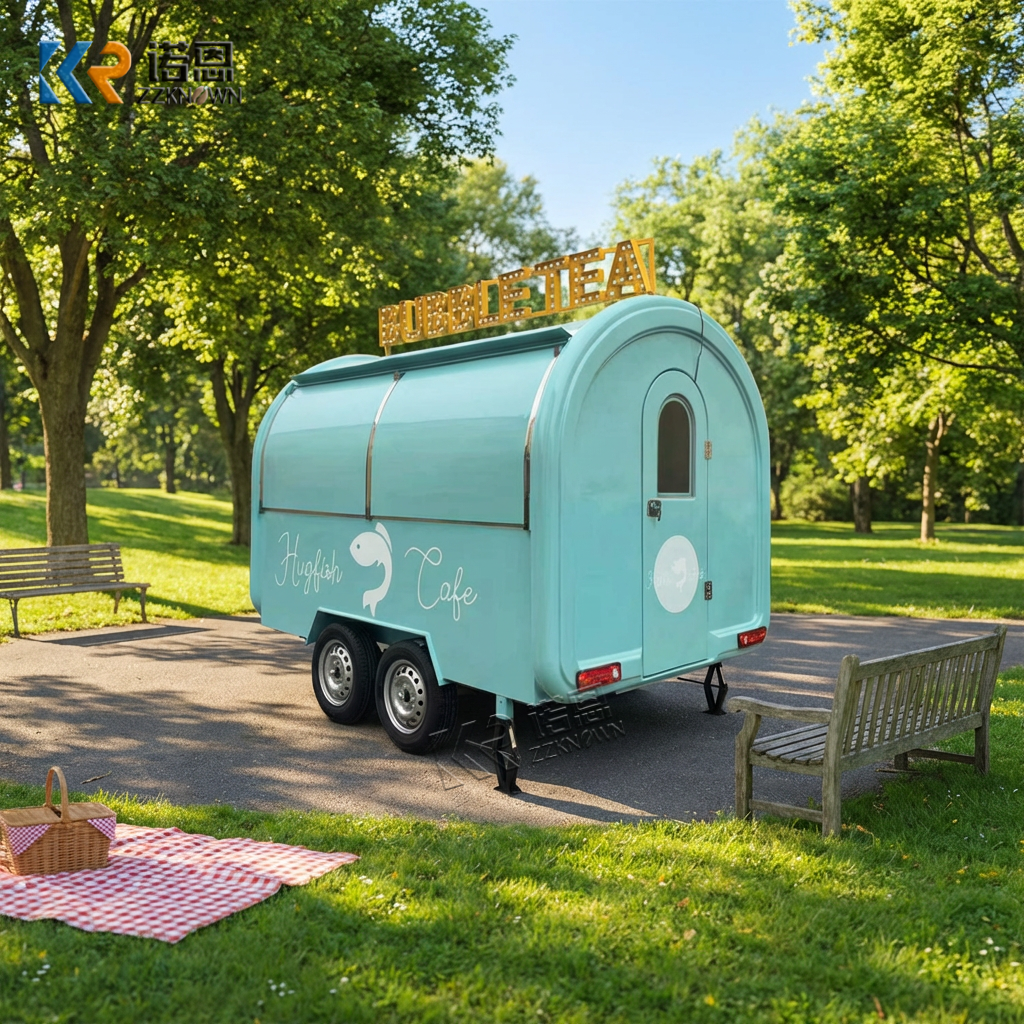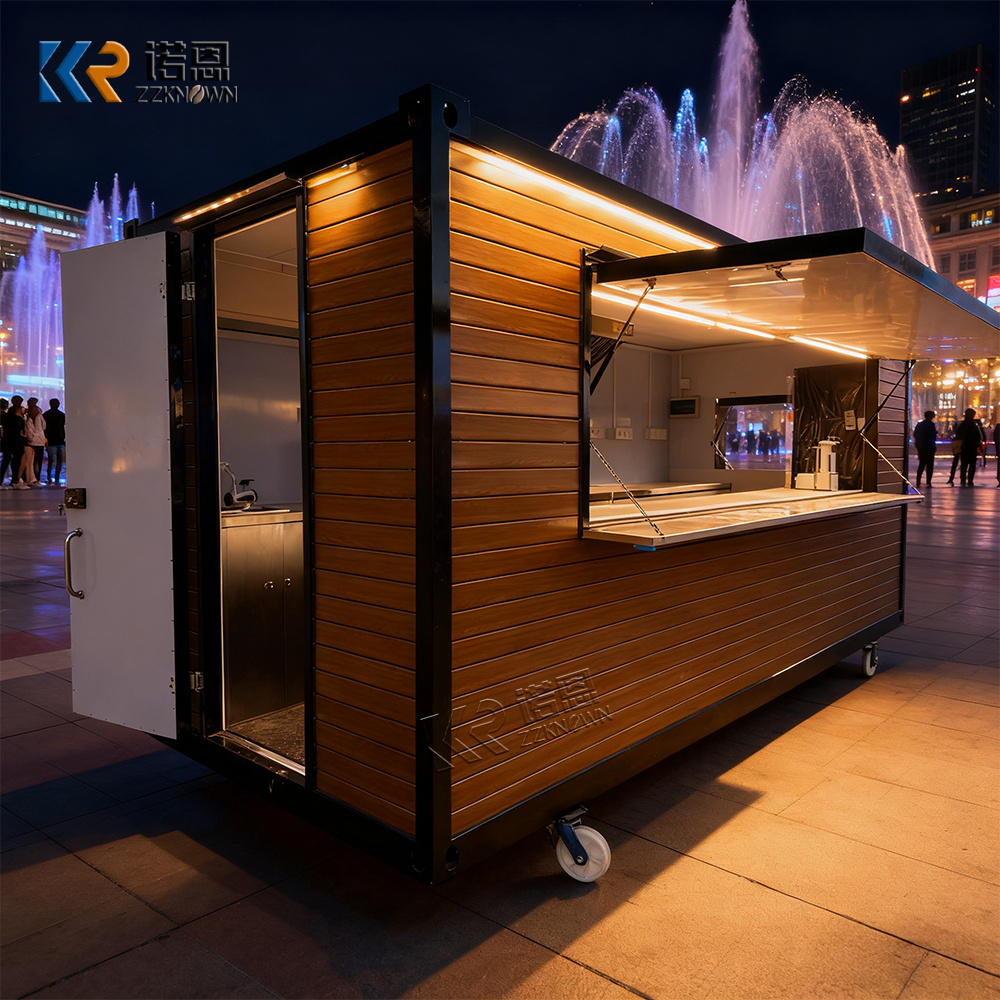
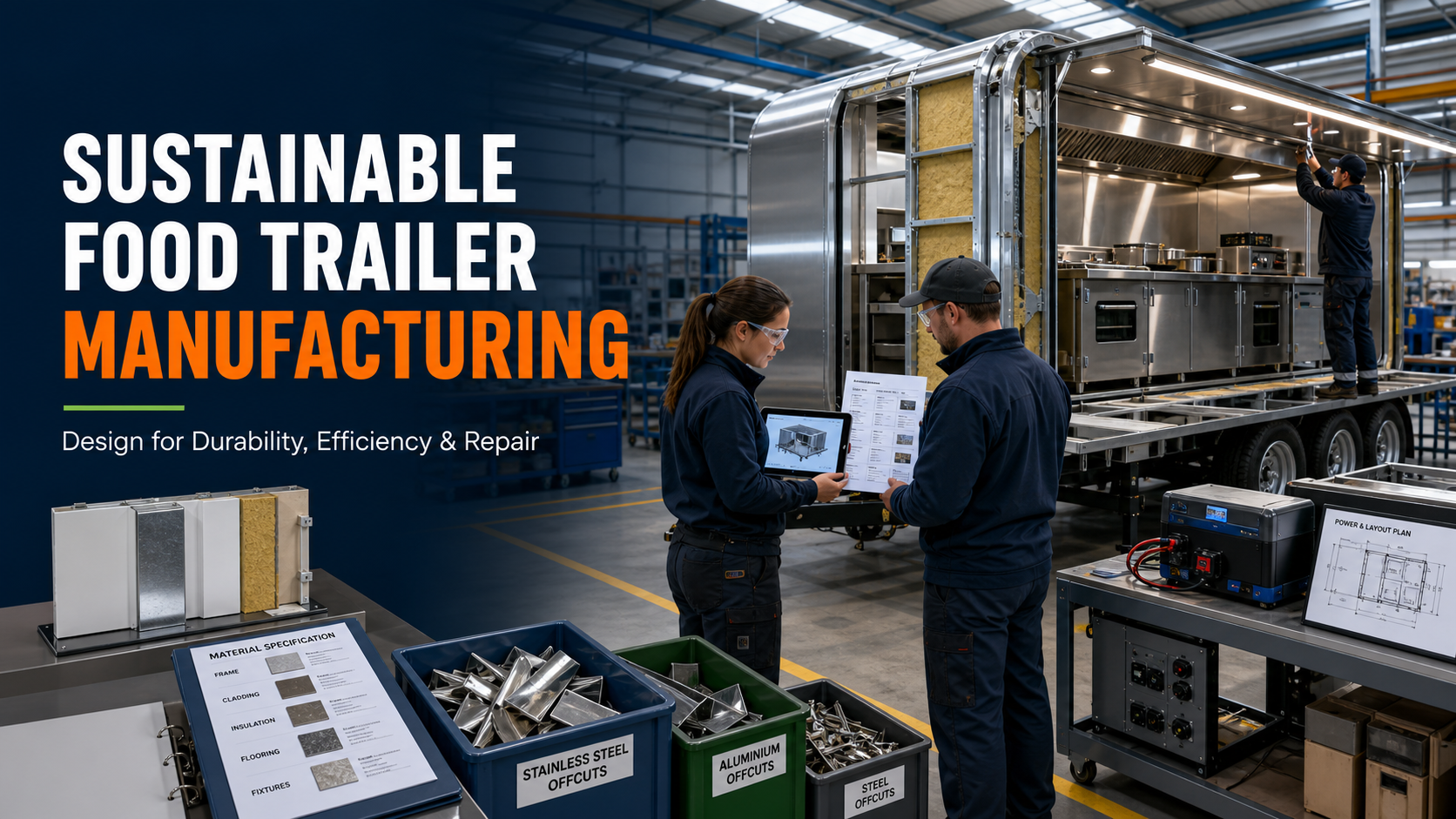
How Can Sustainable Manufacturing Improve a Modern Food Trailer?
A practical global buyer’s guide to sustainable food trailer manufacturing, covering durable materials, energy and water efficiency, repairable design, verified claims, real ZZKNOWN models, and lifecycle planning.
Direct answer
Sustainable food trailer manufacturing means reducing avoidable impact across the trailer’s whole life—not adding a green label. A practical design uses the right amount of durable, cleanable material; sizes equipment and utilities to the menu; allows maintenance and replacement; documents environmental claims; and plans for long service, upgrades, and responsible end-of-life handling. Local food, electrical, road, fire, and marketing rules still come first.
Last updated: August 20, 2026
Author: ZZKNOWN Editorial Team
Technical review: ZZKNOWN Food Trailer Engineering Team
What are the key takeaways?
- Start with the operating need. The smallest trailer that safely handles the menu, staff, storage, workflow, and peak demand may avoid unnecessary material and energy use.
- Durability is a sustainability feature. Cleanable finishes, corrosion resistance, protected wiring, service access, and replaceable equipment can extend useful life.
- Measure the kitchen, not the slogan. Appliance loads, ventilation, hot water, refrigeration, insulation, lighting, operating hours, and local electricity mix affect use-phase performance.
- Keep food safety non-negotiable. Recycled or alternative materials are not automatically suitable for food-contact surfaces, structure, insulation, fire zones, or road use.
- Ask for evidence. Percentage claims, renewable-energy claims, test data, certificates, invoices, material specifications, and system drawings should identify exactly what they cover.
- Plan for repair and upgrade. Modular equipment, spare capacity, labeled circuits, common fasteners, manuals, and accessible service points can reduce premature replacement.
Where does this guide apply, and how current is the information?
This guide is written for global buyers comparing custom food trailers, concession trailers, coffee trailers, dessert trailers, and mobile kitchens. Official sources, product pages, and technical guidance were checked on August 20, 2026. Cost examples are published ZZKNOWN website snapshots in U.S. dollars, not binding quotations. Environmental performance depends on the exact materials, equipment, power source, transport route, service life, maintenance, menu, and local infrastructure.
A manufacturer can support a better design, but it cannot give one worldwide “sustainable” approval. The buyer still needs destination-specific review for food hygiene, roadworthiness, electrical work, gas, ventilation, fire safety, refrigerants, waste, planning, and environmental marketing.
| Source or region | What it contributes | What it does not prove |
|---|---|---|
| U.S. EPA Sustainable Materials Management | A life-cycle view covering extraction, manufacture, use, reuse, maintenance, and waste management. | That a specific trailer has completed a life-cycle assessment. |
| ISO 14040 | Principles and framework for defining goal and scope, inventory, impact assessment, interpretation, reporting, and review. | An ISO certification for ZZKNOWN or a product-level result. |
| U.S. FTC Green Guides | Why broad “green” or “eco-friendly” claims should be replaced with clear, specific, substantiated claims. | A product performance standard or environmental certification. |
| EU Directive 2024/825 | Consumer-protection direction on generic environmental claims and sustainability labels. | Automatic compliance in every EU market without national implementation review. |
What does “sustainable manufacturing” mean for a food trailer?
Imagine two trailers parked at the same weekend market. The first wears leaf graphics and a large “eco” badge, but its oversized refrigerator runs half empty, the hood moves more air than the cooking line needs, service panels are blocked, and one failed appliance requires major interior demolition. The second looks ordinary. Its equipment matches the menu, LED lighting covers the task areas, piping and circuits are labeled, the refrigerator has verified efficiency data, and the cooking modules can be removed for service.
Which one is the more sustainable purchase? You cannot answer from appearance. You need a defined boundary, real specifications, operating assumptions, and evidence. According to ZZKNOWN’s production experience, the useful conversation begins with six questions: What will you sell? How many orders must the trailer handle? Where will it operate? How many hours per day? Which utilities are available? How long do you plan to keep and upgrade the unit?
The U.S. EPA describes sustainable materials management as using and reusing materials more productively over their whole life cycles. Applied to a mobile kitchen, that means looking beyond factory scrap or one material choice. The chassis, body, insulation, interior, equipment, transport, power, water, maintenance, replacement parts, and eventual disassembly all matter.
Which design choices usually matter most?
Can the trailer be right-sized?
Match length, axles, storage, work aisles, water capacity, and cooking line to the real service plan. Overbuilding adds material, transport weight, purchase cost, and often larger utility loads.
Will it last and stay cleanable?
Specify durable, corrosion-resistant, smooth, accessible surfaces where hygiene requires them. Protect edges, seals, wiring, plumbing, and high-wear zones from normal mobile use.
Can equipment be serviced?
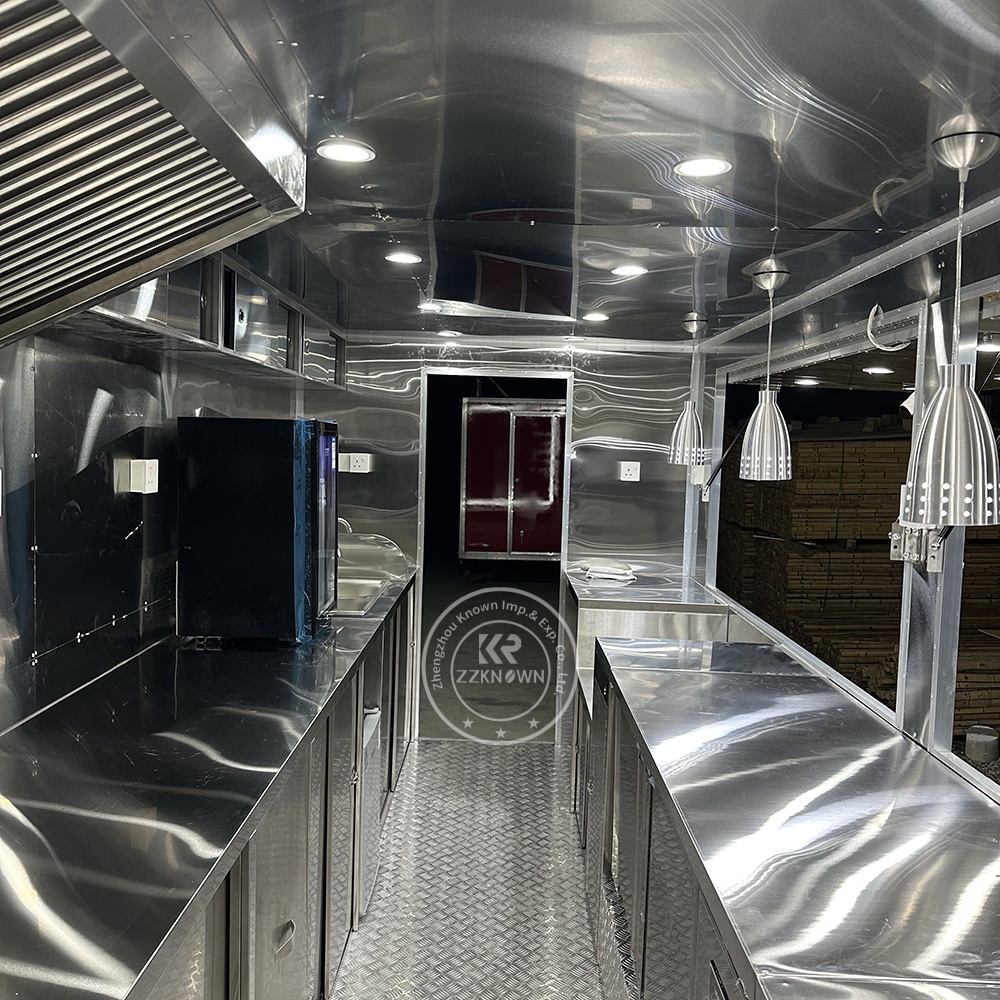
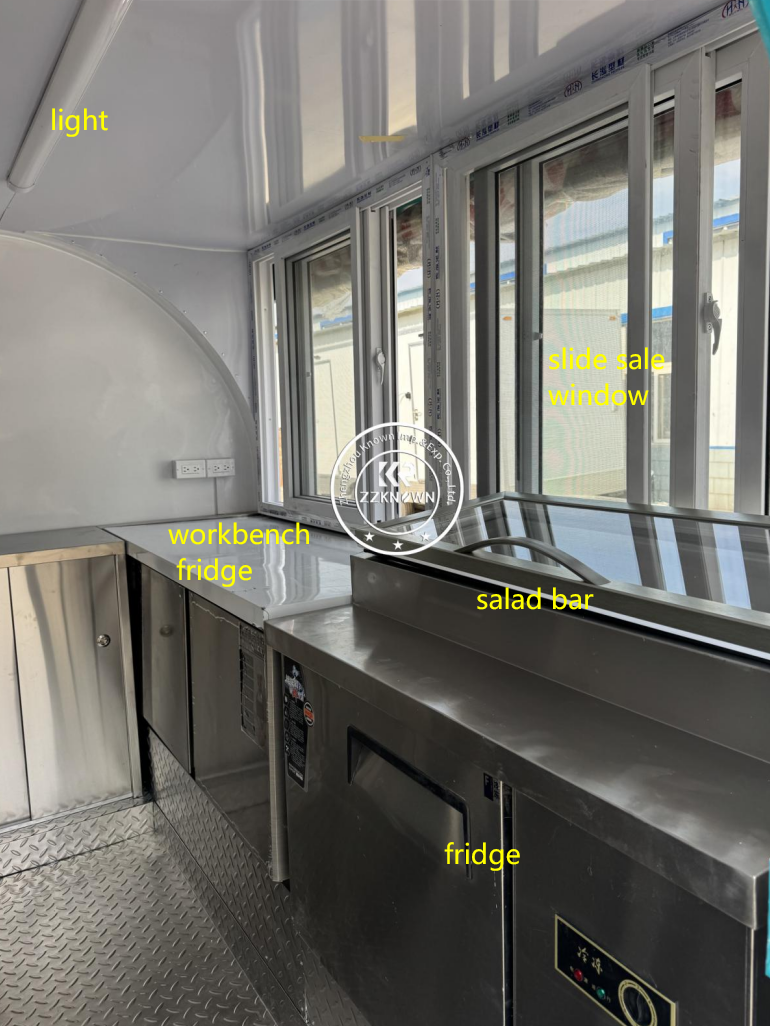
Provide access panels, removable modules, shutoff access, labeled circuits, standard fasteners, manuals, and clearance for filters, coils, pumps, valves, and refrigeration service.
Can claims be verified?
Record material grades, thicknesses, claimed recycled percentages, appliance model numbers, efficiency labels, battery chemistry, supplier certificates, and the scope of each statement.
How should materials be compared?
There is no universally “greenest” trailer material. Stainless steel, aluminum, galvanized steel, fiberglass, insulation, flooring, sealants, and coatings perform different jobs. A light body may support towing efficiency, but poor durability can shorten service life. A robust surface may use more material initially but survive years of cleaning and heat. Recycled content is useful only when it is technically suitable, documented, and considered with production, transport, maintenance, and end-of-life trade-offs.
Food safety is the boundary you should not negotiate away. The FDA Food Code 2022 says multiuse food-contact surfaces should be smooth, free of breaks and crevices, finished with smooth welds and joints, and accessible for cleaning and inspection. The FDA Code is a model adopted and adapted by jurisdictions, so the local plan reviewer decides what is accepted.
| Decision | Lower initial-impact idea | Life-cycle question | Evidence to request |
|---|---|---|---|
| Body and frame | Right-size sections and avoid decorative overbuilding | Will it meet load, road, corrosion, repair, and service-life needs? | Material specification, drawing, weight estimate, finish schedule |
| Interior surfaces | Use hygienic material only where the function requires it | Can it tolerate cleaning, heat, moisture, impact, and inspection? | Grade, thickness, surface finish, local acceptance |
| Insulation | Match climate and operating schedule | Will thermal benefit offset material, space, moisture, and fire trade-offs? | Product data, thickness, thermal and fire information |
| Equipment | Avoid oversized or duplicate appliances | How much active, idle, and standby energy will it use? | Model number, certified ratings, test method, warranty |
How can a mobile kitchen use less energy and water?
Commercial kitchens are demanding environments. U.S. Department of Energy guidance says appliance selection and kitchen design strategies should consider efficient refrigerators, freezers, fryers, ovens, hot-food holding equipment, dishwashers, ice machines, steamers, and low-flow hot-water fixtures. It also emphasizes designing cooking equipment and hoods together so ventilation captures effluent without unnecessary airflow.
For a trailer, every watt and gallon also affects generator size, battery capacity, shore-power demand, water-tank volume, payload, and operating range. Use an equipment power schedule with continuous load, simultaneous load, startup demand, daily run time, fuel type, and idle behavior. Then model at least a normal day and a peak day.
What can reduce electrical demand?
LED lighting, efficient refrigeration, controlled water heating, correct appliance sizing, night shutdown procedures, clean condenser coils, and a menu that avoids underused high-load equipment.
What can reduce water use?
Leak control, appropriate spray valves and faucets, trained scraping and soaking procedures, equipment chosen for the actual batch size, and a layout that makes correct cleaning easy.
When can batteries or solar help?
They can support quiet operation and selected loads when capacity, charging, roof area, climate, fire protection, electrical rules, and replacement planning are realistic.
When is gas still part of the plan?
Some high-heat menus use gas to avoid very large electrical systems. Compare safety, ventilation, fuel logistics, local restrictions, leakage risk, and operating emissions—not one headline.
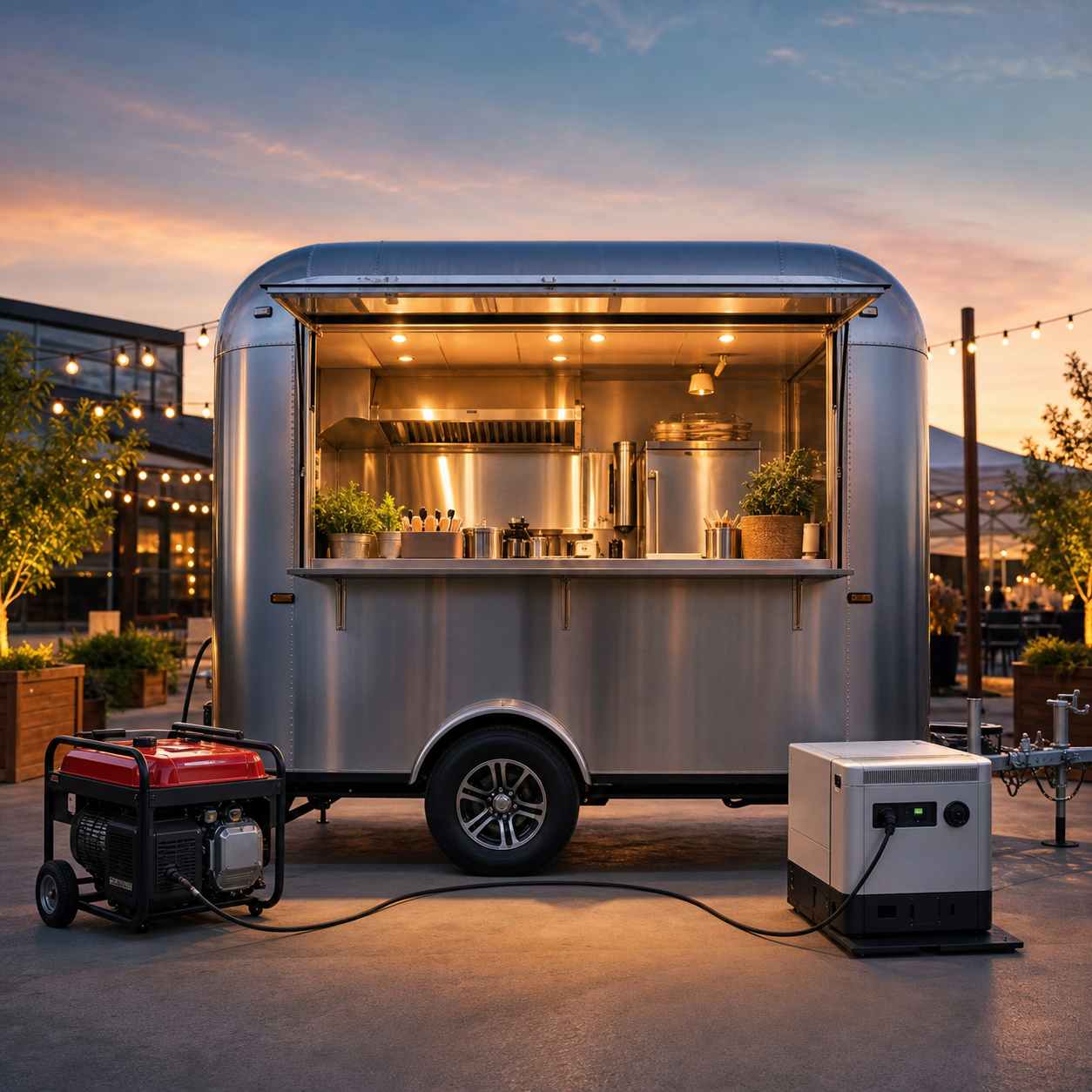
Our battery-powered food trailer vs generator guide explains why a coffee trailer and a fryer-heavy kitchen should not receive the same power package.
What do real ZZKNOWN models teach us?
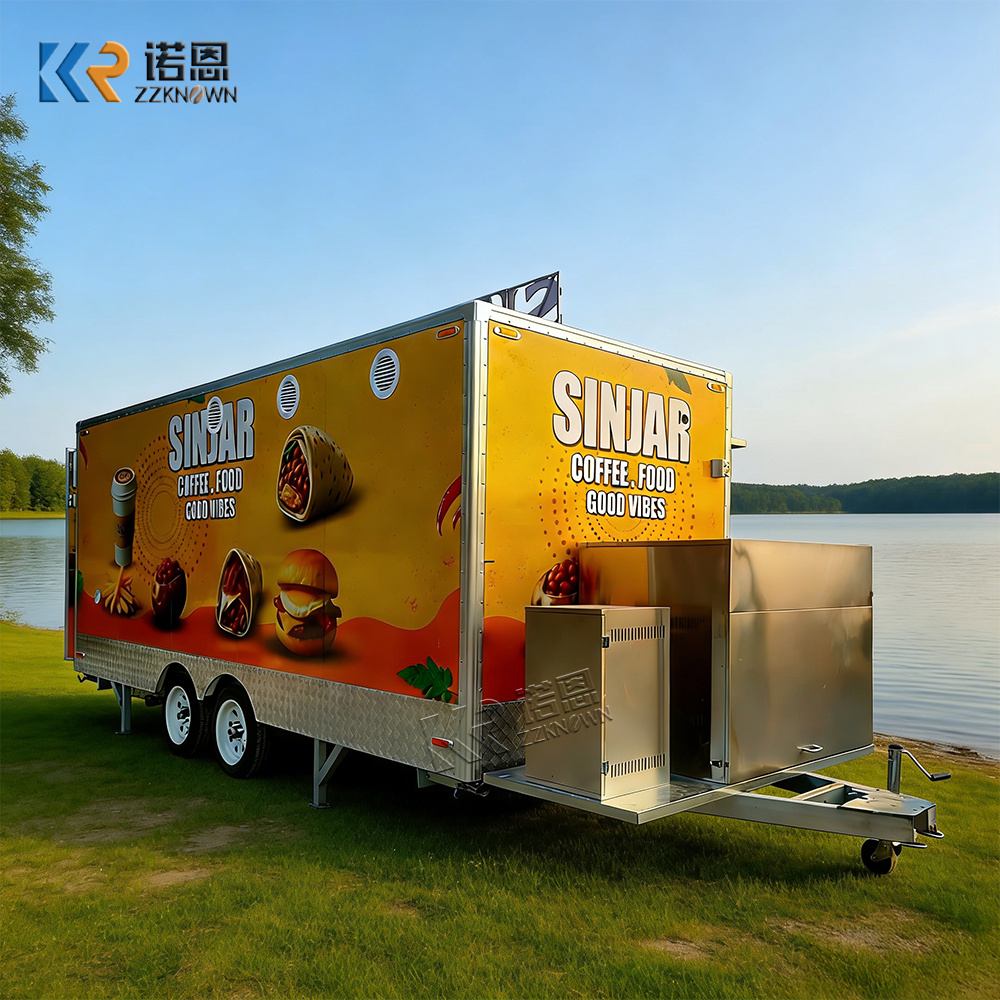
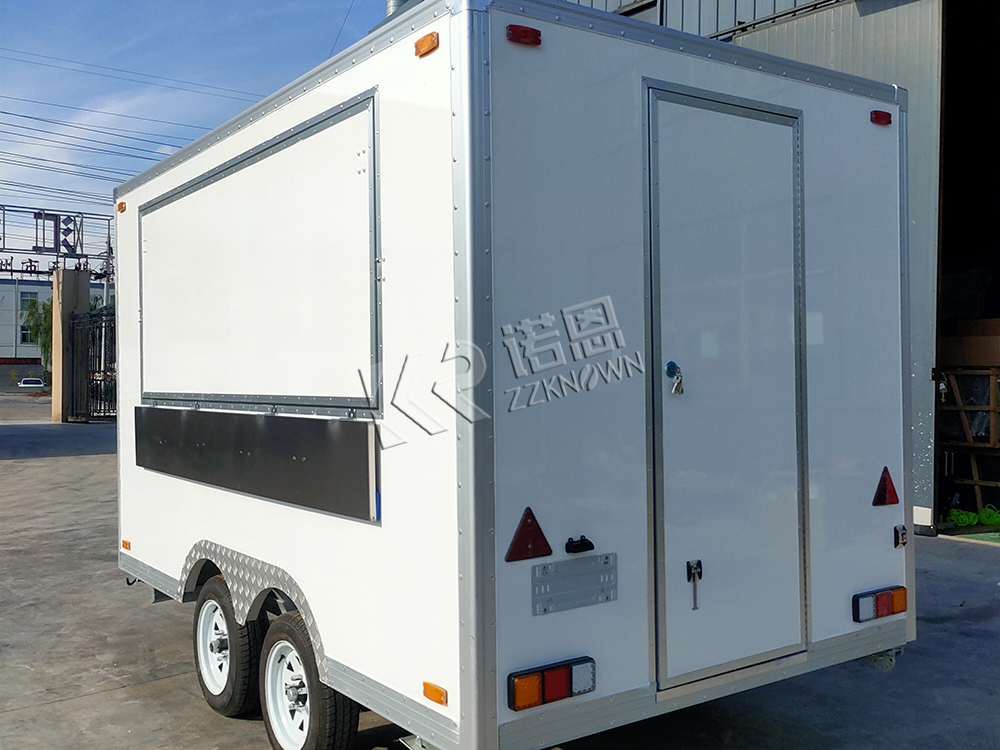
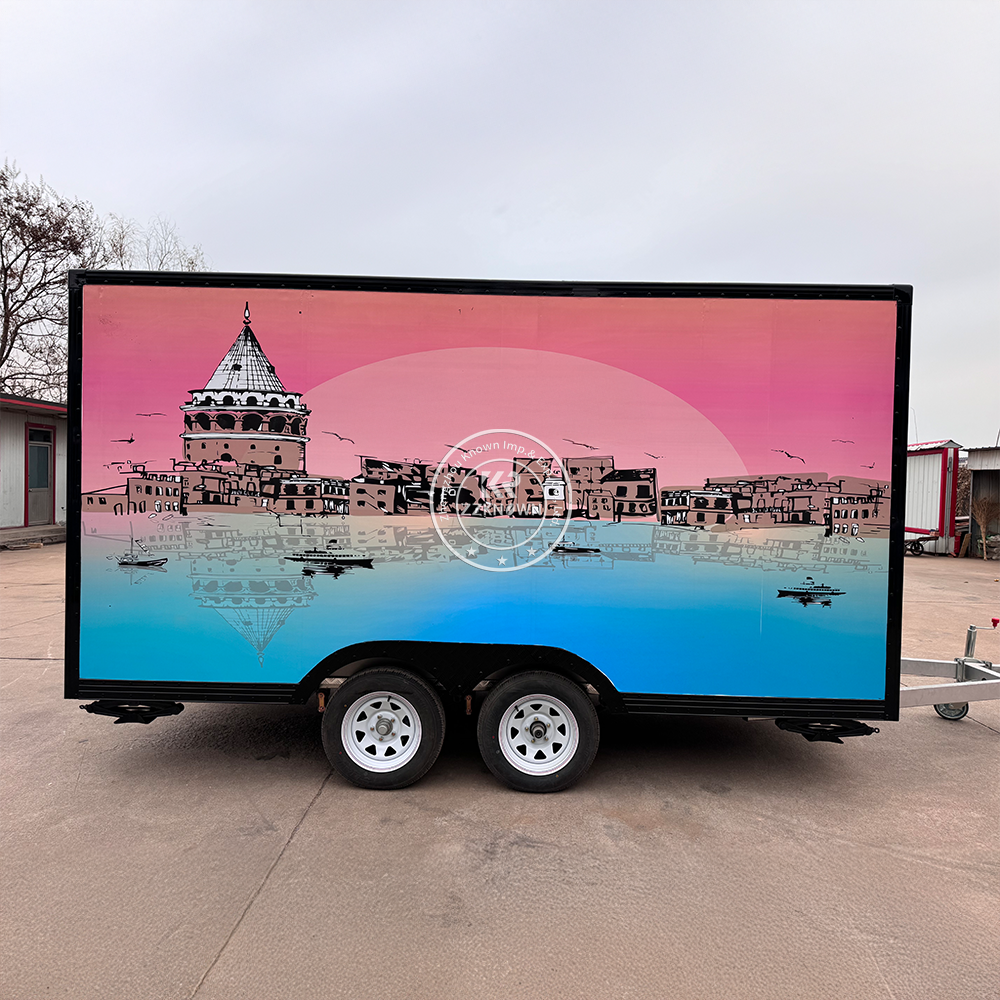
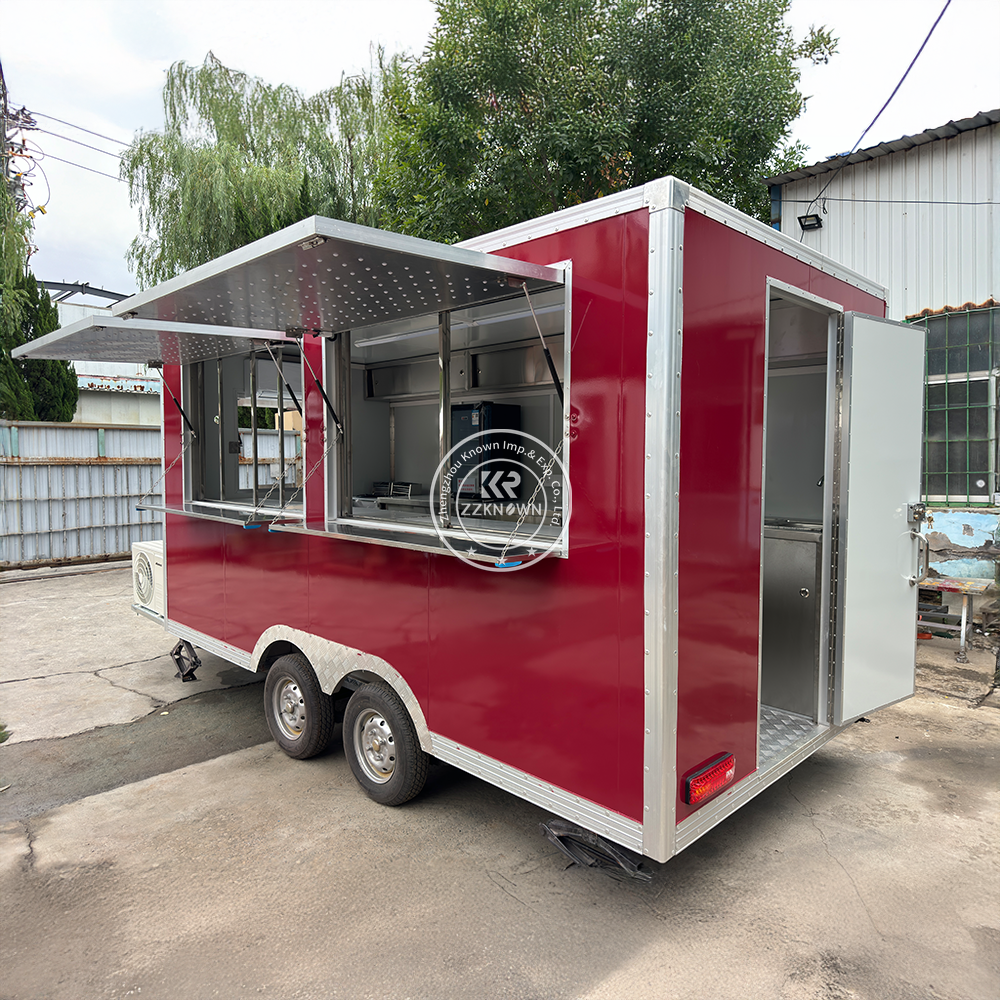
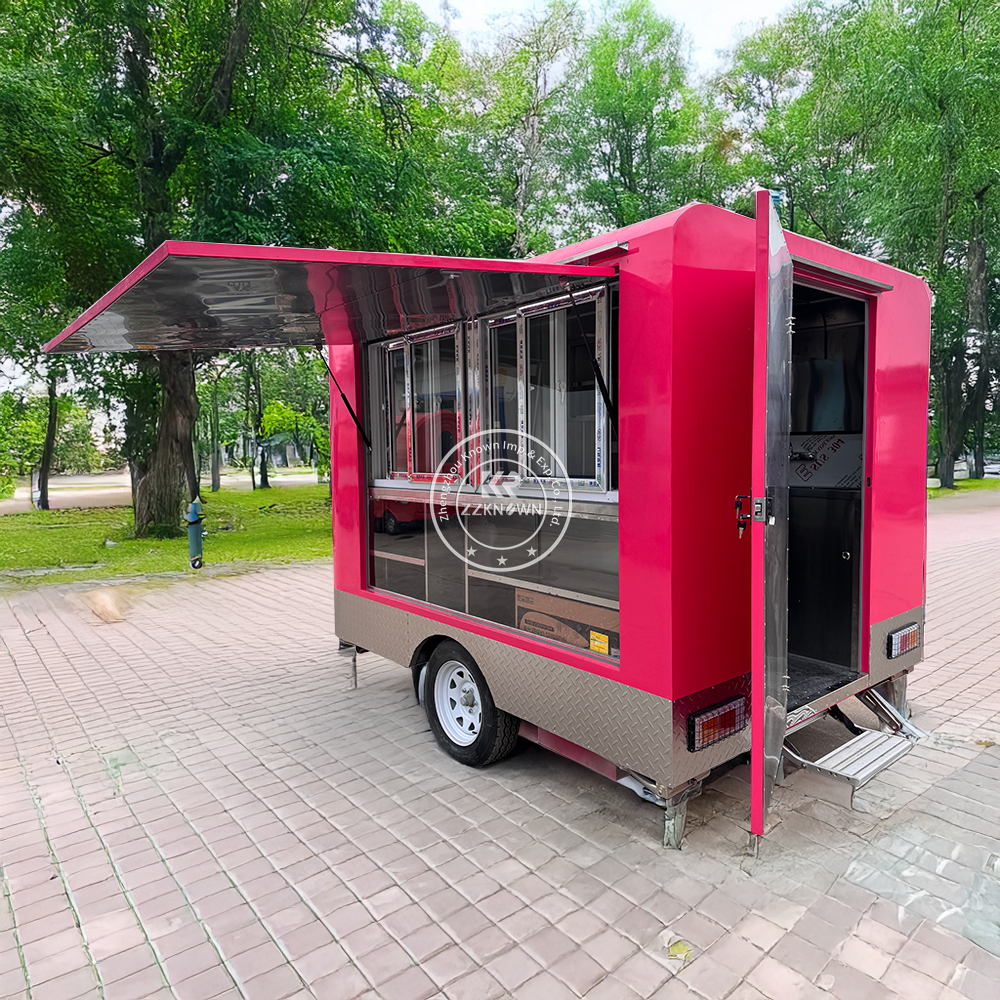
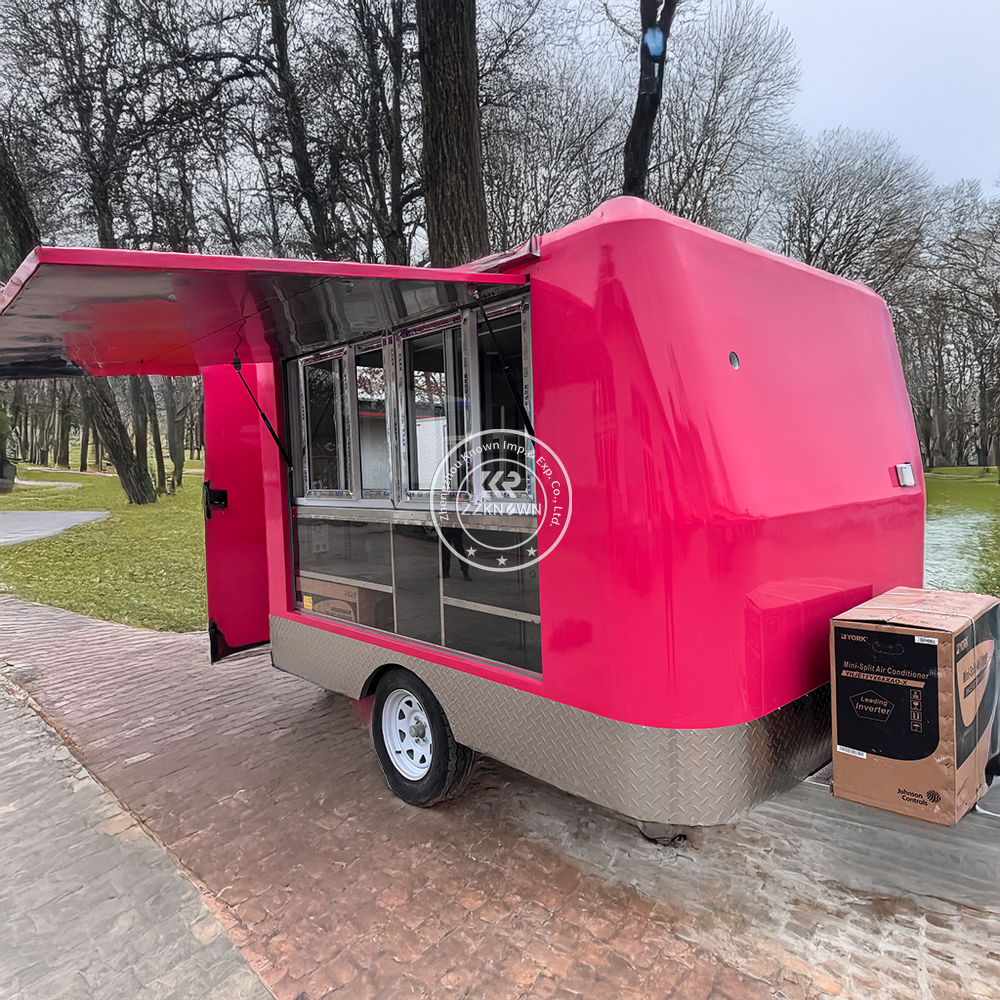
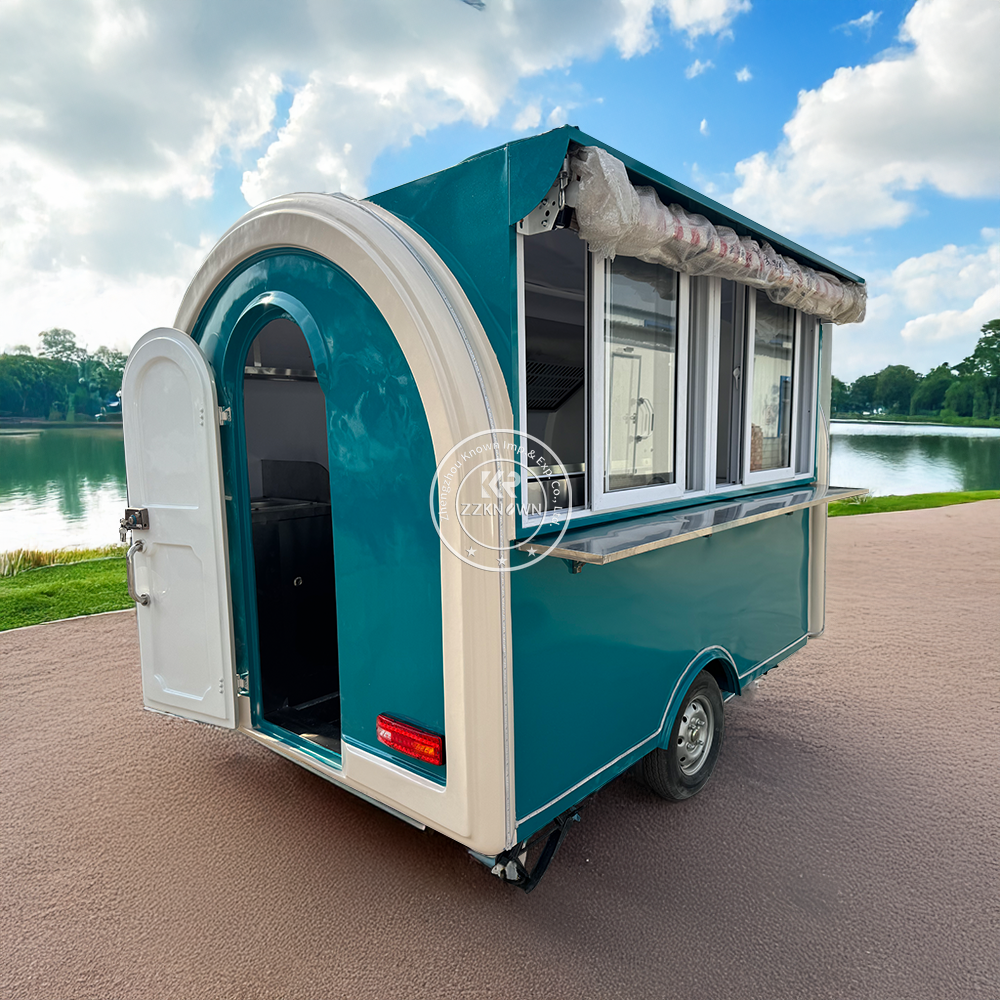
Real models are useful because sustainability discussions must return to dimensions, equipment, materials, and price. They are not environmental certifications, and the same model can perform very differently after customization.
.png)
.jpg)
| Published model | Published size | Website price snapshot | Sustainability planning angle |
|---|---|---|---|
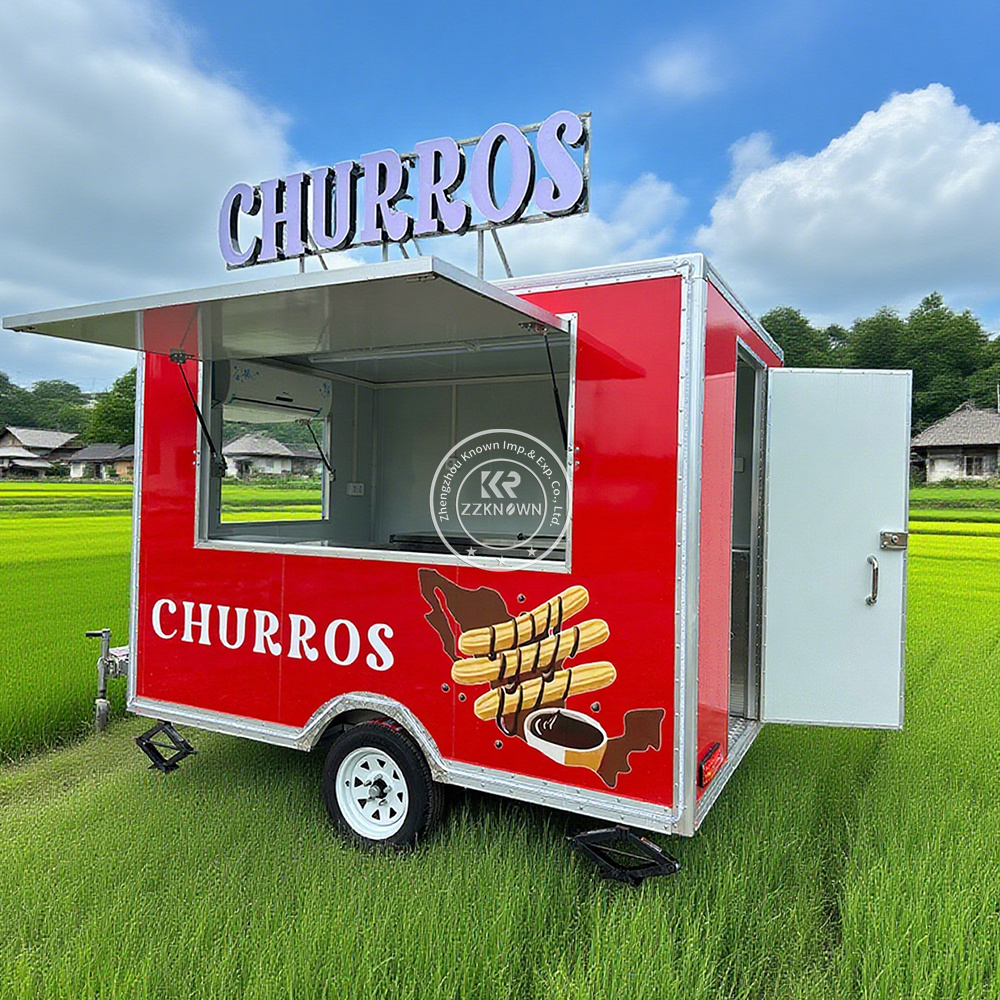
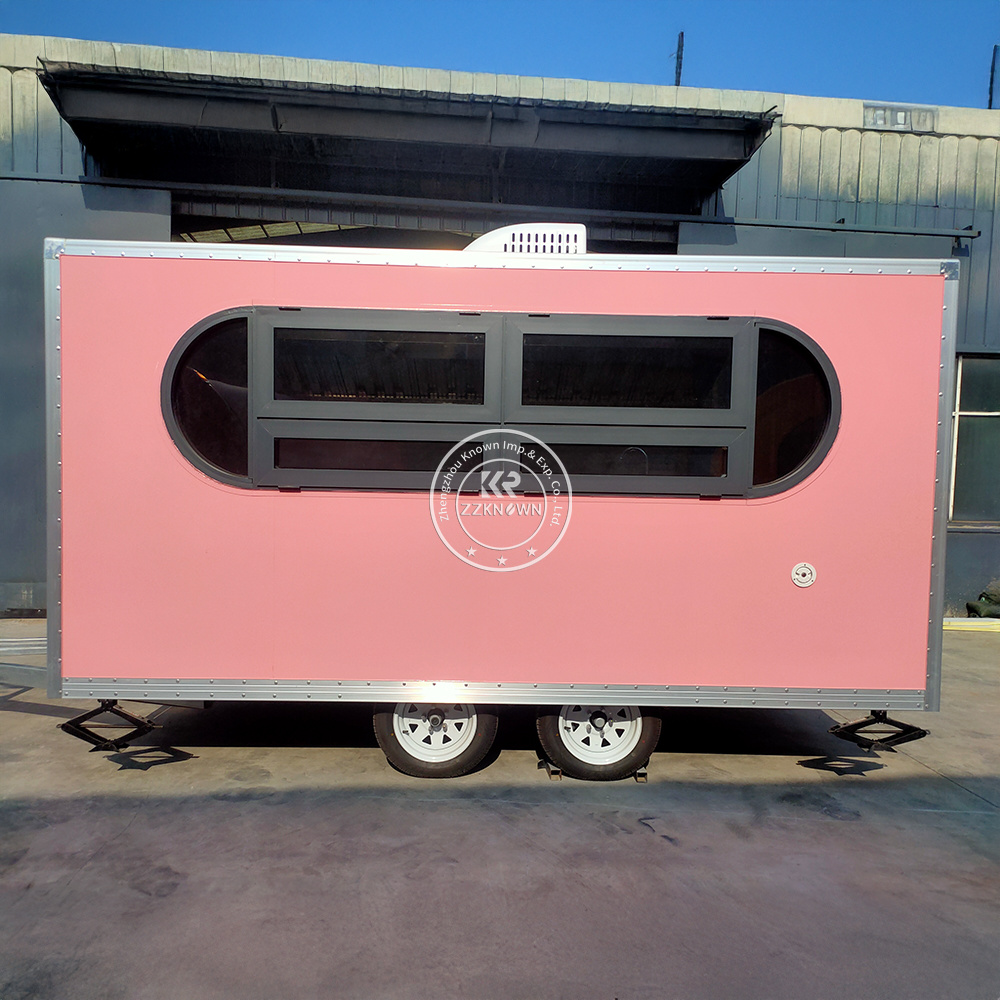
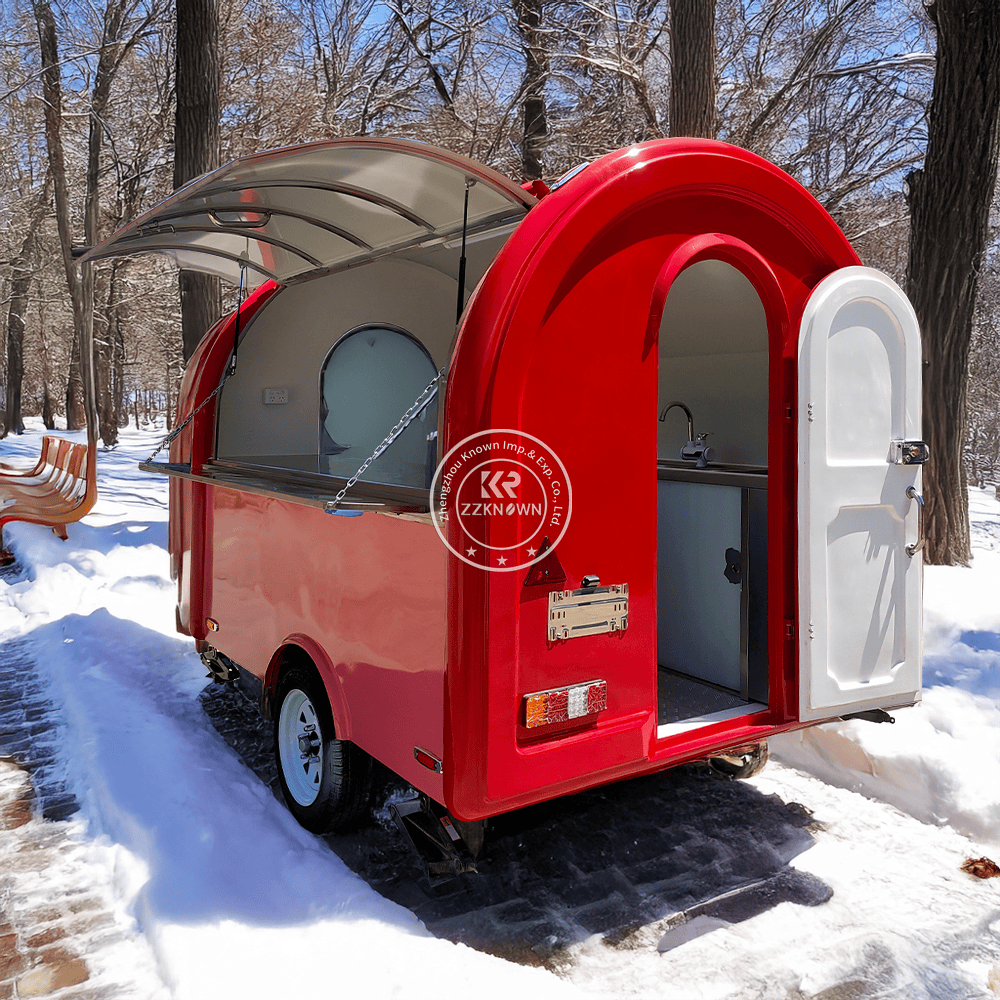
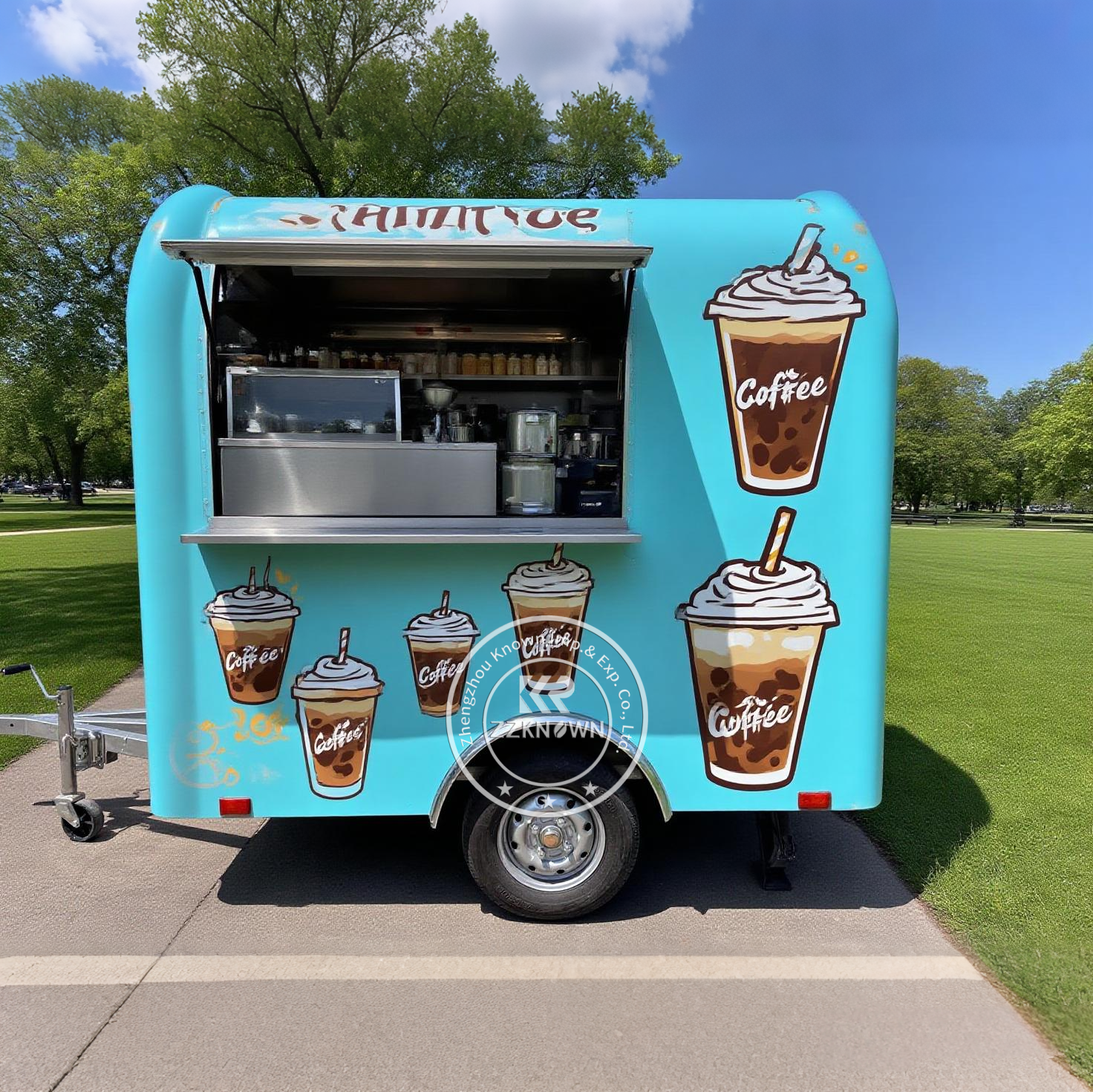
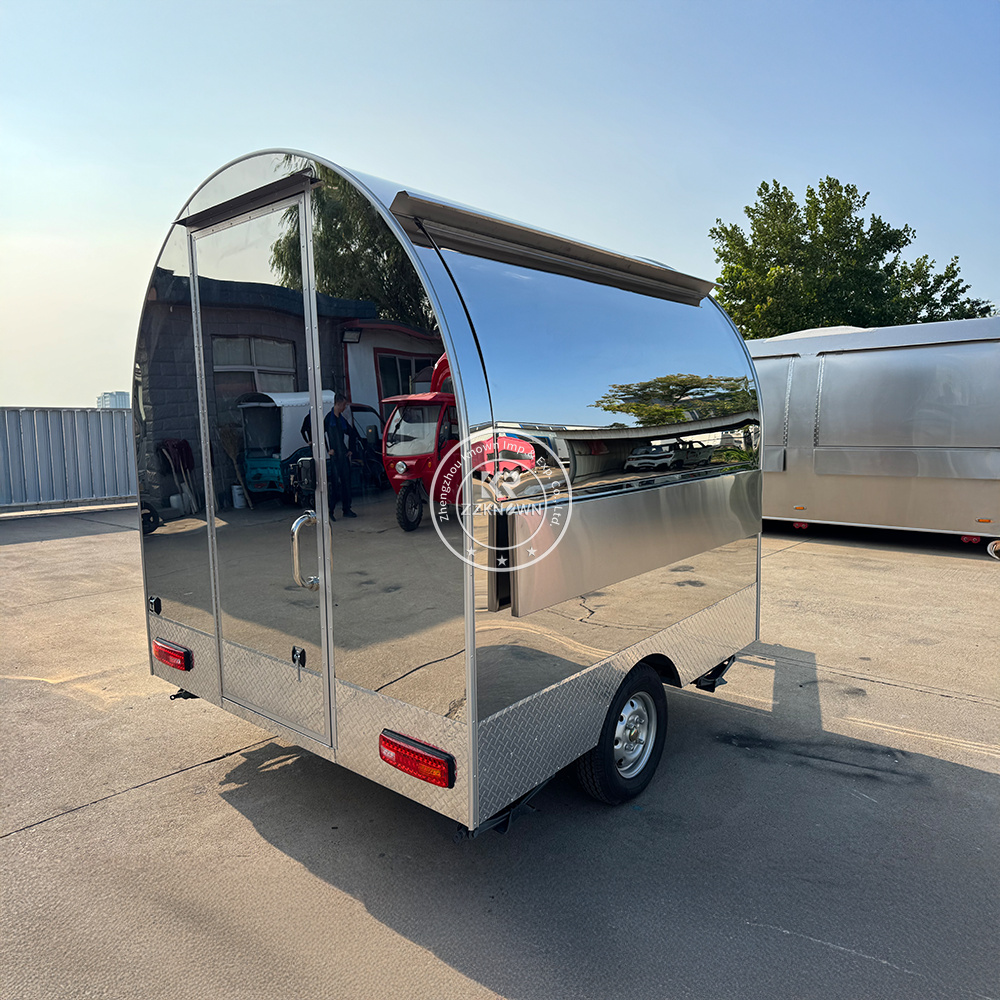
| KN-FR220H | 2.2 × 1.6 × 2.3 m | US$2,600–5,830 | A compact platform for a focused snack, coffee, or test concept where one or two staff and limited equipment are enough. |
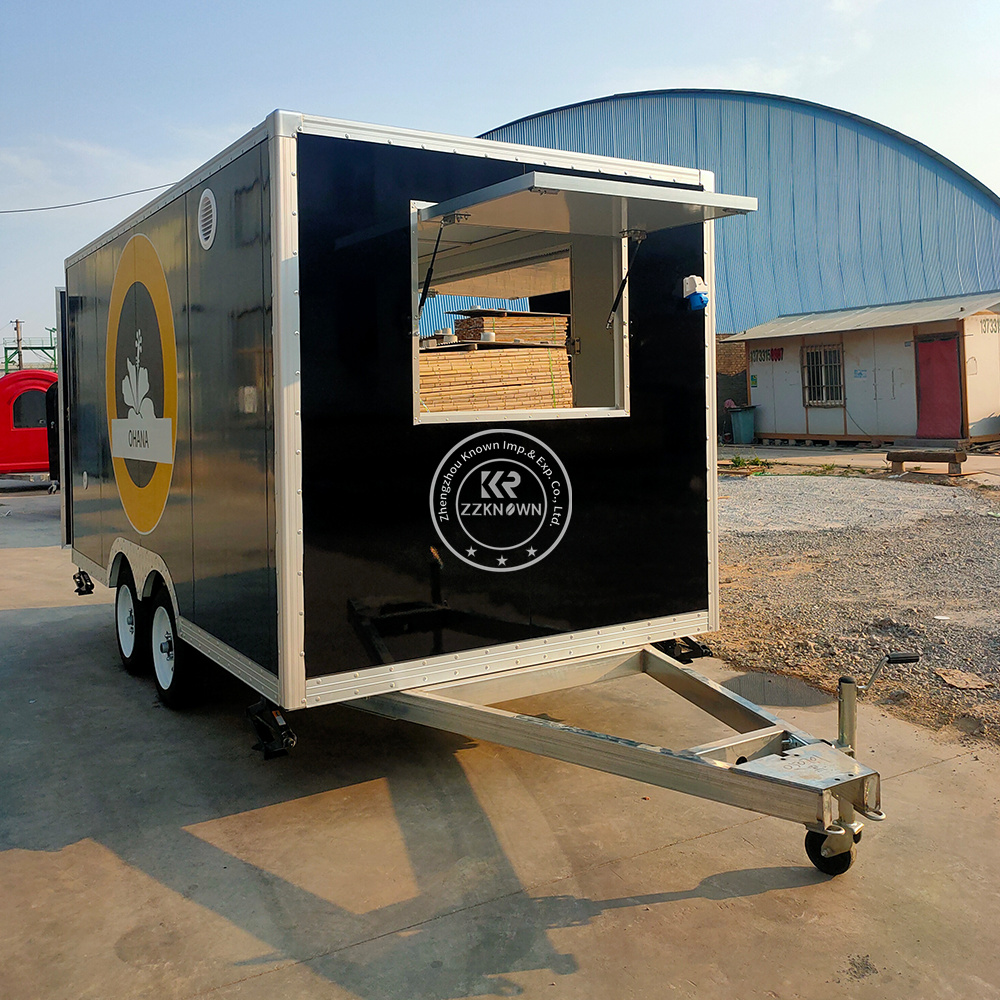
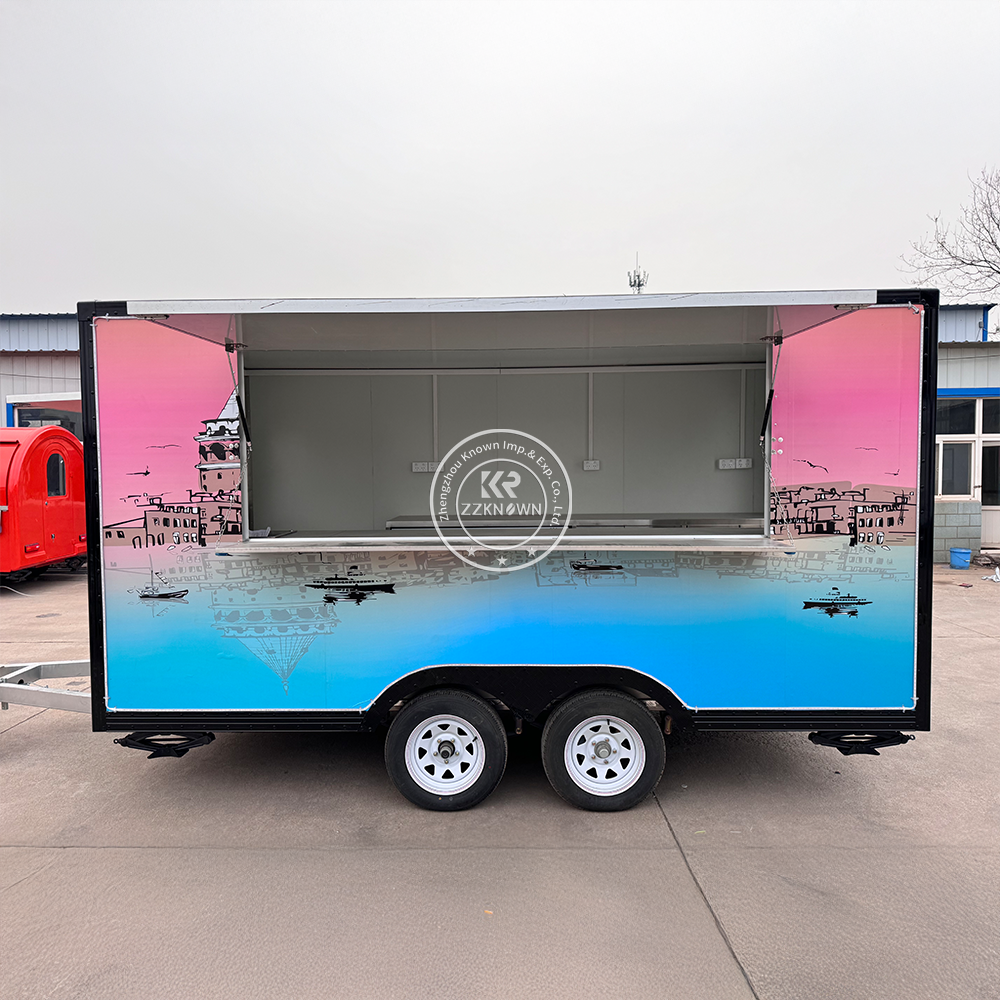
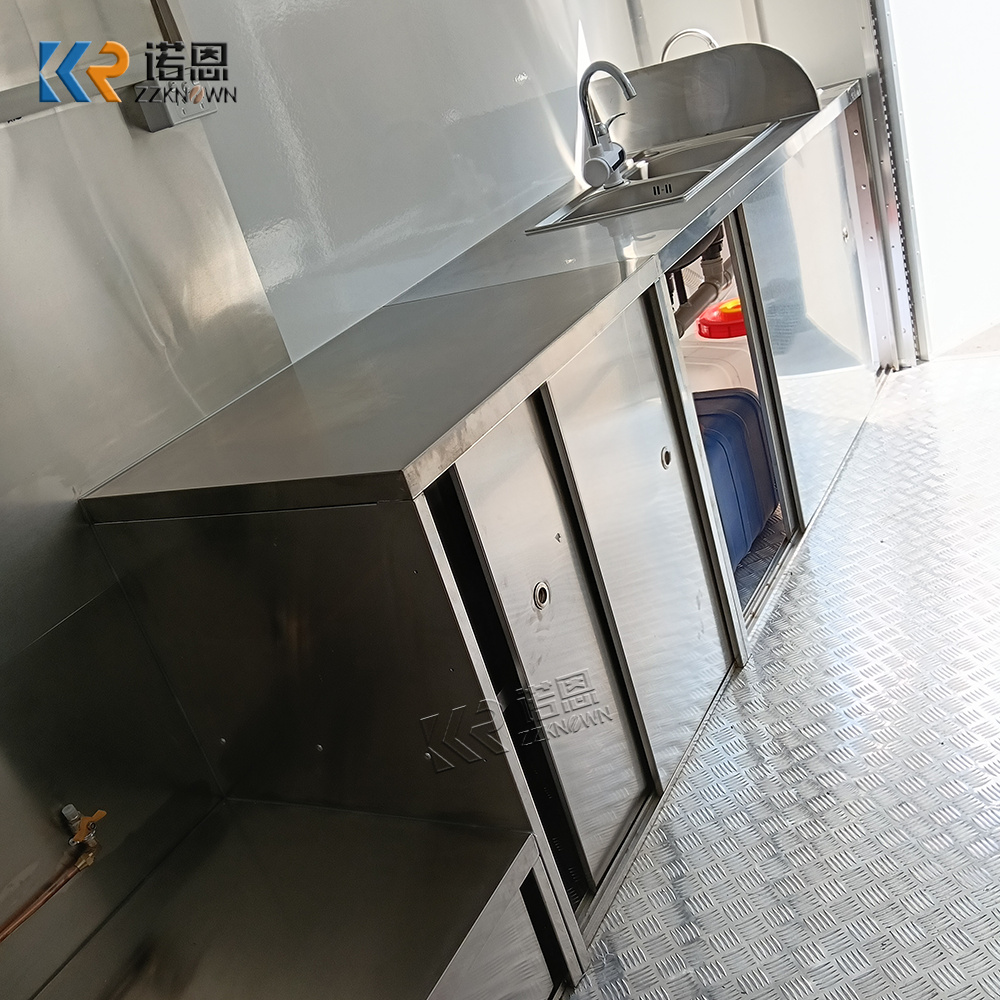
| KN-QF400 | 4.0 × 2.0 × 2.3 m | US$8,490–18,900 | Balance body, full commercial kitchen needs, storage, ventilation, water, and destination-market systems. |
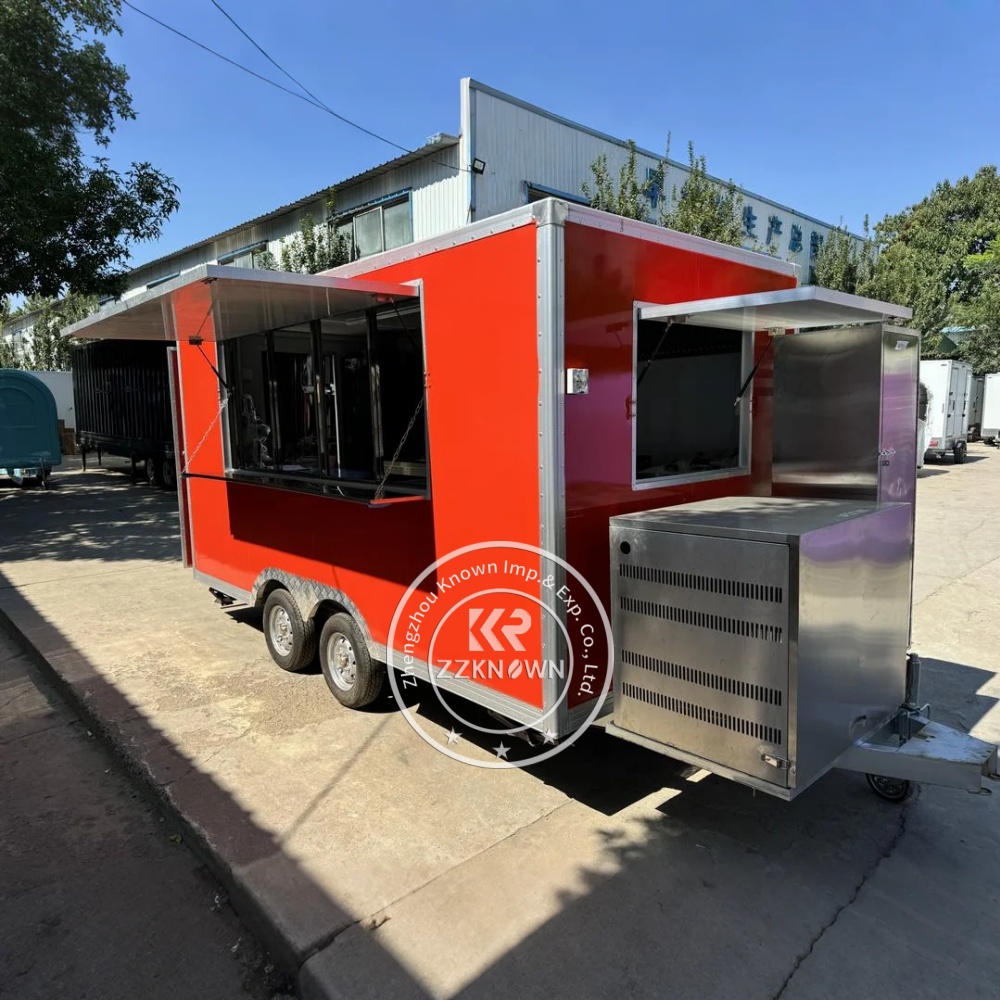
| KN-QF490 | 4.9 × 2.0 × 2.3 m | US$8,490–18,900 | Extra usable space can support higher throughput, but only if demand justifies material, equipment, utilities, and towing implications. |
Price note: These are website ranges observed on August 20, 2026. Equipment, certification, customization, freight, duty, tax, batteries, solar, installation, inspection, and destination work can change the final cost. Ask for a current written quotation.
How should repairability and upgradeability be designed?
A trailer may work for ten years while its refrigerator, POS, battery, menu, lighting, branding, and serving process change several times. Sustainable design anticipates that. Leave safe access to major components. Avoid trapping pumps behind permanent cabinets. Provide cable routes with capacity only where future loads are credible. Keep an as-built electrical diagram, plumbing diagram, equipment schedule, fastener list, finish schedule, and spare-parts references.
Modular does not mean loose. Commercial equipment must remain securely installed for towing, cooking, cleaning, and inspection. The right solution combines structural restraint with serviceable connections and planned removal paths. That is why the engineer needs exact appliance dimensions and service-clearance requirements before cabinets are fabricated.
What does the ZZKNOWN engineer need before making sustainability recommendations?
Engineer’s note: “Send us your menu, expected orders per hour, staff count, destination, operating climate, service hours, utility access, towing limits, preferred fuels, equipment models, cleaning process, and expected years of use. Tell us which claims or procurement targets your customer requires. Then we can compare size, material, insulation, appliance load, ventilation, water, battery or generator options, and service access.”
This is planning guidance from the ZZKNOWN Food Trailer Engineering Team. It is not a life-cycle assessment, environmental product declaration, energy guarantee, or regulatory approval.
How were the recommendations and data collected?
- We used the U.S. EPA life-cycle definition of sustainable materials management to organize extraction, manufacturing, use, maintenance, reuse, and waste questions.
- We reviewed the public ISO 14040 scope summary to avoid presenting a simple checklist as a completed LCA.
- We checked U.S. DOE guidance on commercial-kitchen energy, water, appliance sizing, ventilation, and maintenance.
- We reviewed the FTC Green Guides and EU Directive 2024/825 to frame specific, substantiated claims and avoid vague environmental language.
- We reviewed current ZZKNOWN product pages for real model numbers, dimensions, price snapshots, materials, and published equipment information.
- We translated those sources into questions used during custom trailer planning. No proprietary customer energy bills, carbon inventories, or supplier-specific recycled-content records were available for this article.
How can a buyer avoid greenwashing?
Replace “Is this trailer eco-friendly?” with narrower questions. Which component contains recycled material? What percentage by weight? Is it pre-consumer or post-consumer? Which supplier document supports it? Does the percentage apply to the entire trailer, the body panel, or only a package? What baseline supports a “uses less energy” claim? Which operating hours, climate, menu, and comparison model were used?
The FTC advises against broad, unqualified claims such as “green” or “eco-friendly.” It also says recycled-content claims should identify the amount when a product is only partly recycled, and renewable-energy claims need clear support and scope. In the EU, Directive 2024/825 similarly addresses generic environmental claims and sustainability labels. A photo of solar panels or a leaf icon is not evidence.
For ZZKNOWN projects, the safe approach is to put agreed specifications in the quotation, drawings, bills of materials, equipment schedule, inspection checklist, and final documents. If evidence is unavailable, describe an item as an option under review, not an achieved benefit.
Which related products, cases, and guides should you review?
- Compare practical energy systems in the battery versus generator guide.
- Start with equipment flow in the efficient food trailer layout guide.
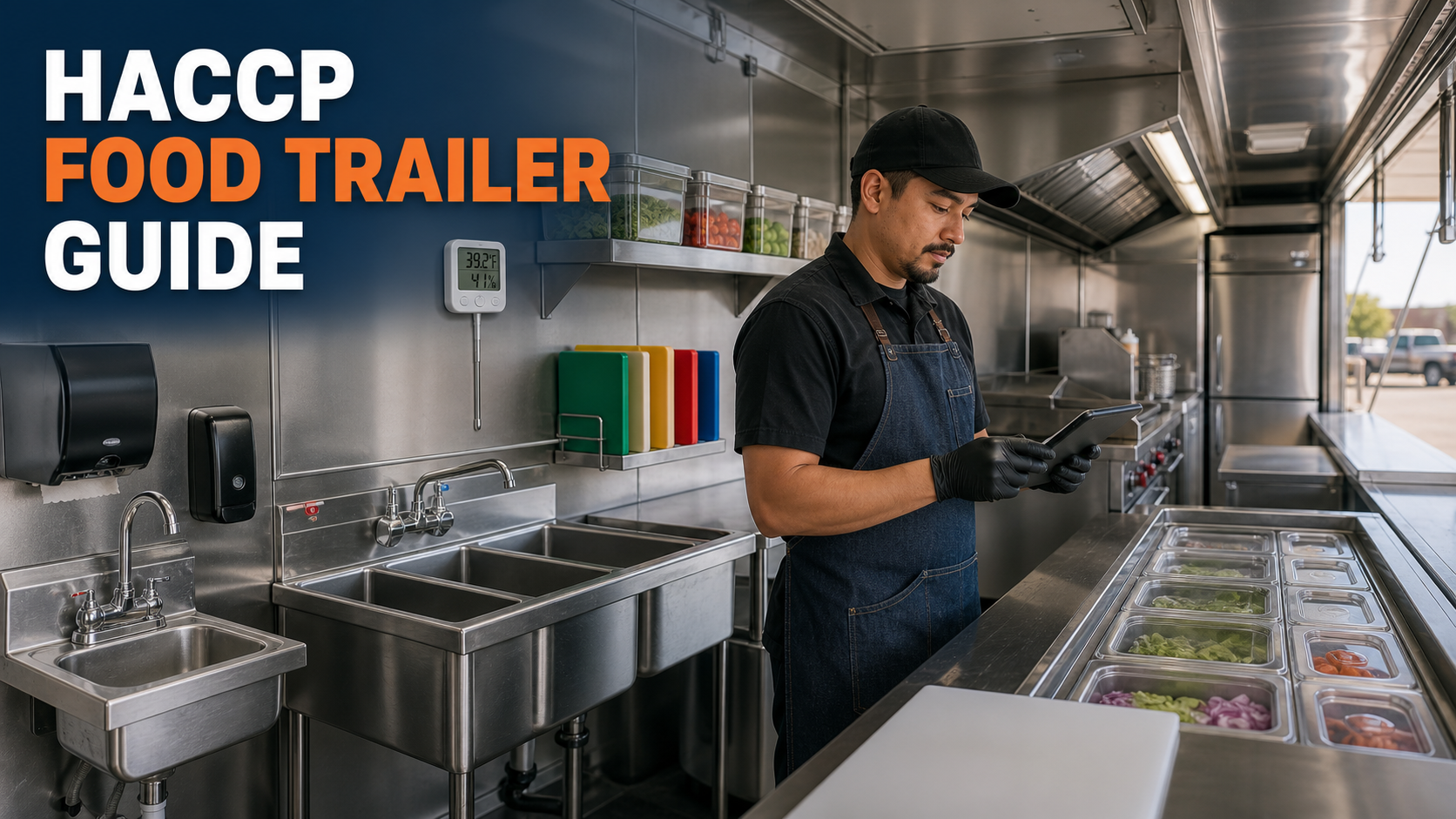
- Protect sanitation requirements with the HACCP food trailer guide.
- Review the real 8-meter Malaga custom Airstream project to understand how size, equipment, and freight affect the full purchase.
- Explore custom-built ZZKNOWN food trailers for a menu-based quotation.
What do global buyers usually ask?
Is stainless steel always the most sustainable material?
No. Compare function, grade, quantity, service life, cleanability, maintenance, sourcing, transport, and end-of-life. Food-contact acceptance and durability may outweigh a simple material slogan.
Can ZZKNOWN use recycled material?
Potentially for suitable components when sourcing, safety, quality, quantity, and documentation allow it. Specify the component and required evidence before quotation; do not assume the whole trailer contains a stated percentage.
Will solar panels run the entire kitchen?
Usually roof area and daily solar energy are limited compared with heavy cooking loads. Solar may assist a battery system, but the engineer must calculate appliances, runtime, charging, weather, and backup.
Is an electric kitchen automatically lower carbon?
No. The answer depends on grid electricity, appliance efficiency, fuel alternative, usage, ventilation, battery manufacture and replacement, and system boundaries. Electrification can still offer operational and local air-quality benefits.
Does a compact trailer always use fewer resources?
Not if it is too small for safe workflow, needs frequent restocking trips, or must be replaced early. Right-size for the complete operation rather than choosing the shortest shell.
What documents should I request?
Ask for approved drawings, material/finish schedules, equipment models, electrical and plumbing diagrams, manuals, inspection records, certificates within scope, and evidence behind any environmental claim.
Can an old trailer be upgraded instead of replaced?
Sometimes. Inspect chassis, corrosion, structure, wiring, plumbing, ventilation, brakes, seals, and approvals. Upgrade only when the existing platform can safely support the new load and use.
Can you provide a product carbon footprint?
That requires defined boundaries, verified supplier and factory data, transport and use assumptions, a recognized method, and often independent review. Do not treat a normal factory quotation as a carbon-footprint report.
Would you like a more durable, efficient, and repair-ready trailer plan?
Send ZZKNOWN your menu, destination country, operating hours, expected service life, equipment list, power options, climate, towing limits, and any documented sustainability target. We can prepare a CAD layout, power schedule, material options, service-access plan, and current factory quotation for your review.
Editorial note: This article provides manufacturing and procurement guidance, not a life-cycle assessment, environmental product declaration, carbon calculation, certification, legal opinion, or regulatory approval. Verify every claim and destination requirement for the final configuration.