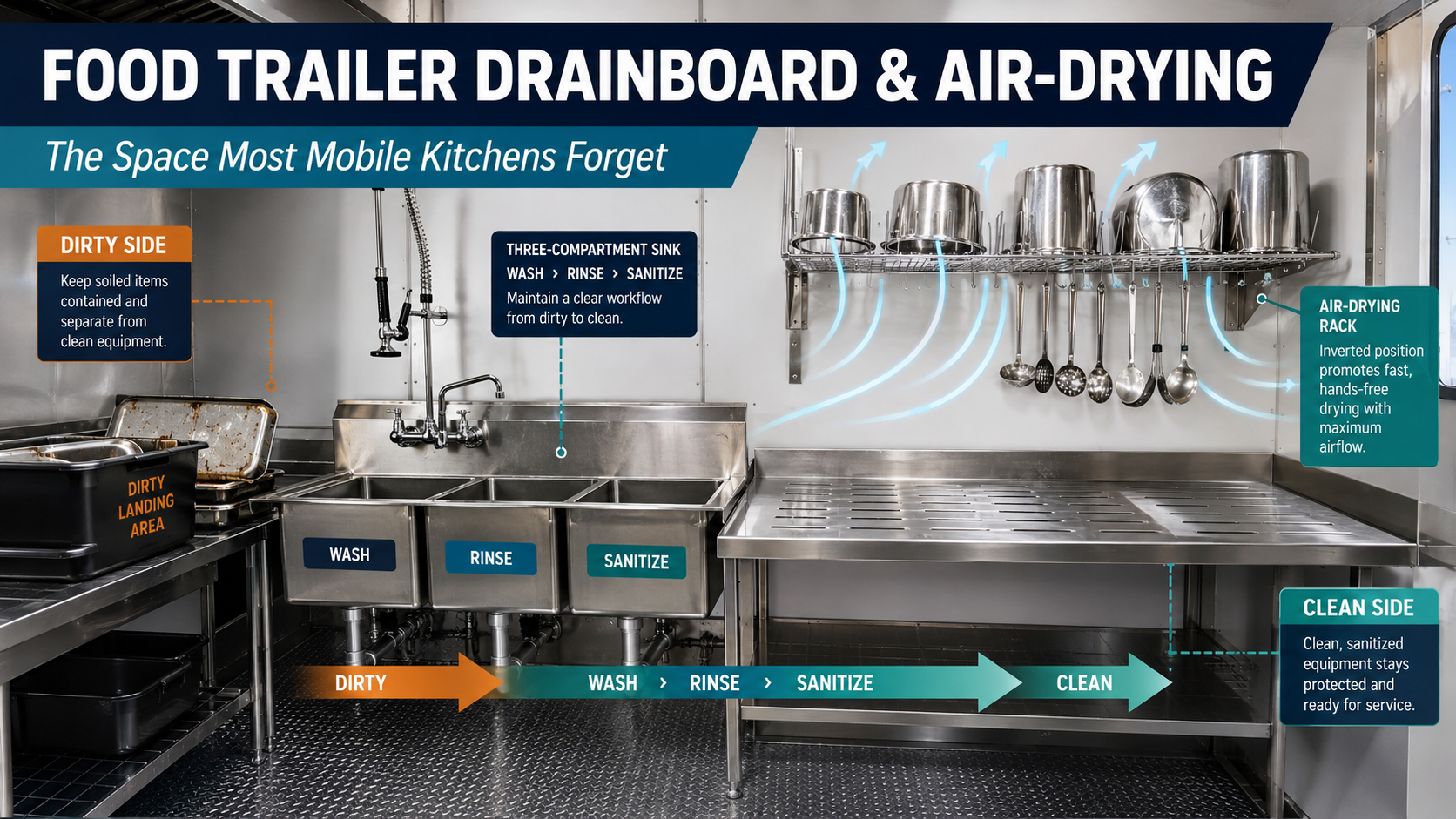
Where Should Clean Dishes Air-Dry in a Food Trailer?
Direct answer: Clean, sanitized utensils should air-dry or drain completely in a protected clean-side area—not on a towel, prep counter, or top of the sink. A practical food trailer needs space for dirty landing, wash–rinse–sanitize compartments, and clean drying. The drainboard or rack must fit the real utensil volume without blocking handwashing, food preparation, refrigeration, or staff movement.
What should you remember before choosing a sink?
- A three-compartment sink is only part of the warewashing station; landing and drying space complete the workflow.
- Keep soiled items and sanitized items on opposite sides of a one-way dirty-to-clean path.
- Air-drying is the default in the FDA Food Code; cloth-drying clean utensils is generally not allowed under that model code.
- Size the sink and drying zone around the largest pot and the busiest service period—not only the trailer length.
- Drainboards, wall racks, over-sink racks and removable mobile racks solve different space problems.
- Submit the layout to the destination authority before fabrication because local adoption and mobile-unit rules vary.
Where does this guidance apply, and when was it checked?
This guide is written for global food trailer buyers. Sources, product specifications and links were checked on September 3, 2026. The U.S. examples use the FDA Food Code 2022, which is a model offered for adoption—not one automatic rule for every state, county or city. Your approved plan, adopted local code, menu, operating volume and sanitizer instructions remain controlling.
| Region or source | What the source says | What the buyer should verify |
|---|---|---|
| United States — FDA model code | §4-901.11 requires cleaned and sanitized equipment and utensils to air-dry or drain adequately before food contact. §4-301.13 calls for drainboards, utensil racks or tables large enough for accumulated soiled and cleaned items. | The Food Code edition adopted locally, mobile-unit exceptions, sink sizing, drainboards and commissary allowances. |
| Minnesota example | Minnesota Rule 4626.0680 requires at least a three-compartment sink in a mobile food unit unless a stated exemption applies; state mobile-unit guidance also emphasizes air-drying space. | Licensing jurisdiction, menu category and whether warewashing may occur at an approved commissary. |
| Australia / New Zealand | FSANZ guidance describes cleaning before sanitizing and states that air-drying is best. | State, territory, council or New Zealand verifier rules and the approved sanitizing method. |
| Other markets | Food-contact items need to be cleaned, sanitized and protected from recontamination before use. | Ask the local food authority which sink, drying, water, drainage and equipment standards apply to the exact menu. |
Why is drying space more than an empty piece of counter?
Imagine a burger trailer at the end of a lunch rush. Tongs, spatulas, mixing bowls and sauce containers arrive at the sink faster than one employee can wash them. The three basins are doing their jobs, but the sanitized tools have nowhere to go. Someone places them on a towel beside raw-food prep. Another stack covers the hand sink. A pan is returned to service while water is still pooled inside.
The sink was technically present, but the workflow was never finished.
Drying space controls where sanitized items wait, where water drains, and whether clean utensils stay separated from dirty ones. FDA Food Code §4-301.13 says the drainboards, racks or tables should be large enough for all soiled and cleaned items that may accumulate during operating hours. That phrase—may accumulate—is the part compact-kitchen buyers often miss. The required capacity follows the operation, not a catalog photo.
Why is towel-drying a poor default?
A towel can carry microorganisms or soil from hands, counters and earlier utensils. It can also leave fibers on food-contact surfaces. FDA Food Code §4-901.11 says cleaned and sanitized equipment and utensils must be air-dried or used after adequate draining, and they may not be cloth-dried except that already air-dried utensils may be polished with clean, dry cloths.
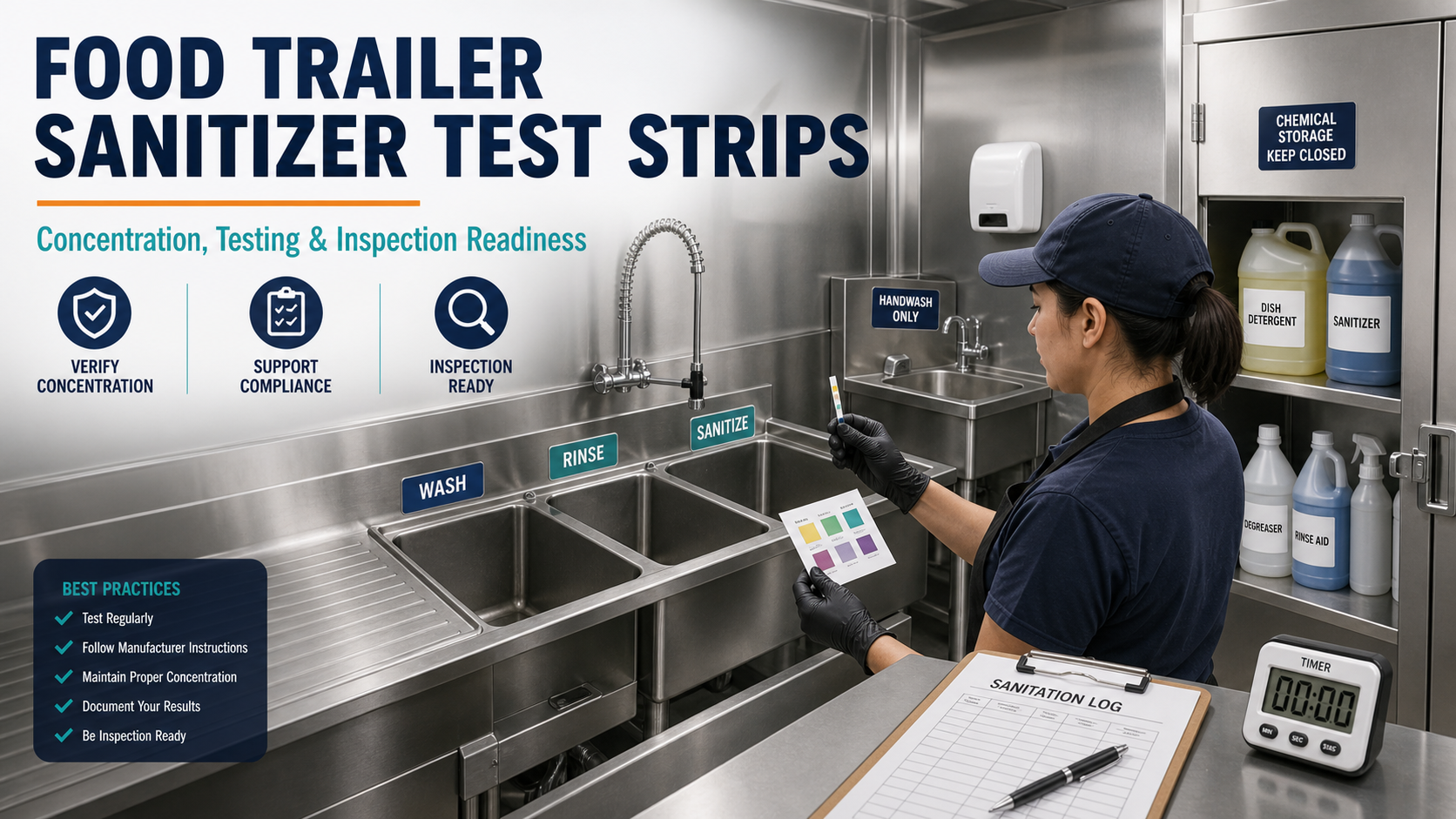
Air-drying also gives a chemical sanitizer time to finish the labeled contact process without being wiped away too soon. Once dry, items should move into protected clean storage—not back onto the dirty landing table. The details connect directly to the broader hygiene controls in our HACCP food trailer guide.
How should the dirty-to-clean workflow move?
A right-to-left arrangement works just as well when the trailer door, plumbing or cook line demands it. What matters is that the direction is obvious and repeatable. Staff should not have to place a sanitized bowl behind a pile of greasy pans or carry a wet utensil across an active prep station.
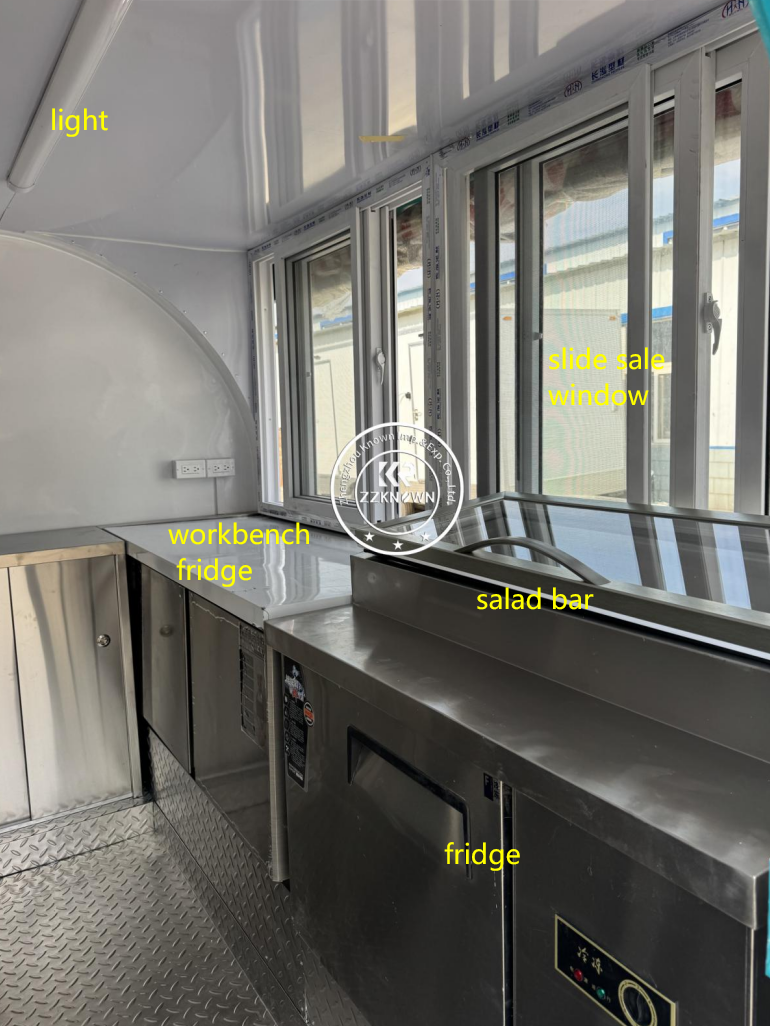
The dirty landing surface holds used utensils before washing. The sink then supports the approved wash, rinse and sanitize process. The clean drainboard or rack holds items without nesting them in a way that traps water. Finally, dry utensils move to a clean cabinet or protected shelf. Build splash protection where needed and keep the dedicated handwashing sink continuously accessible.
How much drying space should a food trailer reserve?
There is no responsible universal answer such as “always reserve 24 inches.” Menu, utensil size, wash frequency, staffing and peak volume change the need. Start with an inventory: the largest pot, the number of tongs in rotation, cutting boards, hotel pans, blender parts, espresso pitchers, trays and any removable appliance components.
Then simulate the busiest realistic accumulation. If twenty utensils may wait during a festival rush, a narrow fluted surface that holds four is not enough unless you add a rack, more frequent washing or a protected rotation system. The authority may also judge the equipment against the submitted menu and process.
| Planning factor | Compact, low-utensil operation | Busy full-menu operation | Design question |
|---|---|---|---|
| Typical menu example | Coffee, packaged desserts, simple beverages | Burgers, fried foods, BBQ, multi-pan catering | How many reusable food-contact items enter the wash cycle each hour? |
| Dirty landing | Small integrated surface or removable tub system | Dedicated landing board sized for peak accumulation | Can dirty items stay away from food prep and the hand sink? |
| Clean drying | Integrated drainboard plus compact wall rack | Long drainboard, multi-level rack or additional approved table | Can items drain without nesting or blocking the aisle? |
| Storage after drying | Closed overhead or under-counter cabinet | Separated high-capacity clean-utensil storage | Can staff move dry items without crossing the dirty path? |
| Relative fabrication cost | Low to medium | Medium; higher if cabinetry, plumbing or trailer length changes | Is space being added before production or retrofitted later? |
The cost categories are relative design impacts, not quoted prices. Stainless grade, dimensions, rack type, labor, freight and market requirements change the final price.
Which drying solution works best in a compact mobile kitchen?
When should you use an integrated drainboard?
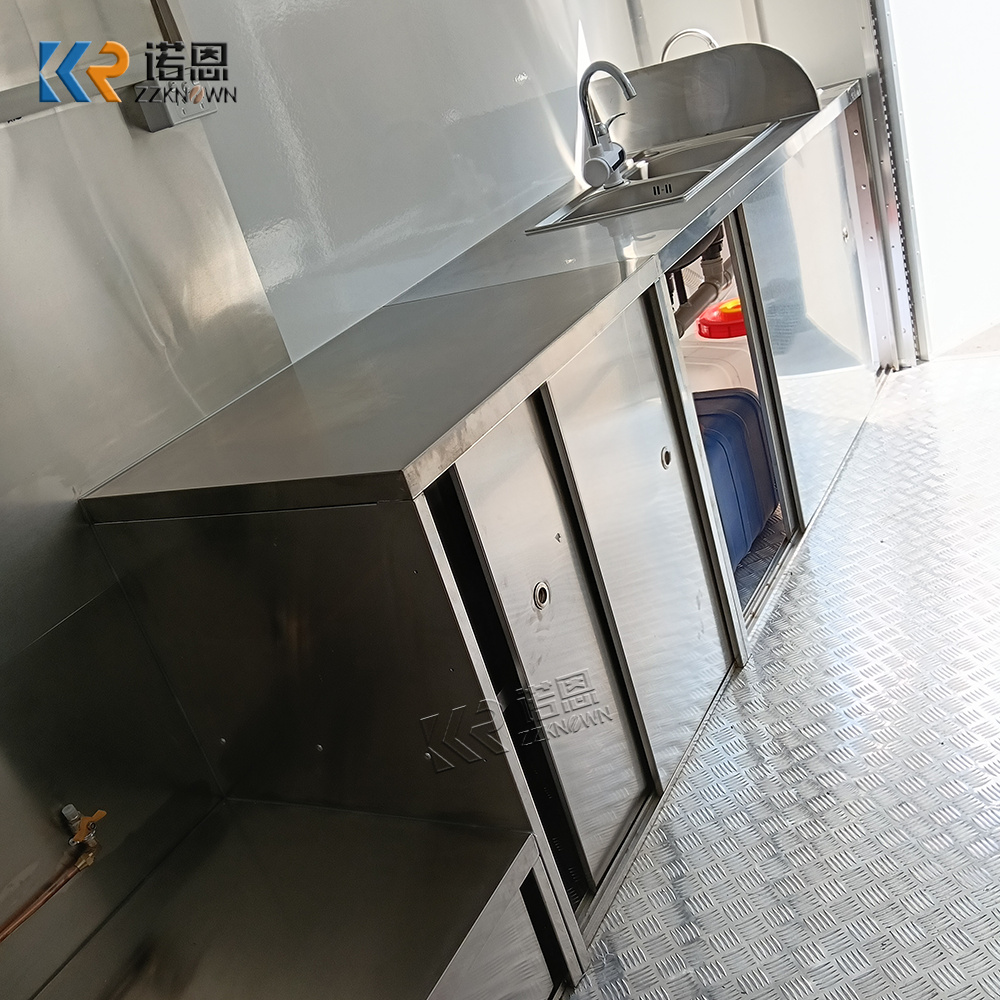
Use it when you need a durable, easy-clean landing surface physically connected to the sink. It controls runoff well and makes the clean-side direction obvious. Confirm the slope, seams, edge details and drainage.
When does a wall-mounted rack help?
A wall rack uses vertical space and frees the counter. It works well for bowls, pans and utensils if mounted away from splash, grease, condensate and overhead contamination. The wall structure must support the loaded rack during travel.
Can an over-sink rack save space?
Yes, especially above the clean side, but it must not obstruct faucet movement, basin access, sanitizer testing or cleaning. Drips must fall into an acceptable clean-side zone—not into wash water or onto the floor.
When is a removable rack useful?
A removable commercial rack can add capacity during service and be stored securely for travel. The operating plan still needs an approved, protected position that does not narrow the exit or aisle.
What is the difference between a drainboard and a drying rack?
A drainboard is usually a sloped or ribbed horizontal surface beside the sink. It supports landing, drainage and larger pans. A drying rack separates items so air can circulate, often using vertical space more efficiently. Many strong layouts use both: a clean drainboard for heavy pots and a raised rack for smaller utensils.
The terms may be used differently on local forms. FDA Food Code §4-301.13 allows drainboards, utensil racks or tables that provide the required holding capacity. A local reviewer may still specify an integral drainboard, splashback, dimensions or construction. Send the reviewer’s wording to the manufacturer instead of assuming that any shelf will qualify.
What should a 2.2-meter compact trailer do differently?
In a compact trailer, the answer is not to delete the clean side. It is to simplify the menu and use the volume carefully. A focused coffee or dessert concept may rotate fewer utensils and use a short integral board plus an upper rack. A removable perforated rack can provide additional separation during service, but it must have a secure travel position.
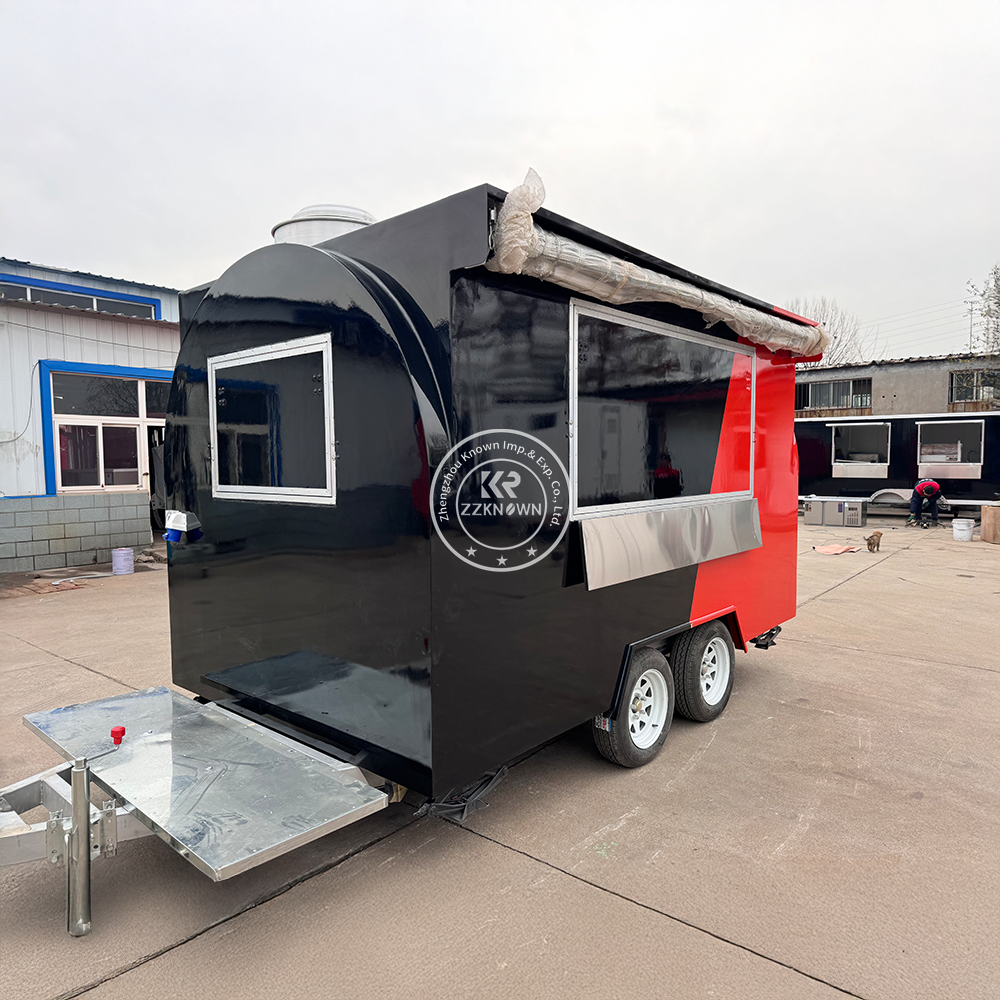
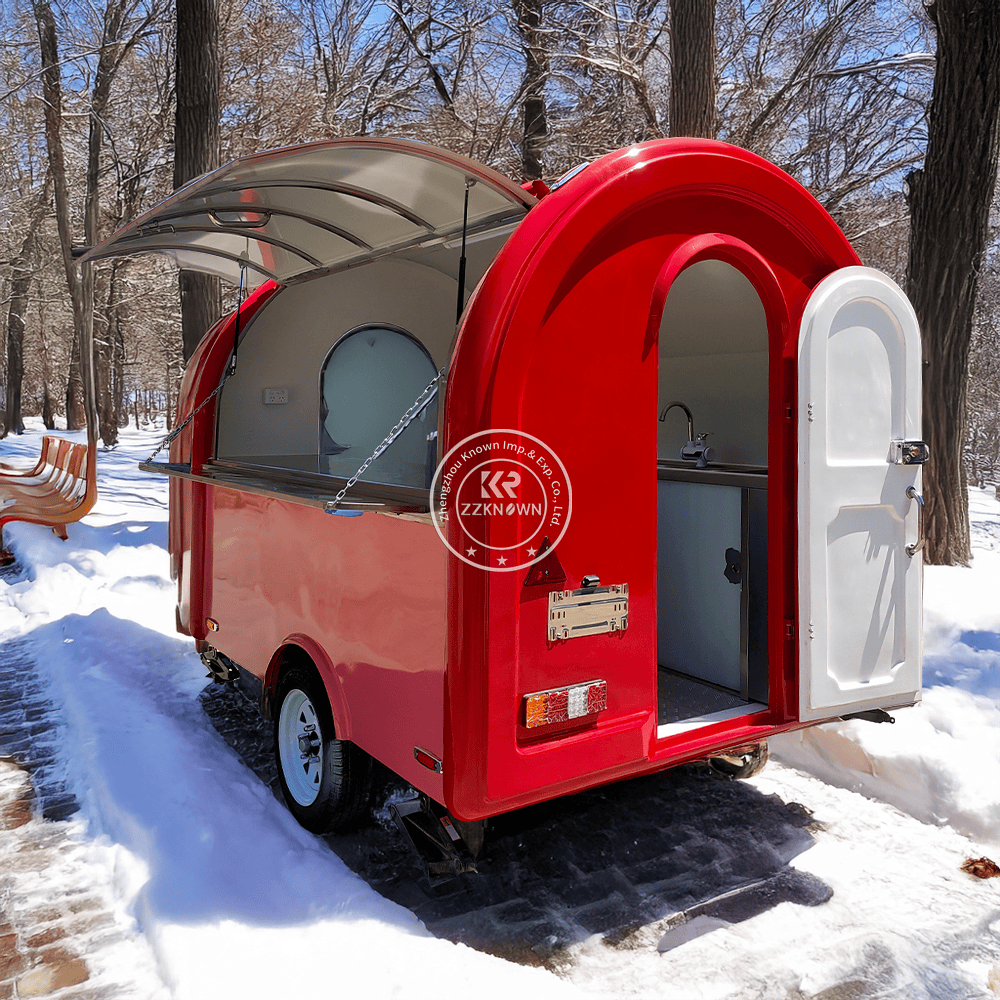
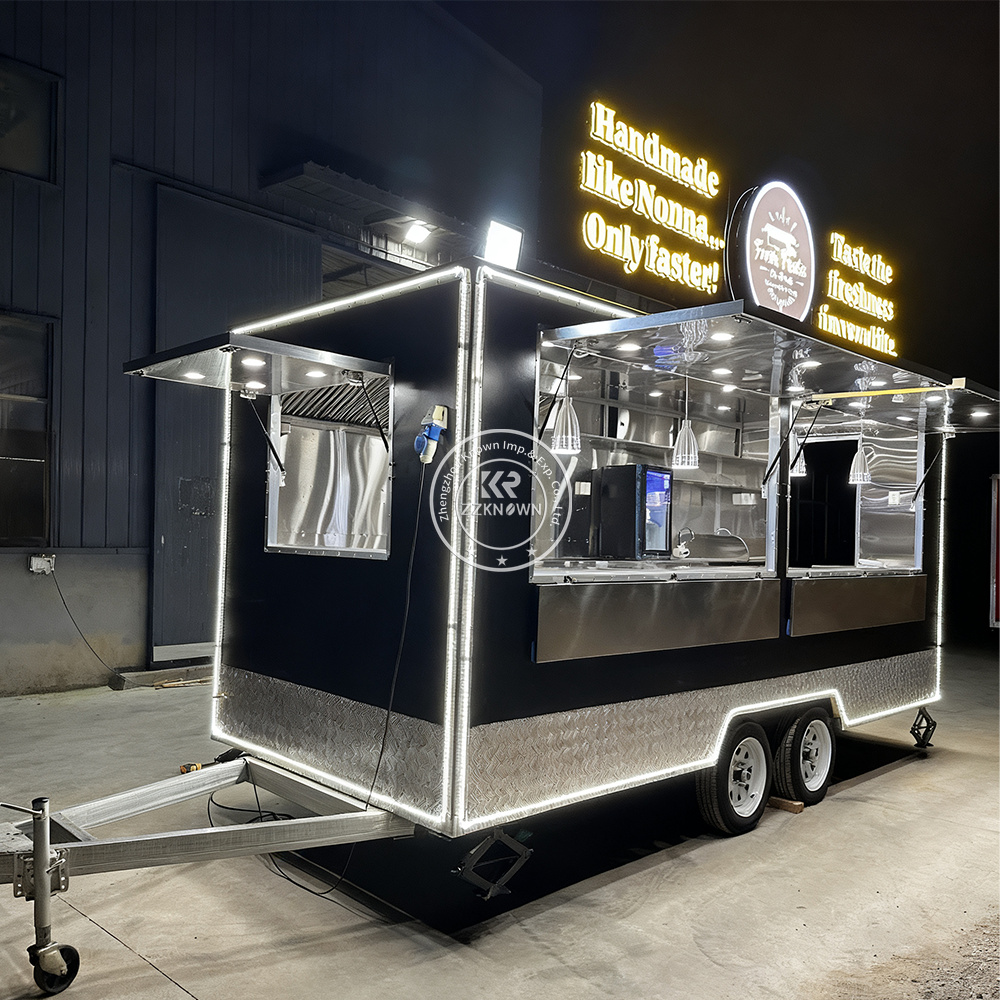
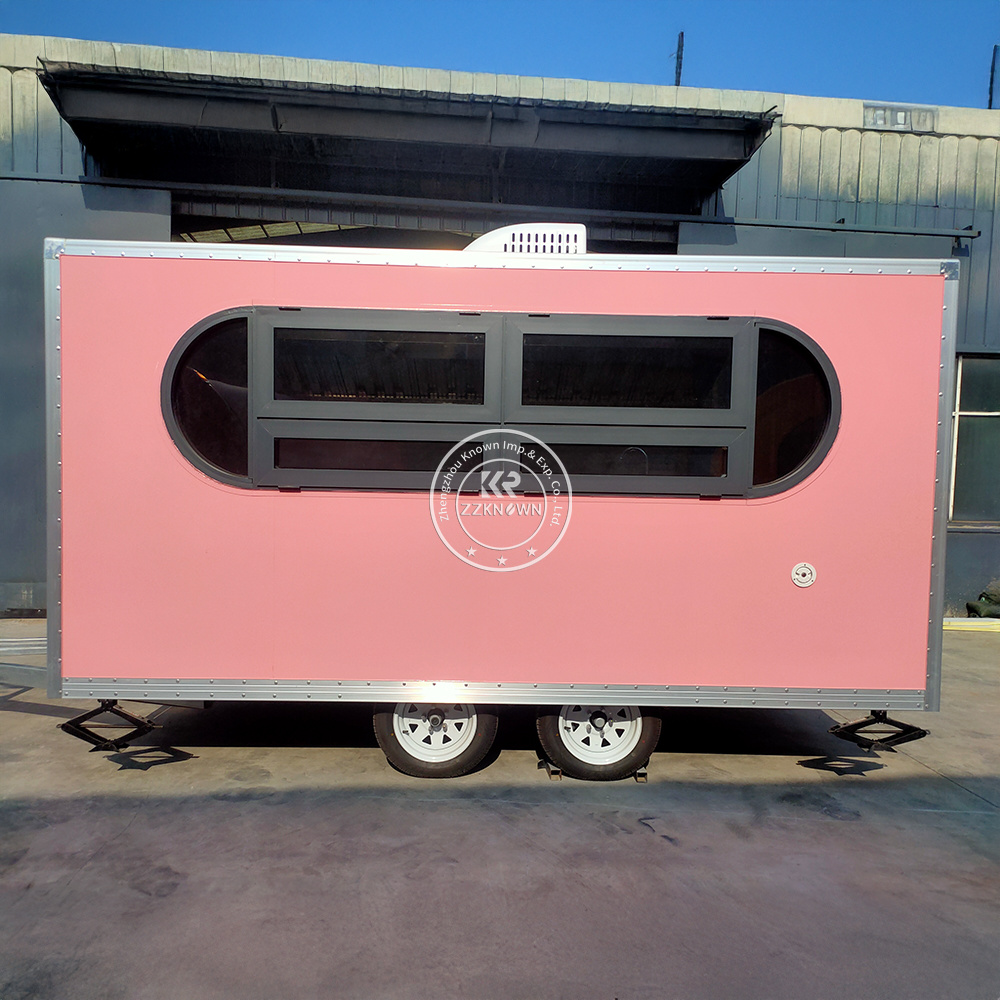
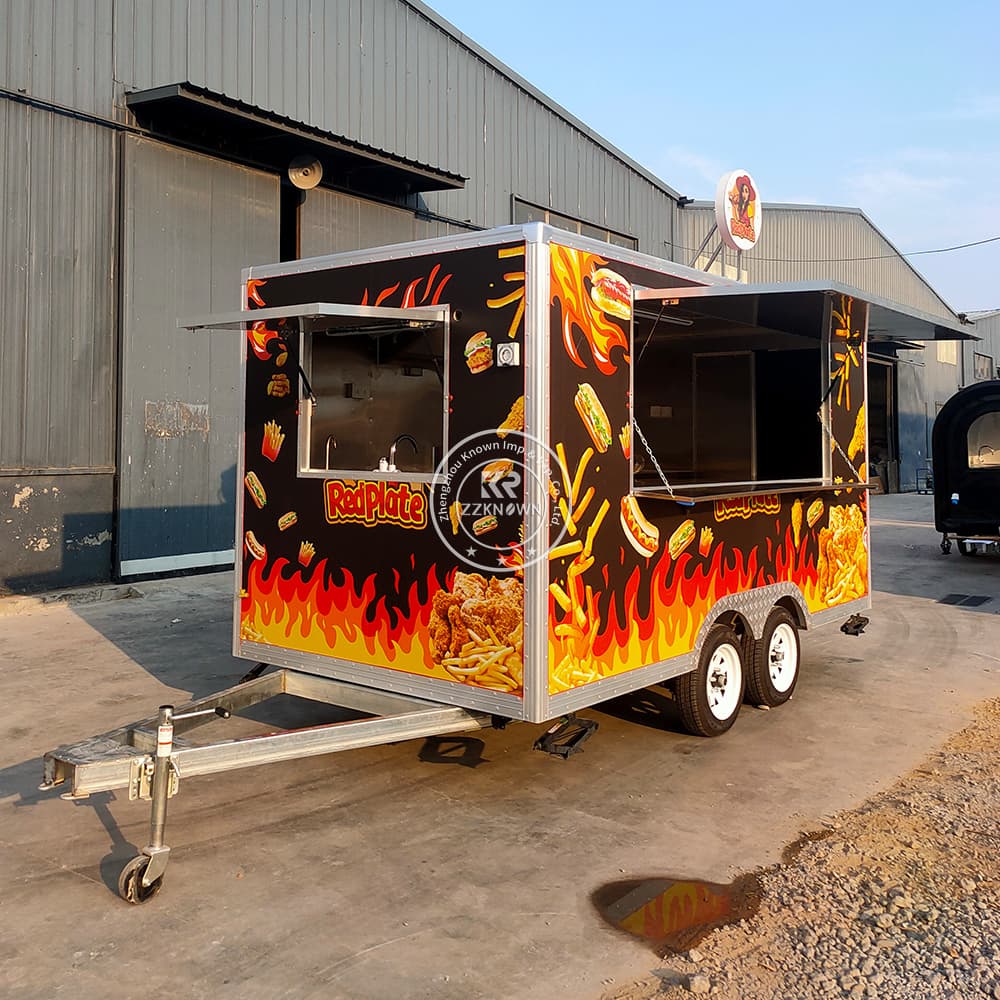
The real ZZKNOWN KN-FR220H mini food trailer is published at approximately 2.2 m × 1.6 m × 2.3 m. That footprint can support a focused operation, but every basin, landing area and cabinet must earn its space. The buyer should not copy a large burger trailer’s menu into the smaller shell without recalculating utensils, water, storage and drying capacity.
What can a 4-meter trailer do with the extra room?
A 4-meter layout can create clearer dirty and clean zones, more counter length and a larger wall rack. It may also support more employees and equipment—which increases the dish load. Extra trailer length does not automatically create extra drying capacity if every inch is consumed by fryers, refrigerators and prep counters.
.png)
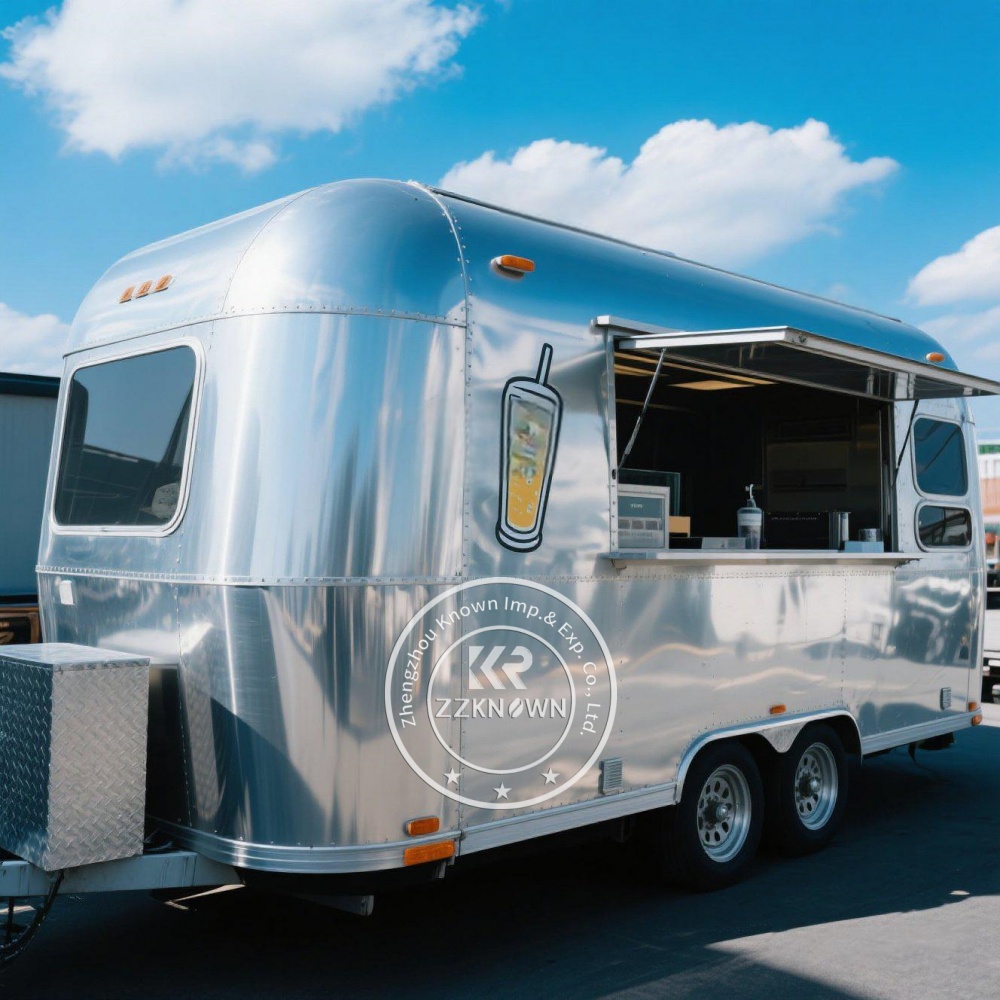
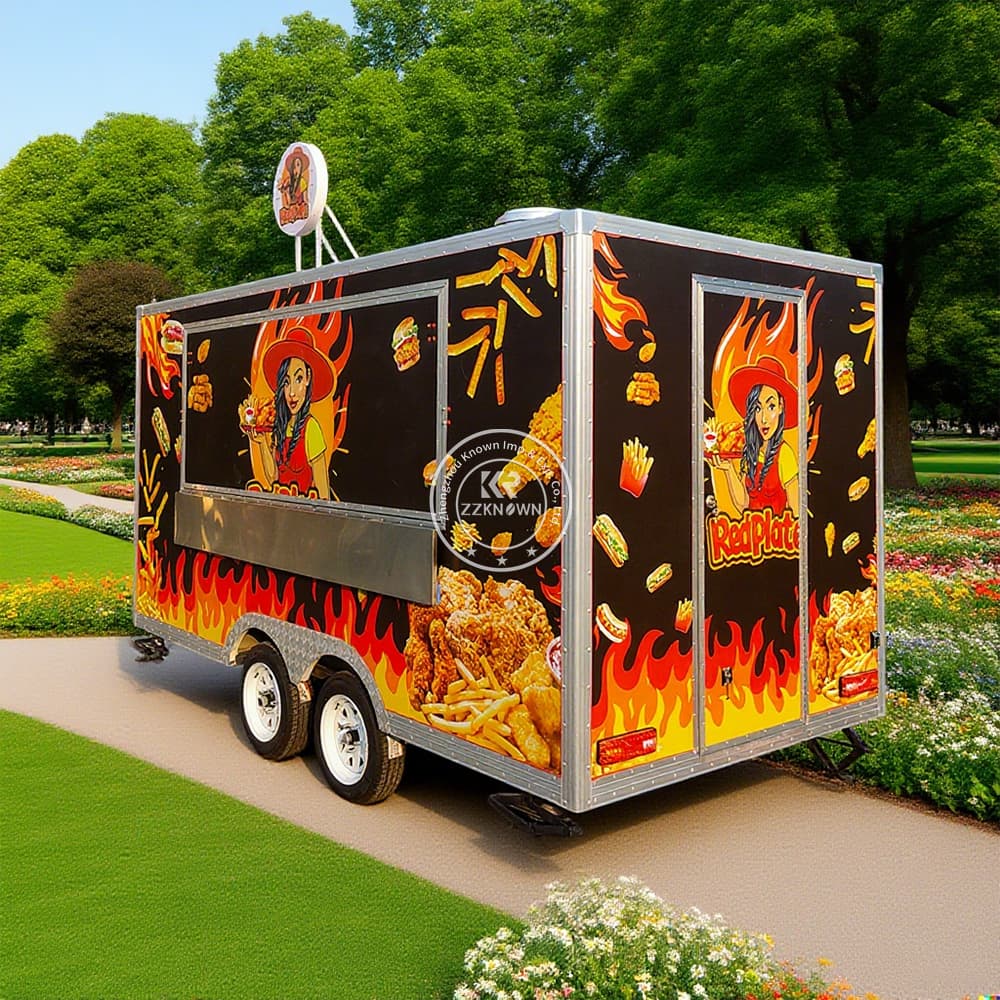
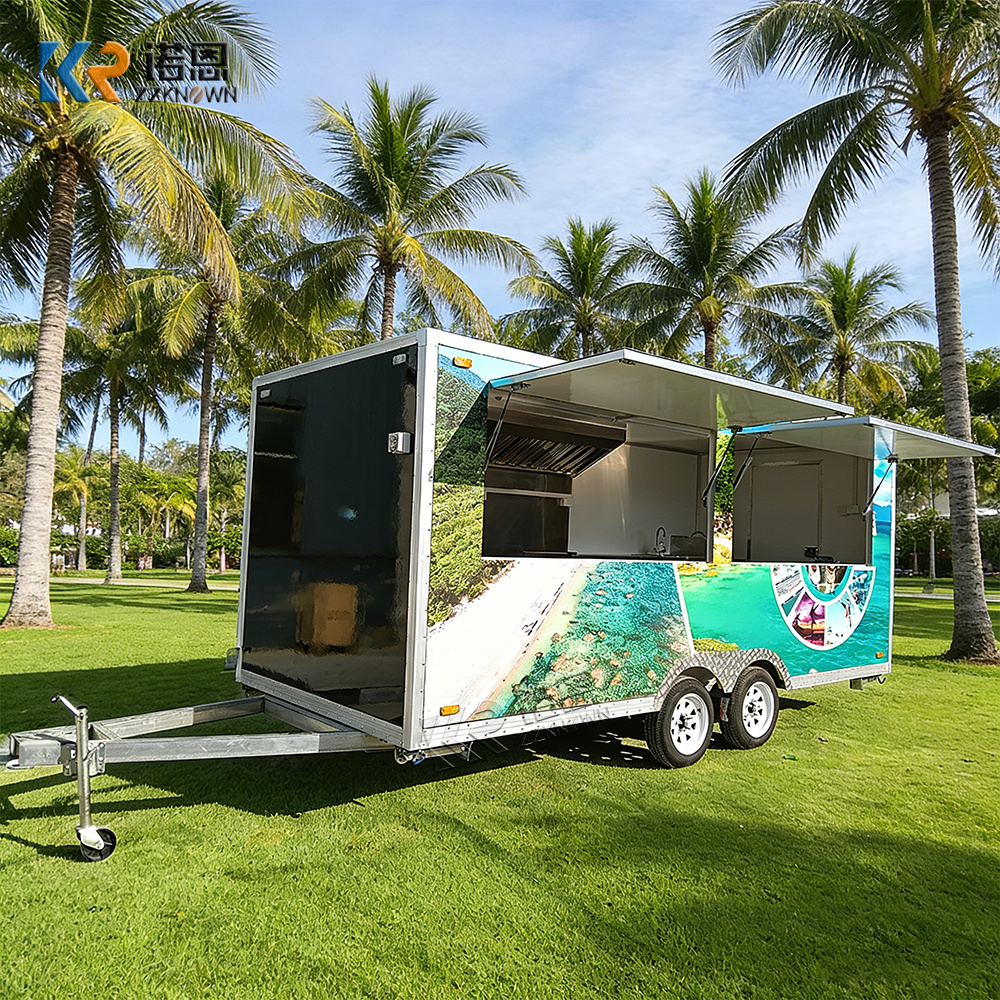
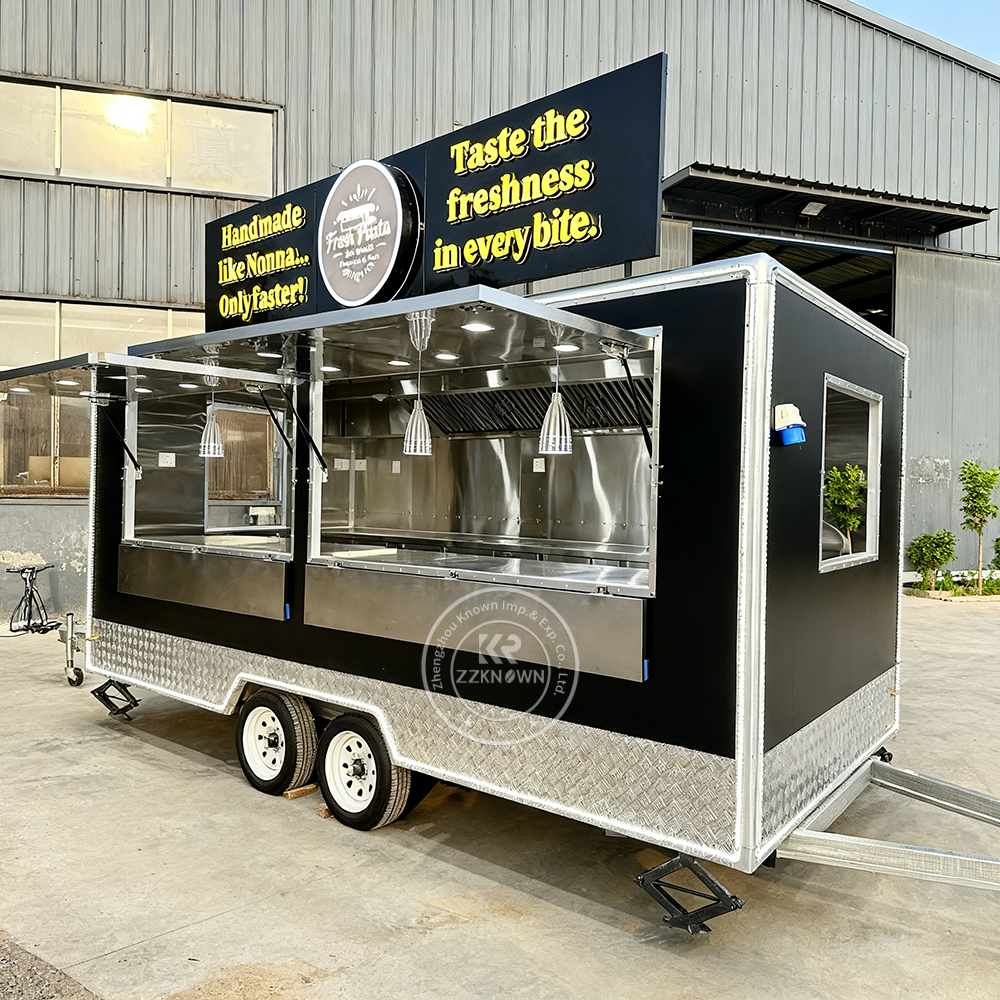
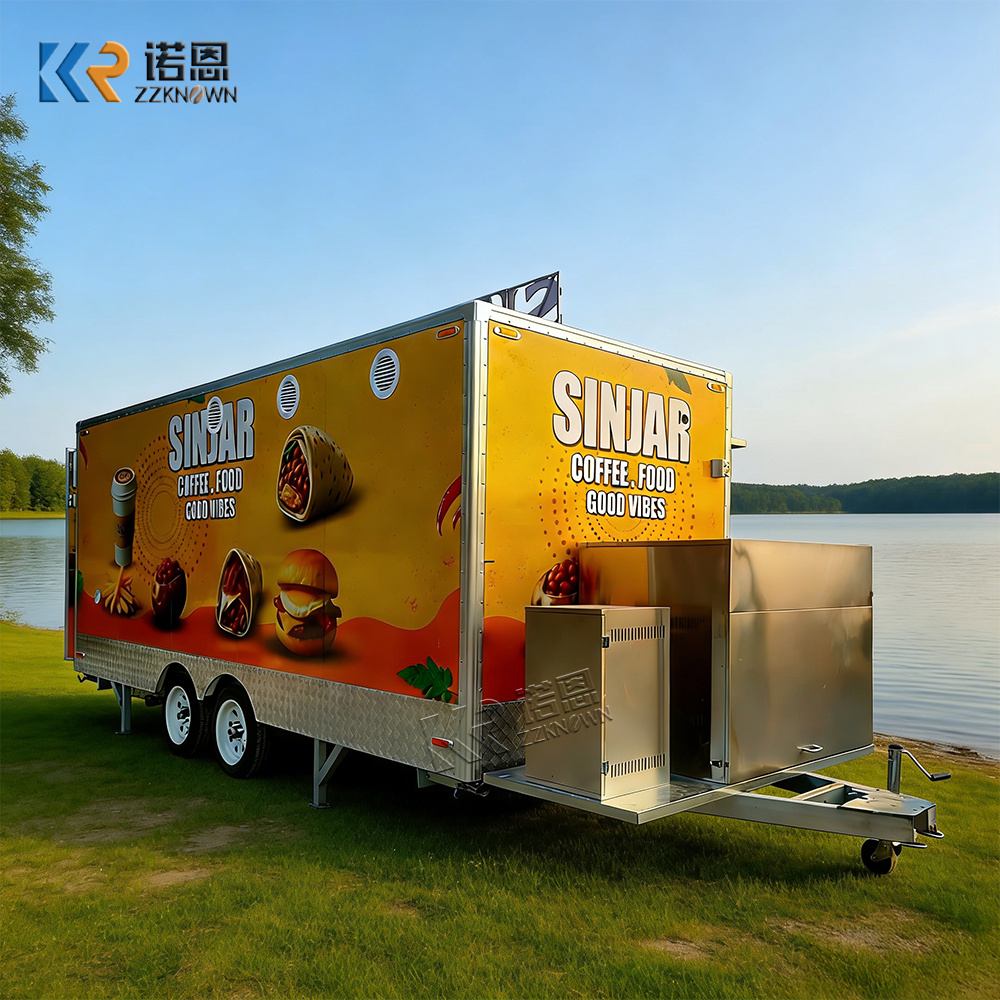
Real product image: ZZKNOWN KN-QF400. Final sink, drainboard and rack configuration is customized to the destination requirements and menu.
How does the KN-QF400 illustrate the tradeoff?
The published KN-QF400 aluminum food trailer example lists a 3+1 sink, cold-storage fitments, a three-meter hood, eight outlets and a 110V/60Hz U.S.-style electrical configuration. Its published price snapshot ranges from US$8,490 to US$18,900 depending on quantity and configuration.
Those specifications demonstrate the platform, not automatic approval. The usable clean-side length depends on the actual sink bowls, drainboards, hand basin, door swing, refrigeration and cooking line selected for the buyer.
.jpg)
What does ZZKNOWN’s production experience suggest?
According to ZZKNOWN’s production experience, sink discussions often begin too late. Buyers first fill the drawing with cooking equipment and refrigeration, then ask where the three-compartment sink can fit. That sequence produces the familiar mistake: the basins fit, but the dirty landing and clean drying areas disappear.
A better design meeting starts with the menu, largest utensil, expected wash volume, sink rule, handwashing requirement, water-heater recovery, freshwater and wastewater capacity, drainboards and clean storage. Only then should the surrounding cabinets and equipment be frozen. For the broader sequence, see the ZZKNOWN food trailer layout guide.
How should clean utensils be stored after they dry?
Move them with clean hands into a protected cabinet, covered container or approved shelf. Avoid storing utensils under exposed plumbing, beside chemicals, in splash zones or where customers can touch food-contact surfaces. FDA Food Code §4-903.11 includes storage protections such as keeping cleaned equipment and utensils in a clean, dry location where they are not exposed to contamination.
Arrange the storage so handles are easy to retrieve without touching food-contact ends. For frequently used tongs or spatulas, build a routine that replaces soiled utensils with clean ones before the supply runs out. A rack is not clean storage forever; once the item is dry, clearing the rack restores capacity for the next wash cycle.
What design mistakes cause trouble during inspection or service?
What if the clean board becomes a prep table?
The station loses its protected drying capacity. Label zones, provide enough prep counter and train staff not to repurpose the clean side during a rush.
What if clean items are stacked while wet?
Nesting traps moisture and blocks airflow. Use dividers or racks that hold items apart and inverted where appropriate.
What if the rack sits above dirty water?
Splash and drips can recontaminate utensils. Keep the rack on the clean side and verify where runoff goes.
What if the hand sink becomes landing space?
Handwashing access must remain open. Give dirty utensils a dedicated container or board so staff never need to block the hand basin.
What if the refrigerator door hits the drainboard?
Check door swings and staff positions on the drawing. A nominally open counter is not usable when another appliance occupies it.
What if the rack is not secured for travel?
Road vibration and braking can release shelves or utensils. Engineer secure mounting and a pre-trip storage procedure.
How can buyers compare common workstation options?
| Option | Best use | Main advantage | Main limitation | Relative cost impact |
|---|---|---|---|---|
| Integral drainboard | Most mobile warewashing stations | Durable, obvious flow, controlled runoff | Consumes fixed counter length | Low to medium |
| Wall-mounted drying rack | Compact trailers with strong wall support | Uses vertical space and increases airflow | Must avoid grease, splash and head clearance | Low to medium |
| Over-sink rack | Very tight layouts | Saves counter space | Can interfere with faucets, testing and cleaning | Low |
| Additional stainless table | High-volume trailers or commissaries | Flexible capacity and clear separation | Needs floor area and travel restraint | Medium |
| Commercial dish rack system | Standardized high-volume utensil rotation | Organized handling and good airflow | Requires rack storage and compatible dimensions | Medium |
How were the facts and recommendations collected?
Our data method combined the current FDA Food Code page and Chapter 4 print text, official Minnesota mobile-food rules and guidance, current FSANZ cleaning and sanitizing guidance, a 2026 county mobile-unit plan-review example, and real ZZKNOWN product pages. Regulatory statements come from official sources. Product dimensions and price snapshots come from the linked ZZKNOWN listings. Relative cost impacts are qualitative because fabrication details, materials, freight and local equipment standards change the final quotation.
We separated four kinds of evidence: model-code language, adopted state examples, public guidance and manufacturer experience. None is presented as a worldwide permit guarantee. Before production, buyers should submit the menu, equipment schedule, plumbing details and scaled layout to the authority that will inspect the unit.
What should your pre-production checklist include?
- Largest utensil dimensions and peak reusable-utensil count.
- Required sink compartments, bowl dimensions and faucet type.
- Dirty landing position and capacity.
- Clean drainboard, rack type and air circulation.
- Splash protection and separation from food preparation.
- Dedicated hand sink access.
- Water-heater recovery and freshwater/wastewater capacity.
- Clean utensil storage after drying.
- Rack and utensil restraints for road travel.
- Local plan-review approval before fabrication.
What do real buyers ask about drainboards and air-drying?
Does every food trailer need a drainboard?
Many U.S. codes and plan reviewers require drainboards or equivalent racks/tables when on-board warewashing occurs. Some limited operations may use a commissary or an approved alternative. Confirm the local plan-review requirement for your menu.
Can I dry dishes with a clean towel?
Under the FDA model code, cleaned and sanitized utensils must air-dry or drain adequately and generally may not be cloth-dried. Other countries may phrase the rule differently; air-drying remains the safer default.
Can the clean drainboard double as food-prep space?
That creates scheduling and contamination problems. If a surface must serve multiple purposes under an approved procedure, it needs defined cleaning, sanitizing and timing controls. Dedicated space is clearer and easier to operate.
How large should the drying rack be?
Size it for the volume that can accumulate between wash cycles during the busiest operation. Provide dimensions and quantities of the largest and most frequently used utensils.
Can the rack be installed above the three-compartment sink?
It may be possible on the clean side if it does not interfere with faucets, basin use, sanitizer checks or cleaning, and if drips cannot contaminate dirty or rinse compartments. Seek local approval.
Do single-use-only trailers need the same setup?
Some jurisdictions exempt limited units from on-board warewashing if no multiuse utensils or equipment are used and commissary provisions are satisfied. Do not assume the exemption applies; the menu and process decide.
Should dirty and clean landing boards be on opposite ends?
That is a strong one-way design and is commonly expected. If space forces another arrangement, the plan must still prevent dirty-to-clean crossover and splash contamination.
Can ZZKNOWN design around my largest pot?
Yes. Send the pot dimensions, utensil list, menu, staff count, destination checklist, desired sink, water capacity and equipment plan. ZZKNOWN can prepare a custom sink-and-drainboard layout for review.
Which related ZZKNOWN guides should you read next?
- How do you build a HACCP-ready food trailer kitchen?
- How do you design an efficient mobile kitchen layout?
- How can menu engineering improve a food trailer?
- Where can you compare custom-built ZZKNOWN trailer options?
Which official sources support this guide?
- U.S. FDA Food Code 2022, especially §§4-301.13 and 4-901.11.
- Minnesota Department of Health mobile food unit resources.
- Minnesota Rule 4626.0680 mobile warewashing facilities.
- FSANZ cleaning and sanitising guidance.
- Ravalli County 2026 mobile food plan-review application, which asks operators to describe the utensil air-drying area.
Would you like a sink and drainboard layout built around your utensils?
Send ZZKNOWN your largest pot size, utensil list, menu, expected peak volume, trailer size, staff count and local plan-review checklist. Our engineering team can map the dirty landing, wash–rinse–sanitize line, air-drying space and clean storage before fabrication.
Request a Sink + Drainboard Layout
Explore ZZKNOWN Food Trailers
Editorial note: This article is educational and does not replace an approved plan, adopted local code, sanitizer label, plumbing review or inspection. Product specifications and pricing may change; request a current quotation and drawing.