Published: July 8, 2026 | Last updated: August 14, 2026
Applies to: Buyers comparing new custom food trailers for the United States, Canada, Europe, the United Kingdom, Australia, New Zealand and other export markets.
Author: ZZKNOWN Content and Export Support Team | Technical review: ZZKNOWN Design and Production Team
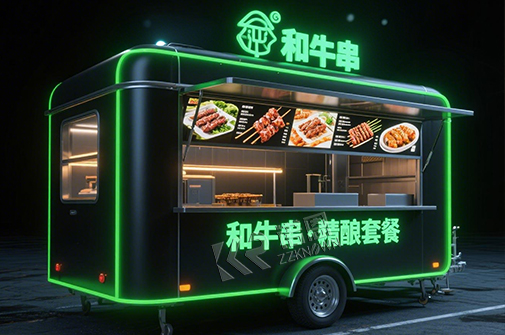
Short answer: For many first-time operators, a 4m (13.1ft) food trailer offers a practical balance of kitchen space, equipment capacity and maneuverability. A 3m trailer suits focused menus and one or two people; 5m and 6m units suit larger cooking lines and teams. The right choice still depends on menu, finished weight, towing vehicle and local approval requirements.
This guide compares common ZZKNOWN body lengths of 3m, 4m, 5m and 6m. The feet conversions are rounded. The gross floor-footprint examples assume a common 2m body width and do not represent usable aisle space. Width, height, axle configuration and interior dimensions can change by model and destination.
The suggested operator counts, menu types and equipment groups are planning references based on ZZKNOWN's production and layout experience. They are not legal occupancy limits or promises of output. Price ranges are indicative ex-factory planning bands in USD and should be checked against a current, itemized quotation.
We reviewed current ZZKNOWN product dimensions and equipment examples, grouped them by typical menu complexity, and compared the space required for cooking, refrigeration, preparation, sinks, storage and staff movement. We also reviewed official vehicle and food-service sources to keep identification and approval language separate from local operating permission.
| Body length | Gross 2m-wide footprint | Planning team | Menus often considered | Typical equipment scope | Indicative ex-factory range |
|---|---|---|---|---|---|
| 3m / 9.8ft | About 6m² before walls and cabinets | 1-2 | Coffee, juice, ice cream, churros, simple snacks | Focused cooking or beverage line, sinks, compact refrigeration | $3,000-$6,000+ |
| 4m / 13.1ft | About 8m² before walls and cabinets | 2-3 | Burgers, fried food, coffee, pizza, mixed snacks | Cooking line, hood, prep refrigeration, sinks and storage | $6,000-$12,000+ |
| 5m / 16.4ft | About 10m² before walls and cabinets | 3-4 | BBQ, pizza, bakery, multi-station fast food | Longer cookline, more refrigeration, prep and dry storage | $10,000-$16,000+ |
| 6m / 19.7ft | About 12m² before walls and cabinets | 4-6 | Catering, events, several menu stations | Multiple work zones, higher-capacity utilities and storage | $12,000-$20,000+ |
For a full explanation of what the price includes, read the 2026 food trailer cost guide. Equipment, materials, body style, utilities and shipping can move a quotation outside these ranges.
A 3m trailer works best when the menu is narrow and the workflow is simple. Think coffee and pastries, cold drinks, ice cream, churros or one main cooking process. It can suit one operator and a helper, but every appliance must earn its space.
Before choosing 3m, place the sinks, refrigeration, main appliance, service window and door on a scaled drawing. Check whether one person can open the refrigerator while another uses the aisle. If the menu needs a fryer, griddle, oven, hood and large prep refrigerator together, a longer body may be more practical.
.png)
A 4m trailer can usually separate ordering, cooking, preparation and washing more clearly than a 3m body while remaining easier to place than a 5m or 6m unit. It is often considered for burger, fried-food, pizza, coffee and mixed-snack menus with two or three people.
Four metres is not automatically the right answer. A large pizza oven, long hood or several under-counter appliances can still crowd the aisle. Draw the actual equipment sizes and door swings before approving the shell.
.png)
A 5m trailer is useful when the menu needs several hot appliances, a longer hood, more prep surface or separate cold and hot stations. It can also give three or four people more room to pass each other during service.
The extra metre should solve a clear operating problem. If it only creates unused floor, it also adds body material, weight, parking length and towing demands. Use the space for a defined purpose such as refrigeration, bakery display, dry storage or a second preparation station.
.png)
A 6m-class trailer makes sense for event catering, high-volume service, several menu stations or a team that needs clearly separated work zones. The additional length can support more prep, storage and refrigeration, but it also increases the importance of weight distribution, axle planning, brakes, turning space and the towing vehicle.
Do not choose 6m only for possible future growth. First confirm where it will park, how it will travel, how it will be shipped and whether the expected sales operation genuinely needs the space.
| Menu | Space drivers | Common starting size to review | Why? |
|---|---|---|---|
| Coffee / drinks | Coffee machine, grinders, ice, refrigeration, water | 3-4m | Focused production with cold storage and service counter |
| Burgers / fried food | Fryer, griddle, hood, prep fridge, sinks | 4-5m | Hot line, ventilation and refrigerated prep need coordinated clearance |
| Pizza | Oven, dough prep, topping rail, refrigeration | 4-5m | Oven dimensions and heat clearance drive the plan |
| BBQ / mixed catering | Several hot appliances, hood, prep and holding | 5-6m | Multiple stations and higher storage demand |
| Ice cream / dessert | Freezer, display, topping counter, sinks | 3-5m | Size depends heavily on refrigeration and display format |
As a planning reference, 3m often suits one or two people, 4m two or three, 5m three or four, and 6m four to six. These numbers change with aisle width, appliance depth, door position and the tasks performed. A beverage team may work differently from a team handling fryers and hot trays.
Test the workflow on the drawing: receiving, cold storage, preparation, cooking, plating, payment, service and washing. Mark where team members cross paths. If the same narrow point is used for cooking, refrigeration and service, increase the body length or simplify the menu.
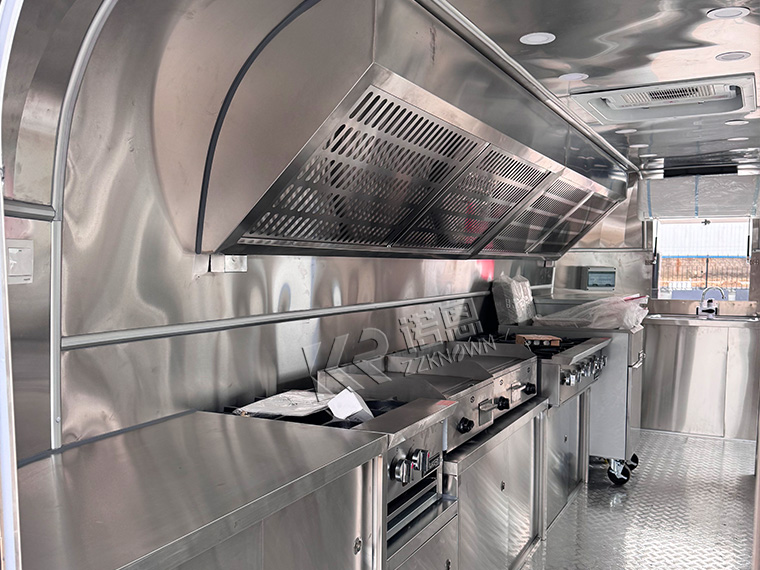
List the exact appliance dimensions, voltage or fuel, rated load and service clearances. Then place the hood, electrical panel, gas route, water tanks, sinks, refrigeration and air conditioning. An attractive floor plan is not enough if it ignores heat, power, drainage, weight and maintenance access.
Engineer's note: Freeze the menu and major equipment before freezing the body. A fryer or pizza oven affects more than counter space—it can change ventilation, utilities, heat clearance and weight distribution. According to ZZKNOWN's layout experience, late equipment changes create the most avoidable redesign work.
For a layout review, use the custom design and OEM/ODM service and review how specifications are checked on the Factory & Quality Control page.
Length alone cannot determine the axle. A 3m trailer with heavy refrigeration and cooking equipment may need a different chassis from a lightly equipped 3m beverage unit. A 5m or 6m unit may use a dual or multi-axle arrangement, but the decision must come from the documented design loads, completed weight and destination requirements.
Before ordering, ask for the planned empty weight, permitted load, axle ratings, tire ratings, coupling, brakes and weight distribution. After equipment and stock are added, confirm that the loaded trailer and tongue weight remain within the trailer, hitch and tow-vehicle ratings.
Vehicle identification is not the same as permission to operate. In the United States, 49 CFR Part 565 covers VIN requirements and includes trailers, while the FDA Food Code is a model used by food-safety jurisdictions. Local vehicle registration, health, fire, gas and electrical approval can still vary by state, county and city.
For Great Britain, the DVSA provides a trailer Individual Vehicle Approval route for qualifying built or imported trailers. Australia's VSB 1 Revision 6 addresses common trailers with an aggregate trailer mass of 4.5 tonnes or less and their applicable Australian Design Rules. EU Regulation 2018/858 establishes a type-approval and market-surveillance framework that includes category O trailers.
Ask the relevant authority or qualified local professional which rules apply to your exact trailer and intended operation. WMI, VIN, manufacturer registration or a product document should not be described as automatic approval for every market.
Not for a focused menu. It can work well for drinks, desserts or one main cooking process. It becomes restrictive when several hot appliances, a large hood, multiple refrigerators and several people must share the aisle.
It is a useful starting point for many businesses because it can hold a practical kitchen without the footprint of a larger unit. Still, test the exact menu and equipment on a scaled layout.
Many buyers begin by reviewing 4m or 5m because the menu often needs a griddle, fryer, hood, prep refrigerator, sinks and storage. Equipment dimensions and team size decide the final length.
A 4m or 5m layout is often reviewed first. The oven, heat clearance, dough preparation, topping refrigeration and service method are more important than a generic size label.
No. Speed comes from workflow, equipment capacity, menu design and team coordination. A long trailer with poorly placed refrigeration or crossing work paths can still be slow.
Often yes, subject to production, shipping and destination constraints. Confirm exterior and interior dimensions, door clearance, equipment height and legal transport limits before approval.
Use the completed design weight, expected payload, weight distribution and destination rules. Do not select the axle only from the trailer length or a marketing photo.
Send the destination, menu, cooking method, team size, equipment list, utilities, serving side and branding requirements. Include equipment dimensions or datasheets when you already own the appliances.
Send ZZKNOWN your menu, destination, team size and equipment list. The design team can compare suitable body sizes and prepare a 2D or 3D layout and itemized quotation for review.
Request a Food Trailer LayoutRelated: Food trailer products · Customer cases · Custom design · Factory and quality control