Published: August 13, 2026 | Last updated: August 13, 2026
Applies to: New custom food trailers ordered from China for buyers in the United States, Canada, Europe, the United Kingdom, Australia, New Zealand and other export markets. Prices are in USD.
Author: ZZKNOWN Content and Export Support Team | Technical review: ZZKNOWN Design and Production Team
Short answer: In 2026, a new custom food trailer from China typically costs about USD $3,000-$20,000+ ex-factory. A compact shell with basic utilities sits near the lower end; a larger mobile kitchen with cooking equipment, refrigeration, ventilation and market-specific electrical or gas work costs more. Freight, duties, destination fees and local approvals are normally separate.
This guide combines current ZZKNOWN product specifications published on August 13, 2026 with the configuration factors our design and production teams review before preparing a quotation. We grouped trailers by body size and typical equipment level, then separated factory price from freight, destination fees and local approval costs.
According to ZZKNOWN's production experience, two trailers with the same outside dimensions can have very different costs. A coffee trailer may need refrigeration, sinks and a modest electrical load, while a burger or pizza trailer may need high-output cooking equipment, a large hood, gas or heavier electrical service and more heat clearance.
| Body size | Planning range | Common menus | What usually changes the price? |
|---|---|---|---|
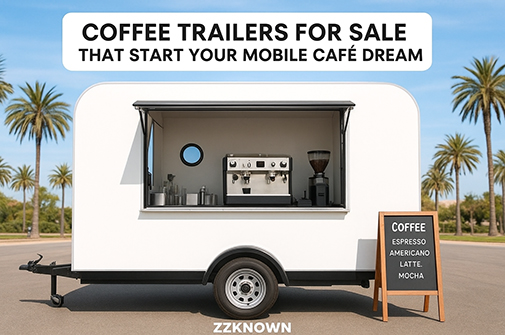
| 2.2-3m / 7.2-10ft | $3,000-$6,000 | Coffee, ice cream, juice, snacks | Shell material, basic utilities, refrigeration and branding |
| 3.5-4.1m / 11.5-13.5ft | $6,000-$12,000 | Burgers, fried food, pizza, mixed menus | Dual axle, hood, cooking line, refrigeration, gas or electrical load |
| 4.5-6m / 15-20ft | $10,000-$20,000+ | BBQ, full mobile kitchens, multi-menu service | Structure, multiple workstations, HVAC, high-capacity equipment and shipping method |
| Special or oversized unit | Layout-based quotation | Events, catering, several operators | Payload, axles, custom structure, utilities and container/loading plan |
A compact trailer is not automatically the cheapest choice for every business. If the menu needs a fryer, griddle, prep refrigerator, hood and several sinks, forcing everything into a very small body can create workflow and clearance problems. Use the food trailer size guide to compare space before choosing on price alone.
These published models show why a single “price per foot” is misleading. Their body design, equipment scope and finish are different.
| Model | Published size | Published price / scope | Useful comparison |
|---|---|---|---|
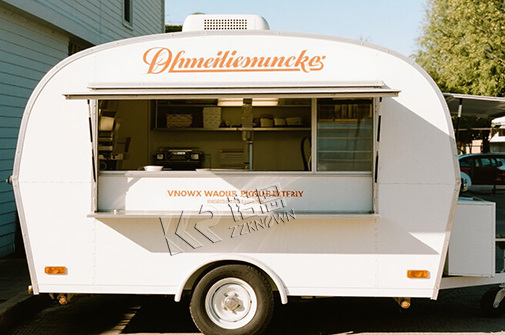
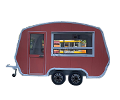
| KN-FS410 square trailer | 4.1 x 2.15 x 2.35m | $4,500-$6,900 published model range | Dual-axle square body; final equipment determines the quote |
| KN-FS400 catering trailer | 4 x 2 x 2.3m | Quote required for the shown kitchen package | 110V/60Hz, hood, cooking line, refrigeration and custom finish |
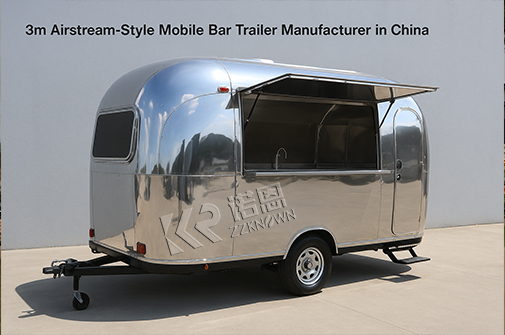
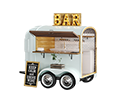
| KN-QF400 aluminum trailer | 4 x 2 x 2.3m | $8,490-$18,900 published model range | Oxidized-aluminum body and configuration options widen the range |
.png)
.png)
Ex-factory means the trailer is priced at the factory before international transport and most destination charges. A clear quotation should identify what is included instead of using one unexplained total.
Ask for an itemized quotation and a marked layout. If a fryer, refrigerator or hood is shown in a rendering but not written into the commercial offer, do not assume it is included.
Yes. Coffee, juice and ice cream usually emphasize refrigeration, water and electrical capacity. Burgers, fried chicken, BBQ and pizza add cooking heat, ventilation and fire-safety planning. The correct starting question is “What will you cook?” rather than “What is the cheapest trailer?”
Yes. Voltage, frequency, plug type, circuit count, breaker sizing and equipment load must be reviewed for the destination. Gas work also depends on the appliances, pipe layout, ventilation and the rules used by the local inspector. These are design inputs, not decorative options.
They do. Trailer length, planned payload and local towing requirements affect the chassis and axle configuration. Fiberglass, painted steel, stainless steel and oxidized aluminum have different material, fabrication and finish costs. Confirm the agreed structure and material in writing.
A standard paint color and simple logo are different from a full wrap, formed sign, menu light box, decorative awning or custom body shape. Branding is worth planning early because windows, lights and signs compete for exterior space.
Equipment pricing changes with capacity, construction, brand and electrical or gas specification. The safest approach is to build a menu-based equipment list and request current prices. For early planning, buyers commonly separate the budget into the following groups:
| Equipment group | Typical examples | What to confirm |
|---|---|---|
| Cooking | Fryer, griddle, range, oven, grill | Fuel, load, capacity, clearances |
| Cold storage | Prep refrigerator, under-counter fridge, freezer | Temperature range, dimensions, ventilation |
| Ventilation | Hood, fan, filters, duct | Cooking line length and local fire review |
| Water and hygiene | Sinks, tanks, pump, water heater | Tank capacity, sink count and local food code |
| Service and storage | Counters, shelves, POS position, menu board | Operator workflow and usable clearance |
The factory price pays for the agreed build. The landed cost is what you have spent when the trailer reaches its destination and is ready for the next local step. A practical budget may include:
Ask the seller which Incoterm is used and ask a local broker for the destination-side estimate. A low product price can become an expensive purchase if the shipping method or local fees were never discussed.
Engineer’s note: Freeze the menu before freezing the trailer. The menu determines the appliances; the appliances determine heat, power, gas, water and ventilation; those systems determine the safe layout and much of the final cost. Changing the cooking line after production begins can affect counters, wiring, plumbing, hood length and weight distribution.
Share the destination, menu, number of operators and required equipment first. ZZKNOWN can then prepare or revise a 2D or 3D custom layout, check equipment positions and provide a layout-based quotation. You can also review the factory and quality-control workflow before ordering.
No manufacturer document replaces destination approval. In the United States, the FDA Food Code is a model used by jurisdictions for retail and food-service safety, and the FDA explains that adoption and enforcement occur through state, local, tribal and territorial authorities. For vehicle-manufacturer identification, 49 CFR Part 566 requires manufacturers to submit identifying information; that is not the same as approval by every state or local department.
For European buyers, Regulation (EU) 2018/858 covers type-approval and market surveillance for motor vehicles and category O trailers, but the correct approval route still depends on the vehicle and destination. Ask the local authority or an appropriately qualified professional which rules apply to your exact trailer.
ZZKNOWN may provide WMI and U.S. manufacturer-registration information for applicable products, CE documentation for specified products, and ISO 9001 quality-management certification. These do not mean every trailer is automatically approved for every destination.
A used trailer may reduce the purchase price, but check for water leaks, corrosion, damaged flooring, undocumented wiring, gas modifications, worn brakes, missing paperwork and equipment that does not match your menu. Measure every appliance and confirm the available electrical load before buying.
A new custom trailer costs more upfront but lets you review the workflow, equipment positions, voltage, finish and agreed documentation before production. The better choice depends on the used unit's condition and the cost of bringing it into line with your local requirements.
A small 2.2-3m custom food trailer often falls around $3,000-$6,000 ex-factory for planning. Refrigeration, cooking equipment, custom utilities and branding can move it above that range.
Length does not describe the equipment package, material, axle, hood, refrigeration, electrical load, gas work or finish. Compare the itemized specification and layout, not only the outside size.
Only when the quotation lists it. Ask for the brand or specification, dimensions, quantity, fuel or voltage and price for every important appliance.
Not in an ex-factory price. Confirm the Incoterm, departure and destination ports, loading method and which destination charges remain for the buyer.
No. Approval varies by country, state, city and department. The buyer should confirm vehicle, health, fire, gas and electrical requirements with the relevant destination authorities before ordering.
Ask the seller to state the validity period. Equipment, material and freight prices can change, so an old planning figure should not be treated as a current offer.
Start with a focused menu, use equipment that fits the expected volume, avoid unused decorative features and approve the layout before production. Removing an essential sink, hood or refrigeration item simply moves the cost or compliance problem to a later stage.
Send the destination, menu, operator count, preferred size, equipment list, utilities and branding in one message. Photos or a sketch of your ideal workflow also help the design team ask better questions.
Tell ZZKNOWN what you plan to sell, where the trailer will operate and which equipment you need. The team can review your requirements and prepare a 2D or 3D layout and itemized quotation before production.
Request a Food Trailer QuoteRelated: Custom food trailer products · Customer cases · Custom design and OEM/ODM · Factory and quality control