


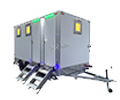
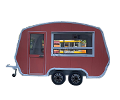
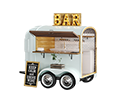

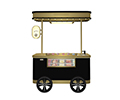
New license opportunities are real—but the smartest first move is still to confirm the permit path, menu and unit format before ordering a mobile kitchen.
What should a buyer understand first?
- 2,200 per year is a license-application expansion, not 2,200 automatically approved trucks.
- The City’s published allocation is 1,500 non-Manhattan, 500 citywide and 200 citywide for eligible U.S. veterans and people with disabilities.
- A person needs the right vendor or supervisory license, while the cart or truck needs its own permit and permit decal.
- Current offers first go to people on waiting lists created in 2022; new lists come after those lists are exhausted.
- A unit must pass inspection within six months of a permit application or the application becomes void.
- NYC uses the terms cart and truck. A buyer considering a towable food trailer should confirm unit eligibility with NYC Health before production.
- Menu, food-processing level, commissary plan, street restrictions and operating borough should guide the unit specification.
- ZZKNOWN can prepare a menu-based layout proposal, but only NYC agencies and destination professionals can approve a permit or unit.
What changed in New York City on July 1, 2026?
Imagine you have spent years working from someone else’s permitted cart. You know the lunch rush, the weather and the menu, but the hardest piece of your own business has been access to a full-term mobile food vending permit. The 2026 expansion matters because it begins to open that bottleneck.
The NYC Health Department’s current Mobile Food Vendors page says new local laws will increase available permits by 11,000. Beginning July 1, 2026, the Department will offer 2,200 supervisory licenses each year for five years. A supervisory license holder can then apply for one associated permit for a cart or truck.
The enacted legislation is also visible in the New York City Council legislative record. This is a meaningful market expansion, but the legal sequence matters more than the headline number.
How are the 2,200 annual supervisory-license opportunities divided?
| Published annual allocation | Where the associated permit may operate | Planning implication |
|---|---|---|
| 1,500 supervisory licenses | All boroughs except Manhattan | Do not design a Manhattan-only business model around a non-Manhattan license. |
| 500 supervisory licenses | Citywide, including Manhattan | Location eligibility still does not override restricted-street and site rules. |
| 200 citywide supervisory licenses | For eligible U.S. veterans and people with disabilities | Applicants must meet the published eligibility and evidence requirements. |
| 2,200 total per year | Five consecutive annual cycles beginning July 1, 2026 | The five-year total is 11,000; offers and approvals occur through the City’s process. |
The allocation above comes from the official NYC Business street-vending page. The same page says 2,000 places go to people currently on the waiting list and 200 to eligible veterans and people with disabilities. Always check the live page for the current application window.
Why does the expansion not mean anyone can buy a truck and start vending?
Because New York regulates the operator, the supervisor, the vending unit and the place of operation separately. The 2026 program expands access to supervisory licenses. It does not erase the waiting list, turn a personal license into a unit permit, approve a particular kitchen or authorize every street.
NYC Health says current supervisory-license applications are offered to people on waiting lists created in 2022. After those lists are exhausted, the Department will create new waiting lists. Only individuals with a current Mobile Food Vendor License can be eligible for a future supervisory-license list. In other words, ordering equipment is not a shortcut around the people-and-permit sequence.
Which approval belongs to the person and which belongs to the unit?
| Item | What it covers | Who or what holds it | Published 2026 reference point |
|---|---|---|---|
| Mobile Food Vendor License | Allows a person to work on a permitted cart or truck after meeting course and application requirements | Individual vendor | NYC311 lists a $50 license fee and $53 Food Protection Course fee; qualifying U.S. veterans are exempt from the license fee. |
| Supervisory License | Allows its holder to apply for one new full-term supervisory-license-associated permit | Individual; not a company | Offered through the waiting-list system; holder must be present while the associated unit operates. |
| Mobile Food Vending Unit Permit | Authorizes the approved cart or truck after application and inspection | The specific unit | Official full-term page lists $200 for an on-site processing unit and $75 for a prepackaged/non-processing unit. |
| Restricted Area Permit | Allows vending on qualifying private property or Parks property under an agreement | The specific unit | No supervisory license or waiting list; it does not authorize vending on public sidewalk or street. |
| Permit decal and letter grade | Shows the unit’s permit and sanitary-inspection grade | Displayed on the unit | NYC Health publishes A as 0–13 points, B as 14–27 and C as 28 or more. |
Fees above are official published city fees checked on September 9, 2026. They exclude insurance, sales-tax registration, vehicle purchase, commissary charges, propane or fire work, equipment, reinspection, legal advice and other business costs. Use them to understand the paperwork—not to estimate the whole startup budget.
Which permit paths should a first-time buyer compare?
Start with the operating location and business model. A full-term street permit is the obvious goal for many vendors, but it is not the only path. NYC Health lists full-term citywide, non-Manhattan and borough-related categories, along with seasonal, green cart, restricted-area and specialized veteran paths. A temporary event may require a Temporary Food Service Establishment permit rather than a full-term mobile-vending permit.
A restricted-area permit is especially important to understand. The official page says it can cover private property, or Parks property under an agreement, has no waiting list and does not require a supervisory license. It also says the unit cannot use that permit to vend on a public sidewalk or street. A brewery parking lot, private campus and curbside route can therefore produce very different permit strategies.
What happens after someone receives a supervisory-license opportunity?
The person still needs to complete the agency process and then apply for the associated unit permit. The official full-term permit page lists supporting items such as a New York sales-tax Certificate of Authority, workers’ compensation and disability-insurance evidence or the applicable exemption form, clearance of certain violations and fines, a commissary or approved food-source arrangement, and sworn statements.
Only the applicant or permit holder can bring the cart or truck to inspection. The unit must pass within six months of the permit application date or the application becomes void. That six-month clock is why a custom build should not begin with vague phrases such as “NYC standard.” It should begin with the application packet, menu, equipment class and inspection timeline.
Does New York City treat every towable food trailer as an eligible unit?
Do not assume so. NYC Health’s public definition describes a mobile food vending unit as a food service establishment within a cart or truck. The agency’s permit and inspection materials also consistently refer to carts and trucks. A global buyer may casually call any towable kitchen a “food truck,” but regulators can use those words more precisely.
If your preferred product is a towable food trailer, send the exact photographs, dimensions, chassis details, towing arrangement, menu and operating plan to NYC Health before approving production. Ask whether that unit format is eligible for your intended permit and vending location. If the answer is uncertain, resolve it in writing. ZZKNOWN can adapt a concept drawing only after the buyer confirms which mobile-unit format the authority will inspect.
What should the unit pass before it can operate?
The permit holder must schedule a pre-permit inspection. The official full-term and restricted-area pages say the unit must pass inspection within six months. After a restricted-area unit passes and the permit decal is affixed, it may begin operating under that permit’s conditions. A vendor license alone is not enough.
The inspection is not just a visual tour of shiny stainless steel. The menu and processing classification can drive sink, hot-water, refrigeration, food-protection, ventilation and other requirements. Fire, fuel, electrical, vehicle and site authorities may have separate responsibilities. Ask each agency which approvals must be completed before the Health Department appointment.
How should the menu control the mobile-kitchen design?
A sealed-drink cart, a prepackaged-snack unit and a kitchen cooking raw meat do not create the same risk or equipment list. NYC’s materials distinguish processing units—where food is cooked, sliced or mixed—from non-processing units. The published full-term permit fee is also different for those categories.
Write the menu as a process story: receiving, cold or dry storage, thawing, washing, cutting, cooking, hot holding, assembly, service, dishwashing and waste removal. Then mark each step on the drawing. That process reveals whether you need a dedicated hand sink, warewashing capacity, larger refrigeration, a hood, fire suppression, propane storage, a generator, more potable water or a different serving window.
Why should the commissary plan influence the vehicle specification?
NYC Health says a permitted cart or truck must be cleaned, serviced and stored at an approved commissary, depot or alternative facility. Official NYC Business guidance describes commissary functions such as potable-water supply, liquid- and solid-waste disposal, unit washing, food preparation and storage, and approved propane storage. Units normally return for cleaning and maintenance at least daily.
That does not mean the mobile unit can be under-designed. Your tank sizes, waste connections, food storage and overnight procedures still need to fit the permitted plan. It does mean you should ask practical questions before choosing equipment: How far is the route? Can the facility accept the vehicle’s dimensions? Which foods are prepared there? Where are cylinders stored? What gets refilled, drained, washed and logged every day?
How should street and site restrictions affect the buying decision?
A citywide permit is not a promise that every curb is available. NYC Health publishes a restricted-streets guide and map, while traffic, parking, Parks, private-property and event rules can apply. A long unit with large door swings may fit a factory aisle but fail the intended site plan.
Measure the real operating envelope, not just the body: mirrors, tow bar, awning, service-window door, fold-down shelf, steps, generator box, propane cabinet, queue and accessible customer space. Confirm parking orientation and which side customers will approach. The safest purchase decision combines permit type, legal location, vehicle geometry and menu workflow on one drawing.
What can the real ZZKNOWN KN-FS400 model teach a New York buyer?
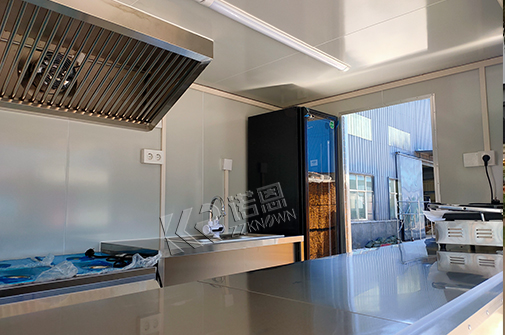
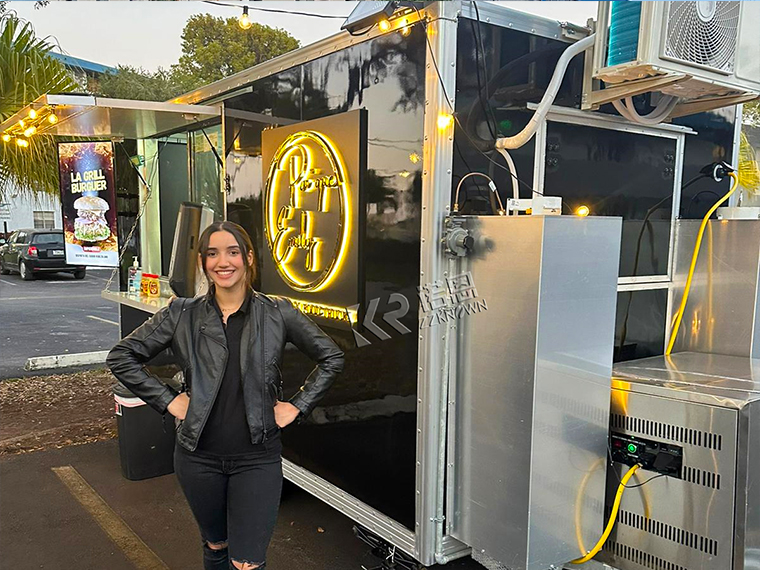
The ZZKNOWN KN-FS400 square food trailer is a real product reference—not a claim of automatic NYC approval. Its current product page lists a 4 × 2 × 2.3-meter body (about 13 × 6.5 × 7.5 feet), two axles and a published factory price of US$4,200–$5,900. The model family also lists stainless workbenches, non-slip flooring, a double sink, 12-volt pump, electric heater tap, LED lighting, fuse box and configurable outlets.
.jpg)
| Published KN-FS400 item | Live page value | Question to settle before an NYC-oriented build |
|---|---|---|
| Body size | 4 × 2 × 2.3 m (about 13 × 6.5 × 7.5 ft) | Will NYC Health accept this towable format for the intended permit, and will the operating site accept the full envelope? |
| Axles | Two axles | What registration, towing, brake and parking rules apply to the completed unit? |
| Published factory price | US$4,200–$5,900 | Which equipment, freight, duties, local work, commissary fees and inspections are outside the base price? |
| Water provision | Double sink, electric heater tap and 12V pump in the model-family table | Does the menu require additional handwashing, warewashing, tank capacity or approved connections? |
| Electrical provision | LED lights, switch, fuse box and market-configurable outlets | What are the actual U.S. voltage, frequency, plug, load schedule, generator or shore-power and listing requirements? |
| Optional cooking equipment | Freezer, fryer, griller and other equipment are listed as options | Does each selected appliance change ventilation, fire suppression, fuel, sanitation or processing classification? |
How should buyers compare a cart, truck and towable trailer?
| Format | Operational advantage | NYC question to resolve | Common design focus |
|---|---|---|---|
| Pushcart | Compact footprint and sidewalk-oriented service | NYC materials publish a 5 × 10 ft maximum pushcart size including attachments and overhangs; confirm current rule and classification. | Compact storage, protection, handwashing, cold holding and commissary workflow. |
| Motorized food truck | Kitchen and vehicle move as one unit | Health permit, vehicle, traffic, restricted-street, parking and fire requirements still apply. | Weight, aisle, ventilation, power, service side and driver visibility. |
| Towable food trailer | Kitchen can be separated from the tow vehicle | Confirm that NYC will accept the exact trailer format for the intended permit and site before purchase. | Tow envelope, tongue/axle weight, stabilizers, brakes, utilities and safe site access. |
What should a buyer send the manufacturer before production?
- NYC permit path and borough
- Written agency feedback on unit type
- Operating address or intended route
- Restricted-street and site checks
- Complete menu and preparation steps
- Processing or non-processing classification
- Appliance make, model and data plate
- Gas, electrical and water load schedules
- Hood and fire-suppression requirements
- Potable- and wastewater requirements
- Commissary agreement and daily workflow
- Vehicle dimensions and weight limits
- Serving side, window and queue direction
- Accessibility and customer-clearance plan
- Inspection deadline and shipping schedule
- Local installer and commissioning scope
What production sequence reduces permit risk?
Decide whether the plan is full-term, restricted-area, seasonal, event-based or another category.
Ask NYC Health whether the exact cart, motorized truck or towable trailer is eligible.
List every preparation step, ingredient flow and appliance.
Calculate water, wastewater, power, gas, ventilation and refrigeration needs.
Obtain written comments from health, fire, gas, electrical, vehicle and site authorities as applicable.
Freeze dimensions, equipment, service access, labels and documents.
Document water, electrical, doors, lights, refrigeration and other agreed system checks.
Use qualified local professionals for required connections, commissioning, tests and agency inspection.
How were the facts in this guide collected?
We used a source-first method. We reviewed the live NYC Health mobile-food-vending page for the expansion, waiting-list sequence, permit categories, letter grades, commissary and inspection resources. We checked the NYC Business street-vending page for the 1,500/500/200 annual allocation and supervisory-license presence rule. We reviewed the enacted City Council record for the legislative expansion, plus the current NYC Business pages for full-term permits, restricted-area permits and vendor licenses.
For the real product example, we checked the live ZZKNOWN KN-FS400 page and used its published model, dimensions, base price, configuration table and real images. No permit approval, inspection result, buyer outcome, startup cost or personal experience has been invented. Factory observations are labeled as ZZKNOWN production experience.
What do real buyers ask about the 2026 NYC expansion?
Can anyone apply for one of the 2,200 supervisory licenses now?
No. Current offers go to people on the waiting lists created in 2022. NYC Health says it will create new waiting lists after those lists are exhausted. A person must hold a current Mobile Food Vendor License to be eligible for a future supervisory-license waiting list.
Does a supervisory license let me operate any truck immediately?
No. It lets the holder apply for one associated unit permit. The cart or truck must still complete the permit process and pass inspection, and the supervisory license holder must be present when that associated unit operates.
Can a company hold the supervisory license?
The official full-term permit page says only individuals, not companies, can obtain the supervisory license. Your business structure and tax paperwork may still matter, but the supervisory license is personal.
Can I use a restricted-area permit while waiting for a street permit?
Potentially, if the site and business qualify. NYC Health says the restricted-area permit can cover qualifying private or Parks property, has no waiting list and does not require a supervisory license. It does not permit public-sidewalk or street vending. Confirm the property agreement, zoning and agency conditions.
Does the City guarantee a permit after I buy a food truck?
No. Vehicle purchase and permit approval are separate. Confirm eligibility, application status, inspection requirements and timing before you buy or fabricate a unit.
Can ZZKNOWN promise that KN-FS400 will pass NYC inspection?
No responsible manufacturer can promise approval without a confirmed menu, unit category, approved specification and inspection. ZZKNOWN can revise the layout around written destination requirements and provide agreed production documents and test records.
How long do I have to pass the unit inspection?
The current NYC Business full-term permit page says the unit must pass inspection within six months of the permit application date or the application becomes void. Check the instructions in your own application packet for the controlling deadline.
Do I need a commissary if the truck has its own tanks and kitchen?
NYC Health says permitted carts and trucks must be cleaned, serviced and stored at an approved commissary, depot or alternative facility. Some limited food types may apply for an alternative facility. An onboard system does not automatically remove the servicing obligation.
Would you like an NYC-oriented mobile-kitchen layout review?
Send ZZKNOWN your permit path, written NYC feedback, unit format, menu, operating borough, site dimensions and equipment data plates. We will map the proposed service window, workflow, sinks, tanks, refrigeration, ventilation, power and storage for discussion before production.
Request a Layout Review Compare Square Food TrailersWhich related ZZKNOWN guides should you read next?
- Food Trailers for Sale in New York
- Food Truck Requirements in the USA
- Best Food Trailer Layout Ideas
- Real Model: ZZKNOWN KN-FS400 Square Food Trailer
- ZZKNOWN Custom Layout and Production Process
- Food Trailer Buyer FAQ
Which official sources support this guide?
- NYC Health — Mobile Food Vendors
- NYC Business — Street Vending in NYC
- New York City Council — Enacted Mobile Food and General Vendor Licensing Record
- NYC Business — Full-Term Mobile Food Vending Unit Permit
- NYC Business — Restricted Area Mobile Food Vending Permit
- NYC311 — Food Cart Vendor License