

What are the key takeaways?
- A second trailer should copy a profitable process, not rescue an inconsistent first operation.
- Standardize the menu, equipment, utilities, storage locations, spare parts and branding before production.
- Choose deliberately between an identical “clone” unit and a specialized unit for a different menu or event type.
- Budget for permits, opening inventory, staff training, working capital and management time—not only the trailer.
- Each location may require its own health, fire, vehicle, zoning, tax and operating approvals.
- Send ZZKNOWN one fleet specification package so multiple trailers can be reviewed against the same baseline.
Why does the second trailer feel harder than the first?
Your first trailer can survive on improvisation. You know which supplier answers quickly, how much sauce to prep, which breaker trips when two appliances start together, and how to calm the line when twelve tickets arrive at once. Most of that knowledge lives in your head.
Then the second trailer opens across town. A new manager orders a different bun, a fryer is set to another temperature, the serving window displays an older menu, and both crews call you at the same time. The problem is not that you bought the wrong number of trailers. The problem is that the business grew faster than its operating system.
Based on ZZKNOWN's production experience, repeat buyers get the strongest result when they treat Unit 2 as a controlled replication project. They first lock the menu and workflow, then standardize equipment positions, utility requirements, cabinet locations, exterior graphics and inspection documents. That sequence turns manufacturing consistency into operating consistency.
When are you actually ready to open a second food trailer?
The U.S. Small Business Administration recommends reviewing the new market, competition, marketing costs, projected revenue, balance sheet and local legal requirements before expanding to another location. That is sensible for a mobile operation too. A busy weekend is encouraging, but it is not a fleet strategy.
Look for several months of useful operating evidence, including ordinary weeks, weak-weather days and at least one peak event. You should be able to explain why sales changed and which capacity constraint caused lost orders. If your answer is always “I personally worked harder,” the system is not ready to copy.
| Readiness question | Evidence to collect | Warning sign | Decision use |
|---|---|---|---|
| Can demand support another unit? | Sales by location, daypart, event type and weather | One exceptional festival creates most revenue | Choose territory and schedule |
| Is the menu repeatable? | Recipe cards, portion cost, ticket time and waste | Only the owner knows the “right” method | Freeze the launch menu |
| Can the crew run independently? | Opening, closing and shift-manager checklists | Every exception requires an owner call | Build the training plan |
| Is cash flow strong enough? | Unit-level profit, debt, reserves and forecast | Unit 2 depends on immediate perfect sales | Set working-capital reserve |
| Do utilities and permits fit? | Power, gas, water, waste and local approvals | The original permit is assumed to transfer | Confirm destination specification |
For context, the U.S. Bureau of Labor Statistics publishes establishment survival data and shows that survival varies by opening year, region and industry. That data does not predict your trailer's success, and a location is not the same thing as a company. It does reinforce a practical point: expansion should be based on records and reserves, not a universal success-rate slogan.
What should you standardize before you request a fleet quotation?
Start with a “golden unit” specification—the approved version every future trailer references. It should include exact body dimensions, axle and brake configuration, equipment model or performance requirements, voltage and frequency, socket locations, LPG or electrical strategy, water-tank arrangement, hood length, sink package, cabinet geometry, serving-window dimensions, materials, colors, logo files and menu-board positions.
Give every item an “approved,” “allowed alternative,” or “local source” status. A refrigerator may need a local-market certification or service network, while stainless worktables can be standardized at the factory. That distinction prevents a last-minute substitution from silently changing workflow or electrical load.
Use the same approach for documents. Keep a master equipment schedule, drawing revision, wiring schedule, plumbing diagram, branding file and pre-shipment checklist. If Unit 3 changes, record why. Otherwise, “almost identical” units gradually become five different kitchens.
Should Unit 2 be an exact clone or a specialized trailer?
An identical trailer is usually easier to train, stock, maintain and schedule. A specialized trailer can reach a new daypart or customer group, but it creates more purchasing, training and spare-parts complexity. Neither is automatically better.
| Fleet option | Best when | Operational advantage | Main trade-off |
|---|---|---|---|
| Identical clone | The first menu is profitable and demand exists in another territory | Same training, recipes, parts and workflow | Less flexibility if markets differ |
| Same shell, adjusted equipment | The brand stays consistent but one location needs different capacity | Shared body, graphics and many components | Crews must learn equipment differences |
| Specialized concept | A beverage, dessert or catering unit complements the main menu | New revenue occasions and shorter focused line | More SKUs, vendors and procedures |
| Event support unit | The first trailer loses sales because prep, cold storage or holding is constrained | Adds capacity without duplicating every station | May not earn revenue independently |
How should you compare the real cost of one trailer and a small fleet?
Do not multiply the factory quote by two and call that the expansion budget. Some costs scale nearly one-for-one; others are shared; several appear only when management becomes more complex. Use a destination-specific quote for actual numbers, but use the structure below to avoid missing categories.
| Cost category | One-unit business | Two- or three-unit fleet | How to estimate |
|---|---|---|---|
| Trailer and installed equipment | One configured build | One per operating unit | Use model-, layout- and destination-based manufacturer quotes |
| Design and branding | Initial concept and files | Shared master system plus unit identifiers | Separate reusable design work from per-unit printing |
| Permits and inspections | One operating area | Potentially each unit and each jurisdiction | Confirm with vehicle, health, fire, zoning and tax authorities |
| Opening inventory | One par level | Per-unit par plus central safety stock | Multiply recipe demand by planned service volume and lead time |
| Training and payroll | Owner-heavy launch | Managers, relief staff and overlap shifts | Training hours × loaded labor cost |
| Software and communication | Single POS and schedule | Multi-location licenses and reporting | Request current vendor pricing per location and user |
| Maintenance and spares | Reactive replacement | Shared critical-spares kit and service plan | List failure-critical components and local lead times |
| Working capital | One unit's reserve | Reserve for ramp-up and uneven unit performance | Build a monthly cash forecast with a conservative sales case |
How do you make the menu repeatable across multiple trailers?
A fleet menu needs more than recipes. Each item should have a station, target ticket time, holding rule, packaging method, allergen note, waste code and “sold-out” replacement decision. Photograph the approved finished product. Weigh portions during training. Record which tasks happen in a commissary and which happen on the trailer.
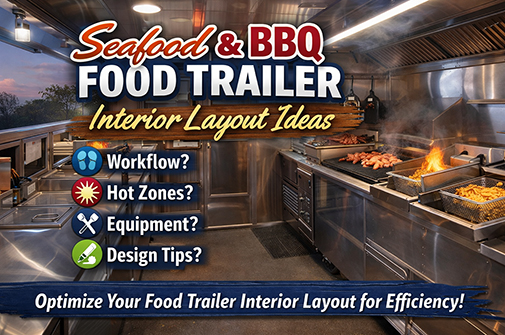
Start with the highest-volume items and map the path from cold storage to prep, cook, assembly, handoff and cleaning. Our food trailer menu-engineering guide explains how menu focus connects to equipment capacity. The ergonomic kitchen design guide shows why frequently used tools and ingredients should sit inside a comfortable reach zone.
If two trailers use the same recipe but one stores buns under the griddle and the other stores them across the aisle, the training system is already splitting. Match cabinet labels, shelf maps and ingredient pan positions wherever practical.
How should equipment be standardized without blocking local compliance?
Standardize performance first: required cooking surface, recovery time, refrigeration volume, hood coverage, sink workflow, electrical load and service clearance. Then specify the exact model when supply, certification and after-sales support make sense. This prevents a brand name from becoming more important than the operating result.
Keep a fleet equipment register with serial numbers, manuals, warranty contacts, electrical ratings, gas requirements, cleaning procedures and spare-part references. Standard parts reduce downtime because a trained technician and stocked component can support several units. However, voltage, plugs, LPG components, road equipment and appliance approvals must match the destination.
Which real ZZKNOWN model shows a useful fleet baseline?
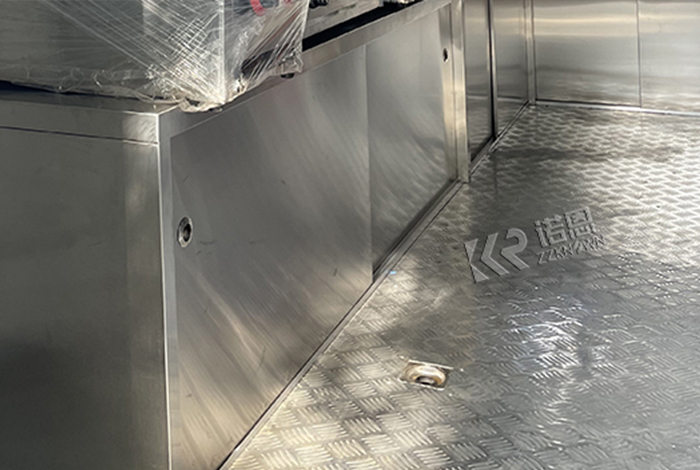
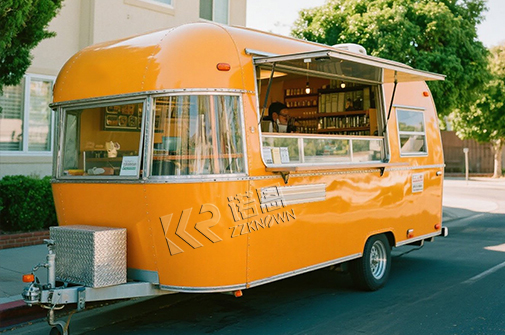
The published ZZKNOWN KN-QF400 oxidized-aluminum food trailer is a useful example of a repeatable 4-meter platform. Its published specification lists a 4000 × 2000 × 2300 mm (13.1 × 6.6 × 7.5 ft) body, dual axle with four wheels and brakes, a 110V/60Hz example, eight outlets, stainless workstations, a 3+1 sink package, cold-storage fitment, a 3-meter hood, gas lines, air conditioning, an awning and lightbox-sign positions.
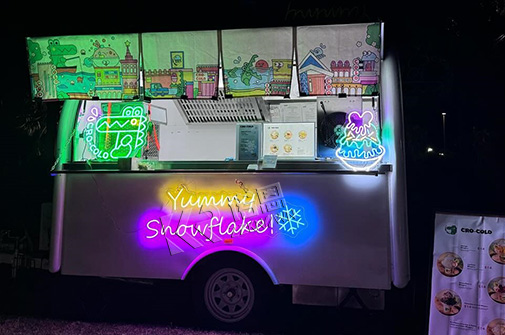
That does not make one configuration universally compliant or ideal. It shows how a fleet buyer can lock a common shell, worktop system, utility approach and exterior language, then adjust the cooking package for a burger, beverage or dessert concept. Before ordering, the buyer should confirm payload, towing, health, fire, gas and electrical requirements with the destination authorities and licensed professionals.
.png)
.png)
How do you build a training system that travels with the fleet?
Write training for a role, not for a favorite employee. A new hire should be able to follow the same opening sequence, food-safety checks, station setup, production method, cleaning schedule and closing count in every unit.
For U.S. operations, the FDA Food Code is a model used by jurisdictions rather than a single nationwide mobile-food permit. Its management provisions place duties on the person in charge and call for employees to be trained in food safety as it relates to assigned duties. The December 2024 supplement also emphasizes active managerial control. Confirm the version adopted by the state and local regulatory authority.
Use short demonstrations and observed sign-offs, not only a handbook. A trainee should physically show how to verify sanitizer, respond to a temperature problem, shut off gas or electricity, clean a fryer area and report illness according to local policy.
How can central purchasing help without creating a warehouse problem?
Central purchasing works when you standardize item codes, pack sizes, approved substitutes, order days, delivery windows and minimum/maximum stock. It fails when every trailer “stocks up” without sales-based par levels.
Build par levels from recipes and service forecasts. If one burger uses one bun, one patty and one portion of sauce, planned unit sales translate directly into ingredient demand. Add a documented safety factor based on supplier lead time and event risk. Review waste and stockouts weekly. The purchasing manager should see inventory by unit, not only one combined number.
Separate commissary capacity from trailer capacity. Buying a case at a lower unit price is not a saving if the cold room, trailer refrigerator or shelf cannot store it safely. For a new fleet layout, send the menu, delivery frequency and expected orders per hour so refrigeration and dry storage can be planned around actual replenishment.
How do you keep the brand consistent without making every market feel identical?
Create a master brand pack with vector logos, color values, wrap drawings, photography style, menu-board grid, price-format rules, uniform guidance and approved customer-facing language. Then define the flexible zones: local specials, event partner marks, language and regulatory notices.
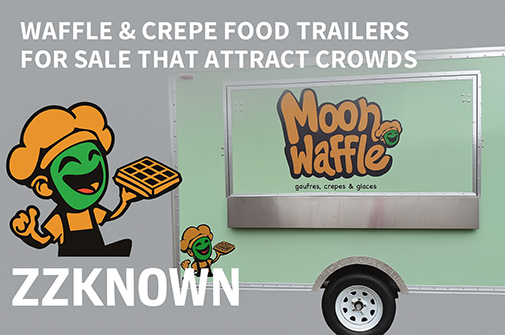
The same principle applies to the trailer. Keep body colors, logo size, sign positions, lighting temperature and service-window presentation consistent. Give each unit a small identifier for maintenance and reporting. ZZKNOWN's OEM/ODM customization page outlines exterior, layout and branding options that can be controlled across multiple builds.
Which permits and legal issues change when you add locations?
Assume the answer is “several” until each authority confirms otherwise. A health permit, fire inspection, mobile-vendor license, vehicle registration or commissary agreement for Unit 1 may not automatically cover Unit 2 or a new city. Sales-tax, employer, zoning, parking and event rules can also change.
The SBA specifically advises businesses expanding to a new U.S. location to review state, county and city licenses, permits, taxes and, where relevant, foreign qualification. Outside the United States, use the equivalent national and local agencies. ZZKNOWN can provide product drawings and applicable manufacturing documents, but cannot replace a local authority, engineer, inspector, customs broker or attorney.
When does a food trailer fleet become a franchise question?
Owning several company-operated trailers is not the same as selling franchises. If another operator will use your trademark, follow your operating system and make required payments, obtain qualified legal advice before offering the arrangement. In the United States, the FTC Franchise Rule requires covered franchisors to provide prospective franchisees a disclosure document containing 23 categories of information.
Do not call an arrangement a “license” and assume franchise law disappears. The legal analysis depends on how the relationship actually works and may include state rules. This article is operational guidance, not legal advice.
What is a practical one-to-three-trailer expansion sequence?
- Stabilize Unit 1: record recipes, sales, ticket times, waste, downtime and owner interventions.
- Choose the growth purpose: new territory, added capacity, specialized menu, catering or event support.
- Create the golden specification: freeze the common body, utilities, equipment, storage, branding and QA documents.
- Build the manager system: train one accountable person before Unit 2 launches.
- Open Unit 2 with overlap: schedule experienced staff across both units and limit the launch menu.
- Audit for 30–90 days: compare unit sales, labor, food cost, waste, ticket time, maintenance and customer feedback.
- Correct before Unit 3: decide whether differences are market-specific or a broken standard.
A third trailer should benefit from what the first two taught you. If you keep ordering while the specification is still moving, you multiply rework.
What should you send ZZKNOWN for a multi-unit layout and quotation?
Send the destination country and city, number of units, launch schedule, menu, expected orders per hour, staff per shift, preferred body size, tow limits, cooking equipment, refrigeration volume, fuel strategy, voltage/frequency, water system, hood requirement, exterior graphics and local inspection notes. Mark which features must be identical and which may vary by unit.
Include photos or drawings of Unit 1 if it already exists. The team can then discuss a common 2D/3D layout, equipment schedule, controlled branding package and production inspection points. For budgeting context, also review the 2026 food trailer cost guide.
What do real buyers usually ask before ordering multiple trailers?
Should my second trailer have exactly the same menu?
Usually it should share the profitable core menu. A small number of location-specific items is manageable if they do not require a separate production line, supplier network or training system.
Can ZZKNOWN build matching trailers in separate production batches?
Matching builds can be planned from an approved specification, drawing revision, equipment schedule and branding pack. Component availability can change, so acceptable alternatives and finish samples should be documented before each batch.
Is it cheaper to order several trailers at once?
Some shared design, branding and production setup may be reusable, but the result depends on quantity, model, equipment, shipping method and schedule. Request a written multi-unit quotation rather than assuming a fixed discount.
Should every trailer use the same refrigerator, fryer and hood?
Use the same models when they meet local requirements and service needs. Otherwise, standardize capacity, dimensions, utility demand and operating procedure so an approved alternative does not break the layout.
How much working capital should Unit 2 have?
There is no universal number. Build a conservative monthly cash forecast for payroll, ingredients, fuel, site fees, insurance, repairs, debt and weak sales. Confirm the reserve with your accountant or financial adviser.
Can one permit cover all trailers in a fleet?
Do not assume so. Unit and location requirements vary. Ask the health, fire, vehicle, tax, zoning and event authorities that govern every operating area.
How do I stop quality from changing between crews?
Use weighed recipes, station maps, photographs, temperature and cleaning logs, observed training sign-offs, mystery checks and unit-level performance reporting. Give a named manager responsibility for each shift.
What is the biggest mistake when scaling a food trailer business?
Buying another trailer before documenting how the first one succeeds. More equipment cannot compensate for an unclear menu, unreliable purchasing, weak training or insufficient working capital.
How was the information in this guide collected?
The article combines four evidence groups: current U.S. government guidance on business expansion and franchising; current FDA model food-safety guidance; U.S. establishment survival datasets used only for context; and published ZZKNOWN product specifications and manufacturing experience. Product facts were checked against the KN-QF400 page on September 1, 2026. Planning tables are decision tools created for this guide, not quoted market averages or financial promises.
Ready to turn one successful trailer into a repeatable fleet?
Send ZZKNOWN your menu, destination, number of units, preferred launch date and current trailer layout. We can review a common equipment package, controlled branding system and multi-unit kitchen layout before quotation.
Request a Fleet Layout and Multi-Unit Quote