International Buyer Guide
A destination-first guide to specifications, approvals, inspection, shipping, customs documents and landed cost.
Direct answer: To import a food trailer from China, confirm destination vehicle and food-service requirements before ordering, approve a written specification and layout, agree the Incoterm and total cost responsibilities, inspect the finished trailer, review shipping and compliance documents, then arrange freight, customs clearance, local delivery and registration. A VIN, CE document or supplier statement alone is not sufficient evidence of approval in your country.
Key Takeaways
Data scope: This article is an international planning guide updated on August 20, 2026. The United States, United Kingdom, European Union and Australia examples below come from official government sources. They are examples, not a complete list of laws or personal legal advice. Customs rates, freight prices, port fees and approval processes can change.
How this guide was prepared: We compared official import and trailer-approval guidance with ZZKNOWN’s production, inspection, packing and export-coordination workflow. We intentionally do not publish universal freight prices, duty rates or delivery times because they depend on route, date, dimensions, weight, tariff classification, Incoterm and destination charges.
| Stage | What you confirm | Evidence to keep |
|---|---|---|
| 1. Destination research | Vehicle, health, fire, gas, electrical, road-use and import requirements | Written guidance or checklist from the relevant authorities |
| 2. Supplier review | Legal company, factory capability, applicable documents and export scope | Company details, factory evidence and document samples |
| 3. Specification | Menu, size, layout, equipment, utilities, materials, weight and market configuration | Approved specification, equipment data sheets and 2D/3D drawing |
| 4. Contract and cost | Price, currency, payment terms, Incoterm, named place/port and exclusions | Signed contract or order, pro forma invoice and quotation |
| 5. Production | Approved design and change-control process | Progress records and written approval of any changes |
| 6. Inspection | Dimensions, equipment, utilities, workmanship, documents and packing points | Inspection checklist, photos, video and test records where applicable |
| 7. Shipping | Method, route, cargo dimensions, insurance, consignee and destination agent | Booking, packing record, bill of lading draft and insurance evidence |
| 8. Customs and delivery | Importer of record, classification, value, duties/taxes, port fees and local haulage | Customs entry, payment records, release and delivery receipt |
| 9. Local approval | Vehicle registration plus health, fire, gas and electrical inspections | Approval, inspection and registration records required locally |
A trailer can clear customs and still fail vehicle registration or food-business inspection. Ask the authority that will register and inspect the actual unit what evidence it needs. Send that checklist to the manufacturer before chassis, axle, lighting, brakes, gas, electrical and kitchen details are fixed.
| Market example | What the official source highlights | What the buyer should verify |
|---|---|---|
| United States | NHTSA explains applicable FMVSS certification labels and VIN/manufacturer submissions; CBP describes entry and Form HS-7 for permanent trailer imports. | Certification label, manufacturer listing, import entry, state registration and local food/fire rules |
| United Kingdom | DVSA states that imported single trailers or very small quantities may require Individual Vehicle Approval. | IVA route and evidence, weight/brakes, registration plus local council and safety requirements |
| European Union | Regulation (EU) 2018/858 covers approval of motor vehicles and category-O trailers; customs operations generally require an EORI number. | Type or individual approval route, applicable conformity evidence, customs and member-state registration |
| Australia | The department states that an import approval is required before a road vehicle is imported and applications are managed through ROVER. | Approval pathway, RAV requirements, VSB 1/ADR evidence, biosecurity and state/territory registration |
Important distinction: A WMI helps identify a manufacturer and a VIN identifies a vehicle. U.S. DOT registration information, a VIN, CE documentation for a specified product or ISO 9001 certification is not, by itself, proof that every trailer is approved for every destination.
Do not approve a quotation that only says “fully equipped food trailer.” The contract and drawing should identify the exact configuration that will be manufactured.
Use the food trailer size guide and the layout-by-menu-and-staff guide to prepare your first equipment and space brief.
A published model is a starting reference, not a promise that the same unit fits every market. For example, ZZKNOWN’s existing 4m commercial pizza trailer with a gas oven shows how a menu, oven, preparation surfaces and service window can be discussed together. The buyer still needs to confirm the selected oven, loaded weight, utilities, gas system, ventilation and destination approval route.
.jpg)
Existing 4m pizza-trailer configuration used as a specification example; final details are market-specific.
Landed cost is broader than the factory price. A useful planning formula is:
| Cost block | What to request | Why estimates change |
|---|---|---|
| Trailer and options | Itemized factory quotation and exclusions | Size, axle, materials, equipment and market configuration |
| Origin logistics | Packing, inland haulage, terminal and export scope | Factory location, port, container type and Incoterm |
| Freight and insurance | Current written quote with validity and cargo details | Season, route, carrier, fuel, dimensions and coverage |
| Destination charges | Local agent’s itemized estimate | Port, terminal, storage, examination and free-time terms |
| Duty and tax | Broker’s classification and customs-value calculation | Destination, tariff code, origin, customs value and tax rules |
| After arrival | Inspection, modification, delivery and registration budget | Local authority findings, distance, permits and service providers |
The agreed Incoterm allocates certain transport tasks, costs and risks between seller and buyer, but it does not replace the sales contract or determine every tax, title or approval issue. Write the exact rule and named place or port—for example, “FCA [named place], Incoterms® 2020”—and ask both sides to list what is included. Compare the cost components in our food trailer cost guide.
| Document group | Common examples | What to check |
|---|---|---|
| Commercial | Contract/order, pro forma invoice, commercial invoice | Legal names, addresses, currency, goods description, value, Incoterm and payment record |
| Cargo and shipping | Packing list, bill of lading/sea waybill, booking, insurance certificate | Consignee, notify party, pieces, dimensions, weight, ports and document-release method |
| Origin/customs | Certificate of origin or other declarations when required | Whether the destination or trade arrangement actually requires the document |
| Vehicle | VIN/plate information, drawings, weight data and market-specific conformity evidence | Unit identity, scope, issuing party and consistency with the finished trailer |
| Technical and inspection | Specification, equipment list, manuals, photos, inspection/test records and packing list | Models, serial numbers, voltage/gas data, agreed changes, detachable parts and installation instructions |
The exact document set depends on the destination, cargo, Incoterm, payment method and approval route. Ask the customs broker and registration authority for a written checklist.
Based on ZZKNOWN’s production and export-coordination experience, inspection works best when it follows the signed specification rather than a generic photo list. Check identifiers and dimensions first, then equipment, utilities, finish, documents and packing.
A buyer may review factory records, appoint a third-party inspector, or use both. Define the inspection scope and acceptance process in the order rather than assuming that every test is included. See how these checks fit into ZZKNOWN factory and quality-control steps.
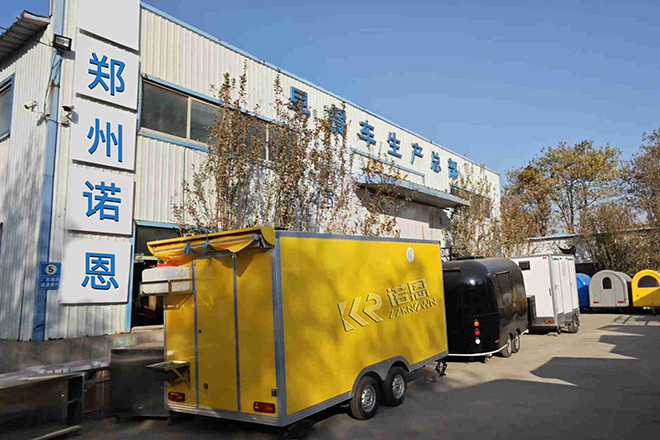
ZZKNOWN production overview; project inspection should follow the approved specification.
| Method | When it may be considered | Questions to ask |
|---|---|---|
| Closed container | Trailer and packing fit the container dimensions and loading method | Packing frame, wheel/part removal, loading/unloading equipment and arrival assembly |
| Open-top or flat rack | Cargo is oversized for a closed container | Out-of-gauge charges, securing, weather protection, terminal handling and route restrictions |
| RoRo or other service | A carrier and both ports accept the specific towable unit | Route availability, cargo condition rules, access, insurance, personal items and destination handling |
The freight forwarder should quote using the packed dimensions, gross cargo weight, origin, destination, ready date and cargo description. Do not rely on an old shipment price or a route estimate without validity dates.
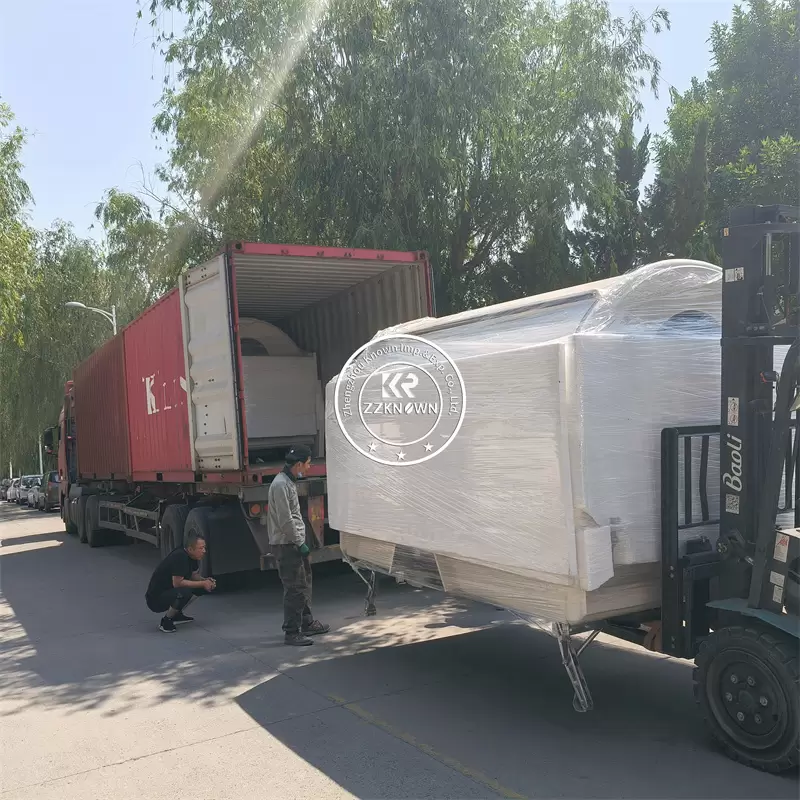
Food trailer packing and shipping example; the method depends on the actual unit and route.
Do not plan to assemble, modify or tow the unit from the terminal unless the port, carrier, insurance provider and local authorities allow it and the required equipment is available. Confirm the handoff plan before sailing.
What does the export team recommend?
Create one “approval pack” before production: the destination checklist, signed specification, drawings, equipment data sheets and required evidence. Create a separate “shipping pack” before dispatch: invoice, packing list, transport document draft, cargo dimensions/weight, insurance details and arrival contacts. Keeping approval and shipping documents separate makes missing responsibilities easier to find.
It can be, but legality and road use depend on customs, vehicle, health, fire, gas and electrical requirements at the destination. Confirm the applicable pathway before ordering.
No. A VIN identifies the vehicle. Approval depends on the required construction, labels, evidence, import process and local inspection for that market.
That depends on the contract, Incoterm and local rules. Ask for an itemized responsibility table and obtain destination estimates from a broker or agent.
The legal requirement varies, but experienced local support is often useful for classification, entry, destination charges, examinations and delivery. Check licensing requirements in your country.
Obtain planning quotes earlier, but book against the confirmed ready date, packed dimensions, weight, loading method and document plan. Carrier validity and cut-off dates control the booking.
It may arrive largely assembled, but detached parts, local connections, inspections, modifications, registration and operating permits may still be required before use.
Use the signed specification and drawing as the checklist. Review photos, video and records, and consider a qualified third-party inspection when appropriate.
There is no reliable universal duration. Design approval, production, inspection, booking, sea route, customs examination, port release and local approval each have separate schedules.
Send your destination, menu, preferred size, equipment list, voltage and any authority checklist you already have. ZZKNOWN can prepare a specification, 2D or 3D layout and quotation for review before production.
Request a Food Trailer Import Quotation