Let’s be honest.
If someone told you that you could start a coffee trailer business in Australia with just $8,000, your first reaction would probably be:
“Yeah… sounds a bit optimistic.”
And you wouldn’t be wrong to question it.
But after working with dozens of coffee trailer buyers across Australia through ZZKNOWN, I can tell you this:
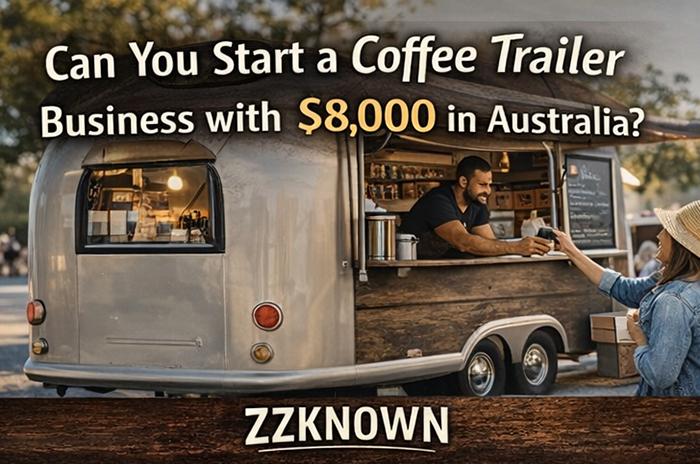
$8,000 won’t build a luxury setup—but it can launch a working, cash-flow-positive coffee trailer if you make the right decisions.
This article breaks down exactly how that budget works, where it doesn’t, and what trade-offs real operators make. No hype. No shortcuts that get you shut down. Just a practical, step-by-step guide based on real equipment, real costs, and real operating experience.
Before we dive into numbers, we need to reset expectations.
Entry-level
Lean and practical
Focused on espresso + speed
Designed for markets, pop-ups, and weekday spots
A full café replacement
A high-end brand showcase
A multi-menu operation
Think of it like your first reliable ute, not a luxury SUV.
Here’s the core principle that separates successful operators from failed ones:
Protect coffee quality first. Everything else is negotiable.
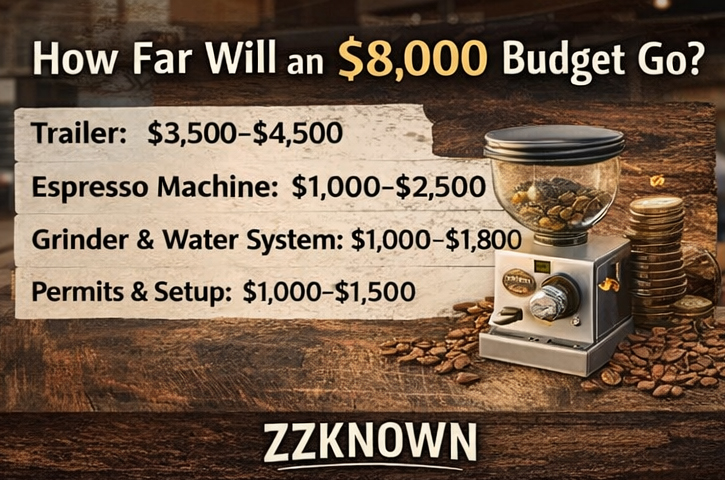
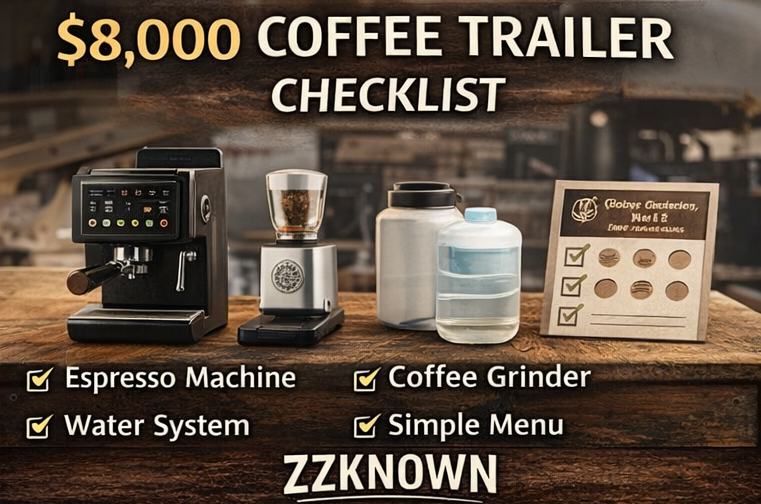
Below is a realistic budget allocation based on the image you shared, adjusted for Australian conditions.
| Category | Budget Range | Why It Matters |
|---|---|---|
| Coffee Trailer Body | $3,500 – $4,500 | Structure, compliance base |
| Espresso Machine | $1,000 – $2,500 | Coffee quality = repeat customers |
| Coffee Grinder | $500 – $800 | Consistency & speed |
| Water System | $500 – $1,000 | Health & daily operation |
| Permits & Setup | $1,000 – $1,500 | Council, food safety, insurance |
Total: ≈ $8,000
This leaves almost zero margin for mistakes, which is why equipment choice matters so much.
At this level, most Australian buyers choose basic, business-ready trailers, not custom showpieces.
At ZZKNOWN, we see three practical options work best:
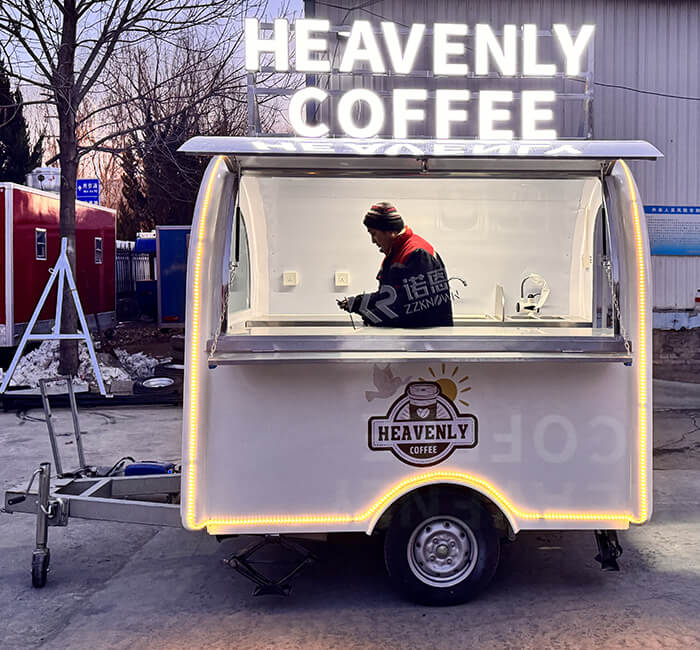
Length: 2.5–3 metres
Single service window
Lightweight, towable by most vehicles
Best for markets and events
Clean rectangular layout
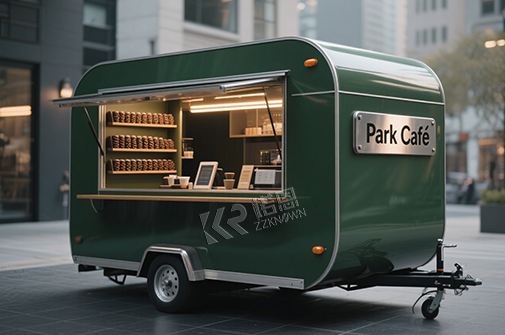
Easier internal workflow
More storage efficiency
Popular with first-time operators
Cheapest upfront
Limited capacity
Often fails council approval
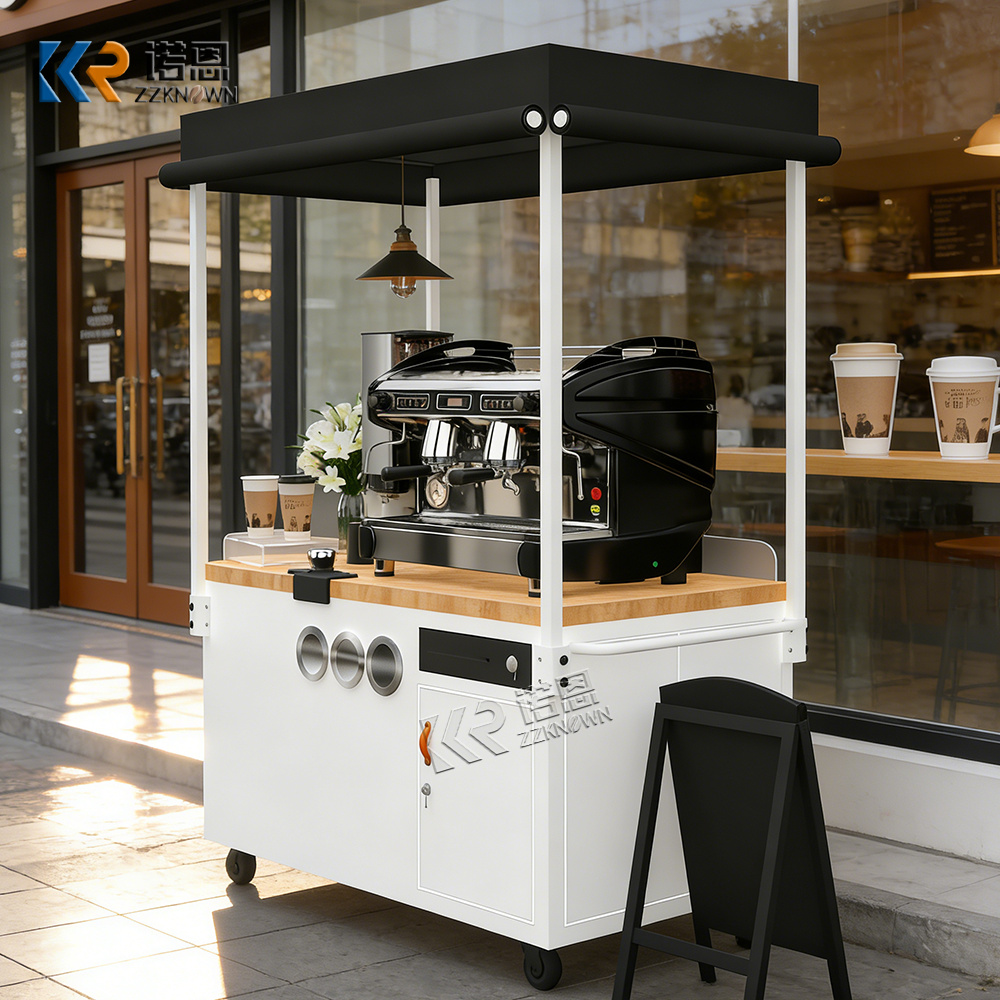
If councils are strict in your state (NSW, VIC), avoid ultra-minimal carts.
Short answer: you can—but you’ll pay for it later.
From real operator feedback:
Cheap machines overheat
Pressure inconsistency kills milk texture
Breakdowns happen during peak hours
Semi-automatic preferred
Stable boiler
Simple internals (easier repairs)
Real-world price range:
$1,000 – $2,500
At ZZKNOWN, we’ve seen well-maintained single-group machines outperform cheap dual-group units every time.
If espresso machines are the engine, grinders are the gearbox.
“I’ll upgrade the grinder later.”
Result?
Uneven shots
Slower service
Inconsistent taste
Flat burr commercial grinder
Adjustable grind size
Designed for espresso volume
Budget realistically: $500–$800
This is non-negotiable if you want repeat customers.
Nobody gets excited about water tanks. Councils do.
Clean water tank
Wastewater tank
Food-grade plumbing
Pump + filtration
Budget: $500–$1,000
Councils inspect water systems closely
Markets require self-contained setups
Poor water quality ruins espresso
This is where many budgets quietly explode.
Food business registration
Council permit fees
Public liability insurance
Food safety supervisor certification
Budget realistically: $1,000–$1,500
Pro tip: Some councils charge annual fees, not one-offs.
Keep it simple.
Espresso
Flat white
Latte
Cappuccino
Long black
Optional add-ons:
Alternative milk
Syrups (limit to 2–3)
This keeps:
Service fast
Inventory low
Training simple
Let’s talk numbers—realistic ones.
Espresso-based drink: AUD $4.50–$5.50
Cost per cup (beans + milk): ≈ $1.20
120 cups/day × $5.00 = $600 revenue
Cost of goods ≈ $144
Gross margin ≈ $456/day
Work 20 days/month:
≈ $9,000 gross/month
That’s why small setups can work.
With disciplined operation:
Startup cost: ~$8,000
Net monthly profit (after costs): $2,000–$3,000
Break-even: 4–6 months
This aligns with real data from first-time operators we’ve supported at ZZKNOWN.
Location: Regional Victoria
Setup: $8,200 total
Strategy: Same weekday industrial park, weekends at markets
Results:
Paid off trailer in 5 months
Upgraded to dual-group machine after 1 year
Now employs one staff member
What worked?
Consistent location
Simple menu
Reliable equipment
Location: Metro Sydney
Mistake: Spent too much on design, too little on equipment
Outcome:
Machine failures
Slow service
Lost repeat customers
Closed in 4 months
Lesson:
Branding doesn’t fix bad workflow.
At ZZKNOWN, we don’t just sell trailers—we help buyers:
Allocate budget correctly
Design efficient layouts
Choose equipment that matches volume
Prepare for council approval
Because the goal isn’t to start—it’s to survive and grow.
Once cash flow stabilises:
Add second grinder
Upgrade espresso machine
Introduce cold brew or nitro
Improve branding & signage
Smart operators grow in stages, not all at once.
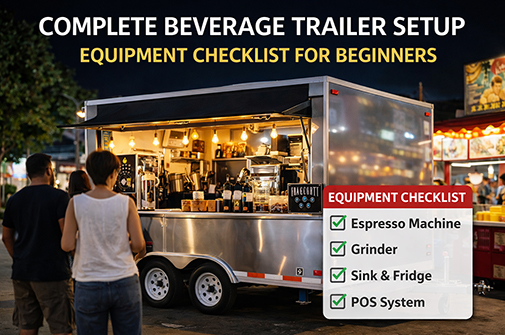
Business-ready trailer
Commercial espresso machine
Proper grinder
Self-contained water system
Council permits
Insurance
Simple menu
If any of these are missing—you’re not ready yet.
Yes—but only with disciplined choices and realistic expectations.
Yes, if inspected and serviced.
NSW and VIC tend to be stricter.
Yes—entry-level, business-ready configurations are common.
Only if cash flow projections are solid.
This budget doesn’t buy comfort.
It buys opportunity.
If you:
Respect coffee quality
Choose reliability over looks
Learn before you expand
An $8,000 coffee trailer can be the first chapter of a very profitable story.
And if you want guidance from people who’ve seen both wins and failures, ZZKNOWN is always happy to share what actually works on Australian streets.