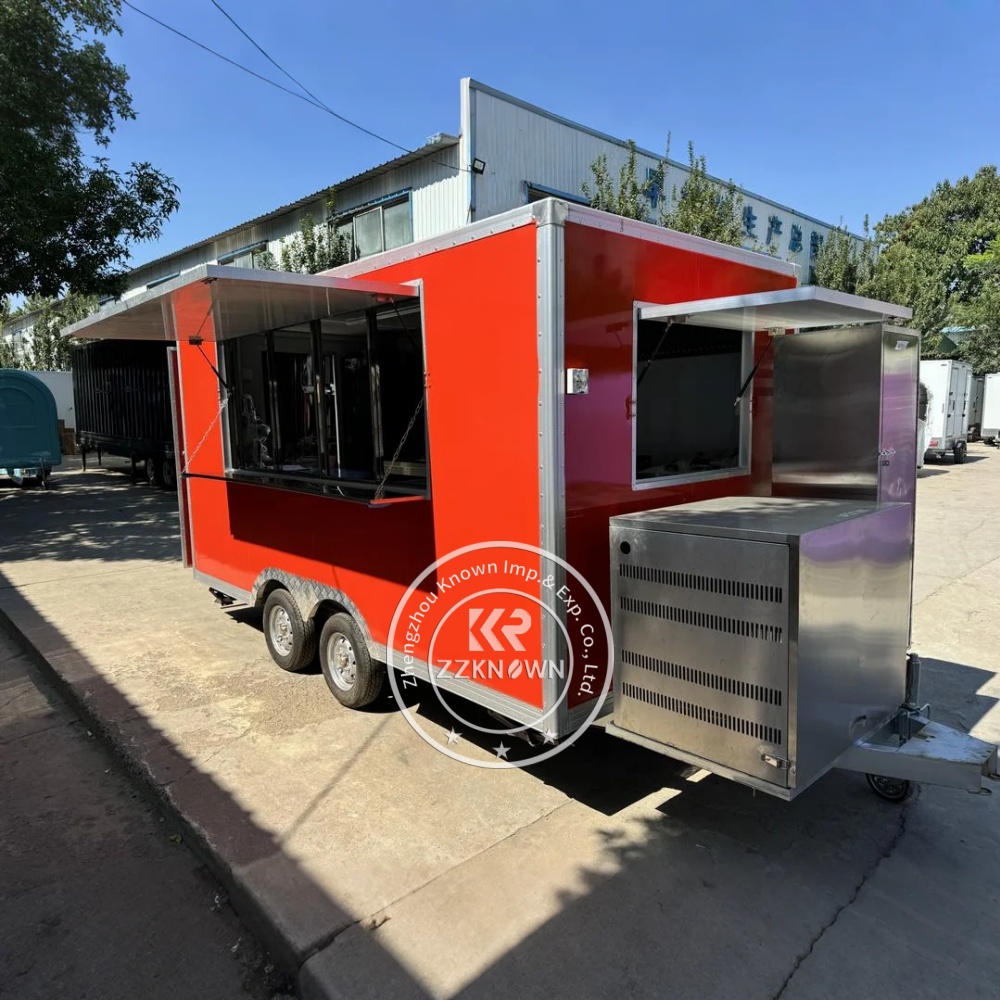
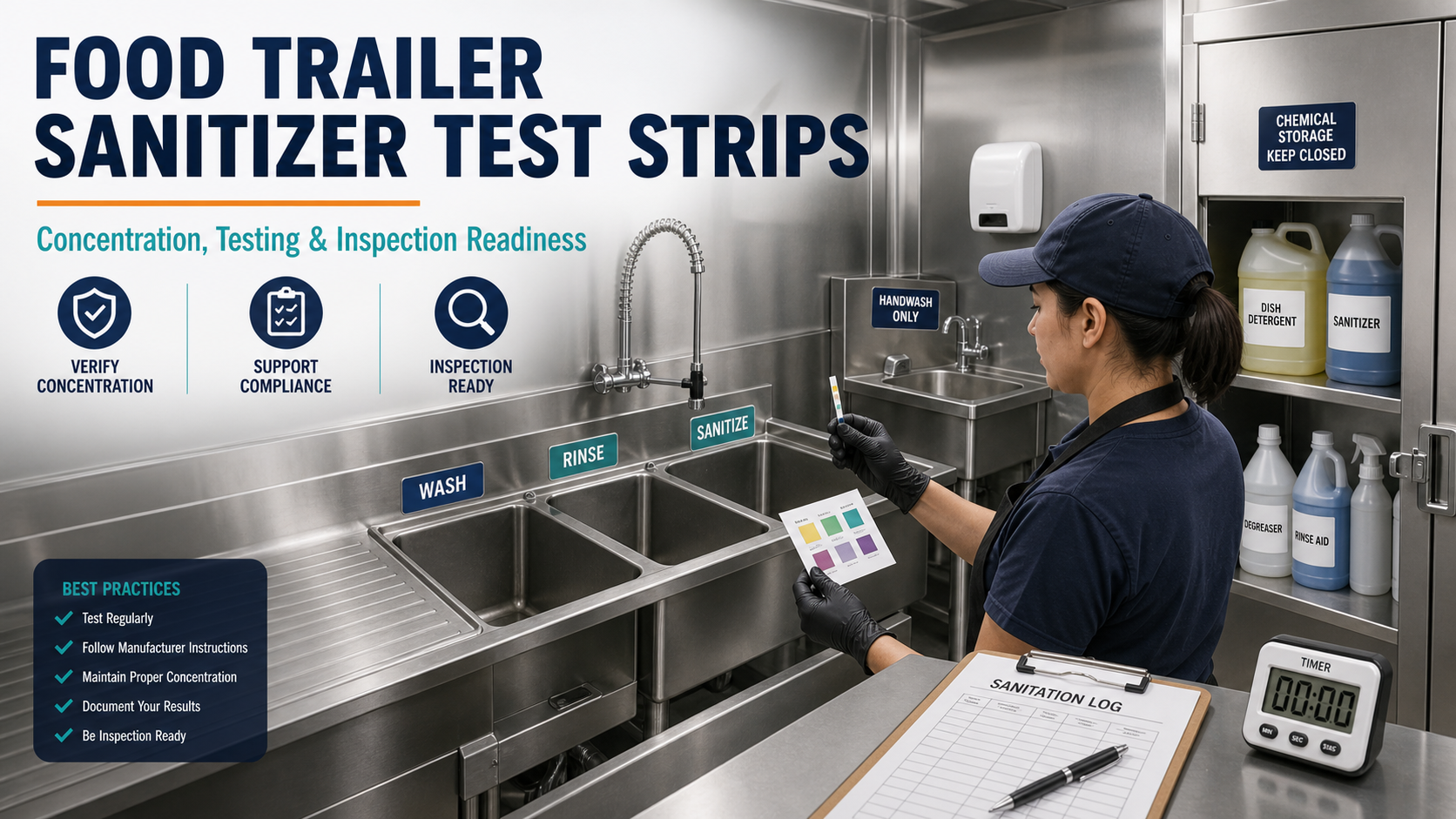
How Do You Test Sanitizer Concentration in a Food Trailer?
Direct answer: Use a test strip or test kit made for the exact sanitizer in your food trailer, compare the result with the product label’s required range, and verify water temperature, contact time, and any pH or hardness limits. Record the reading and correct an out-of-range solution before utensils or food-contact surfaces are sanitized. Never judge concentration by smell or color alone.
What should you remember before anything else?
- A test strip is not a universal tool: chlorine, iodine, and quaternary ammonium compounds need chemistry-specific tests.
- Cleaning removes soil; sanitizing reduces microorganisms. A greasy surface cannot be reliably sanitized.
- The product label and local health authority control the target concentration and contact time.
- Test a fresh solution, retest when conditions change, and keep a simple written log.
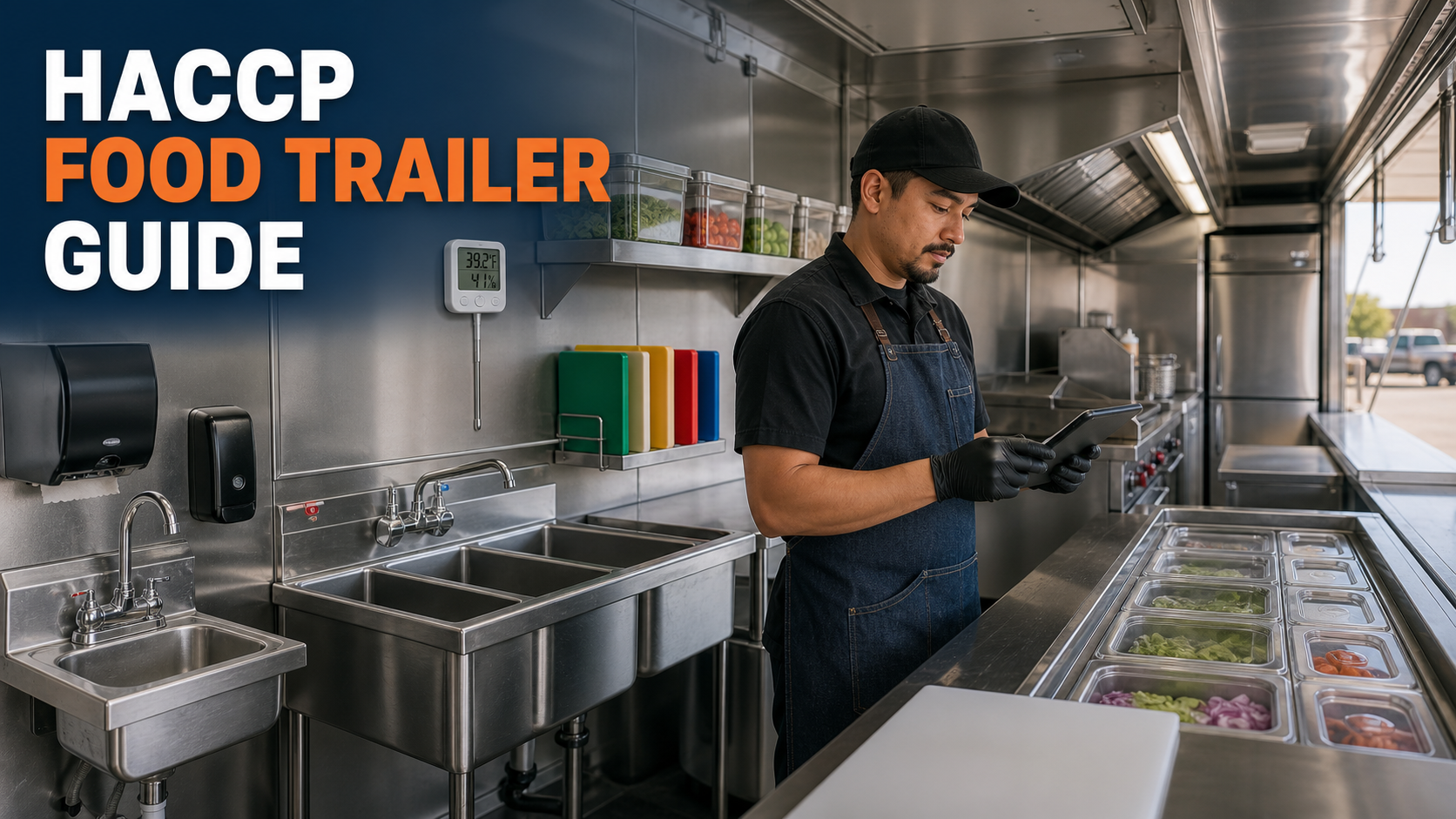
- Plan the sink, drainboards, chemical cabinet, test-kit storage, water heater, and wastewater system as one workstation.
Where does this guide apply, and when was the information checked?
This guide is written for global buyers planning or operating a mobile food unit. The technical examples were reviewed on August 27, 2026. United States concentration examples come from the FDA Food Code 2022, which is a model code—not an automatic nationwide operating permit. States, counties, cities, provinces, and national authorities can adopt or modify their own rules.
| Market | What the official source establishes | What a buyer should verify locally |
|---|---|---|
| United States | FDA model-code provisions include a requirement for an accurate sanitizer test kit and chemistry-specific concentration conditions. | Adoption version, permit checklist, approved chemicals, plumbing, sink and drainboard details, and inspector expectations. |
| European Union | Regulation (EC) No 852/2004 requires hygienic design and adequate facilities for cleaning and, where necessary, disinfecting utensils and equipment. | Member-state implementation, approved biocide label, potable water, wastewater and mobile-premises rules. |
| Australia / New Zealand | FSANZ guidance emphasizes a commercial food-grade sanitizer used according to the manufacturer’s concentration and contact-time instructions. | State, territory, council or New Zealand verifier requirements and the exact plan-review form. |
| Canada | Health Canada’s Biocide Monograph provides national parameters for eligible surface sanitizers used in food premises. | Provincial or municipal food-premises requirements, authorized product label and rinse instructions. |
| Other markets | Food-contact surfaces generally need an effective, verified cleaning and sanitizing process. | Ask the national food authority and the local permit office for written requirements before production begins. |
Why does sanitizer concentration matter in such a small kitchen?
Picture the first inspection morning. The trailer is spotless, the stainless steel shines, and the menu board looks perfect. Then the inspector asks, “How do you know this sanitizer is at the right concentration?” If the answer is “It smells strong enough,” the conversation can change quickly.
Too little active ingredient may not sanitize effectively. Too much can violate the product label, leave unwanted residue, damage surfaces, or create a worker-safety problem. A test strip turns a guess into a measurement. That small piece of paper also tells an inspector something important: the operator understands the process and has a repeatable control.
Under §4-302.14 of the FDA Food Code 2022, a test kit or other device that accurately measures sanitizer concentration must be provided. A 2026 mobile-unit plan review from Tippecanoe County, Indiana, for example, asks applicants to identify the sanitizer, confirm that it is labeled for commercial food use, and state whether test kits will be provided. That is a real-world reminder that the test method belongs in the operating plan—not in an emergency shopping trip after inspection.
What is the difference between cleaning and sanitizing?
What does cleaning do?
Cleaning removes grease, crumbs, proteins, sauces and other visible soil with the appropriate detergent, water and physical action. It prepares the surface for the next step.
What does sanitizing do?
Sanitizing treats an already clean food-contact surface to reduce microorganisms to an acceptable level. The chemical must reach the surface at the correct concentration for the required contact time.
Can sanitizer replace washing?
No. Soil can shield microorganisms and consume the sanitizer’s active ingredient. Scrape and wash first, then rinse away detergent before sanitizing.
Should utensils be towel-dried?
Usually, properly sanitized utensils should air-dry in a protected area. A towel can re-contaminate a clean surface. Follow your local code and product instructions.
If you are building a full food-safety system, connect this procedure with our HACCP guide for food trailer kitchens. The two pages solve different parts of the same problem: HACCP organizes hazard control, while concentration testing verifies one critical sanitation step.
Why can’t you judge sanitizer by its smell or color?
Because your senses cannot measure the active concentration. A solution may smell strong but be outside the labeled operating range. Food residue, detergent carryover, hard water, incorrect dilution, temperature, pH and time can all affect performance. Some solutions are nearly colorless at working concentration, and colored buckets or lighting make visual comparison even less reliable.
The safer habit is simple: mix according to the label, stir, allow the solution to stabilize if instructed, test it with the correct kit, and write down the result. If it is outside the acceptable range, replace or adjust the solution according to the label and retest. Never “top it up” by intuition.
Which test strip should you use for each sanitizer?
| Sanitizer family | Matching test method | What else affects the reading or use | Relative setup cost |
|---|---|---|---|
| Chlorine | Free-available-chlorine test paper or an approved chlorine kit with the correct range | Water temperature and pH can change acceptable conditions; organic load reduces available chlorine. | Low |
| Iodine | Iodine-specific test strips or kit | Temperature, pH, product concentration and contact time must match the label/code. | Low to medium |
| Quaternary ammonium compounds (QAC/quats) | Quat-specific test paper with a range that covers the labeled target | Water hardness, temperature, detergent residue and the EPA-registered or locally authorized label matter. | Low to medium |
| Other approved chemistries | The manufacturer-approved verification method | Do not substitute a chlorine or quat strip unless the chemical supplier specifically authorizes it. | Varies |
| Digital or photometric kit | Calibrated instrument and chemistry-specific reagent | Training, calibration, clean sample cells, batteries and documented procedures are needed. | Medium to high |
Cost levels compare the testing setup only, not chemical consumption or equipment installation. Prices vary by country and supplier. Choose accuracy, range and local acceptance before price.
What do the U.S. Food Code numbers actually mean?
The following table summarizes selected chemical-sanitizing conditions in FDA Food Code 2022 §4-501.114. These are model-code examples, not a universal mixing recipe. Your product’s EPA-registered label and the code adopted by your local authority control the actual operation.
| Chemistry | FDA model-code concentration example | Associated conditions |
|---|---|---|
| Chlorine | 25–49 mg/L | Minimum 49°C / 120°F at pH 10 or less, or pH 8 or less. |
| Chlorine | 50–99 mg/L | Minimum 38°C / 100°F at pH 10 or less; minimum 24°C / 75°F at pH 8 or less. |
| Chlorine | 100 mg/L | Minimum 13°C / 55°F under the cited table conditions. |
| Iodine | 12.5–25 mg/L | Minimum 20°C / 68°F, pH 5 or less unless the manufacturer specifies otherwise. |
| Quaternary ammonium compound | Per manufacturer’s EPA-registered label | Minimum 24°C / 75°F; concentration and water hardness follow the label. |
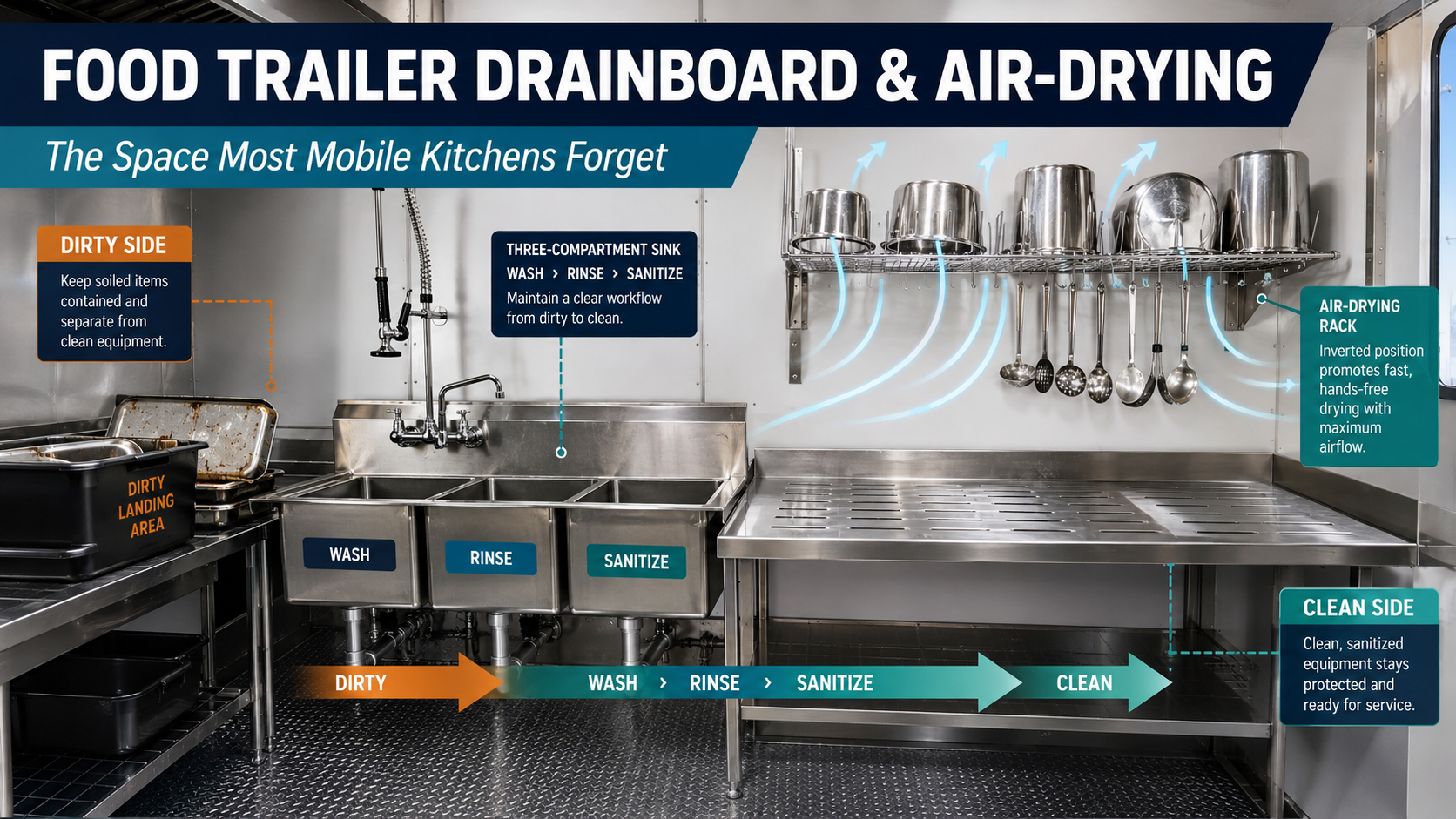
How should a three-compartment sink workflow run?
- Pre-clean: scrape or remove food debris into the appropriate waste container.
- Wash: use detergent and water at the temperature required by the detergent and local rules.
- Rinse: remove detergent and loosened soil with clean water.
- Sanitize: fully immerse or treat the clean item with a verified sanitizer solution for the labeled contact time.
- Air-dry: place the item on a clean drainboard or rack where it is protected from splash and contamination.
The workflow sounds straightforward, but a compact trailer makes space planning critical. Dirty utensils should not cross the clean drying zone. The hand sink should remain accessible and should not double as a dump sink. Chemical storage should be closed, labeled and separated from food. Under EU Regulation 852/2004, cleaning agents and disinfectants are not to be stored where food is handled—an excellent design principle in any market.
How do you test the solution during a normal workday?
- Read the sanitizer label and the test-strip instructions before the shift.
- Confirm the strip type, measuring range and expiration date.
- Prepare the sink with clean water and sanitizer exactly as directed.
- Measure temperature, and pH or water hardness when the chemical or local procedure requires it.
- Take a representative sample or dip the strip for the specified time; do not touch the reaction area.
- Wait the instructed development time and compare under good neutral light.
- Record the result, time and staff initials.
- If out of range, stop using the solution, correct or replace it according to the label, and retest.
Retest at the start of a shift, after preparing a new batch, when water is added, after heavy soil loads, when temperature changes significantly, and at the frequency required by the label or local operating procedure. For on-site sanitizer generators, FDA’s annex guidance says the manufacturer should provide a verification method such as appropriate test strips.
Where should you store the test kit and chemicals?
Keep strips dry, sealed, easy for staff to reach and away from steam or splash. Store chemicals in their original labeled containers inside a dedicated closed cabinet, below or away from food and single-service items. The test kit can sit in a small dry drawer or wall-mounted organizer near the warewashing station—but not above an open sink where it can fall into the solution.
According to ZZKNOWN’s production experience, this detail is easiest to solve during the drawing stage. A few inches of planned cabinet width can prevent chemicals, towels, test papers and spare gloves from competing for the same counter. See how the wider kitchen workflow fits together in our food trailer layout guide.
Which inspection failures are most common?
What if the wrong strip is on board?
A chlorine strip cannot verify a quat sanitizer. Match the chemistry and confirm that the strip’s range includes the labeled target.
What if the solution is not tested?
A bucket labeled “sanitizer” is not evidence. Test after mixing and keep the current result available.
What if detergent enters the sanitizer sink?
Detergent carryover can interfere with the process. Rinse utensils and compartments thoroughly before sanitizing.
What if chemicals sit beside ingredients?
Move them into a dedicated labeled cabinet and redesign storage so chemical and food zones cannot be confused.
What if staff skip contact time?
Use a visible timer. “Dip and remove” is not a substitute for the product label’s required exposure.
What if clean utensils are towel-dried?
Provide enough drainboard or rack space for protected air-drying and train staff on the clean-side workflow.
What should buyers specify in a sanitizing workstation?
| Design item | Questions to answer before production | Why it matters |
|---|---|---|
| Three-compartment sink | Can each compartment immerse the largest utensil? What does the local plan reviewer require? | Prevents an undersized sink from becoming a permit problem. |
| Drainboards / racks | Is there a defined dirty side and clean air-drying side? | Reduces cross-traffic and recontamination. |
| Water heater | Can it recover during peak warewashing, and is its energy source compatible with the site? | Supports washing and code-required hot-water demand. |
| Chemical cabinet | Is it closed, labeled, ventilated if required, and separated from food? | Improves safety and inspection readiness. |
| Test-kit storage | Will strips stay dry, visible and easy to access? | Makes testing part of the routine rather than an afterthought. |
| Wastewater | Are tank capacity, venting, drain connection and disposal method acceptable locally? | A functional sink also needs a compliant waste path. |
| Wall and counter finish | Are surfaces smooth, durable and easy to clean? | Supports repeatable cleaning and reduces hidden soil. |
What does a real ZZKNOWN model show?
.png)
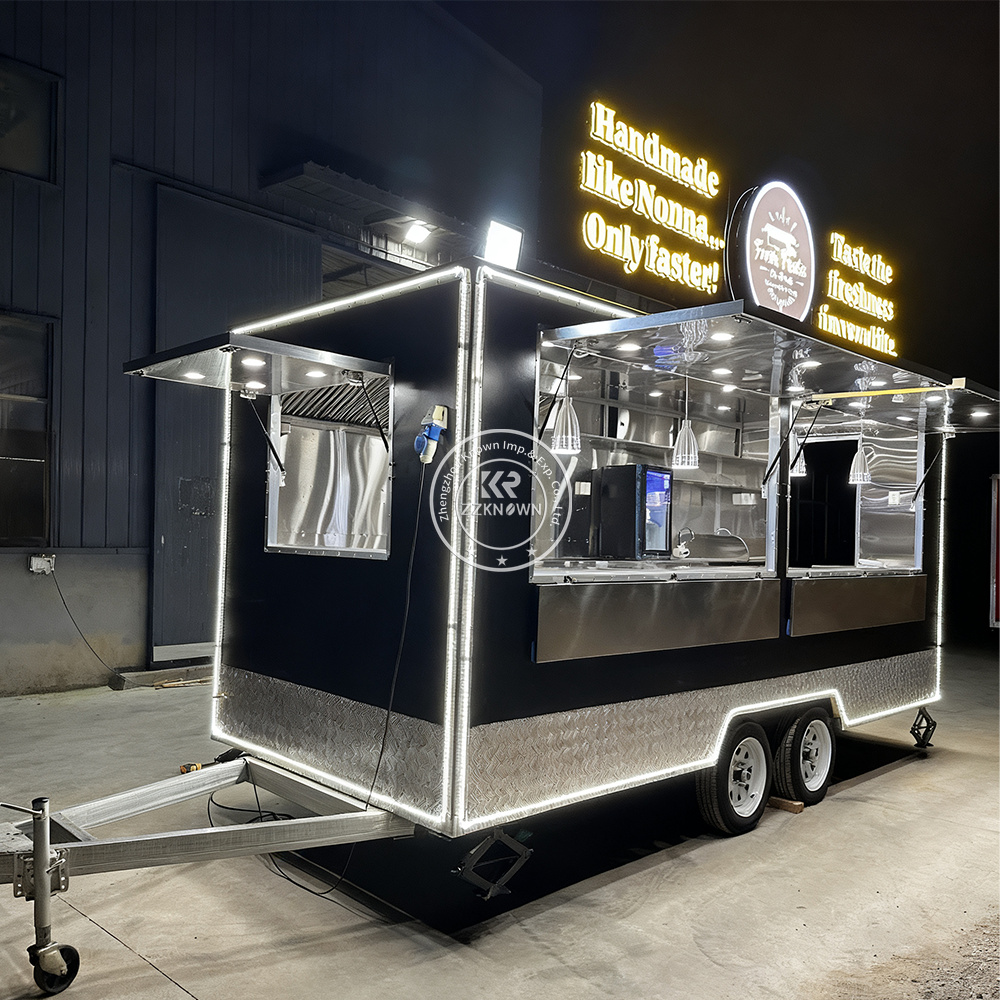
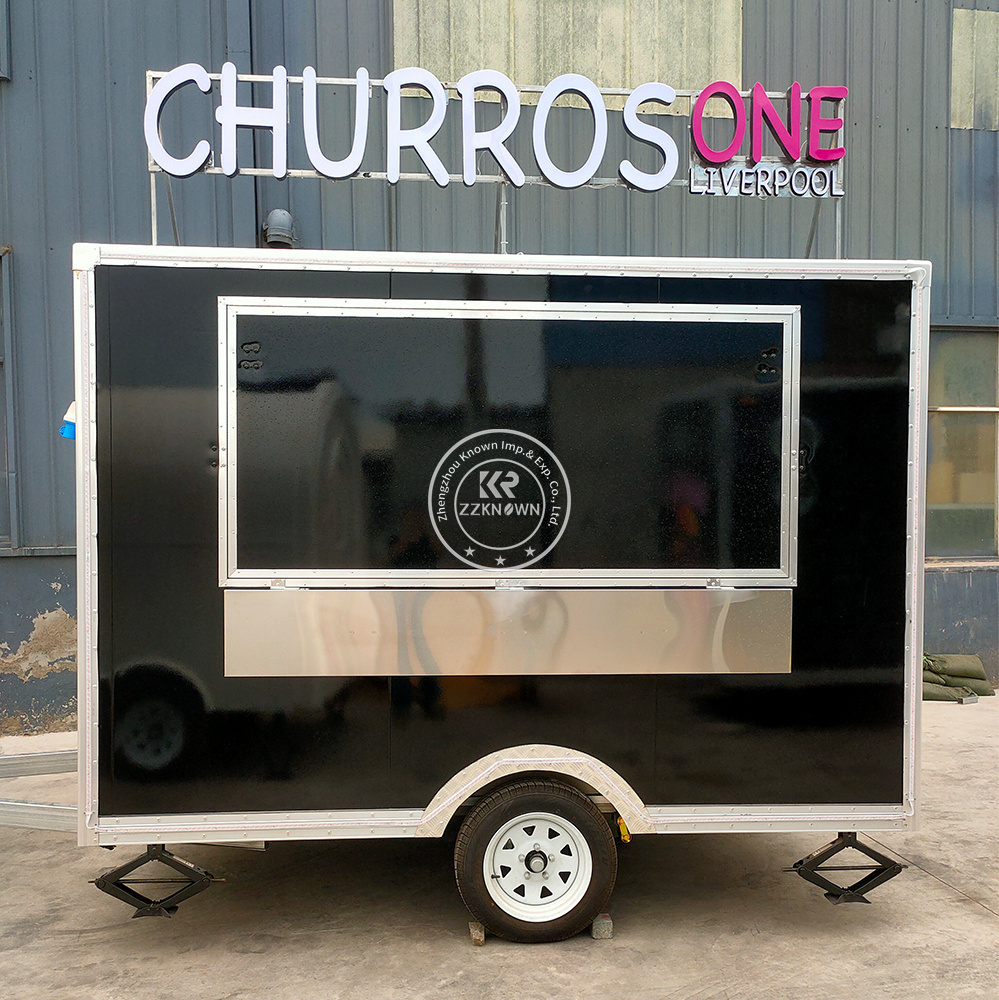
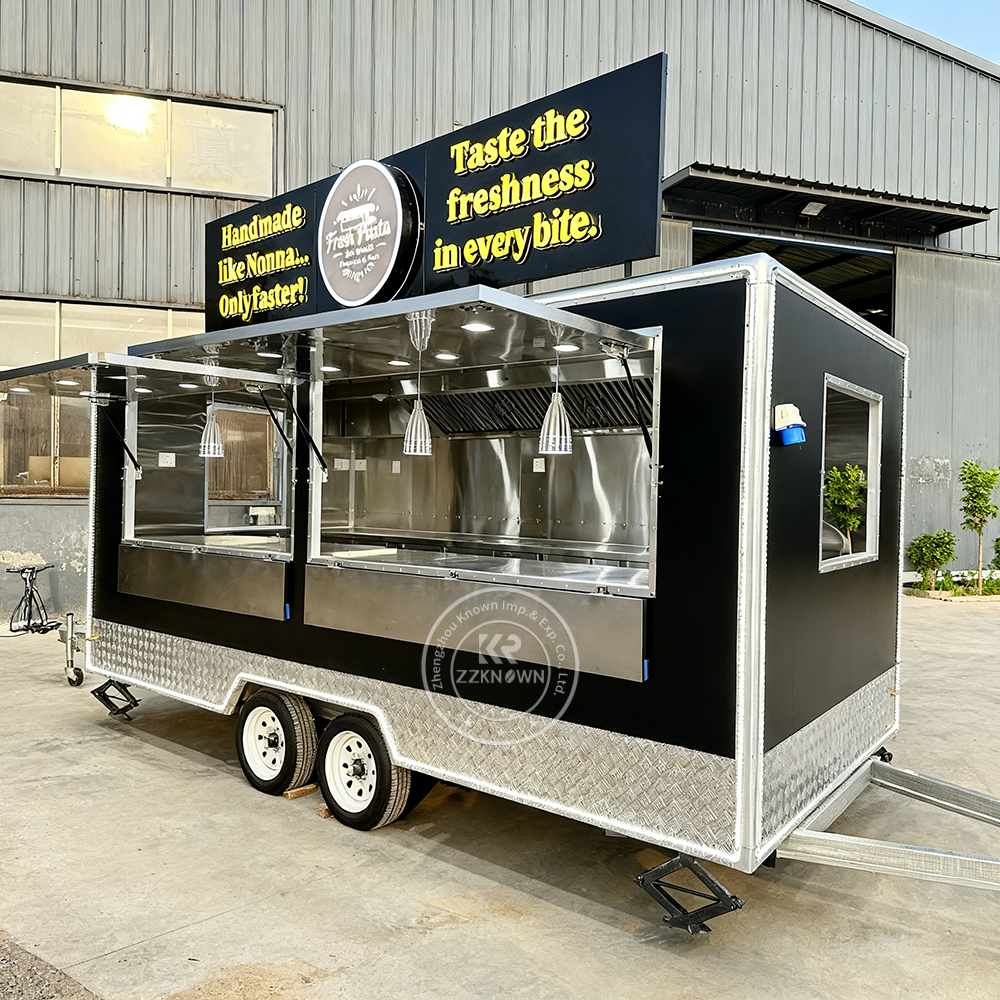
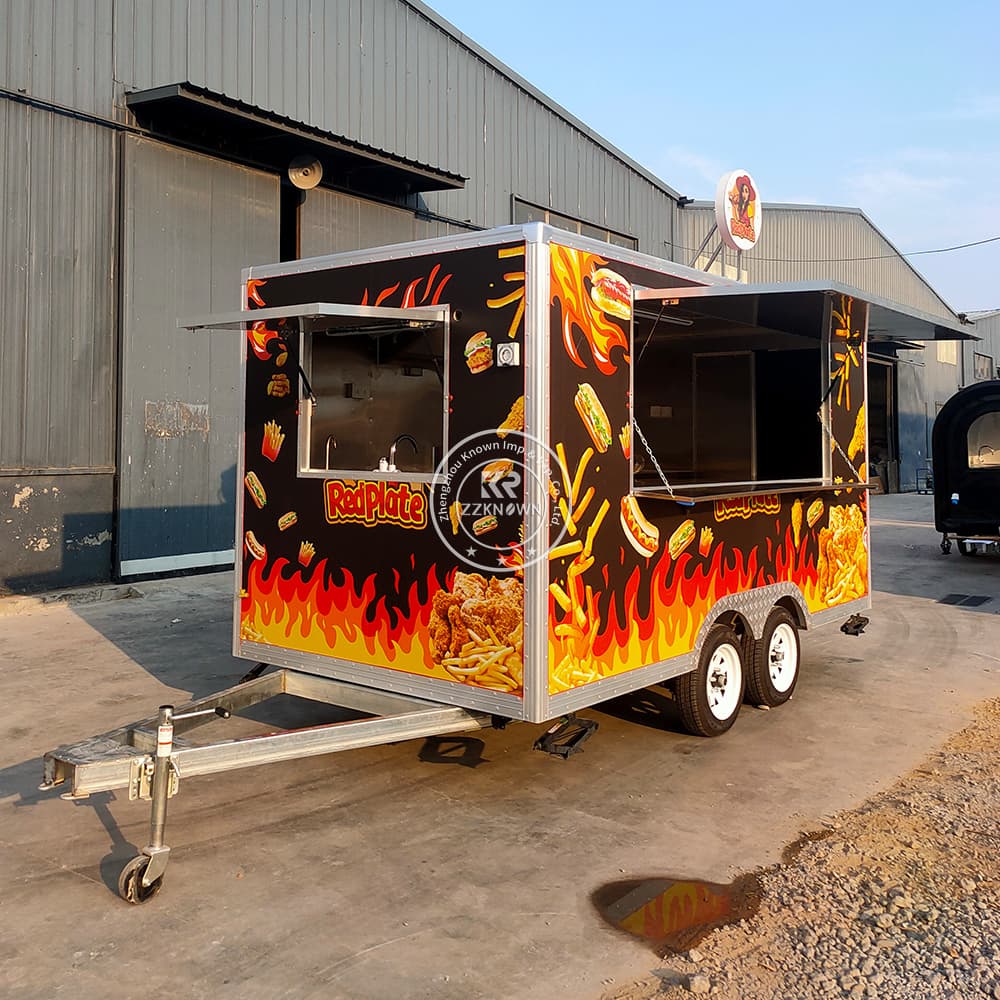
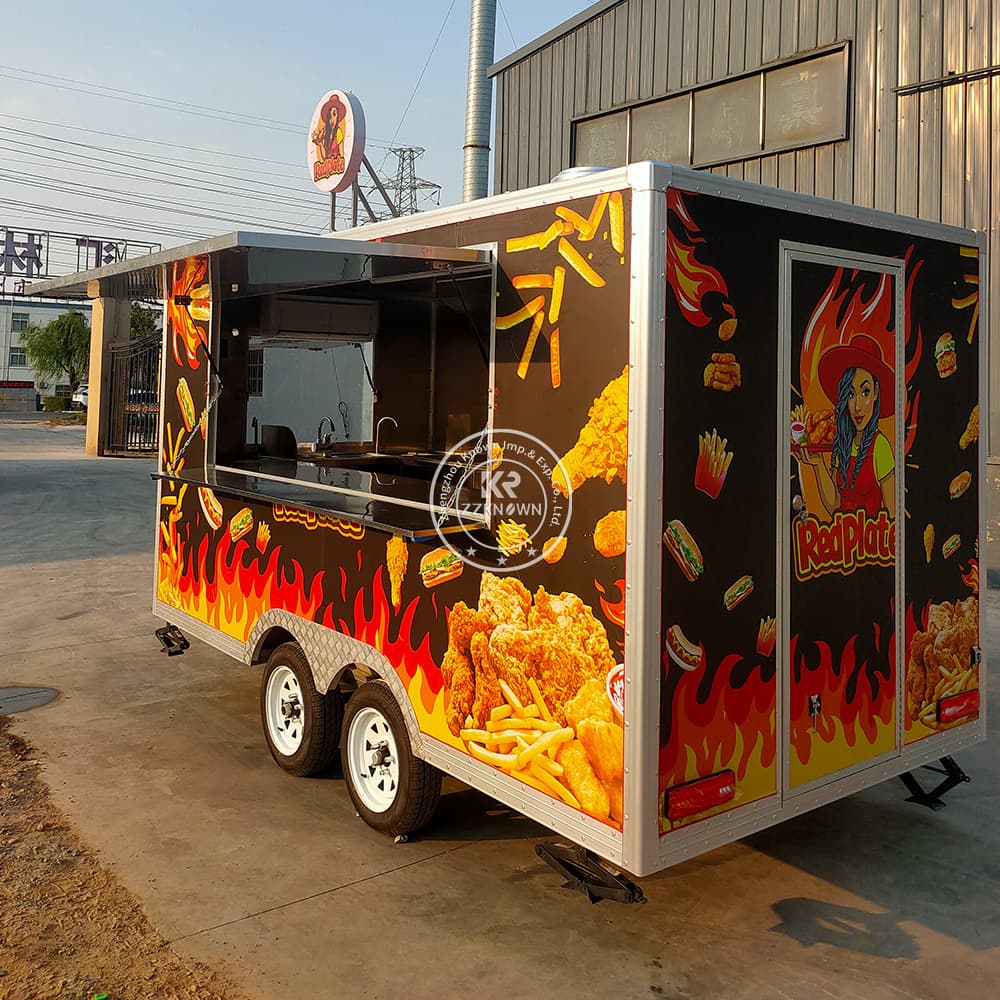
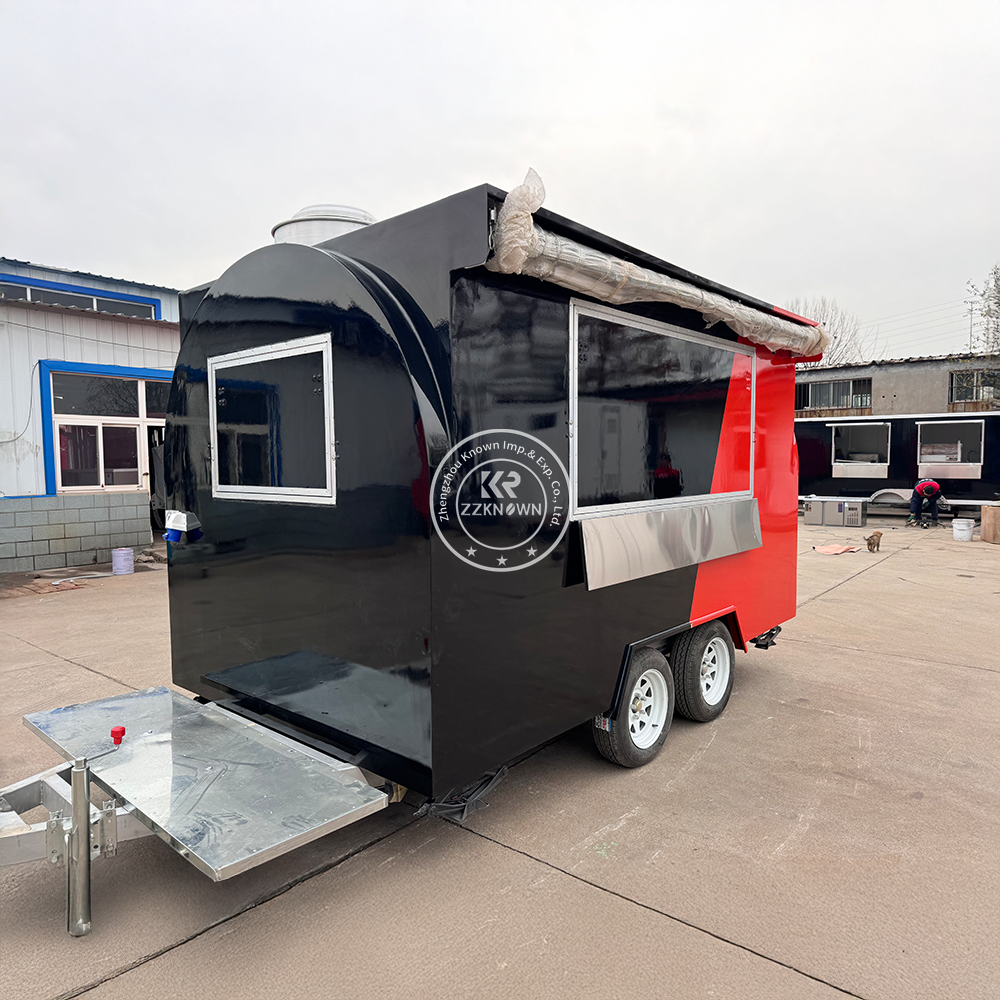
Real product image: ZZKNOWN KN-QF400. Final equipment and compliance configuration depend on the destination and approved drawing.
How can this platform support the workstation?
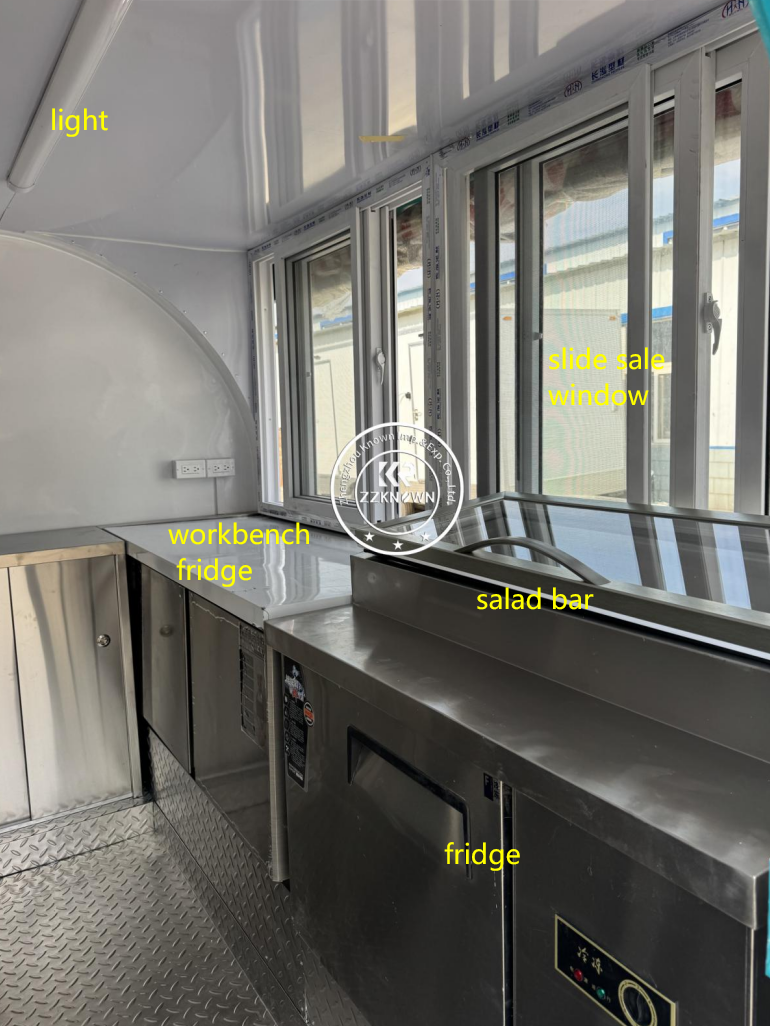
The published KN-QF400 oxidized aluminum food trailer shows a 3+1 sink arrangement, 110V/60Hz electrical configuration, eight outlets, cold-storage fitments and a three-meter hood in the listed example. Its published price snapshot ranges from US$8,490 to US$18,900 depending on configuration and quantity.
That does not mean every KN-QF400 is automatically permitted everywhere. For a sanitation-focused build, ZZKNOWN engineers would still confirm compartment dimensions, drainboards, separate handwashing, water-heater demand, tank capacity, chemical storage and test-kit location against the buyer’s local plan-review requirements.
.jpg)
How were the facts and recommendations collected?
Our data method combined four source types: official food-code text, national food-safety guidance, a current local mobile-unit plan-review form, and real ZZKNOWN product specifications. We used official sources for regulatory statements, the sanitizer label as the controlling operational instruction, and the KN-QF400 product page for real dimensions, configuration and price snapshot. Relative cost labels in the testing table are qualitative because strip and instrument prices change by supplier, country and pack size.
We did not treat a manufacturer blog as a legal authority, and we did not convert the FDA model code into a global promise. Before ordering, ask your health authority for the current mobile-unit checklist and send it to the designer. This is especially important when the trailer will cross state, provincial or national borders.
Can you copy this daily sanitation log?
Yes. Print this table or adapt it to your HACCP or standard-operating-procedure records. Use the target printed on the approved product label—not a number remembered from another trailer.
| Date / time | Area or sink | Chemical / product | Label target | Measured result | Water temp. | Corrective action | Initials |
|---|---|---|---|---|---|---|---|
What do real buyers ask before ordering?
Does every food trailer need sanitizer test strips?
Many jurisdictions require a test kit when chemical sanitizers are used. FDA Food Code §4-302.14 is a prominent U.S. model-code example. Confirm the adopted local rule and the chemical used in your unit.
Can I use the same strip for chlorine and quat sanitizer?
No. They are different chemistries. Use a chemistry-specific strip or approved device with a measuring range that covers the product label’s target.
How often should my team test the sanitizer?
At minimum, test when a solution is made and whenever the label, local code or operating procedure requires. Retest after dilution, heavy use, contamination, temperature changes or a new batch.
What should we do if the result is too low or too high?
Stop using the solution for sanitizing, follow the label to correct or replace it, then retest. Record both the failed result and the corrective action.
Do I need a three-compartment sink?
It is common for manual warewashing, but local rules may allow or require different arrangements based on the menu, utensils and operation. Obtain written plan-review requirements before production.
Can the hand sink be one compartment of the warewashing sink?
Generally, mobile food-unit plans call for a separate, accessible handwashing sink. Never assume a shared use will be accepted; confirm with the local authority.
Where should chemicals be installed in a compact trailer?
Use a dedicated closed and labeled cabinet separated from food, utensils and single-service items. Position it so a leak cannot contaminate a clean zone.
Can ZZKNOWN design the layout around my local checklist?
Yes. Send the checklist, menu, largest utensil, preferred sanitizer, sink requirements, power standard and tank rules. ZZKNOWN can prepare a custom drawing for your review; final approval remains with your local authority.
Which related resources should you read next?
- How can HACCP work in a food trailer kitchen?
- How do you plan an efficient mobile kitchen layout?
- Can a food trailer work as a delivery-only kitchen?
- Where can you compare custom-built ZZKNOWN trailer options?
Which official sources support this guide?
- U.S. FDA Food Code 2022, including §§4-302.14 and 4-501.114.
- FDA Food Code annexes, including sanitizer verification context.
- U.S. EPA pesticide-label questions and answers.
- EU Regulation (EC) No 852/2004 on food hygiene.
- Food Standards Australia New Zealand cleaning and sanitising guidance.
- Health Canada Biocide Monograph.
Would you like an inspection-ready sink layout?
Send ZZKNOWN your local plan-review checklist, menu, largest utensils, power standard, water-tank requirements and preferred sanitizer. Our engineering team can organize a complete warewashing and sanitizing workstation around your real operating flow.
Request a Warewashing & Sanitizing Layout
Explore ZZKNOWN Food Trailers
Editorial note: This article is educational and does not replace a sanitizer label, chemical safety data sheet, approved plan, or local inspection requirement. Product specifications and pricing may change; request a current quotation and drawing.