
Food Trailer Fire Suppression Interlock: Why Must Gas and Electric Cooking Power Shut Off?
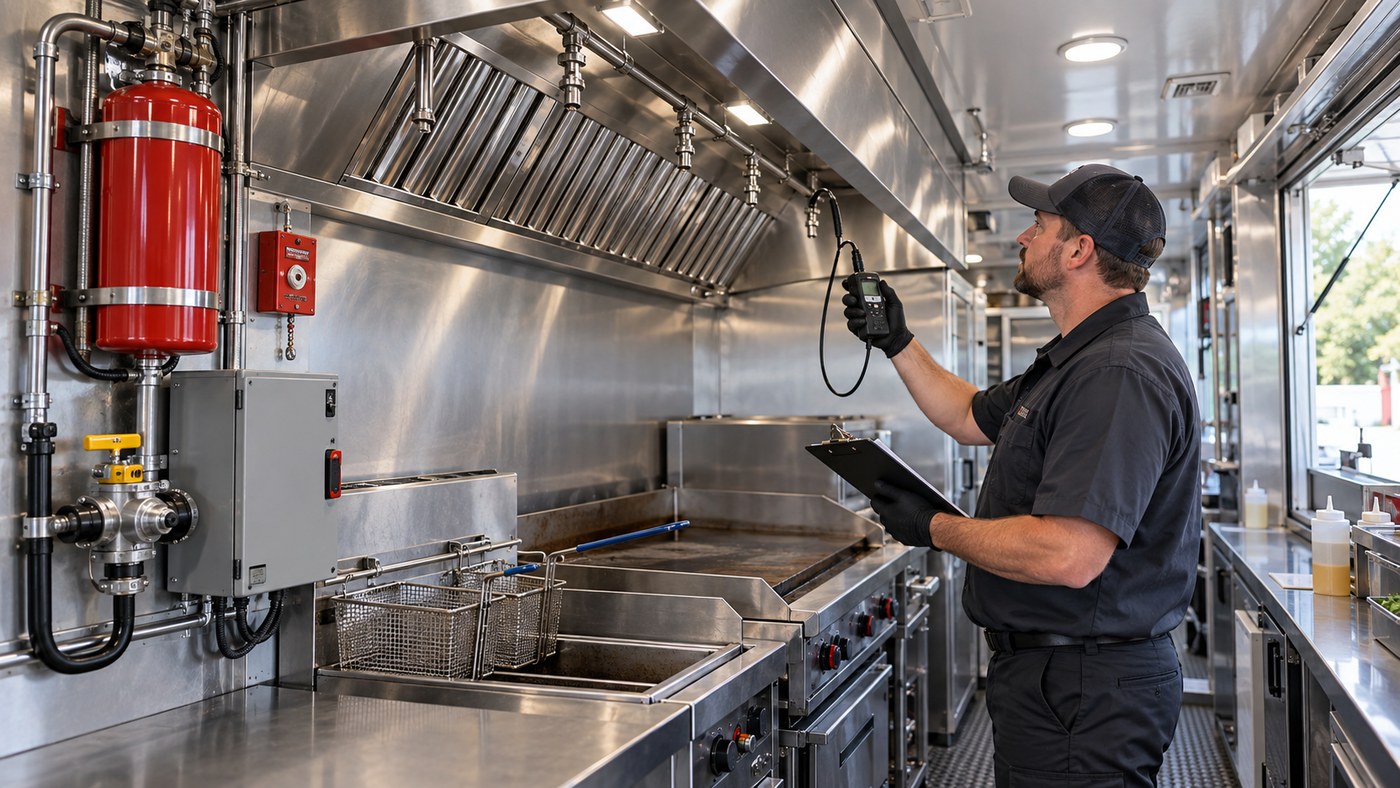
- A suppression cylinder alone is not the whole safety system; detection, discharge, gas shutoff, electrical shutdown, manual activation and reset must work together.
- NFPA-based U.S. rules generally call for heat-producing fuel and electrical power serving protected equipment to shut off automatically when suppression activates.
- Gas equipment and electric cooking equipment need different shutdown hardware, but both must be included in one tested sequence.
- Exhaust-fan and make-up-air behavior is not something an exporter should guess. It must match the listed system, adopted code and local authority having jurisdiction (AHJ).
- The final interlock should be designed, installed, commissioned and tagged by qualified local fire, gas and electrical professionals.
- Changing a fryer, griddle, hood, nozzle or power circuit after approval can trigger redesign and reinspection.
What really happens when a hood fire starts?
Imagine the dinner rush inside a 4-meter burger trailer. Two fryer baskets are working, the griddle is full, and the hood is pulling grease-laden vapor out of a narrow kitchen. A fryer fire is detected. The wet-chemical system discharges—but the fryer burner keeps receiving propane and an electric griddle beside it stays energized. The agent may knock down the flames, yet the appliances are still adding heat.
That is the problem the interlock is built to prevent. The 2024 edition of NFPA 96 covers fire-extinguishing equipment for both commercial kitchens and mobile or temporary cooking operations. Public NFPA materials describing its fuel-and-power shutdown logic state that, when a cooking fire-extinguishing system activates, fuel and electric power that produce heat for protected equipment automatically shut off, and the shutoff devices require manual reset.
Think of it as a chain, not a collection of accessories. Detection initiates the release. The extinguishing agent attacks the cooking-oil fire. The gas valve closes. Electrical contacts signal a contactor or another approved device to remove heat-producing power. The operator evacuates and calls emergency services. Only after the cause is understood and the system is serviced should the cooking line be restored.
Why is extinguishing agent alone not enough?
Modern commercial fryers hold hot oil with substantial stored heat. Wet chemical is selected because it can cool the surface and form a foam-like blanket over burning cooking oil. But a burner or heating element left on can keep transferring energy into the vat. It can weaken the suppression effect, increase the chance of re-ignition and make conditions more dangerous for the crew and firefighters.
The interlock attacks the fire triangle from another direction: it removes the continuing energy input. This is why the phrase “fire suppression optional” is not a complete engineering description. Buyers should ask how detection, nozzles, pull station, gas shutoff, electrical shutdown, alarm signal and manual reset are coordinated—and who will test the completed sequence in the destination market.
The UL Commercial Cooking Marking and Application Guide explains that actuating a commercial cooking suppression system must also shut down the fuel or electrical power supply to the cooking equipment, with manual restoration. UL also stresses that the system must be installed according to the applicable code, its listing and the manufacturer’s instructions. That last sentence matters: a correct concept can still become a failed installation if unlisted components are combined or wired outside the listed design.
Which appliances should the interlock shut down?
The practical starting point is the approved cooking-equipment schedule. Fryers, griddles, ranges, charbroilers, woks and similar appliances that produce heat and grease-laden vapor commonly sit under a Type I hood and may require protection. The approved suppression design identifies the protected hazard, nozzle arrangement and control outputs.
Do not build the shutdown list from memory. Match it line by line:
| Food trailer load | Typical interlock question | Likely shutdown approach | What must be confirmed |
|---|---|---|---|
| LPG fryer or griddle | How will fuel stop when suppression actuates? | Listed mechanical or electric gas shutoff valve in the approved gas path | Valve type, size, location, reset method and licensed gas installation |
| Electric fryer, griddle or range | How will high-current heating power be removed? | Suppression-system electrical contact operating an approved contactor or control circuit | Voltage, phase, amperage, coil/control voltage, fault protection and electrician’s design |
| Gas appliance under the same protected hood | Is it inside the protected cooking operation even if it does not need its own nozzle? | Often included in automatic gas shutdown under NFPA-based rules | Listed system design and AHJ interpretation |
| Hood exhaust fan | Should it continue, start or stop during discharge? | Sequence depends on the approved system and adopted code | Suppression designer, hood listing, fire code and AHJ |
| Make-up air | Could incoming air affect agent retention or fire behavior? | Coordinated shutdown or sequence as required by design | Hood system documentation and commissioning test |
| Refrigerator, lights, POS and water pump | Do these non-cooking loads need to lose power? | Usually separated from the heat-producing cooking shutdown circuit unless the approved design says otherwise | Panel schedule, emergency plan and local electrical requirements |
How does the automatic LPG shutoff work?
In a propane cooking line, the suppression release mechanism can close a listed gas valve. Depending on the approved system, the valve may be mechanically actuated or electrically controlled. Either way, the objective is simple: the protected burners must stop receiving fuel when the fire system actuates, and fuel must not silently return as soon as the detection link cools or the electrical signal changes.
A real product example is the Amerex KP Mechanical Release Module. Amerex states that its module connects the detection components, manual pull station, gas valve, agent-cylinder discharge and snap-action switches; one switch can support electrical signaling and power shutdown. Amerex’s current specification also describes both listed mechanical and electric gas-valve options. These facts illustrate the architecture, but they are not permission to mix an Amerex release module with arbitrary valves or field-built controls.
For the trailer buyer, the useful drawing is a gas schematic showing cylinder or supply connection, regulator stages, main shutoff, interlocked valve, branch valves and appliances. The valve must be accessible for service but protected from road damage, heat and casual tampering. Its flow capacity and pressure range must suit the appliance demand. Installation and pressure testing belong to qualified trades in the destination jurisdiction.
How does the electrical cooking shutdown work?
Suppression control contacts are not automatically sized to carry the full current of a large electric fryer. Instead, the release module typically provides a control signal. A properly selected contactor or other approved control arrangement then disconnects the heat-producing load. The designer must coordinate line voltage, phase, full-load current, inrush, control voltage, enclosure rating, overcurrent protection and the fail-safe behavior of the control circuit.
This distinction prevents a common purchasing mistake: seeing “microswitch included” and assuming the electrical design is finished. A small switch may be the command; it is not necessarily the power device. The panel schedule should identify each protected cooking circuit and the interlock interface. Refrigeration and essential non-cooking loads should not be casually placed on the same contactor just because it saves one component.
According to ZZKNOWN’s production experience, buyers get a cleaner local installation when the factory reserves labeled cable routes, junction space, contactor-panel space and access panels before finishing the walls. The final device selection and termination should still be performed or approved by the qualified contractor responsible for local compliance.
What should happen to the exhaust fan and make-up air?
This is where casual online advice becomes risky. Different approved systems and adopted codes can require particular fan behavior. The exhaust fan may need to continue operating, start automatically or follow another approved sequence; make-up air may have a separate response. The correct answer comes from the hood and suppression design, not a generic food-trailer checklist.
Ask the suppression contractor to provide a written sequence of operations. It should say what happens during automatic detection and manual pull, which gas valve closes, which electrical loads drop out, what the exhaust and supply fans do, whether a local alarm operates and how the system is reset. During commissioning, every item should be demonstrated without guessing.
Why must restoration require a manual reset?
Automatic restoration could re-energize damaged appliances or release gas into a compromised kitchen. Manual reset creates a deliberate hold point. Someone must identify why the system operated, check the cooking line, correct the problem, service or recharge the suppression system and verify that it is safe to restore fuel and power.
Manual reset does not mean “push the nearest button and keep cooking.” It means following the system manufacturer’s procedure and the instructions of the fire-suppression service company and fire authority. A discharged system is no longer ready for the next event until qualified service is complete.
Where should the manual pull station be placed?
The pull station gives the crew a way to activate suppression before an automatic detector operates. NFPA-based rules place the manual activation point in an accessible path of egress, with location and mounting details governed by the adopted edition and the AHJ. The design principle is easy to understand: a worker should be able to pull it while moving away from the cooking fire, not reach through flame or around hot appliances.
Do not bury the pull station behind an open refrigerator door, shelf, menu board or stacked supplies. Show its proposed position on the floor plan and wall elevation. Protect it from accidental operation only with approved means—not a homemade cover that slows emergency use.
How should a manufacturer plan the interlock before production?
Start before the hood is fabricated. Send the manufacturer the menu, exact appliance models, fuel type, voltage and phase, hood dimensions, intended suppression-system brand or local installer requirements and destination jurisdiction. Then freeze the cooking line long enough to obtain review.
- Map the hazard. Identify every grease-producing appliance and its exact position under the hood.
- Reserve suppression space. Allow accessible locations for the agent cylinder, release module, pipework, nozzles and service clearances.
- Plan the gas path. Reserve an appropriate location for the listed interlocked valve and clearly identified manual shutoffs.
- Plan electrical control. Document protected circuits and provide safe, accessible space for contactors or control equipment.
- Write the sequence. Define detection, discharge, fuel shutdown, electrical shutdown, fan response, alarm and reset.
- Coordinate trades. The hood contractor, suppression distributor, gas fitter and electrician must be working from the same equipment list.
- Commission the complete trailer. Test the final arrangement after local installation, not merely individual components on a workbench.
The ZZKNOWN OEM/ODM process can prepare a menu-based equipment layout, utility routing and reserved installation zones for local review. The manufacturer does not replace the licensed fire-suppression designer, gas fitter, electrician or AHJ.
Which real food trailer model shows why coordination matters?
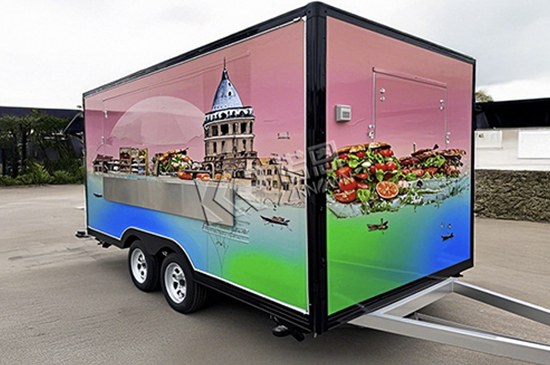
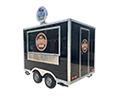
The real ZZKNOWN KN-FS410 custom square food trailer provides a useful example. Its published configuration is approximately 4.1 m × 2.15 m × 2.35 m and includes a 2.3-meter exhaust hood, 110V/60Hz electrical distribution with separated breakers, individual gas branches and cooking positions for equipment such as a fryer, griddle, claypot stove and BBQ grill.
That combination creates exactly the coordination challenge discussed here: gas-fired appliances, electrical cooking or accessory loads, ventilation, a compact aisle and a mobile chassis all meet in one kitchen. The model is a planning reference, not a claim of automatic approval in every jurisdiction. Final appliance selection, suppression coverage, interlock hardware, trade installation and inspection must match the destination.


What affects the interlock budget?
There is no responsible global fixed price. Labor rates, adopted code editions, system brand, hood length, appliance lineup, fuel type, electrical service and inspection procedures vary widely. A low factory allowance can become expensive rework if the local listed system will not fit it.
| Budget item | Typical cost impact | Why it changes | Best way to control cost |
|---|---|---|---|
| Listed suppression hardware and nozzles | Major | Hood length, hazard types, appliance positions and coverage method | Freeze the cooking line and obtain installer input early |
| Gas shutoff valve and piping changes | Low to major | Mechanical vs electric valve, pipe size, accessibility and local gas labor | Reserve the approved valve location and provide an accurate gas schematic |
| Electrical contactors and control panel | Moderate to major | Number of protected circuits, amperage, phase, enclosure and control scheme | Provide a verified load schedule and keep non-cooking loads separate |
| Fan and make-up-air control | Project dependent | Motor starters, VFDs, approved sequence and hood listing | Request a written sequence of operations before wiring |
| Commissioning, tagging and permits | Mandatory local cost | Jurisdiction, inspection frequency and licensed service requirements | Budget for the local contractor from the beginning |
| Late appliance change | Potentially highest rework cost | Nozzle coverage, hood capacity, gas load and electrical circuits may all change | Use model-number-level equipment approval before production |
Ask for itemized local quotations instead of comparing only the suppression cylinder price. The cheapest cylinder is irrelevant if the final system cannot be listed, commissioned or serviced where the trailer operates.
How should the completed system be tested and maintained?
Commissioning should verify the complete cause-and-effect sequence: automatic detection input, manual pull, agent-release mechanism, gas-valve closure, electrical cooking shutdown, fan response, alarm output and manual reset. The test method must follow the listed system and qualified installer’s procedure; it does not necessarily require discharging agent during every functional test.
UL’s code-authority guidance notes that commercial cooking fire-extinguishing systems are generally inspected at least every six months by qualified service technicians, subject to the applicable code and manufacturer instructions. Mobile operations add vibration, road shock and frequent equipment movement, so operators should also perform routine visual checks before service: confirm tags are current, nozzle caps are present, pull station is unobstructed, appliances have not moved, gas components are protected and no one has bypassed a contactor or switch.
Keep service reports, system diagrams, equipment schedules, gas test records, electrical diagrams and change records in the trailer and in secure digital storage. If a fryer moves or a different appliance is installed, ask the suppression company to review the coverage before operation. The ZZKNOWN food trailer fire-safety guide, LPG system guide and pre-opening operational test guide provide related planning checklists.
Which documents should a buyer request?
- Dimensioned cooking-equipment plan with manufacturer and model numbers.
- Hood data, exhaust airflow and make-up-air information.
- Suppression-system design and nozzle/coverage drawing from the qualified system designer.
- Written interlock sequence covering automatic and manual activation.
- Gas diagram showing regulator stages, manual shutoffs and automatic interlocked valve.
- Electrical load schedule, panel schedule, protected circuits and contactor/control details.
- Product listing and installation instructions for the selected suppression system and control devices.
- Commissioning record, service tag, inspection approvals and reset instructions.
- Change log for every appliance, hood, gas, electrical or suppression modification.
How were the claims in this guide checked?
Data collection method: On September 24, 2026, we reviewed the official NFPA 96 publication page and public NFPA code-development materials, UL Solutions’ Commercial Cooking Marking and Application Guide, current Amerex KP system information, the Nassau County Food Truck Checklist and Austin Fire’s mobile-food-vending inspection guidance. We compared those sources with the published ZZKNOWN KN-FS410 specification and separated code guidance from manufacturer planning advice.
Evidence boundary: NFPA, IFC and electrical requirements apply only as adopted and amended by the destination jurisdiction. Manufacturer examples explain real control architecture but do not authorize mixing components. No price, approval, inspection outcome or universal fan sequence is promised. Confirm the adopted code edition and final design with the AHJ and qualified local installers.
What do food trailer buyers ask about interlocks?
1. Does every food trailer need a hood suppression interlock?
Not every menu or appliance creates the same hazard. Units with grease-producing commercial cooking commonly need a Type I hood and listed suppression system under U.S. fire rules, but the AHJ decides what applies. Give the inspector your exact menu and appliance models.
2. Does an Ansul or other wet-chemical system automatically include gas shutoff?
The product family may support gas-valve actuation, but the installed project must actually include the correct listed valve, linkage or control and be commissioned. Never assume a cylinder and nozzles alone complete the interlock.
3. Can one microswitch disconnect a large electric fryer?
Usually the switch provides a control signal rather than carrying the fryer’s full current. A qualified electrical designer may use it to operate a properly rated contactor or another approved control device.
4. Should the hood fan turn off when suppression activates?
Do not choose this from a generic article. The required exhaust and make-up-air sequence depends on the listed system, adopted code and AHJ. Request a written sequence of operations and test it during commissioning.
5. Can fuel or power return automatically after the fire is out?
The shutdown should require manual reset. Before restoration, qualified personnel must inspect the equipment, correct the cause and service the suppression system according to its instructions.
6. Can I add a fryer after the trailer passes inspection?
Not without review. The new fryer can change hood capacity, nozzle coverage, gas demand, electrical load and required shutdown circuits. Ask the suppression contractor and AHJ before altering the cooking line.
7. Who should install and certify the interlock?
Use qualified, licensed or certified local specialists as required: an authorized suppression-system distributor, gas fitter and electrician, coordinated with the AHJ. The overseas manufacturer can prepare the layout and reserved interfaces but should not promise local certification.
8. What should I send ZZKNOWN for an interlock-ready layout?
Send your destination, menu, exact appliance models, fuel type, voltage and phase, hood or suppression requirements, local inspector comments and preferred trailer size. ZZKNOWN can then prepare a project-specific layout and utility coordination package for local review.
Where can you read the official and manufacturer sources?
- NFPA — NFPA 96 (2024), Standard for Ventilation Control and Fire Protection of Commercial Cooking Operations
- UL Solutions — Commercial Cooking Marking and Application Guide
- Amerex — KP Mechanical Systems and Release Module
- Amerex — OEM Mechanical Release Module, P/N 28318
- Nassau County, New York — Food Truck Fire Checklist
- Austin Fire — Mobile Food Vending Fire Inspections
Do you need an interlock-ready food trailer layout?
Send ZZKNOWN your menu, appliance schedule, destination and local fire-review notes. Our engineering team can prepare a menu-based layout, gas and electrical coordination plan, reserved suppression locations and a project quotation for review by your qualified local installers and fire authority.
Request a Layout and QuoteExplore Square Food Trailers