Food Trailer Propane Leak Test and Pressure Test: What Buyers Should Know
A practical buyer guide to food trailer LPG leak checks, pressure tests, documentation and retesting, with local inspection examples from Oklahoma and Austin.
Before a food trailer starts service, its propane system needs more than a visual once-over. A leak check looks for escaping gas at connections and components; a pressure test checks the integrity of the piping section specified by the applicable procedure. The two serve different purposes. The test scope, timing, technician qualifications and records must follow the rules where the trailer will operate.
This buyer’s guide explains what to ask a trailer builder and a local LPG professional before delivery and commissioning. It does not provide a do-it-yourself gas-testing procedure or a universal test pressure.
Leak check vs. pressure test: what is the difference?
| Question | Leak check | Pressure test |
|---|---|---|
| What is being checked? | Whether gas is escaping from the assembled system and its accessible connections under the prescribed conditions. | Whether a defined section of new or modified piping holds the specified test pressure for the required period. |
| Typical focus | Cylinder connection, regulator, valves, fittings, piping joints and appliance connections, as applicable. | The piping and components included in the approved test scope; appliances or regulators may need to be isolated according to the applicable procedure. |
| When? | At commissioning and at intervals or after events required by the local authority and adopted code. | When new piping is installed or existing piping is modified, and whenever the local authority requires it. |
| What evidence should a buyer request? | A dated result identifying the system checked, method, findings and person who performed it. | A dated report identifying the tested section, test conditions, result and qualified person. |
The NFPA food-truck safety fact sheet calls for pressure testing new or modified piping and for leak checks of cylinder connections when a cylinder is replaced. PERC’s mobile food facility guidance also describes periodic system leak testing under the 2024 edition of NFPA 58. These resources are useful planning references; the edition adopted and enforced at your destination controls the actual obligation.
Why a mobile kitchen needs a clear test plan
A food trailer travels, is parked and leveled, and may have cylinders exchanged during service. Movement can put strain on poorly supported piping or connections. Equipment can also be removed or replaced after the original build. A report from one point in time does not prove that a later alteration or cylinder change is leak-free. Ask the installer and local inspector which checks apply after transport, repair, storage and changes to the cooking line.
Follow the system from cylinder to appliance
During the layout review, ask a qualified professional to identify the complete gas path on a drawing:
- Cylinder and mounting. Confirm the proposed cylinder location, restraint and access against the destination’s rules. Ask how a replacement cylinder connection will be checked.
- Regulator and supply connection. Record the regulator model and the gas demand it serves. The technician should verify that the connection and regulator arrangement match the approved design.
- Fixed piping and fittings. Request a routing drawing that shows how piping is supported and protected from movement and damage. Identify the sections that will be pressure tested.
- Shut-off valves. Mark each valve on the drawing and make sure operators can identify and reach the required shut-offs.
- Appliance connections. List the exact cooking appliances, their fuel requirements and any flexible connectors. Have the professional check that each connection is included in the appropriate leak-check scope.
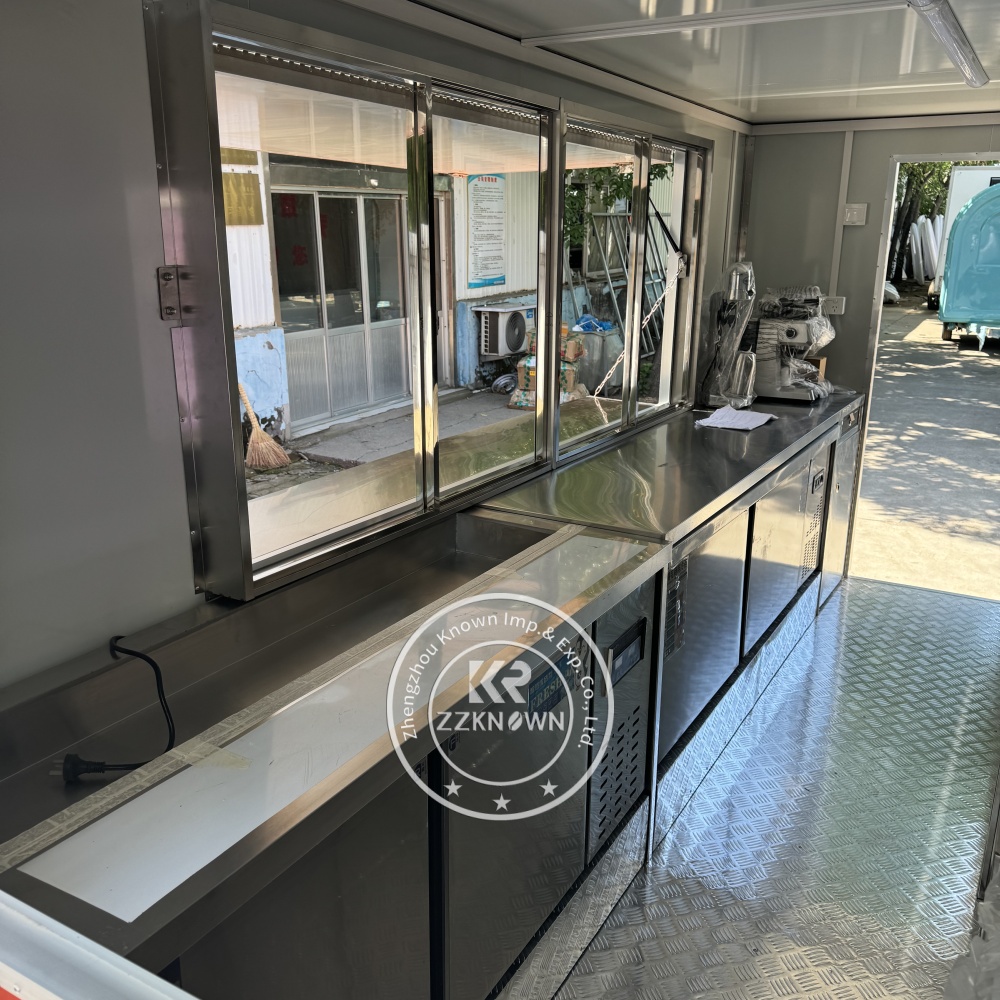
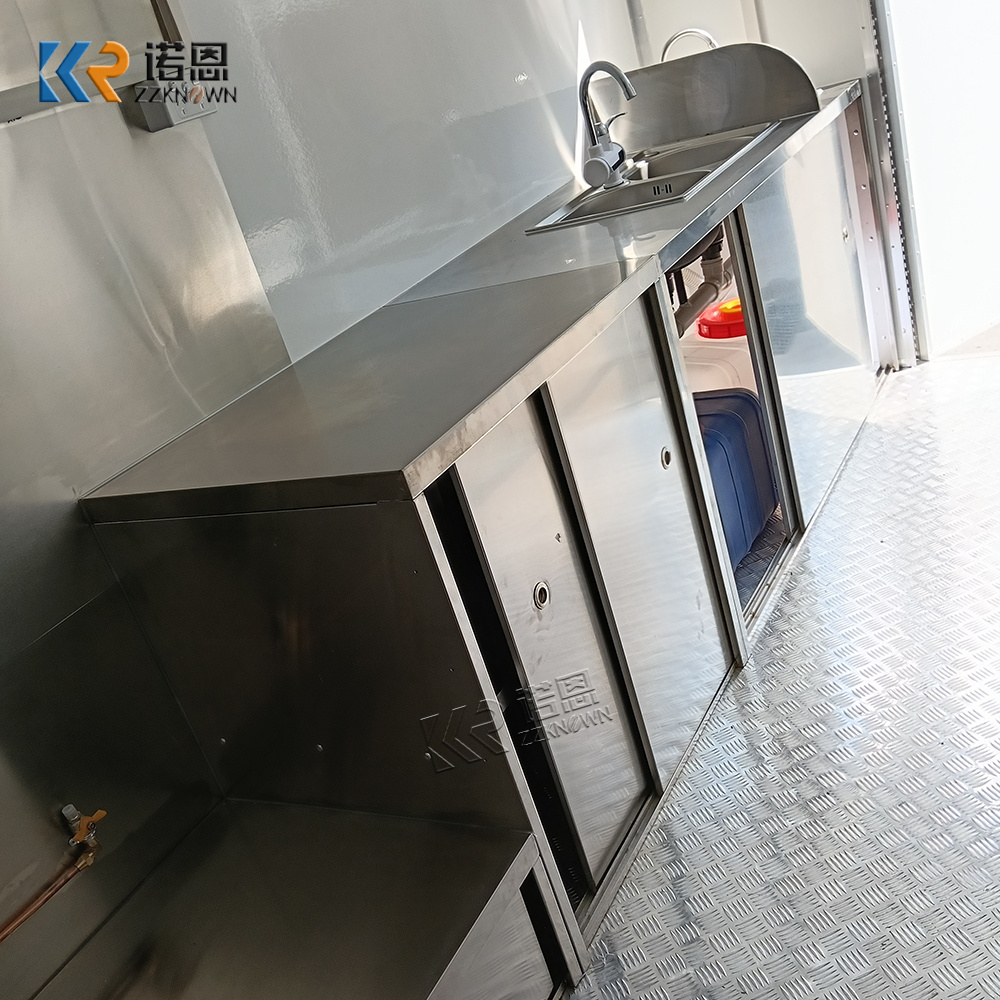
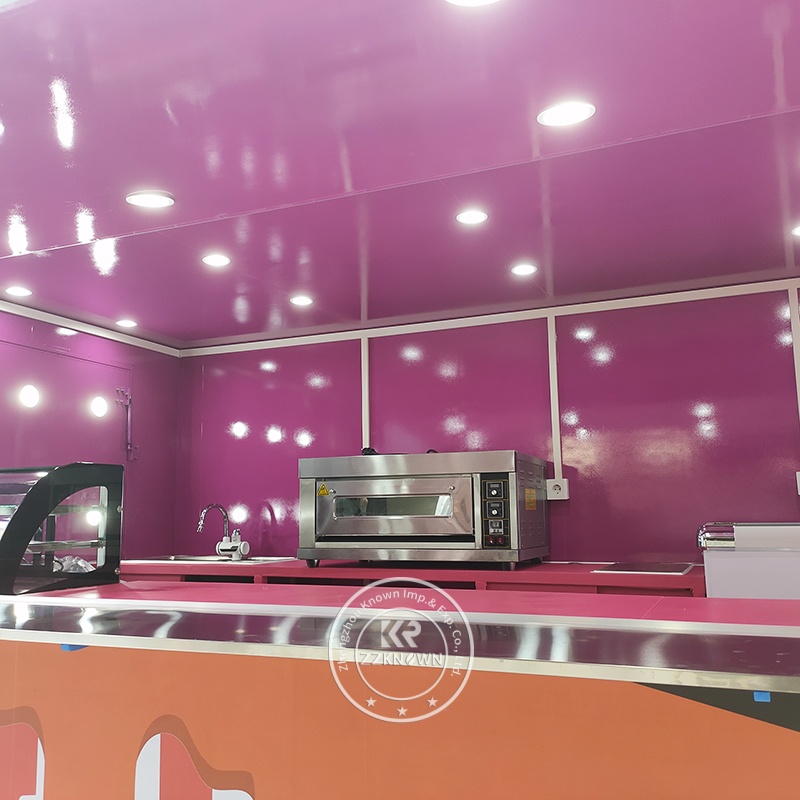
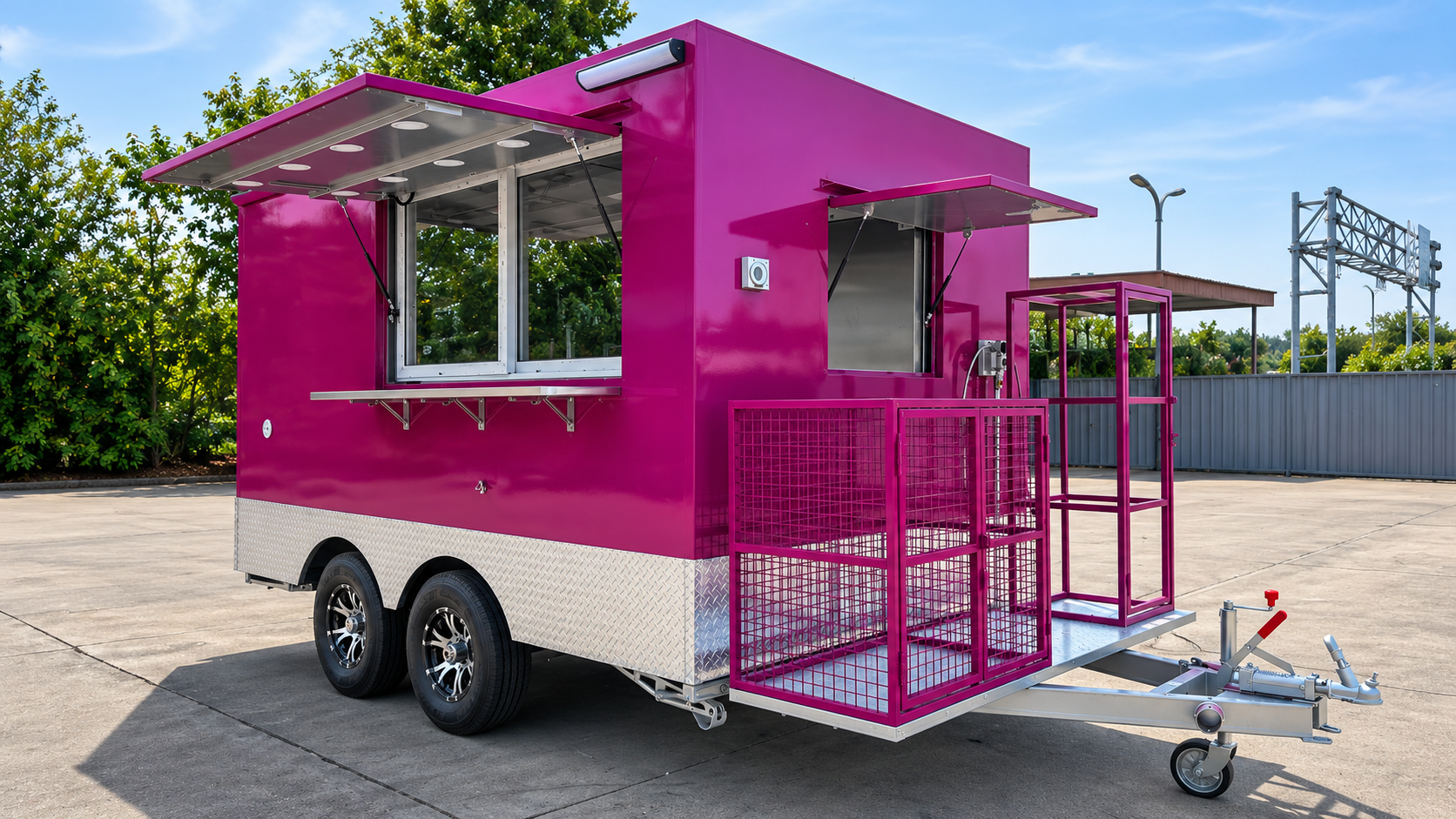
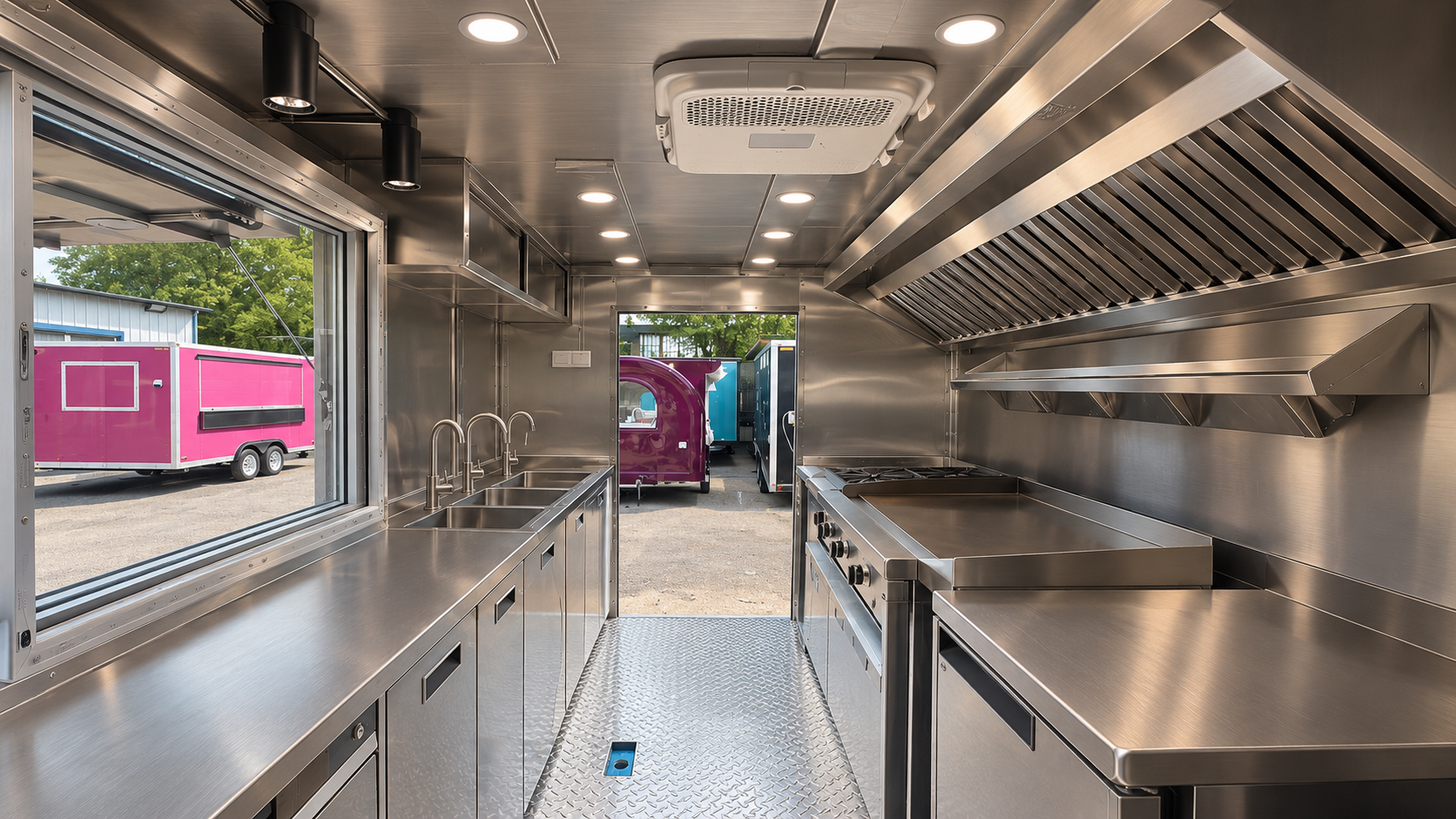
Do not infer gas-system compliance from a photograph of a finished kitchen. The interior image below shows a layout reference, not a verified LPG installation or test result.
What should a pressure-test report tell you?
Ask the installer to record the trailer identifier, test date, gas system or piping section tested, applicable procedure, test medium, instrument, specified pressure and duration, observed result, repairs and retest result, and the tester’s name and license details where required. The qualified person sets and performs the procedure under the local code and equipment instructions. A generic statement such as “gas tested” is less useful than a report tied to your actual trailer and final equipment layout.
If a fitting, line or appliance is disconnected after a test, ask whether the earlier report remains valid. For example, Austin’s mobile food vending fire-inspection guidance says disconnecting gas lines after the pressure test voids its propane-system inspection report. That is a local requirement, but it illustrates why the test should match the final assembled configuration.
When should the system be checked again?
- After new installation or piping modification: arrange the pressure test and leak checks required by the adopted rules before operation.
- After repair or an appliance change: have the affected work assessed and retested by the qualified professional before returning it to service.
- At cylinder replacement: follow the operator procedure and local requirements for checking the new connection; the NFPA fact sheet specifically identifies this point.
- After long storage or a suspected problem: ask a qualified LPG professional to inspect the system before use, especially if its condition or prior test record is uncertain.
- At the required inspection interval: calendar the local periodic checks. PERC’s summary of the 2024 NFPA 58 mobile-food provisions describes annual documented whole-system leak testing, including flexible connectors and accessories, where that edition applies.
Warning signs and what owners should leave to professionals
A propane odor, hissing sound, damaged connection or gas alarm calls for immediate attention. Stop using the equipment, keep people away from the area, avoid creating an ignition source, and follow the emergency instructions from the propane supplier and local authorities. Do not continue service while a suspected leak is unresolved. PERC advises shutting off the supply if leakage is found and keeping it off until the problem is repaired and the system is shown to be leak-free.
Owners should not improvise test pressures, alter regulators, bypass shut-off valves, repair gas piping or sign their own inspection report unless they are qualified and authorized to do that work. Operators still need training on the routine checks and emergency steps required at their location.
Local inspection paperwork: two examples
Requirements vary by jurisdiction. Oklahoma’s LP Gas Administration requires a documented leak check and pressure test on its approved Form 4, performed by an LP Gas Administration licensed plumber, before a physical food-truck inspection. Austin requires a propane-system inspection report completed by a licensed LPG plumber before its annual fire inspection of a unit with propane. Neither form should be described as a nationwide certificate. Give your destination authority the exact trailer and equipment details and ask which forms and credentials it accepts.
Buyer’s pre-production and handover checklist
- Send the builder the destination city/state, menu, exact gas appliance models and expected cylinder arrangement.
- Request a current LPG system specification and routing drawing showing the cylinder, regulator, fixed piping, valves, connectors and appliances.
- Confirm who will perform and document the required pressure test and leak check, and at which stage of assembly.
- Ask for copies of actual test records when tests are performed; do not treat a proposed test as a completed one.
- Have a locally qualified professional review the delivered, fully assembled system and complete any required local commissioning or inspection paperwork.
- Keep the records in the trailer and set reminders for periodic checks and cylinder-connection checks.
Frequently asked questions
Is a pressure test the same as a leak check?
No. They have different scopes and procedures. Ask the qualified tester and local authority which of each is required for the final build.
Does a factory test guarantee approval at my destination?
No. A documented factory test can help with handover, but the local authority may require its own licensed tester, form, inspection or retest after installation or modification.
Can I use a photo to confirm the propane system is safe?
No. A photo may help discuss layout and access, but it cannot verify hidden piping, connections, the test method or the recorded result.
Request the LPG system specification before production
If you are planning a propane-equipped trailer, send us your menu, appliance list and operating destination. We can discuss the proposed layout and documentation package before production so your local LPG professional has the information needed for the applicable review. For related planning, see our food trailer propane-system guide and Oklahoma inspection guide.
Updated November 2026. Sources: NFPA food-truck safety fact sheet; PERC mobile-food operator guidance; Oklahoma LP Gas Administration; Austin Fire Department.