ZZKNOWN MOBILE-KITCHEN BUYER GUIDE
A friendly, practical way to turn “please send the equipment specs” into a clean plan-review package before your trailer is built.
What should you remember first?
Is a trailer model number the same as an appliance model number?
No. A ZZKNOWN trailer may be called KN-FS400, while its refrigerator, fryer, hood, and water heater each need their own make and model.
Can you submit a screenshot of a shopping listing?
Maybe as a lead, but a current manufacturer PDF or product specification page is stronger. It should identify the exact model and installation requirements.
Should the sheets come after the trailer is built?
No. Equipment size and utility data can change the drawing, counter, hood, wiring, gas line, and trailer weight before fabrication begins.
Does one U.S. checklist apply worldwide?
No. Use the examples in this guide to prepare better questions; your destination authority decides what documents and equipment it accepts.
Why does an inspector ask for cut sheets?
Imagine you have your menu, a sketch of the trailer, and a quote for a “fully equipped kitchen.” Then the health department replies with five words: Please send equipment spec sheets. If this is your first mobile-food business, that request can feel like a new language. It usually means the reviewer wants to know exactly what will be installed, not just that your drawing contains a box marked “fridge.”
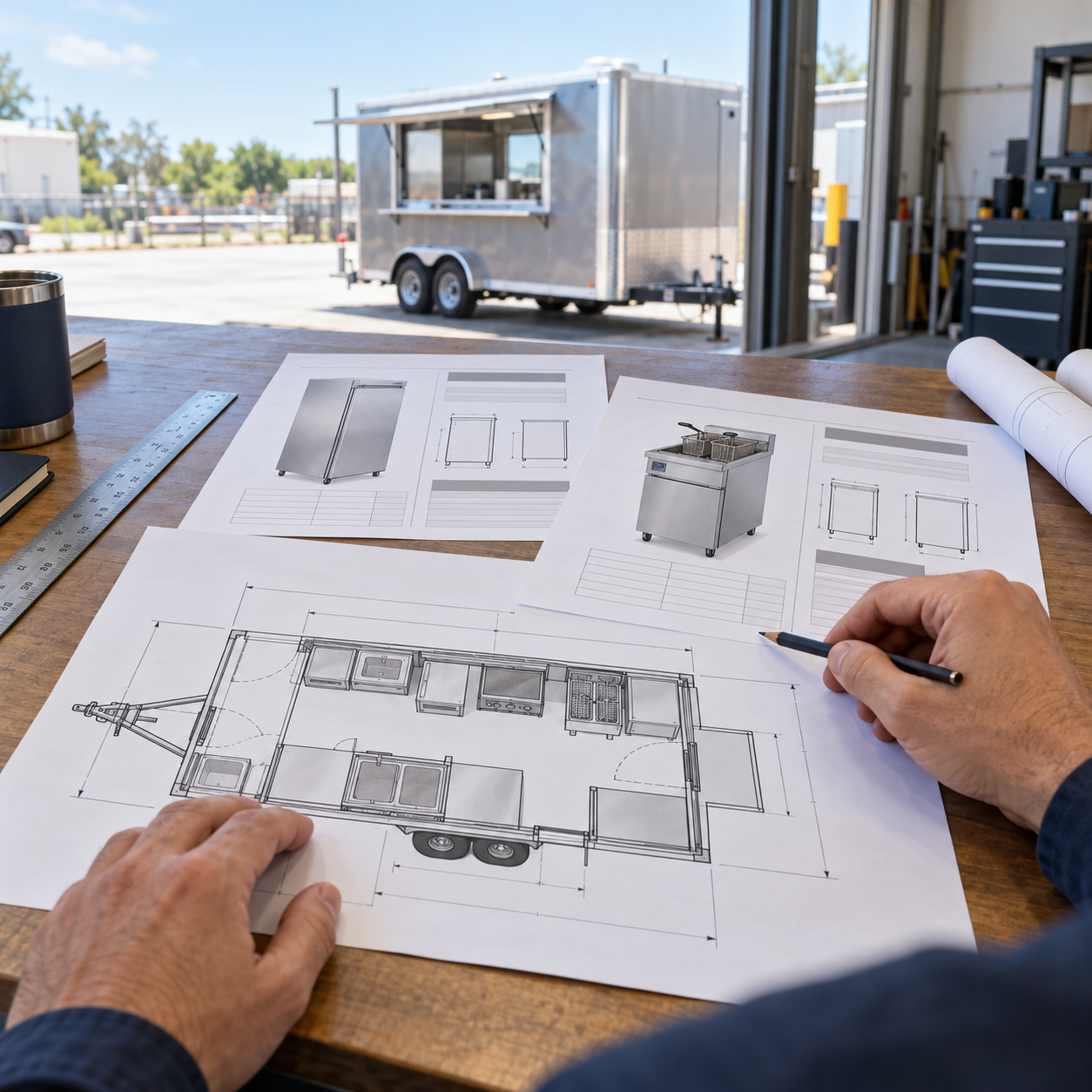
A cut sheet turns that box into something reviewable. It identifies the manufacturer and model, then shows the dimensions, power or gas demand, operating capacity, construction, and installation details available for that particular unit. Those details help the reviewer and builder check whether an appliance fits the intended food process and whether the trailer can support it.
This is a concrete U.S. requirement in some jurisdictions. The Minnesota Department of Health mobile-food-unit plan-review application says to submit a manufacturer specification sheet for each piece of new equipment.
Its equipment schedule asks for the plan item number, quantity, new-or-used status, description, manufacturer, and model. The City of Maplewood’s mobile-food-unit schedule uses the same new-equipment instruction. These are examples of local practice, not a global law.
Minnesota’s official plan-review FAQ also tells applicants where to find sheets: the manufacturer’s website or equipment supplier. For used or existing equipment, it suggests a photo of the equipment and its information label. It recommends numbering each equipment item so the schedule and floor plan can be matched quickly. That is a small organizational step with a big practical payoff.
What is a cut sheet—and what is it not?
The term is informal. You may see “data sheet,” “product specification sheet,” “equipment specification,” or “technical sheet.” What matters is that the document belongs to the exact product variant you plan to install and contains enough detail for the reviewer and builder to evaluate it.
| Document | What it usually tells you | Can it replace a model-specific cut sheet? |
|---|---|---|
| Manufacturer cut sheet | Exact model, dimensions, performance, utility connection, options, and sometimes listings or drawings | This is normally the core submission document. |
| Catalog or marketplace listing | Marketing highlights and a selection of configurations | Not reliably; it may omit the precise option or installation detail. |
| Supplier quotation | Price, quantity, lead time, and commercial terms | No. It may identify the model but rarely documents all technical requirements. |
| Installation manual | Clearances, hookups, restraints, ventilation, operation, maintenance | Often a useful companion, especially for gas, electric, hood, and refrigeration equipment. |
| Certificate or listing evidence | Scope of a particular standard or listing for a particular model | No. A symbol alone does not show size, utility load, or whether the listed variant is the one ordered. |
If a supplier sends a “refrigerator cut sheet” that names a family of ten models, circle the actual variant. A 27-inch cabinet and a 48-inch cabinet do not share the same footprint, weight, or electrical assumptions. If the ordering code has options for legs, casters, door swing, gas type, voltage, or remote condensers, capture those option codes too. A plan reviewer cannot infer them from a pretty photograph.
What information should be on every equipment sheet?
Start with identity: manufacturer, exact model, revision or document date, and selected options. Then add the fields that drive the physical and utility design. This is not a universal submission list; it is a practical buyer’s checklist to compare with the destination agency’s form.
| Field to verify | Why it matters inside a trailer | Where to check it |
|---|---|---|
| Overall width, depth, height and operating envelope | Determines counter placement, aisle space, open-door path, and service access | Dimension drawing plus installation manual |
| Shipping and operating weight | Affects chassis, axle loads, mounting, towing and weight balance | Manufacturer specification; confirm filled/loaded condition separately |
| Voltage, frequency, phase, amperage, plug or hardwire | Drives circuits, panel capacity, shore-power and generator planning | Equipment electrical data and nameplate |
| Fuel, gas type, input rating and connection | Changes gas piping, regulator, shutoff, ventilation and fire review | Gas appliance sheet and installation manual |
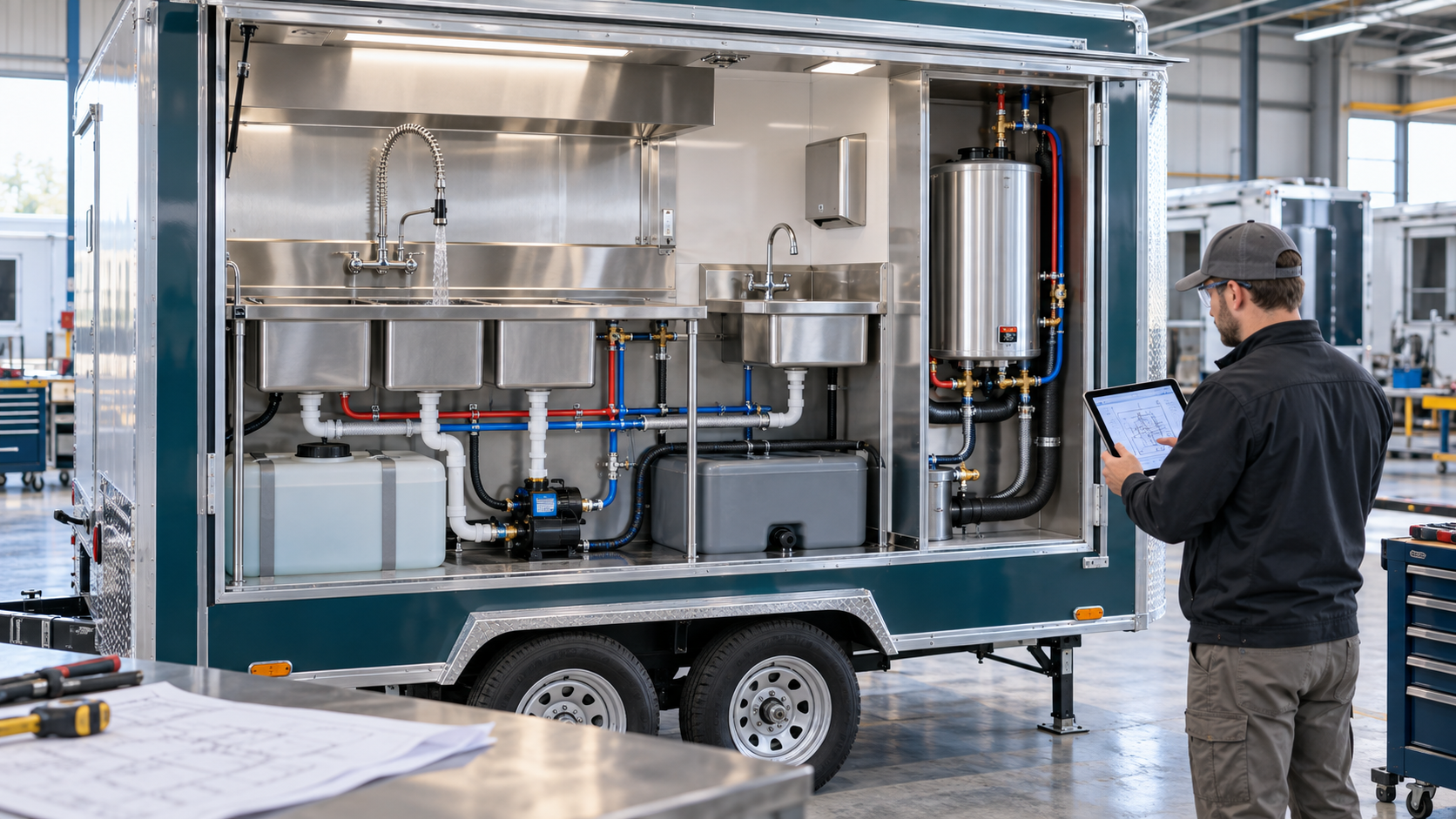
| Water inlet, drain, tank and heater requirements | Changes sink placement, pump, water/wastewater capacity and service access | Plumbing information and local mobile-unit form |
| Food capacity or performance rating | Helps test whether the appliance supports the menu and expected production volume | Manufacturer sheet; verify under intended operating conditions |
| Required clearances and installation method | Prevents an apparently fitting appliance from blocking a door, hood or cleaning access | Installation manual and applicable authority guidance |
| Sanitation/safety listing and exact scope | Some jurisdictions ask for evidence that the selected equipment is suitable for commercial food use | Manufacturer document and listing agency record where relevant |
Notice that purchase price is not on this technical checklist. Price belongs in your procurement comparison, but it does not tell an engineer what circuit, mounting, clearance, or water connection to design. Likewise, a photograph of a machine is useful for recognizing it but cannot replace its data sheet.
Can a real refrigerator sheet show why the details matter?
Yes. Take the True T-23-HC refrigerator as an illustrative outside-manufacturer example. True’s product page identifies a one-door reach-in cabinet that is 27 inches wide, 29.5 inches deep, and 78.375 inches high; it lists 2.2 amps at 115 V/60 Hz/single phase with a NEMA 5-15P plug, a 270-pound weight, and a 15-amp dedicated outlet instruction. The manufacturer PDF also includes plan and elevation views, options, and installation-related information.
Why not simply write “commercial refrigerator” on the drawing? Because 78.375 inches of cabinet height is only the starting point. You still need to consider the trailer’s finished interior height, door swing, casters or legs, air movement, cleaning and maintenance access, tie-down or restraint plan, travel vibration, and local electrical standard. A version intended for a different voltage or market can change the answer. The listed numbers do not mean this model is installed in a ZZKNOWN trailer or approved for every mobile kitchen.
What about a gas fryer?
The Frymaster GF14 is another real, model-specific example. Its manufacturer page lists a 15.63-inch width, 30.88-inch depth, 41.13-inch height, 40-pound oil capacity, natural-gas energy type and 100,000 BTU/h input for the displayed domestic variant. It also links to installation and operation information. Those are not interchangeable with an electric fryer’s wattage or with a different export/gas variant.
A builder uses this information to start a fit and utility check, not to certify the final installation. The hood, fire suppression, gas supply, appliance restraint, oil handling, clearance and local fire review remain separate design questions. Never infer that a model is acceptable merely because a logo appears on a catalog page. Ask the destination reviewer which product listing, configuration and installation evidence they need.
Which documents should you collect for each major equipment type?
Use your menu to decide which equipment is in scope. A coffee-only trailer, burger trailer and dessert unit will not need identical files. The following checklist shows the questions worth answering for common mobile-kitchen components.
What should a refrigerator or freezer sheet show?
Ask for exact cabinet dimensions, operating temperature range, electrical data, door swing, ventilation or condenser location, installation clearance, and access for cleaning or service. For a dual-temperature unit, identify each compartment and the intended food load. A cold-storage promise on a quote does not prove capacity under a crowded summer service. The Minnesota mobile-food-unit construction guide says mechanical equipment should meet the operation’s cooking, cooling, reheating, ventilation, and hot/cold holding needs and be installed as the manufacturer intends.
What should a fryer, griddle or oven sheet show?
Identify whether the unit is gas or electric, its exact input rating, connection, overall size, operating weight or oil capacity, ventilation requirements, clearances, and service access. Record any required accessories such as casters, restraints or splashguards. An “18-inch fryer” label is not enough when the real connection and service envelope take more space than the body.
What should a sink sheet show?
Provide the exact sink configuration, bowl dimensions, faucet, drainboard or landing space, water connection, drain connection and material. Handwashing, food preparation and warewashing may require different fixtures or separation. A “3+1 sink” in a sales description should lead to a drawing with the actual bowl sizes and location. Confirm the local authority’s requirements for the menu and process before cutting the counter.
What should a hood and exhaust package show?
Capture the hood make/model or custom fabrication drawing, length, depth, mounting height, fan data, grease filter or duct arrangement, make-up air strategy, and any fire-suppression interface. A hood photograph does not tell you whether it covers the actual cooking line or what airflow and installation the selected equipment needs. Coordinate fire and mechanical review with the destination authority and qualified installer.
What should a water heater sheet show?
Show the model, fuel or electrical demand, capacity or recovery rating, water connections, mounting, venting or safety provisions where relevant. The heater must be matched to the sinks and operating pattern. The Minnesota application asks applicants to identify the water heater manufacturer and size, and to show the locations of the heater, fresh-water tank and wastewater tank on the layout.
What if the equipment is custom fabricated?
Ask your fabricator for a dimensioned drawing, material description, intended use, attachment method, cleaning access and any components that have their own manufacturer documentation. Label the custom item consistently on the schedule and plan. Do not relabel a generic sketch as an official manufacturer cut sheet. Ask the local plan reviewer how they want custom work documented; approval may depend on materials, fabrication details and on-site inspection.
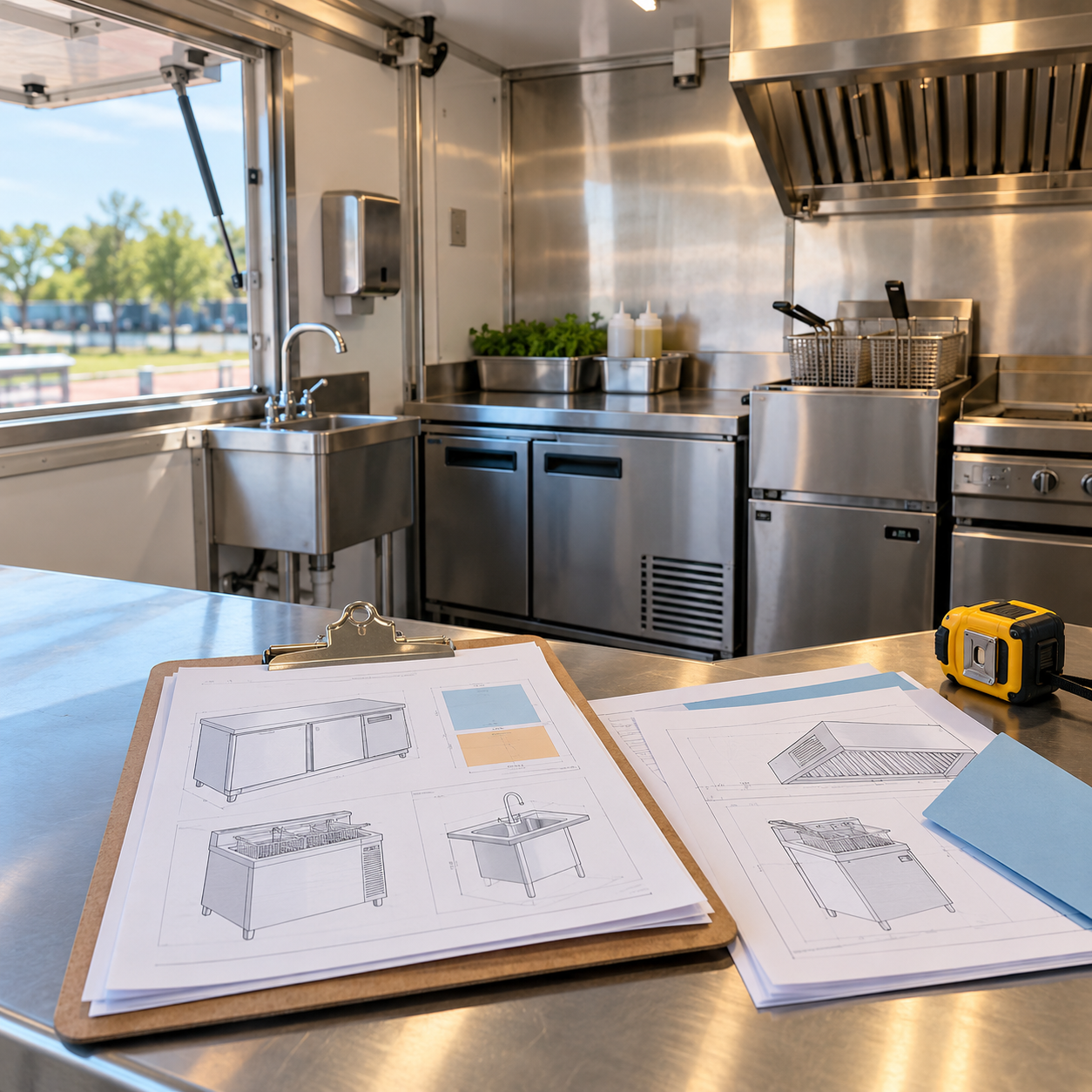
How do you turn loose PDFs into one plan-review package?
Keep this simple. The reviewer should be able to find an item on the floor plan, locate the same number in your schedule, and open the matching sheet without guessing. Your builder should be able to do the same thing while checking the utility and mounting plan.
- Start with the menu. List what you will cook, cool, hold, wash and serve, including the busiest realistic service period. This establishes which equipment actually matters.
- Choose exact makes and models. Mark any item that is still undecided as “TBD”—do not quietly substitute a different item after review.
- Download current manufacturer documents. Save the PDF or product-page date and selected option codes. Ask the supplier when a model name or sheet seems inconsistent.
- Assign one number per piece of equipment. Use those same numbers on the scaled floor plan, equipment schedule and file names. Where quantity exceeds one, make the count clear.
- Check utilities and fit together. Create a load schedule, gas schedule and plumbing list; then compare real equipment footprints, service access, doors, hood coverage and trailer weight.
- Ask the local authority what to submit. The relevant agency may request a menu, finish schedule, commissary information, water/wastewater details, fire review and more. Do not treat a manufacturer packet as approval.
- Lock and version the approved set. When a model changes, update its schedule row, cut sheet, utility calculation and drawing revision before fabrication or installation proceeds.
What might an equipment schedule look like?
This sample is a format demonstration only. It deliberately separates a real ZZKNOWN trailer model from independent appliance-maker examples. It does not claim that the True refrigerator or Frymaster fryer is installed in a KN-FS400, fits that trailer, or has received local approval.
| Plan ID | Equipment | Make and exact model | Selected data to verify | Document status |
|---|---|---|---|---|
| R-01 | Reach-in refrigerator—illustrative | True T-23-HC | 27 × 29.5 × 78.375 in; 115 V/60 Hz/1 phase; 2.2 A; 270 lb | Manufacturer product page and PDF available; suitability for this trailer not assessed |
| F-01 | Gas fryer—illustrative | Frymaster GF14 | 15.63 × 30.88 × 41.13 in; 100,000 BTU/h natural-gas variant shown | Manufacturer page available; confirm chosen variant and installation manual |
| S-01 | Handwashing and warewashing sinks | To be selected | Bowl sizes, faucets, drainboards, water and drain connections | Do not submit as a completed model selection |
| H-01 | Cooking-line hood | To be selected or custom drawn | Hood dimensions, airflow, fan, duct and fire-system interface | Coordinate with local mechanical/fire review |
For an actual submission, the first two rows would use only equipment you really intend to buy. Add a separate row for every other appliance, sink, heater, fan, and custom component that the local form asks you to identify. Keep the equipment schedule and PDF filenames consistent—for example, R-01_True_T-23-HC.pdf—so an outdated revision is less likely to slip into the packet.
How does a real ZZKNOWN project illustrate the documentation gap?
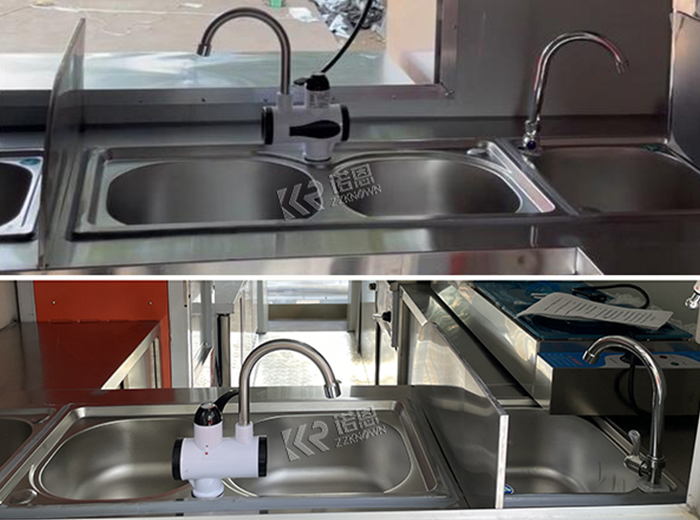
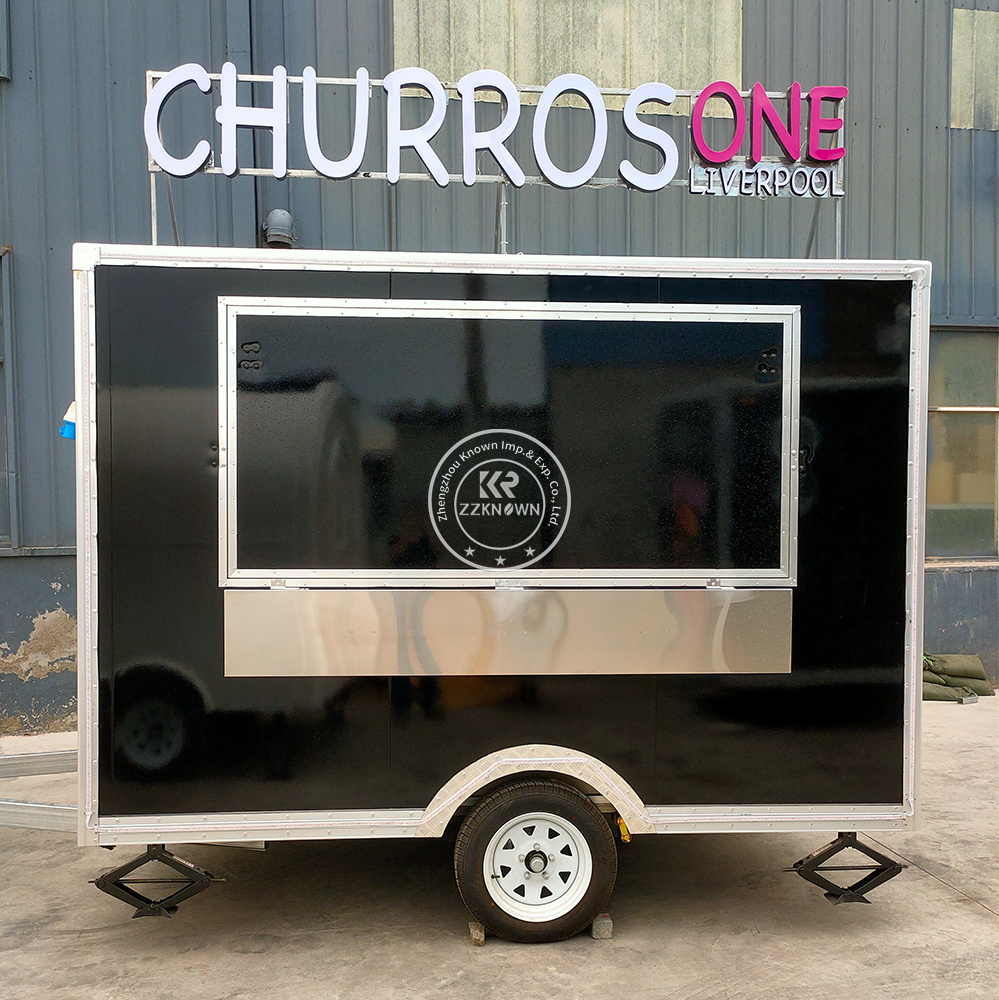
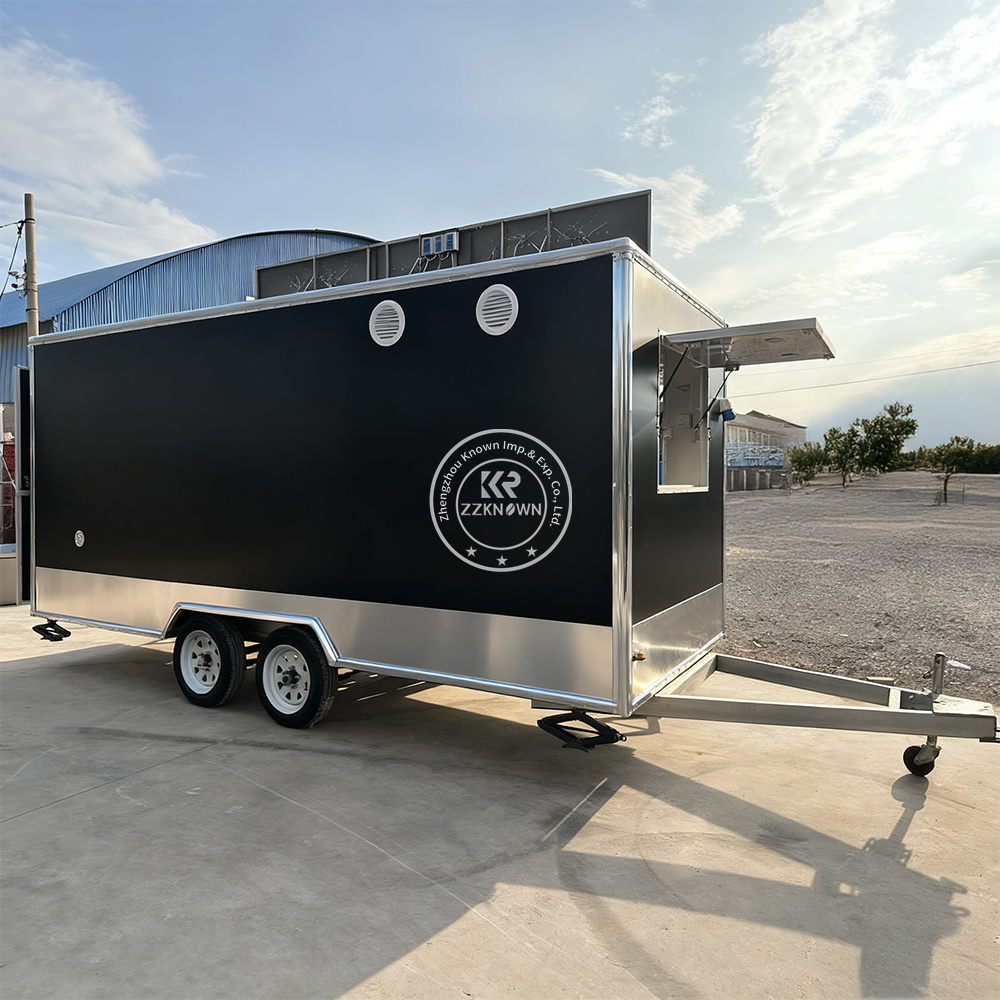
Real project photo from ZZKNOWN’s published Tswagstra case. The photo illustrates equipment placement; it is not a cut sheet or proof of approval.
What does the KN-FS400 example tell us?
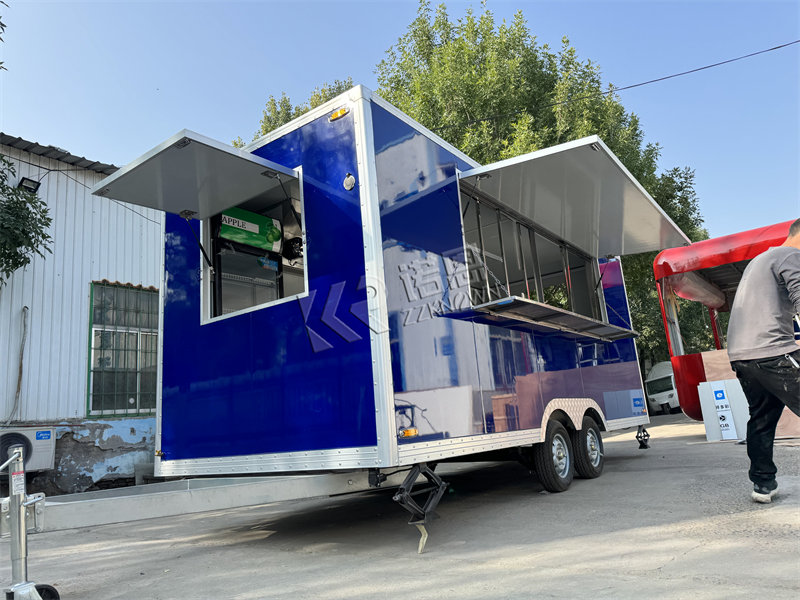
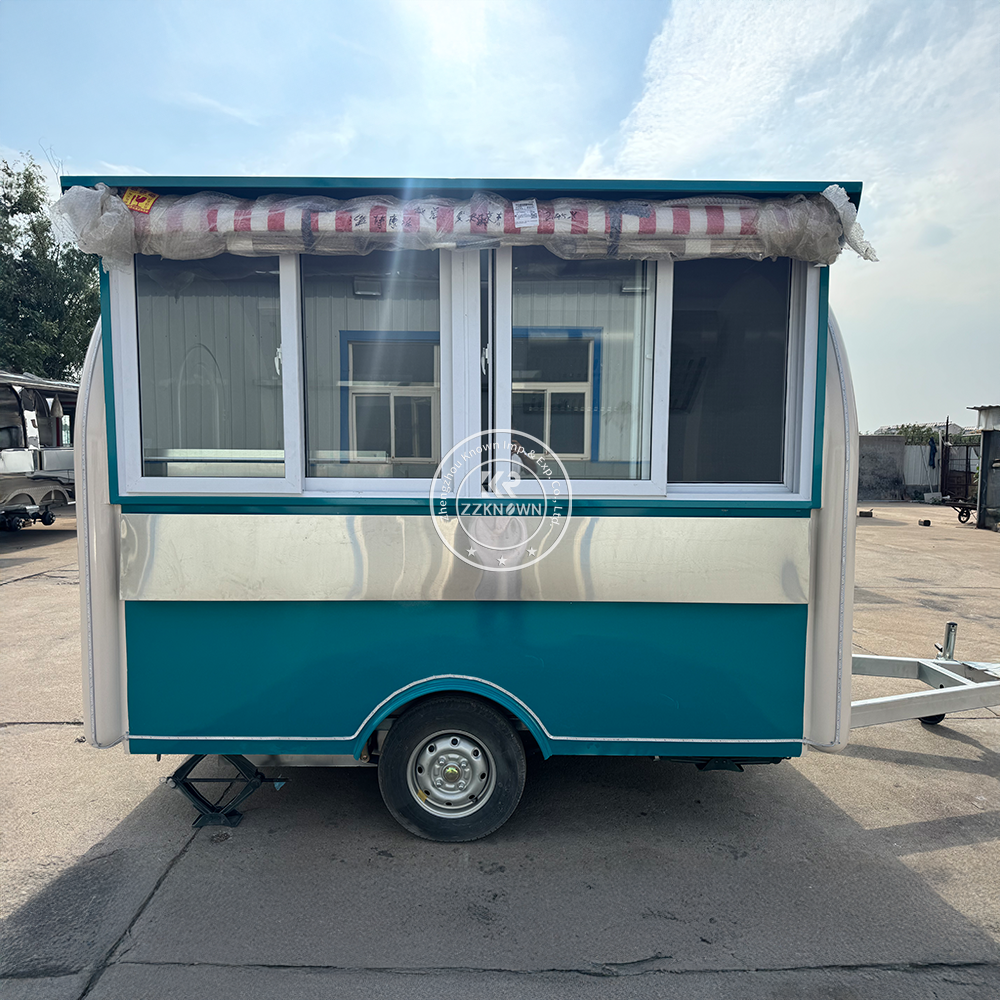
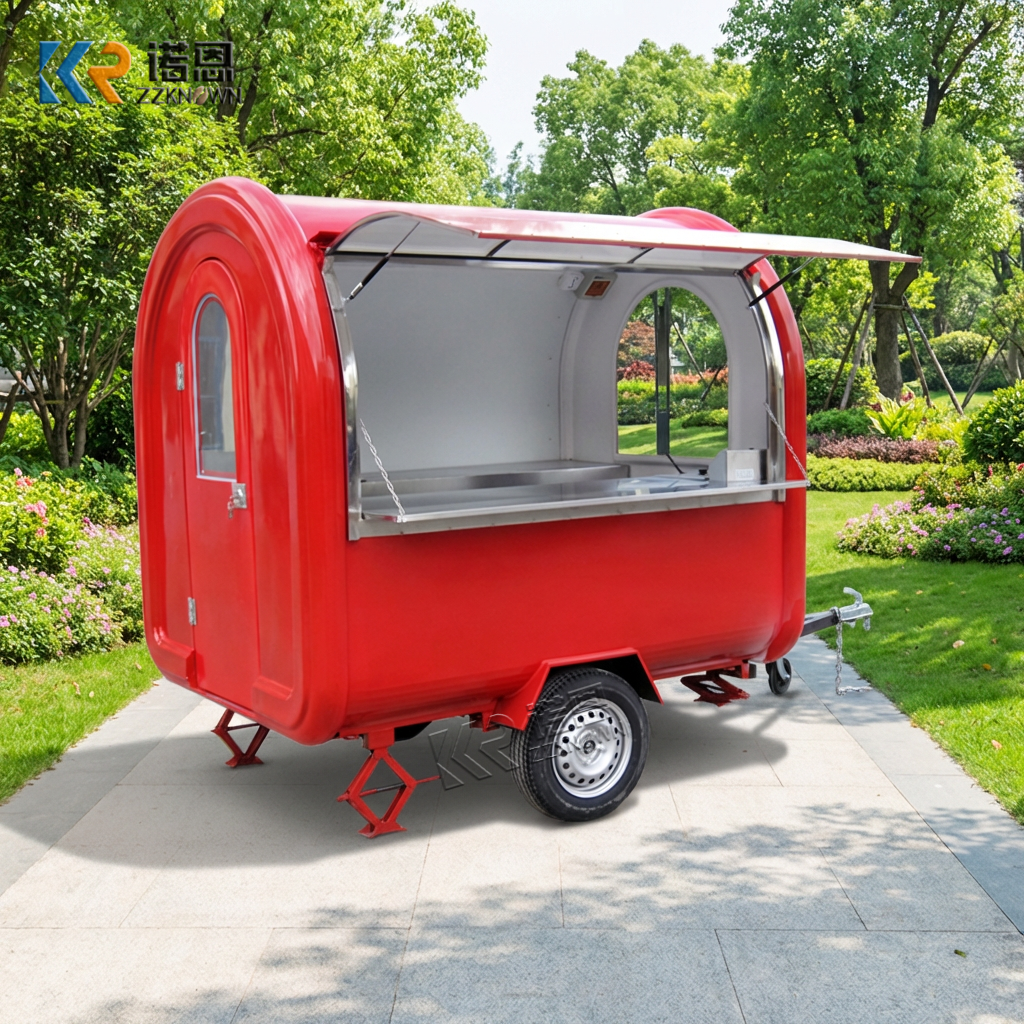
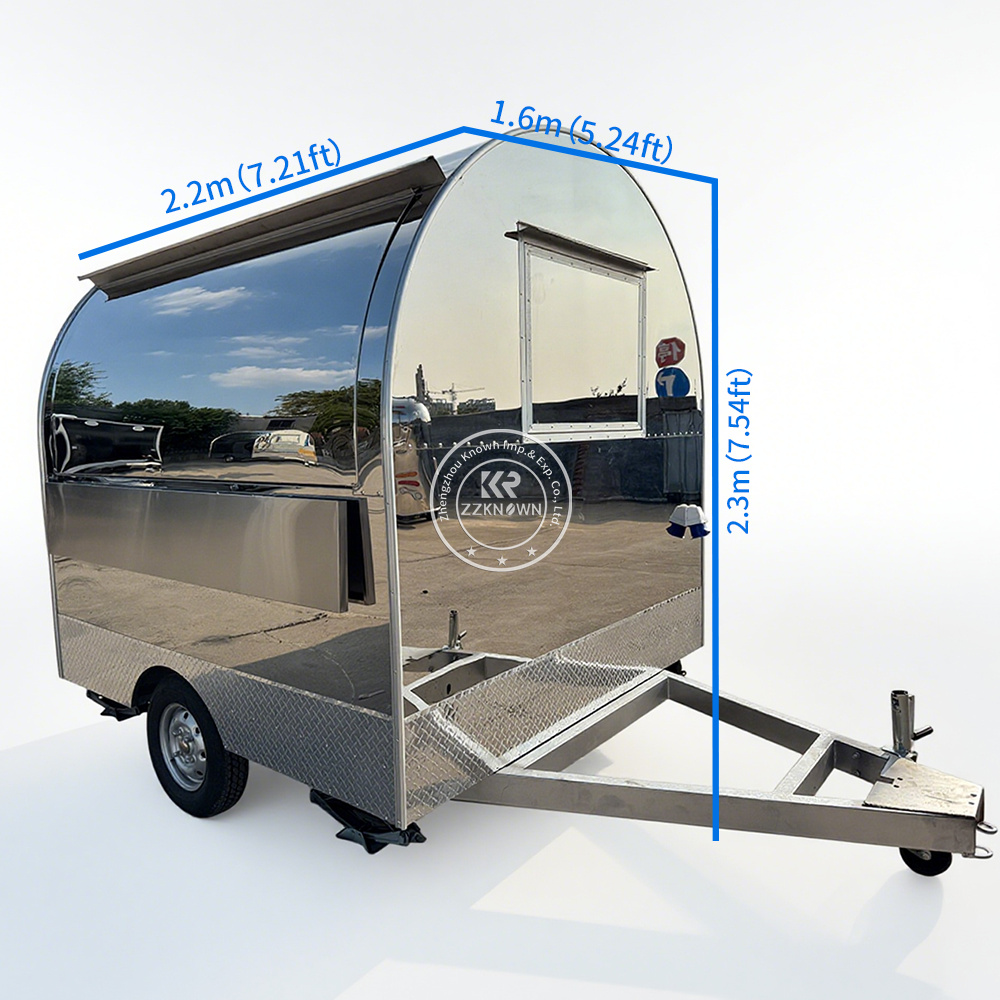
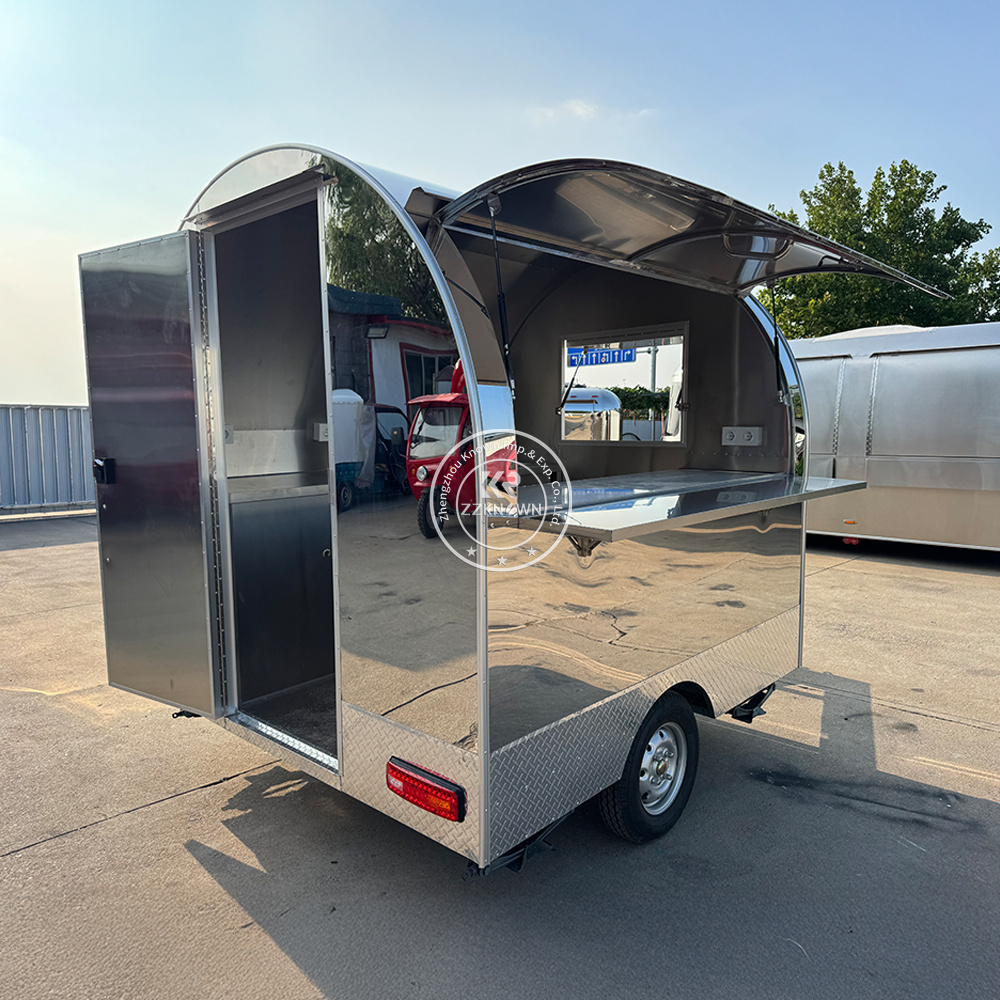
ZZKNOWN’s published Tswagstra Miami case identifies a KN-FS400 body measuring 400 × 200 × 230 cm and lists a cooking and water-system configuration. The KN-FS400 product page gives another 4 m trailer example with fryer, griddle, refrigeration, hood and sinks.
That information is useful for visualizing a mobile kitchen. But “fryer” and “fridge” are equipment categories, not enough to complete a plan-review packet. For a buyer’s exact order, each selected appliance still needs its own make/model, sheet and installation check. Neither the photo nor the trailer model number proves local acceptance.
What are the most common cut-sheet mistakes?
- Sending the wrong market variant. A U.S. 115 V/60 Hz refrigerator sheet is not automatically suitable for a 230 V/50 Hz destination. Gas type and pressure can vary as well. Verify the actual procurement code, not just the familiar model family.
- Ignoring options. Legs, casters, drawers, door swing, built-in pumps and remote equipment can change dimensions or installation. Attach the selected option documentation where it changes the plan.
- Using an old sheet. Manufacturers revise products. Save the date of the document you checked and reconfirm it when you place the equipment order.
- Submitting a list without the layout. The reviewer must be able to see where each item goes. Minnesota’s FAQ specifically recommends numbering equipment on both the floor plan and list.
- Confusing certification marks with a complete review. A listing can be important, but its scope, the installed variant, the food process and installation all matter. The Minnesota construction guide discusses sanitation classifications and conditions for equipment without one; it does not say that one mark alone guarantees approval.
- Replacing a model after approval without updating the package. A narrower unit might free floor space but draw more power; a similar-looking fryer might use a different gas connection or ventilation arrangement. Treat substitutions as a design change, not a clerical swap.
How should global buyers use this U.S. example?
The useful lesson is the method: identify the exact item, collect its original technical data, map it to the plan, and ask the destination authority what evidence it wants. The legal details differ between U.S. states and cities and between the United States, Canada, Europe, Australia, the Gulf and other markets. Do not copy a Minnesota submission form and assume it will satisfy another regulator.
Before ordering an imported trailer, ask who will install and commission each appliance, who will supply local-market listed or approved equipment where needed, and whether final equipment selection should happen in the destination country. A manufacturer can coordinate dimensions and utility routes, but it cannot promise a permit that only the local authority can grant. For broader planning, review ZZKNOWN’s food trailer layout guide, mobile-kitchen food-safety guide, and potable-water connection guide.
What can ZZKNOWN prepare before production?
Based on ZZKNOWN’s published OEM/ODM design process, the team can help translate a buyer’s menu, equipment choices and destination standards into a draft 2D/3D layout and a coordinated equipment list. For a project-specific equipment specification package, define the scope in the quotation: which appliance sheets will be supplied, who selects each model, who verifies local certifications and utility requirements, and how substitutions will be documented.
Our recommendation is to send your destination city, menu, expected busy-period volume, preferred equipment makes/models (if any), local plan-review checklist and utility details before the trailer specification is signed. Then the equipment schedule, drawing and cut sheets can be reviewed as one set. ZZKNOWN can support preparation and revision; the buyer and local authorities remain responsible for confirming applicable requirements and approval.
What do real buyers ask about equipment cut sheets?
Which documents are enough for an initial review?
Do I need a cut sheet for every piece of equipment?
It depends on your local authority and the scope of the project. Minnesota and Maplewood explicitly request a manufacturer sheet for each new equipment item in their mobile-unit forms. Ask your reviewer how they treat small equipment, existing items and custom fabrication.
Can I use the product page instead of a PDF?
Sometimes a current manufacturer page has all relevant data, but a downloadable PDF is easier to archive and version. Minnesota says the information may come from a manufacturer’s website or equipment supplier. Check the submission format your reviewer accepts.
What if my refrigerator or fryer is used?
Ask the local authority. Minnesota’s plan-review application says to list used equipment and suggests photographs; its FAQ specifically mentions the equipment and its information label. Record the actual make, model and condition rather than guessing from appearance.
Are NSF, ETL or CE marks enough to obtain a permit?
No single mark guarantees acceptance. The listing must apply to the exact model and intended use, and installation and local requirements still matter. Ask the relevant authority which documentation it needs. Never substitute a certification logo for the model sheet.
What if equipment choices or timing change?
Can I change the appliance model after the layout is approved?
Possibly, but notify the builder and reviewing authority before installation. Compare the replacement’s dimensions, weight, utility input, connections, clearances and listing; update the drawing and schedule if any of those change.
What if I buy a trailer first and choose equipment later?
Leave real design space, utility capacity and weight allowance, but know that final equipment choices may force expensive changes. Where the jurisdiction requires plan review, ask whether the menu and appliance selections must be settled before construction. Minnesota warns that building ahead of approval can lead to costly corrections.
Should the trailer manufacturer or appliance supplier provide the sheets?
The appliance maker is the best primary source for model data. The supplier can gather it, and the trailer manufacturer can coordinate it into the project package. Decide in writing who is responsible for selecting the correct variant and keeping the documents current.
How early should I ask for the package?
Before the layout is frozen and before fabrication of counters, hood, utilities or equipment mounts. In Minnesota, the agency asks for plans and specifications at least 30 days before construction. Your own authority may have a different timeline, so contact it early.
Want to review the equipment package before ordering?
Send ZZKNOWN your destination city, menu, target service volume, proposed appliance list and any health-department checklist. Ask for an equipment schedule and a layout review that identifies the model sheets, utility information and open questions your local reviewer will need.
Request an equipment specification packageExplore custom food trailers
Which sources support this guide?
- Minnesota Department of Health, Mobile Food Unit Plan Review Application — new-equipment sheets, equipment schedule, water heater and tank information.
- City of Maplewood, Mobile Food Unit Equipment and Finish Material Schedule — manufacturer sheets for new equipment.
- Minnesota Department of Health, Plan Review FAQ — where to obtain sheets, used-equipment photos, numbering and timing.
- Minnesota Department of Health, Mobile Food Unit Construction Guide — equipment capacity, installation and sanitation considerations.
- True Manufacturing, T-23-HC product specifications and manufacturer cut sheet — model-specific refrigerator example.
- Frymaster, GF14 product specifications — model-specific fryer example.