Published: October 16, 2026 | Last Updated: October 16, 2026 | Data region: Global buyer guide with U.S. regulatory examples
Author: ZZKNOWN Editorial Team | Technical review: No named engineer has been represented as having reviewed this article. Project drawings require local qualified review.
How were these recommendations assembled? On October 16, 2026, we reviewed the FDA Food Code 2026, Pennsylvania's Mobile Food Facility Operation Guide, and the Tarrant County Mobile Food Unit packet. We compared official opening and pest-control language with published ZZKNOWN configurations. The design table below is not a field-performance test or cost quote. Local adoption, menu, climate, and inspector interpretation vary.
Picture a lemonade trailer at an outdoor festival. The line moves fast, the service window stays open, ice and fruit travel between the refrigerator and counter, and a trash can fills with cups and citrus peels. Even if the kitchen was spotless at 9 a.m., the operating pattern creates openings, smells, moisture, and frequent door traffic by noon. A fly only needs a brief opportunity; a mouse looks for a different opening altogether. The real question is not whether the trailer looked sealed in a factory photograph. It is whether the barrier still works during your busiest hour.
The FDA's 2026 model Food Code explains the public-health concern: insects and rodents can contaminate food and food-contact surfaces. Section 6-202.15 addresses holes and gaps, tight-fitting windows, and solid, self-closing doors. When openings are intentionally kept open, the model identifies screens, properly designed air curtains, or other effective protection, subject to stated exceptions. Section 6-501.111 also calls for routine checks of deliveries and premises and for eliminating conditions that shelter pests. These are useful U.S. design benchmarks; your jurisdiction's adopted rules govern your permit.
Based on ZZKNOWN's production experience, pest protection works best when it appears on the first window-and-door drawing. It is harder to add a proper screen track after a decorative service hatch, menu light, and folding shelf occupy the same space. An early conversation about how you serve customers can save awkward retrofits later.
No. A larger opening may improve visibility and handoff speed, but it also creates a larger unprotected path whenever its panels are open. The right width depends on what travels through it: a packaged coffee cup, a pizza box, a tray of meals, or a payment terminal. Start with your menu and service workflow, then make the opening only as large as the handoff needs while preserving staff comfort and customer access.
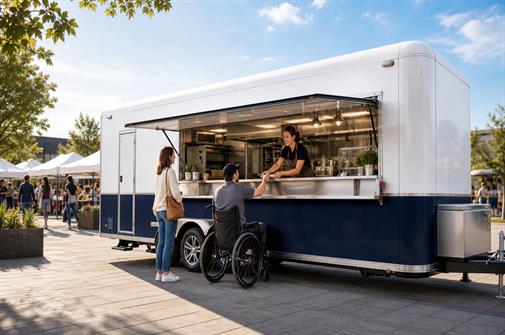
Separate the viewing function from the handoff function when practical. Customers may appreciate a wide glazed front, but the actual transfer opening can be smaller, quicker to close, and easier to screen. If a window must stay open throughout service, determine before manufacture whether your inspector accepts a fitted insect screen, a correctly designed air curtain, another effective method, or a different operating arrangement. A decorative awning is weather protection, not insect protection by itself.
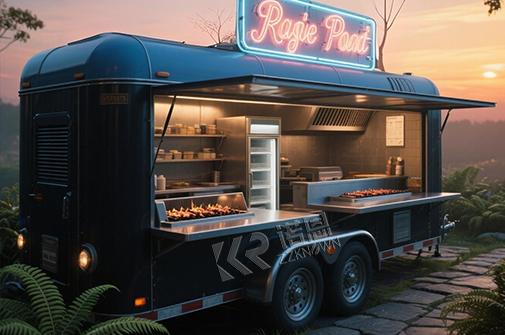
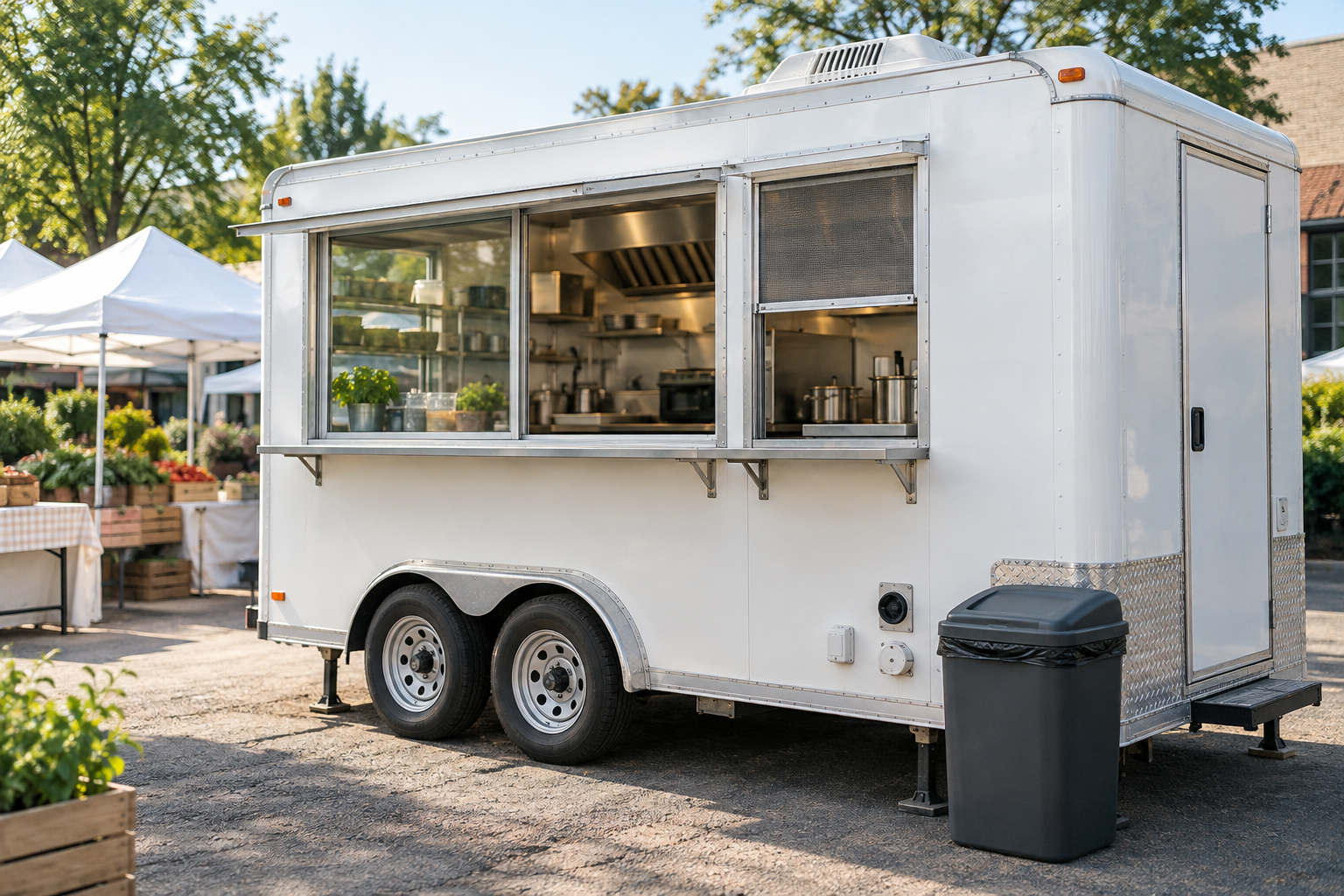
ZZKNOWN's published 4 m mobile lemonade trailer has a glass sliding service window and serving shelf. That is a real configuration reference, not a statement that the listed unit includes a screen or has been approved for every market. If your plan calls for the window to stay open, specify the pest-control detail separately in the quotation and drawing.
Neither style automatically wins. A sliding glass window gives staff partial-opening control and can close quickly between orders. Its trade-off is a lower track that can collect syrup, crumbs, and grit unless it is accessible for cleaning. Panels should run smoothly and close tightly; a warped or obstructed track defeats the benefit. A lift-up hatch provides a wide clear handoff zone and rain cover, but an open hatch may expose nearly the entire aperture during service. It needs a deliberate screen or another accepted protection strategy, not just a hinge.
When reviewing drawings, ask four practical questions. Can the operator close the window with one hand during a rush? Does the screen allow normal handoff without being left off to the side? Can staff remove or reach the screen and track for cleaning? What happens to the screen when the trailer travels? These questions are more useful than a catalog photo labeled simply large window. For a related assembly, see ZZKNOWN's sliding-window installation guide.
| Option | Benefit | Weak point to check |
|---|---|---|
| Sliding glass window | Adjustable opening and quick closure | Track cleaning, overlap, gasket, screen fit |
| Lift-up hatch | Clear handoff zone | Large open path during service |
| Removable screen | Cleanable physical barrier | Torn mesh or removal for service |
| Air curtain | No mesh panel in handoff path | Wrong airflow, placement, or local rejection |
| Self-closing door | Restores barrier after entry | Propped-open door or worn sweep |
Comparison method: These are engineering-planning observations, not laboratory efficacy rankings. We have not shown a universal price because sizes, materials, local labor, and approved components vary. Ask for itemized options only after the plan reviewer confirms the protection method.
Make it part of the service workflow, not a loose accessory packed in a box. The frame should fit the actual opening without obvious perimeter gaps, remain secure when the operator works near the counter, and be removable for washing without awkward tools that invite staff to leave it off. A replaceable mesh panel is easier to maintain than a permanently trapped torn one. Keep frame and track surfaces smooth enough to wipe; sticky drink residue quickly turns a clever detail into a cleaning problem.
The 2026 FDA model language in Section 6-202.15(D) includes a 16-mesh-per-inch screen option for certain openings kept open. Do not treat that line as a worldwide mesh specification or assume finer mesh alone solves bees, windblown dust, or an unsealed frame. Pennsylvania's mobile-food guide is direct for its scope: windows and doors intended to stay open need screens. Share your exact service plan with the local reviewer, especially if you want a pass-through flap or air curtain instead.
Here is a practical test: set up a mock service. Have one person prepare an order, pass it through the protected opening, take payment, then close the panel. If the screen blocks the actual tray, the operator may remove it during the first lunch rush. Redesign the handoff geometry now, while the window can still move on the drawing.
Sometimes, but only when the local authority accepts it and the installed equipment actually controls flying-insect entry at the intended opening. The FDA model lists a properly designed and installed air curtain as one possible method. It does not say any fan above a hatch is automatically compliant. Curtain width, mounting, airflow direction, crosswind, hood exhaust, and make-up air all affect the result. The manufacturer and local installer need to coordinate those details.
Air curtains also need power and maintenance. If an outdoor market loses power or staff switch off a noisy fan, the protection disappears. Ask for a fallback operating procedure: close the window, use a screen, or pause open-food service. If a cooking hood changes pressure inside the trailer, have the ventilation specialist review the whole airflow pattern.
The staff door is often the forgotten large opening. A trailer may have a beautifully finished sales window and still let insects enter every time someone carries ice, stock, or waste through the rear door. The FDA model's default approach is a solid, tight-fitting, self-closing door, with specified exceptions for qualifying emergency exits and other situations. A screen door or screened ventilation panel may help where the door is intentionally open, but the local inspector decides whether that arrangement is acceptable.
Check the whole perimeter, especially the threshold, hinge side, and top corner. Test the closer with the trailer level and again after it has been towed and set on stabilizers. Doors can shift in a mobile chassis. A sweep should seal without dragging so hard that staff disable the closer. Keep emergency egress in view; never add a screen, latch, or interior rack that blocks a required exit.
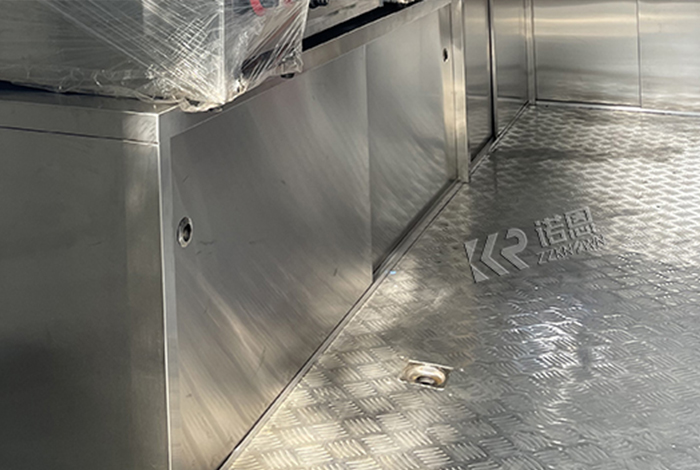
Look for every hole created after body panels are installed: electrical cable glands, shore-power entries, plumbing supply and drain penetrations, gas routing, refrigeration lines, roof fans, hood ducts, and air-conditioning cutouts. A small utility gap is easy to miss behind a cabinet and difficult to clean later. The FDA model calls out closing holes and gaps along floors, walls, and ceilings, and protecting exterior walls and roofs from pest entry.
Based on ZZKNOWN's production experience, a useful drawing is a penetration schedule: where each line crosses the shell, how the entry is protected and sealed, and how a technician can inspect it later. Choose closures compatible with heat, movement, water, and the service involved. Do not fill every opening with arbitrary caulk: a gas or electrical penetration may need a specified fitting, and a ventilation opening must not be blocked. The responsible trades should review those details before walls are closed.
Vents deserve their own review. A removable, cleanable grille or screen may help where permitted, but it must not reduce required combustion air, hood exhaust, or cooling-air flow. Do not swap fine insect mesh into a critical intake without checking pressure drop and equipment instructions. The correct detail depends on the appliance, mechanical design, and local fire rules.
There is also a difference between a sealed-looking edge and a cleanable edge. Deep tracks collect drink syrup and flour; rough sealant attracts soil; exposed cavities give pests places to hide. Specify smooth finishes, accessible tracks, removable covers where needed, and joints staff can clean without dismantling half the kitchen. Ask the fabricator to show the window in three states: closed for travel, normal open position for service, and partly disassembled for cleaning. The third view rarely appears in marketing photos, yet it determines whether the barrier still works months after launch.
Night service adds bright lights, long open hours, and more waste. Hot climates tempt staff to prop the rear door open. Wet sites can leave standing water beneath the trailer. The basic logic stays the same: remove attractants, maintain protected openings, and have a closing plan when conditions change. Place covered exterior trash receptacles away from the service opening where customer flow and site rules allow; empty them often. Keep the surrounding ground clean and drained.
Inside, receive supplies in closed containers and check deliveries for pest evidence. Do not store unnecessary packaging or broken equipment in voids under counters. The FDA model's Section 6-501.111 pairs structural protection with routine inspection and elimination of harborage. In other words, even the best window screen cannot compensate for a neglected stock box or overflowing waste bin.
If bees or flies are active at a particular event, pause and adapt. Close the hatch between orders, move attractive waste farther from the counter, clean spills, and follow the event organizer's and health department's directions. Do not spray insecticide near exposed food unless a qualified operator and local rules permit the product and method.
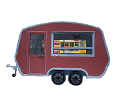
The published ZZKNOWN 4 m Mobile Lemonade Trailer is a helpful visual reference because its 4 m × 2 m × 2.3 m body, glass sliding service window, and serving shelf make the handoff problem tangible. This is a real product page, not a pest-proof certification case study. It does not document screen mesh, air-curtain performance, or a passed local inspection; specify and verify those items separately.
For a named model, the KN-FS400 custom 4 m lunch food trailer lists a large left-side serving window, a smaller front window, and a rear access door. That means three different openings to address on one drawing. The listed model is not evidence that a particular screen or air curtain is standard equipment.

For hot cooking rather than drinks, coordinate window design with hood exhaust, makeup air, hot-line location, and handoff space. ZZKNOWN's menu-based layout guide explains how those zones fit together. Pest control should not create a new fire, ventilation, or exit problem.
Before the appointment, use ZZKNOWN's pre-opening operational test guide to check the rest of the kitchen. A factory check supports your project; it does not replace a local permit or inspection.
Not as a universal global statement. The FDA model offers several ways to protect openings kept open, while local rules may be more specific. Pennsylvania's mobile-food guide requires screens for windows and doors intended to remain open. Ask your jurisdiction about the exact service plan before ordering.
Only if the open position has an accepted pest-entry control and your practices protect food. A tight-fitting window when closed does not solve the open-hour problem. Show the inspector the normal service position, not only a picture of the trailer shut for travel.
It can be one accepted method under the FDA model if properly designed and installed, but the local reviewer must agree. A small fan, wrong mounting position, or untested crosswind is not proof. Request the equipment specification and installation plan.
The FDA 2026 model describes a 16-mesh-per-inch screen option for certain openings. Verify the adopted local rule, frame fit, cleanability, and handoff design. The mesh count alone does not help if the edges gap or staff remove the screen.
The FDA model generally specifies a solid, tight-fitting, self-closing outer door, subject to exceptions. Your actual requirement depends on the adopted code and whether this is an ordinary staff entrance or designated emergency exit. Never compromise required egress to add pest protection.
No. They address only one entry route. Inspectors may also review pass-through windows, doors, vents, refuse, cleaning, food storage, and pest evidence. Tarrant County's mobile-unit checklist explicitly covers windows, doors, and other openings together.
Send the operating city and country, menu, hours, event setting, window style, largest handoff item, staff-door use, ventilation and cooking equipment, plus health-department plan-review notes. Ask for a dimensioned window-and-door schedule and separate pest-protection line items.
Jurisdiction note: These documents do not establish a global construction standard. The 2026 FDA Food Code is offered for adoption; a state or local authority may use a different edition or amendments. For Europe, Australia, Canada, the Middle East, or another destination, request the actual permit checklist from the authority that will inspect your operation.
Tell ZZKNOWN what you sell, where the trailer will operate, how many people work inside, and whether the service opening stays open. We can prepare a menu-based window and layout concept, an opening schedule, and a project quotation for local plan review. Ask for a pest-protection and pre-inspection checklist with your design request.
Request a window layout and quote → Explore ZZKNOWN customization →