Separate the factory quotation from freight, destination charges, customs costs and local delivery before comparing suppliers.
Think of landed cost as the amount required to move a finished trailer from the agreed seller location to the buyer's usable destination. It is broader than a product quotation and broader than ocean freight.
| Cost layer | What may be included | What evidence should you request? |
|---|---|---|
| Trailer and options | Body, chassis, axle, kitchen equipment, electrical or gas configuration, branding and accessories | Signed specification, approved layout and itemized quotation |
| Origin and packing | Protective packing, loading support, export handling and transport to the named origin point | Packing method, packed dimensions, photos and stated Incoterm |
| International transport | Ocean freight, carrier surcharges and cargo insurance where contracted | Route, port pair, equipment type, quote validity and insurance scope |
| Destination charges | Terminal handling, document, release, security, storage or equipment-related charges | Destination agent estimate and carrier or terminal tariff where available |
| Customs and tax | Customs duty, import VAT/GST or sales-related taxes and government user fees | Broker calculation using the current classification, value and origin documents |
| Final-mile costs | Broker, inspection, quarantine, towing or haulage, unloading, modification and registration | Local service quotations and authority requirements |
The factory quotation tells you what is being manufactured. It may not include packing, export transport, ocean freight, insurance, destination port charges, customs clearance or delivery to your address. Two quotations can look similar while covering different responsibilities.
Before comparing prices, match the body size, axle, equipment list, voltage, gas or electrical scope, packing method and delivery term. Use the Food Trailer Cost Guide to compare build-related costs, then use this guide to add logistics and import costs.
Incoterms® 2020 allocate selected costs, risks and obligations between seller and buyer. They do not automatically set product quality, payment terms, ownership transfer, customs classification, duty rate or local approval. The contract should state the rule, version and a precise named place—for example, “FCA [named place], Incoterms® 2020” rather than only “FCA China.”
| Example rule | What the seller generally arranges | What the buyer must still confirm |
|---|---|---|
| EXW | Makes the goods available at the named place | Loading, export clearance, origin transport, main carriage, import clearance and final delivery, subject to the contract |
| FCA | Delivers export-cleared goods to the carrier at the named place | Main carriage, insurance, destination handling, import costs and final delivery |
| FOB | Delivers the goods on board at the named port; this rule is for sea or inland waterway transport | Main sea carriage, insurance, destination charges, import costs and final delivery |
| CIF | Arranges sea freight and the rule's required minimum insurance to the named destination port | Risk transfer point, insurance adequacy, destination charges, import costs and final delivery |
| DAP | Arranges carriage to the named destination, ready for unloading | Import clearance, duty/tax, unloading and any excluded local charges |
Based on ZZKNOWN's packing-review experience, the most useful freight input is not the marketing model name; it is the finished unit's confirmed packed dimensions, gross weight and loading method. Roof equipment, service-window awnings, tow bars, wheels, spare parts and detachable items can change the packed profile.
| Real ZZKNOWN example | Why the shipping plan may differ | What must be confirmed before booking? |
|---|---|---|
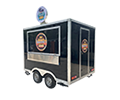
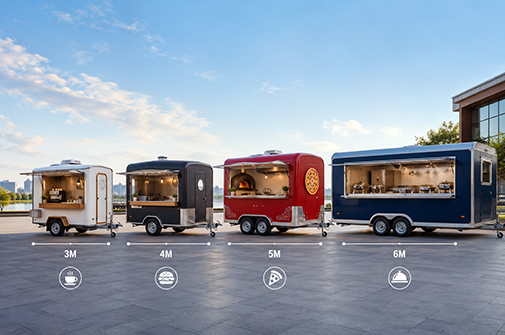
| 3m KN-YX300 custom food trailer | A compact body may offer more loading options, but added equipment and packed height still matter. | Finished dimensions, weight, tow-bar treatment and container fit |
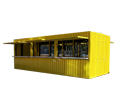
| 4m KN-FS400 dual-axle catering trailer | Dual axles and a fuller kitchen affect weight, lifting and securement planning. | Axle width, equipment list, packed weight and handling points |
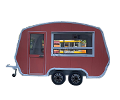
| 5.5m KN-FS550 burger trailer | A longer custom build may require a different container, flat-rack or other equipment decision. | Overall packed envelope, port equipment availability and route restrictions |
.png)
Model KN-YX300. Final packed measurements, not nominal body length alone, should be used for freight booking.
.png)
Model KN-FS400. Axles, equipment and packing method affect weight and handling.
.png)
Model KN-FS550. Longer custom builds require route- and equipment-specific review.
The loading method should be selected only after the final design and packed dimensions are reviewed with a forwarder. Availability also depends on the route, port and carrier.
| Method | When it may be considered | Questions to ask |
|---|---|---|
| Standard or high-cube container | The packed unit fits the equipment's internal dimensions and loading opening | Will wheels, tow bar or roof items be removed? Who reinstalls them? How is the unit secured? |
| Flat rack or open-top equipment | The unit cannot fit standard enclosed equipment because of width, height or loading constraints | Which out-of-gauge surcharges, lifting requirements, coverings and destination restrictions apply? |
| RoRo or vehicle service | A suitable service accepts the trailer on the selected route | Is the unit accepted as rolling cargo? What securement, towing and port-access rules apply? |
| Consolidated or shared loading | A forwarder confirms that the cargo and route are suitable | How will the trailer be separated from other cargo, insured and handled at both ends? |
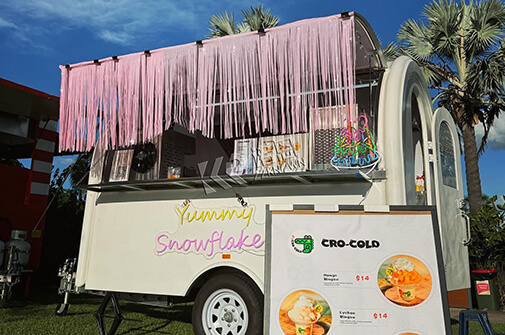
ZZKNOWN may use protective wrapping, chassis support or other packing methods according to the confirmed shipment plan. Some detachable or fragile items may be packed separately to reduce transport risk and installed after arrival. The exact method should appear in the shipment checklist.
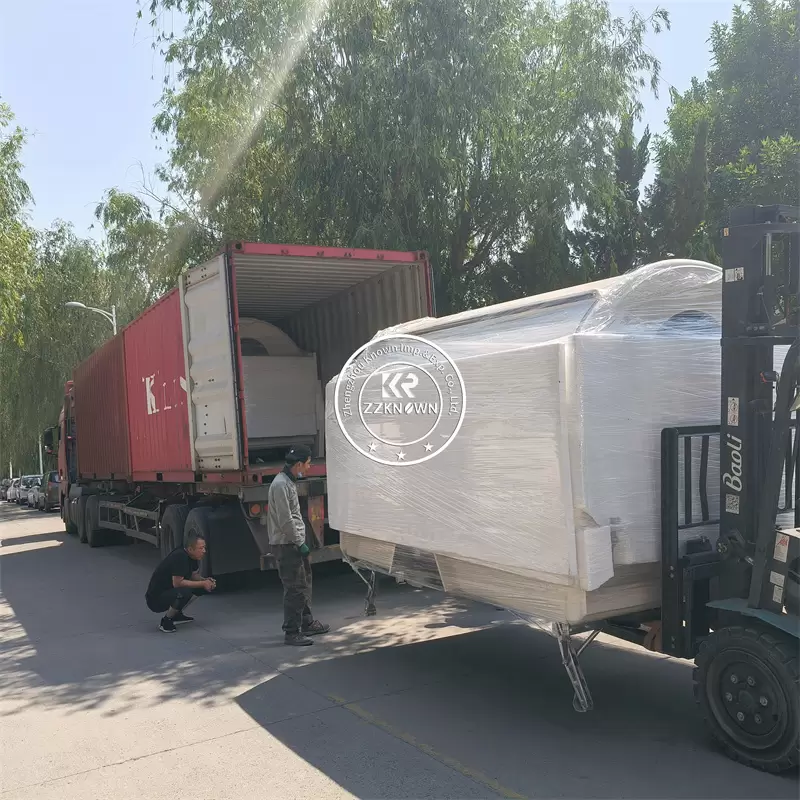
Existing ZZKNOWN packing material. The final packing and loading method is confirmed for each order.
See the Factory & Quality Control page for production, inspection and export-preparation steps.
“Freight prepaid” or “CIF port” does not necessarily mean “no charge at destination.” Depending on the contract, carrier, terminal and customs process, the importer may face terminal handling, documentation, release, security, inspection, storage, equipment, broker and local transport charges.
Do not copy a tax rate from another buyer's shipment. The result can depend on customs classification, declared transaction value, origin, trade measures, destination country and importer's tax status. The importer or appointed broker is normally the correct party to obtain a current ruling or estimate.
For U.S. imports, CBP states that the importer is responsible for declaring value, classification and duty information. For EU imports, import VAT is based on the customs value plus specified duties, charges and incidental expenses. Australia also requires buyers to consider approval, customs, tax, quarantine, inspection, modification and registration costs before shipment.
| Information | Why it matters |
|---|---|
| Destination country, port and postal code | Separates port-to-port pricing from door delivery and identifies route constraints. |
| Menu, staff count and operating plan | Supports an accurate equipment list and layout before freight is priced. |
| Preferred body size and model | Provides an initial shipping envelope for review. |
| Equipment, voltage and gas requirements | Affect configuration, weight, documents and possible local review. |
| Requested Incoterm and named place | Makes included and excluded responsibilities comparable. |
| Need for port or door delivery | Determines whether destination handling and inland transport must be quoted. |
| Local broker or forwarder contact | Allows destination requirements and charges to be checked before shipment. |
Before requesting freight, review the Food Trailer Size Guide, Food Trailer Layout by Menu and Staff, Importing a Food Trailer from China and Custom Design and OEM/ODM. You can also review Real Customer Projects to see how different menus and layouts change the unit specification.
No. CIF generally covers the contracted goods, sea freight and specified insurance to the named destination port under the rule, but destination handling, import clearance, duty, tax, local delivery and approval costs can remain with the buyer.
An initial estimate may be prepared from a proposed model and route, but the bookable price requires the final packed dimensions, weight, loading method, route and shipment date.
It depends on the contract, carrier arrangement and Incoterm. Ask the supplier and destination agent to list each included and excluded charge in writing before shipment.
Give the commercial description, origin, transaction documents and proposed customs classification to a licensed broker or the destination customs authority. Do not rely on another buyer's rate.
Not automatically. Confirm whether cargo insurance is included, who is insured, the coverage level, exclusions, deductible, claim documents and risk-transfer point.
Storage or equipment-related costs may accrue when cargo is not released within applicable free time because of documents, payment, inspection, approval or transport delays. Confirm the current terms with the carrier or destination agent.
Compare the same route, equipment, shipment scope, destination charges, validity, insurance and handling plan. A lower port-to-port number can exclude costs included in another quote.
Confirm the specification, layout, trade term, named place, preliminary packing assumptions, excluded charges, destination approval path and the party responsible for customs clearance and local delivery.
Send your menu, destination country and postal code, preferred size, equipment list, voltage or gas requirements and desired delivery scope. ZZKNOWN can review the trailer specification, prepare a 2D or 3D layout and provide a quotation with shipping assumptions for your review before production.
Request a Food Trailer and Shipping Quotation